

A deep delve into the cons of generative AI imagery and what it could mean for your business.
Technology is ever growing and changing, and we always have an obligation to be aware of it and grow with it. The last few years have brought an expansive growth in the availability of generative AI imagery, which uses generative models to produce text, images, videos, or other forms of data. This boils down to a data system that makes a visual collage out of the data it contains. It does not create anything unique or new; it does not have that capability. It can only combine and modify the data it already has.
Most people are familiar with generative AI imagery in the form of prompting apps like ChatGPT, Midjourney and Gemini to create content for professional or personal use. We’ve also seen a lot of articles and presentations talking about how to use generative AI in businesses. People are enthusiastic to discuss how quick and helpful AI is, which is not untrue. Siri and Alexa are great examples of AI that are ingrained in our daily lives, and they help us find information, build grocery lists, send texts, set reminders and more. Microsoft Word and many email platforms offer predictive text, spell check and voice-to-text options that help with writing, another useful form of AI. But generative AI is very complicated, and there is less conversation on its detrimental aspects.
First and foremost, images produced by generative AI cannot be copyrighted. The US Copyright Office requires human authorship for anything to be eligible for copyright, meaning any imagery you generate with AI and use for your business now becomes public domain. If you submit your own assets or proprietary data to any generative AI database, they could appear in other generated content produced from that same database. That also means that any generative AI images you create and publish or post online can be taken by anyone and used as they please; you wouldn’t have any legal recourse to stop them.
On top of this, many generative AI databases are fed on countless images sourced from all over the internet, with no respect to copyrights, patents or trademarks. This gross infringement on the works of millions of artists, creators, and businesses has led to a litany of lawsuits against generative AI companies. Andersen v. Stability AI et al. is a lawsuit in which a group of artists have filed against Midjourney, DreamUp, and Stable Diffusion for submitting artists’ works to their databases without consent or compensation. That’s not the only example, either. More than 4,700 artists have joined a class-action lawsuit against Midjourney, Stability AI, DeviantArt, and Runway AI. These include parties affiliated with the license holders of artworks from Norman Rockwell, Wes Anderson, Pablo Picasso and many other artists. This suit claims the generative AI data bases steal and copy their unique artistic styles, damaging their platforms and services long-term.
Aside from the legal aspects of generative AI, there is also a dramatic environmental impact to consider as well. Generative AI creates waste in the form of CO2 emissions, high electricity usage, and massive water waste. According to Jesse Dodge, a research scientist at the Allen Institute for AI, when OpenAI trained GPT-3, it was noted that the training process produced the equivalent of 500 tons of carbon dioxide. The growth of power requirements for data centers went from 2,688 megawatts annually in 2022 to 5,341 megawatts in 2023, the doubled number heavily driven by generative AI usage. It is estimated that by 2026, data center electricity consumption will reach near 1,050 terrawatts annually, making AI data centers the fifth largest global drain on energy. These data centers also require a large amount of water usage to cool their systems. It is estimated that every 20 to 50 Chat GPT prompts consumes about 500 milliliters of water. This water has a limited number of times it can be recycled before it becomes unusable and must be disposed of, but even the process of recycling the water for reuse has a large energy consumption as well.
As an Art Director and an illustrator, I must be vigilant to protect my own artwork from being scraped by these companies without my consent. I also have an obligation to Woodworking Network to make sure that we protect ourselves as a company, but to also protect the companies who advertise with us and those we write articles about. I’m obligated to be sure no proprietary materials are submitted to any generative AI data bases on my watch. I must also guard us from any potential inclusion in future lawsuits that may arise during this growing era of AI technology.
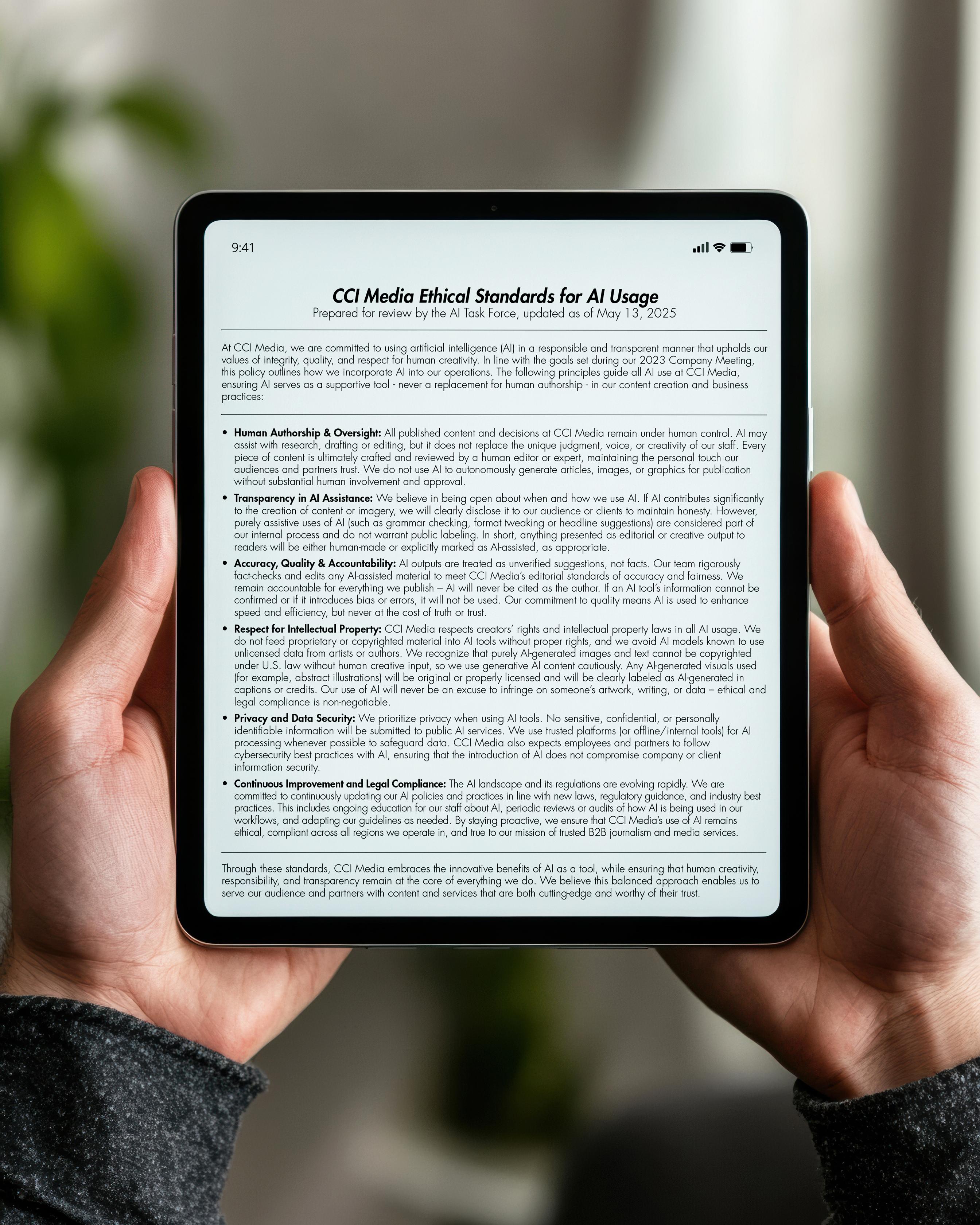
We here at Woodworking Network have built an ethics policy concerning AI to be transparent as to where we stand when it comes to this technology as it changes. We will conduct yearly audits of AI tools and their usage as it applies to us to make sure we stay knowledgeable on the subject. I would advise you to educate yourself on all aspects of AI, analyze how you currently use it and might use it in the future, and discuss with your team what best practices would suit your company.
Do you use AI in your daily work? If so, how? Were you aware of any of these darker aspects of AI usage? Email me at [email protected] and let’s discuss! ✚


Have something to say? Share your thoughts with us in the comments below.