

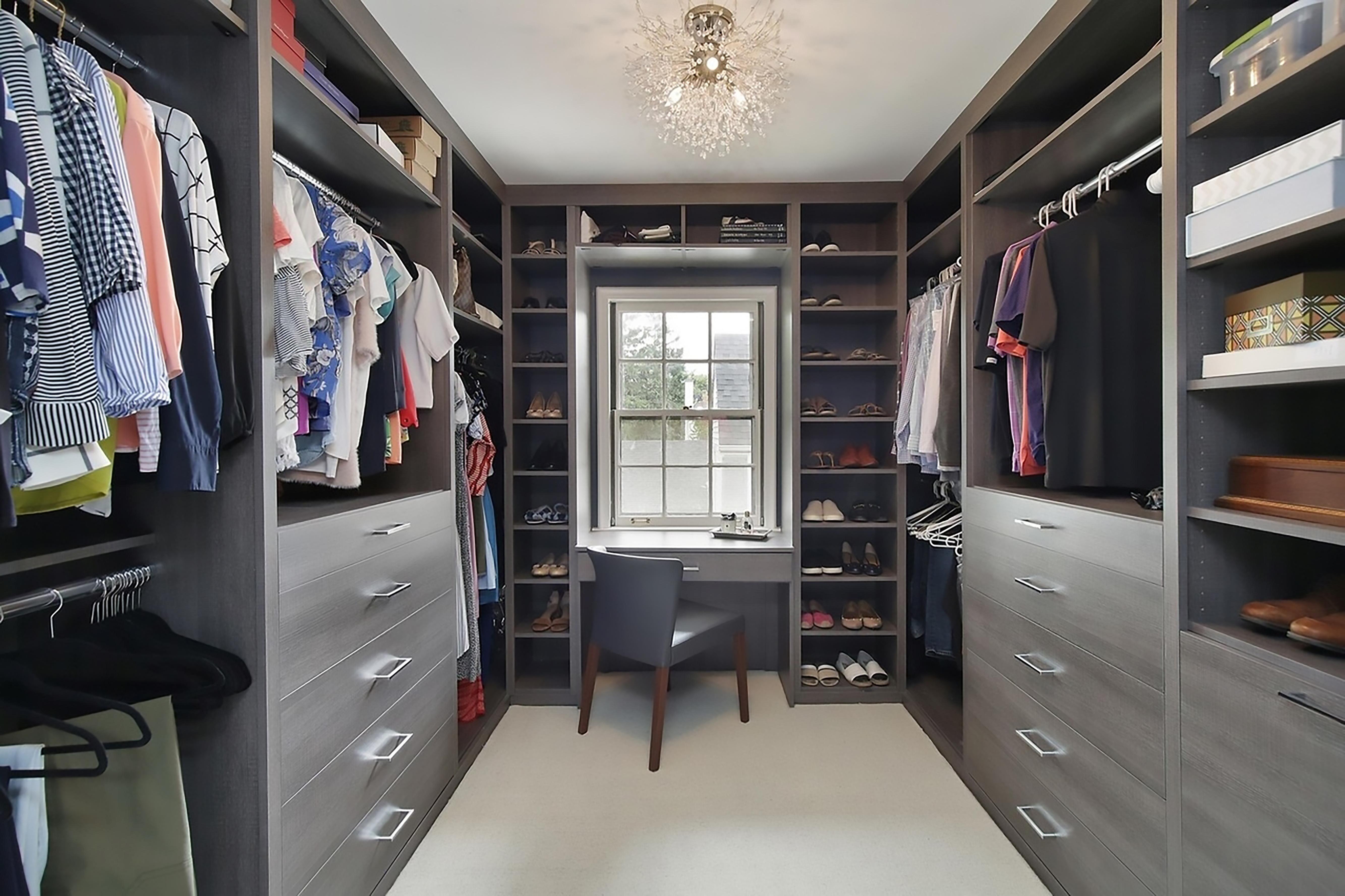
Running toward a fire to save a home or a life takes guts, resourcefulness, training; starting a business takes intestinal fortitude as well. Especially when your first attempt at the business — before you knew it was a business or even an industry — was building a gift for your wife.
That was the case with Tim Fowler, firefighter with the Chicago Fire Department, and owner and founder of Chicagoland Custom Closets in Skokie, Illinois, just outside of Chicago.
Tim and his wife Jill, both life-long Chicagoans, got married in 2000. He hadn’t yet started working with the CFD, that would come shortly after 9/11, but he wanted to do something special for her.
“It was her birthday, and I wanted to do a nice closet for her,” Fowler said in his small office. It is a cramped space. Noise can be heard from the production area where the company’s Anderson America CNC router is machining panel after panel, a VTM VantEdge bander is applying edgeband, and workers perform the multitude of tasks that need to be done that day for installation the next day. They’ve been at it since 5 a.m. getting everything ready for the installers, who arrive around 6:30 a.m. and are eager to start the day.
“I didn’t even know there was a closet industry or companies that did this, so I went to Home Depot and bought a bunch of stuff and, while she was at work one day, built her closet. She just thought it was the greatest thing in the world.”
“Every time her girlfriends saw it, the response was always, ‘this is amazing.’”
Genesis of an idea
Responses to his simple wire frame and precut melamine board closet were eye-opening. “It dawned on me that maybe we got something here, that this could be something.”
Fowler explored the closet industry, taking a side job as an apprentice installer at a nearby closet company. He began learning the closet business on his off hours from the fire department.
When he and his wife took the plunge and opened Chicagoland Custom Closets, it was at a pretty exciting time in their marriage. Jill was pregnant with their first child, Jack, who is now 19, going on 20-years old.
Fowler began the business in a garage and was a one-man band, doing sales, design, and installation. Eventually, that small business would hire workers, expand into a manufacturing facility and evolve to the point that it now manufactures all of the closet components and cabinetry that appears in every room in a home. Soon, Chicagoland Custom Closets will leave its current cramped space and expand into a new facility that will triple the production space and leave plenty of square feet for a showroom.
Evolving
The growth of the company has been deliberate. “Everything has been very gradual with this company,” Fowler said. “When we started, we worked out of a garage and then it was ‘okay, hire an employee, get a van, move to a little storefront for a showroom.’”
At this point, Fowler was outsourcing the component manufacturing. When his supplier expanded its own business with new equipment, the learning curve caused orders to be delayed. Fowler decided his company needed to take another step forward.
Initially, Fowler bought used equipment that met his production needs, but soon customer demand required more. The next step was a giant leap into CNC machining with the purchase of an Anderson America Selexx 5x10 CNC router.
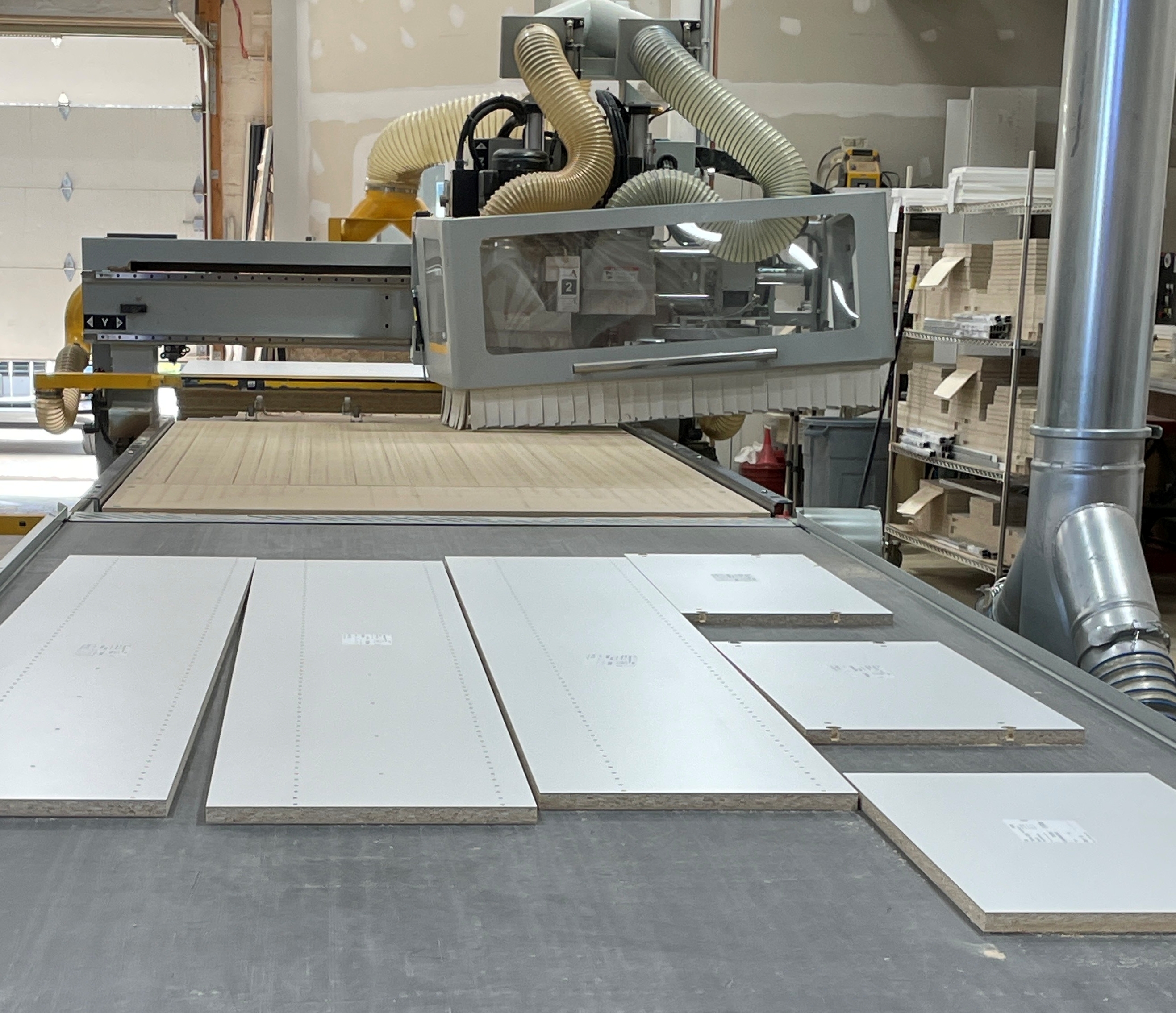
CNC automation has benefited the company by improving efficiency, reducing errors, and enabling better production capabilities. It allows for more precise and consistent manufacturing of parts, which is crucial given the complexity and volume of components involved in closet production. This automation supports scaling up production and maintaining high-quality standards as the business grows.
Fowler hired two workers who were knowledgeable about the closet industry and Cabinet Vision Software from Hexagon.
“Before that, I was literally doing manual cut sheets,” he said. “I would write out the cut sheet by hand with the designs and hand it to my guy in the shop who would start cutting. Now, we have automated the process, and our CAD guys send them right to the router and that means a lot less mistakes and a lot more capability.”
Enhanced capabilities have allowed the company to quickly and efficiently tackle myriad jobs, from $10 million homes to unique spaces in the home. Many of these projects are designed to meet the unique vision of the client.
Firefighting and business acumen
“We are incorporating into a closet all these beautiful things that would be high-end in any kitchen. The advancements of offerings in the closet industry, and the expectations from our customers, are very high.”
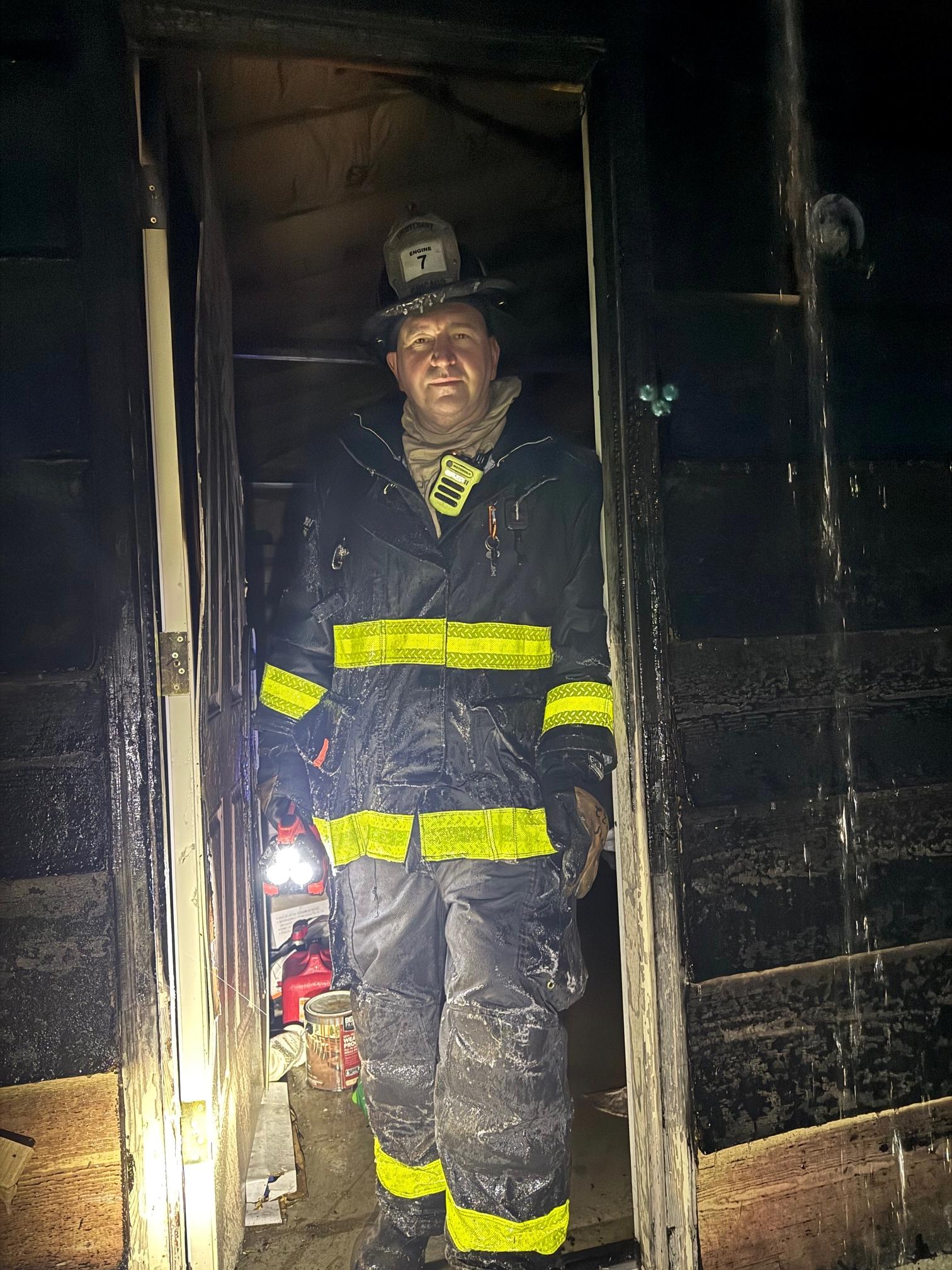
Fowler said his firefighting experience influences his closet business in several ways. His knowledge of building construction, for instance, helps him understand how to design closets based on construction variations.
“Understanding building construction is important in the fire service, and it’s definitely important in the closet world,” he said. “For instance, a high-rise with metal studs, might not have the ability to securely anchor that unit to the wall.”
Additionally, the composure and problem-solving skills developed in firefighting assist him in managing the many unexpected issues that arise in the closet business, such as scheduling challenges or on-site problems.
“That goes back to the question about being a firefighter and owning a closets business,” he said. “Taking risks is just part of who I am. I could have kept outsourcing manufacturing. I could stay in this space, but to grow requires risks. There have been times when I’ve been in a jam in a fire, and have relied on my training and experience. It’s the same for growing my business.”




Have something to say? Share your thoughts with us in the comments below.