

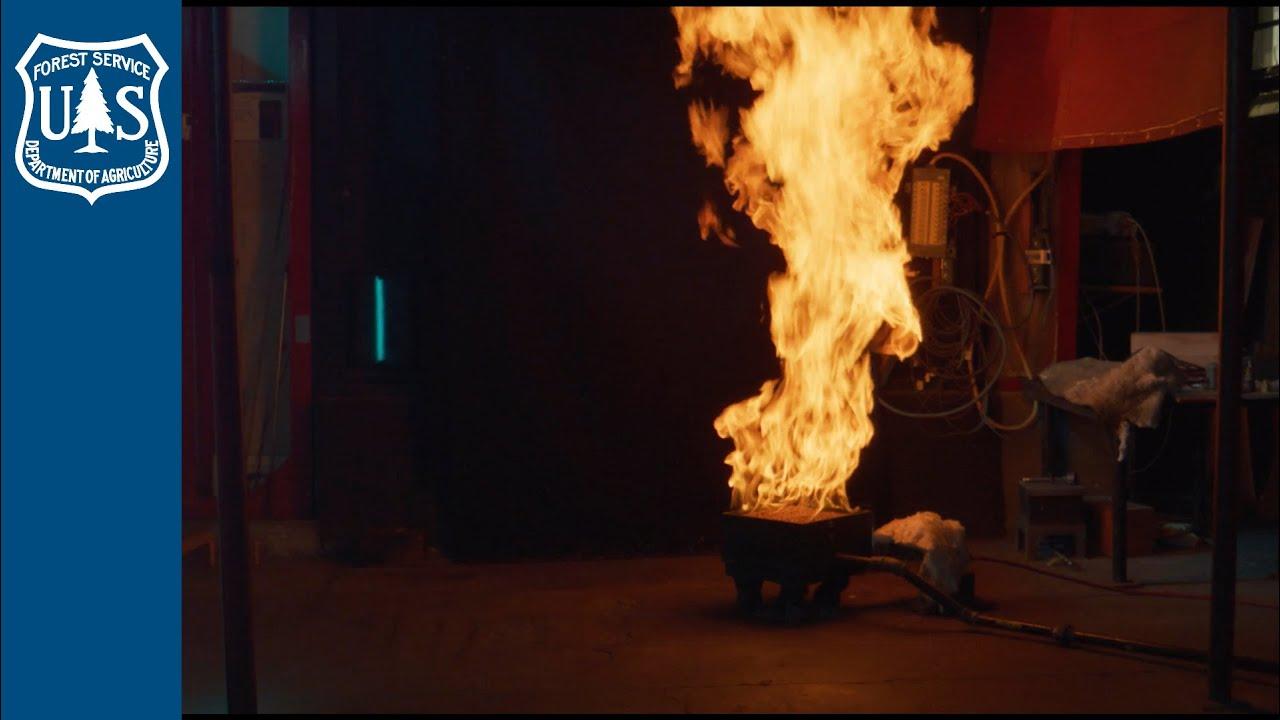
Fire testing is expensive and complex, which is why industry leaders look to the Forest Service for expertise. The Fire Lab at the USDA Forest Service's Forest Products Laboratory conducts research that influences building codes and furthers fire science knowledge to ensure the safety of buildings that include wood components.
“The work we do here at the Forest Products Laboratory is really important for everybody’s everyday lives in terms of the buildings we live in, work in, and play in,” said Forest Products Laboratory materials research engineer Laura Hasburgh.
Wood may be present in the structural part of the building, such as the wall or ceiling framing. Wood is also used for interior finishes, like trim, doors, furniture and cabinetry. That’s why the safety and durability of wood products are important for everyone—from the businesses making the products to the people using them.
However, testing wood materials for durability and resistance to moisture, weight, and fire is largely unaffordable for industry and universities.
The Forest Service's Forest Products Laboratory offers a solution where government scientists, universities, technicians, and partners collaborate to affordably test new and existing wood products for safer, stronger wood-based buildings. And the findings are shared with everyone.


Have something to say? Share your thoughts with us in the comments below.