

We talk a lot about the “woodworking industry,” but that makes it sound like some homogenous, mechanized behemoth. In reality, woodworking spans many industries, trades, and markets, and that was certainly on display when the Wood Component Manufacturers Association came to Maine for two days of shop tours.
Stops on the first day featured an internationally renowned maker of fine furniture, a boat building operation, and even a company that makes wooden bearings. Here are some snapshots and takeaways from the tours.
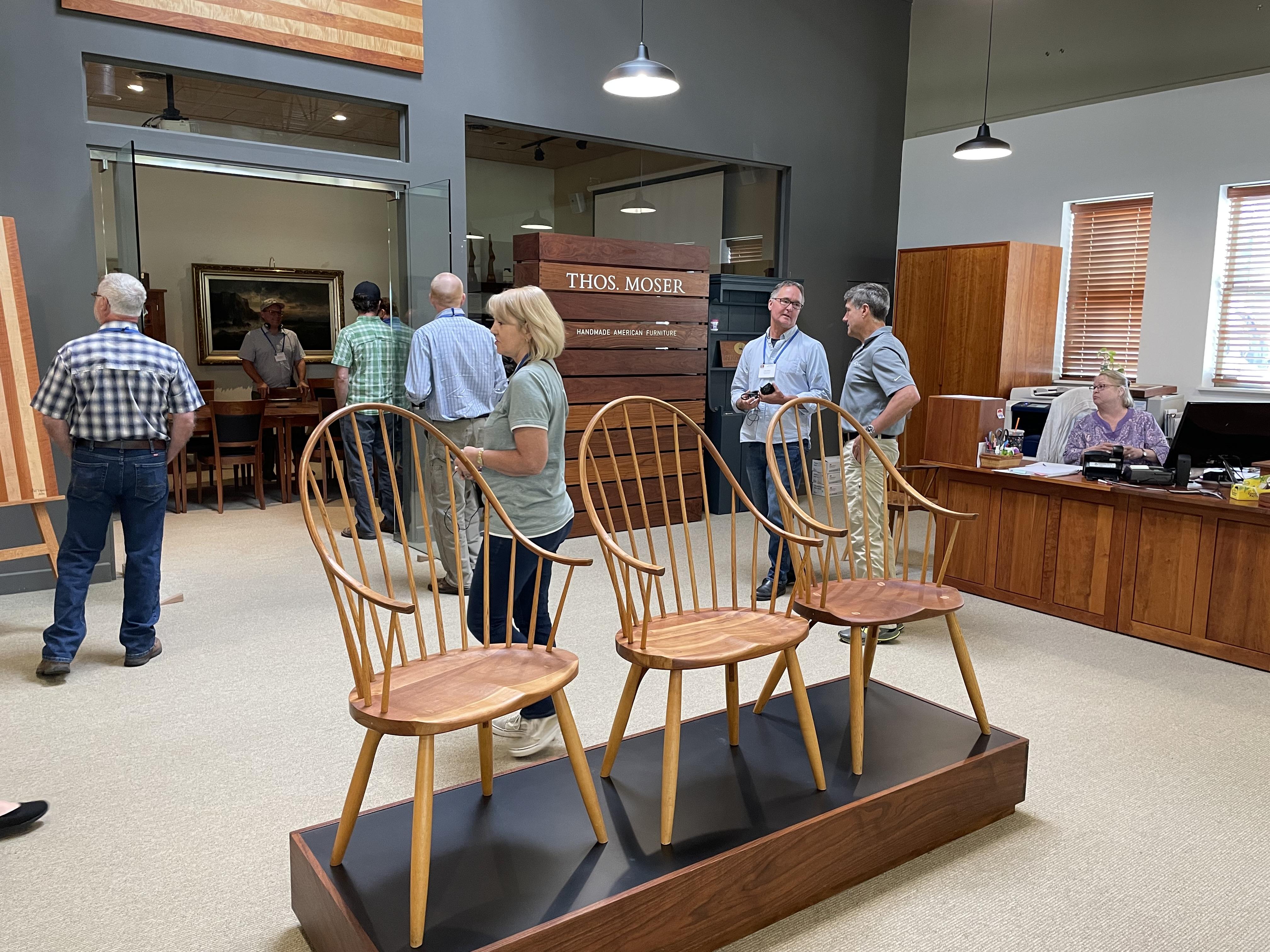
Thos. Moser Furniture
Located in Auburn, Maine, Thos. Moser Furniture produces a wide range of what the company describes as “handmade American furniture.” Designs range from classic Shaker-inspired pieces to original contemporary furniture featuring the finest in materials from domestic hardwoods to Italian leather.
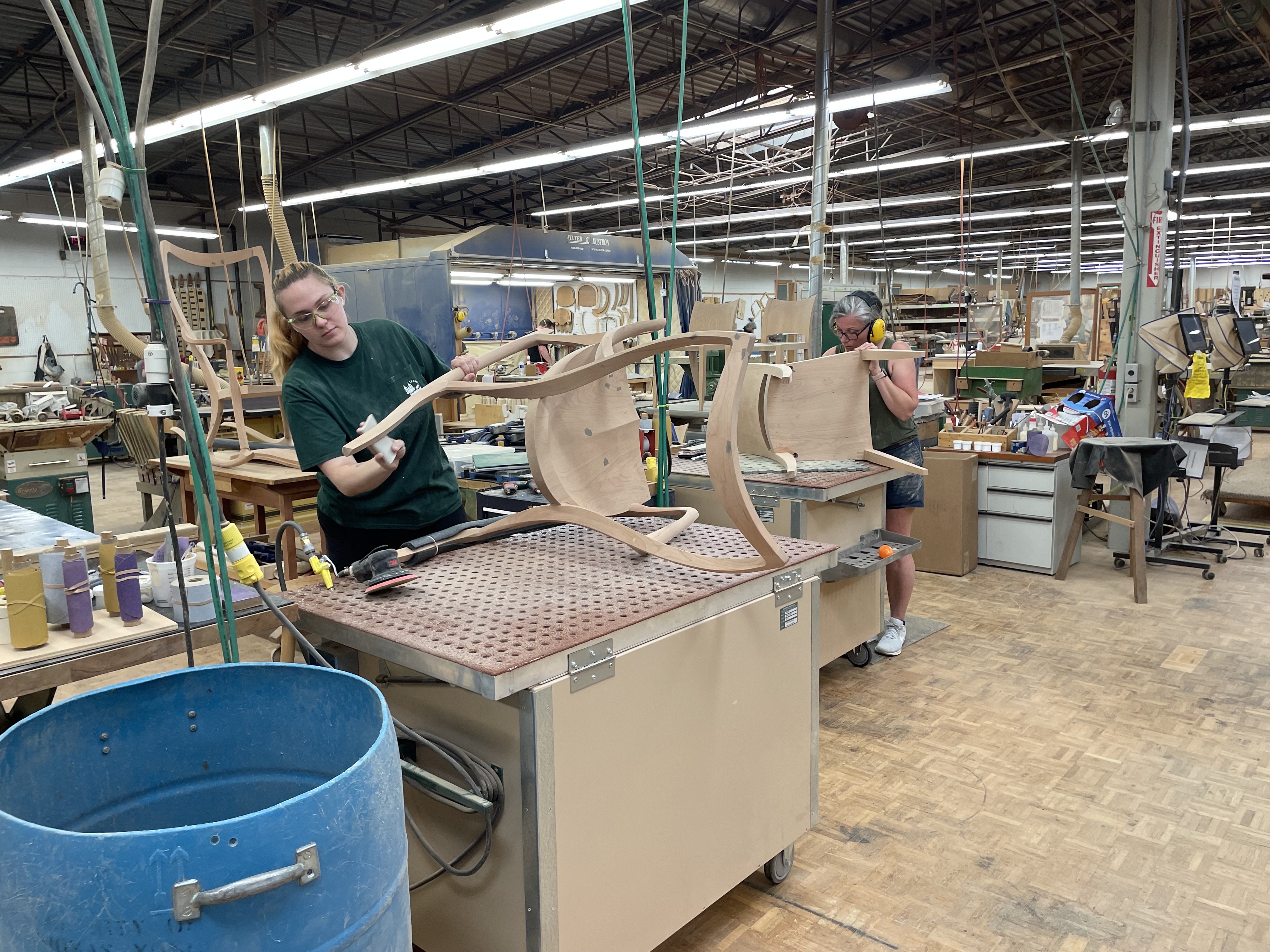
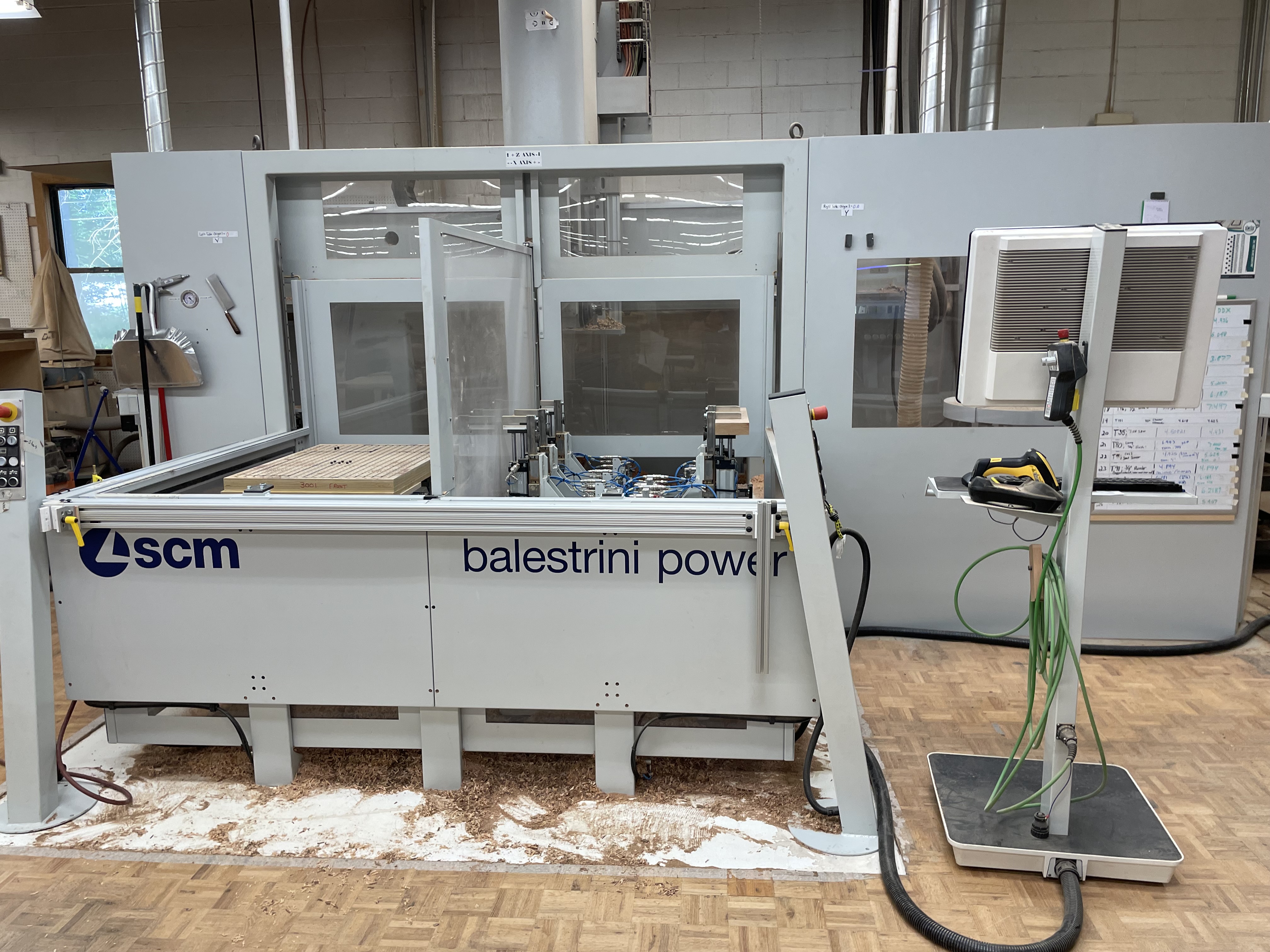
While it is true that all the Moser products involve a great deal of craftsmanship and hand work, don’t get the idea that the shop is lacking in technology. In the front office, engineers work with 3D modeling programs to develop the designs. Computer stations throughout the plant track progress on every piece in process in real time. Skilled men and women practice not only a high level of hand craftsmanship, but also, they incorporate CNC automation with 3- and 5-axis CNC machines seamlessly integrated into the production.
Using mostly responsibly harvested domestic premium grade cherry and walnut, the wood is carefully selected and matched for each project, Thos. Moser craftsmen take individual responsibility for each piece, signing it upon completion.
Tom Moser founded the company in 1972, leaving his position as a college professor to grow the budding custom furniture business. Today, the company has some 70 employees in 80,000 square feet. While Moser himself has stepped away from most of the day-to-day operation of the company, he still maintains a shop at the plant and visits regularly to work on prototypes or craft new projects.
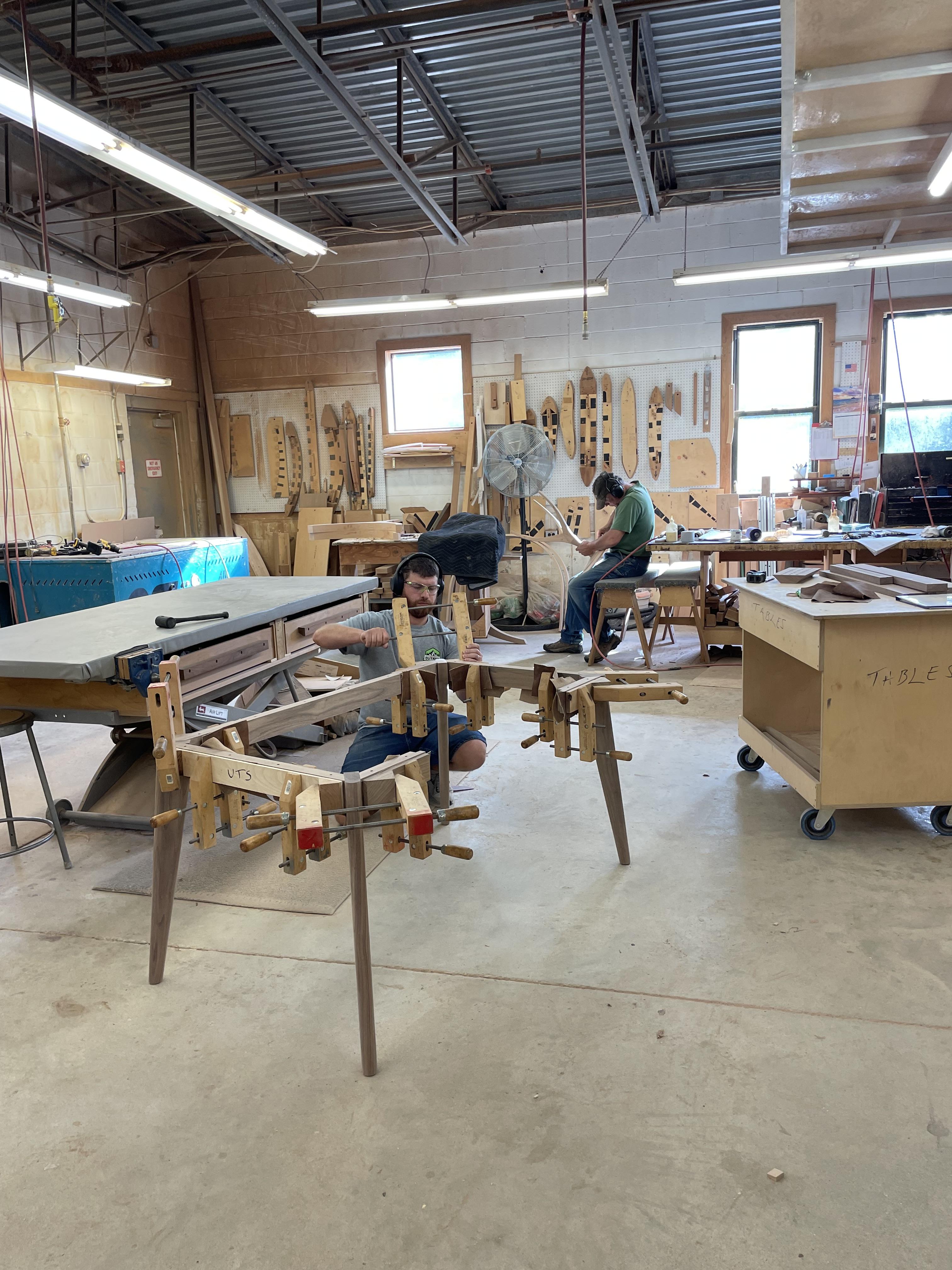
There are 400 active SKUs in the Moser catalog, but there is no inventory. Everything is made to order. Rick Foss, director of manufacturing, said the company currently has an average wait time of six months from order to shipping. During COVID, he said, that extended to 12 months with a big increase in orders. Today, the goal is to get the wait down to four months.
Production is split into work centers, each with their own equipment. One work center handles case goods, another tables, and the third chairs. Still, individual craftsmen shepherd each piece through the plant. The company uses Epicor software to track all production.
“We modified (the software) to focus on people not equipment,” said Foss. “Everybody is a quality inspector.”
An SCM Balestrini 5-axis CNC router is the newest piece of equipment in the plant. It has two stations, and Moser craftsmen use custom vacuum fixturing to hold parts for machining. Many Moser designs feature elegant curves and bent laminations. A radio frequency glue press takes 30 seconds to cure the adhesive.
Despite the emphasis on individual craftsmanship, the company practices its own version of lean manufacturing and flow production. Craftsmen are also encouraged to work on their own projects in the shop at designated times. Foss said the company has had the best luck training less experienced workers to be part of the team.
Having marked its 50th year in 2022, Thos. Moser has become a brand respected for craftsmanship, business acumen, and design sensibilities. Its furniture can be found in seating for popes and presidents, as well as in fine homes across the country.
Lyman-Morse Boatbuilding
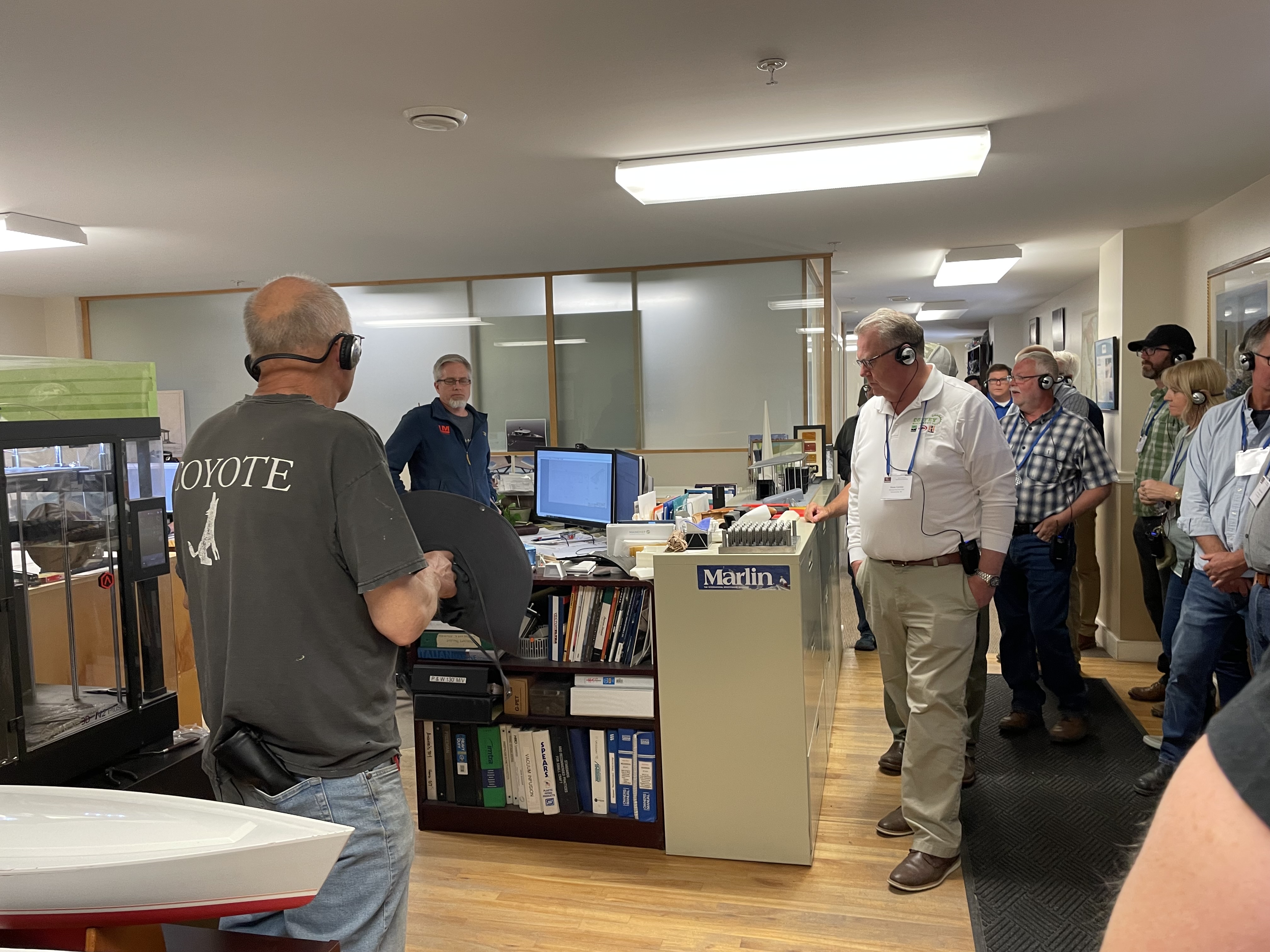
Maine is known for its stunning coastline and long maritime history (lobster, anyone?), so it’s no surprise that a boatbuilding company was on the Maine shop tour for the WCMA, visiting Lyman-Morse Boatbuilding in Thomaston, Maine, a company that has been building and repairing yachts since 1978.
While the tour focused on woodworking, Lyman-Morse showed off production in not only wooden boats but also expert work in composite materials and metal. WCMA members admired intricate wooden workmanship as craftsmen assembled a wooden hull upside down in one part of the plant and were doing final fitting on an aluminum-hulled boat elsewhere.
Sophisticated equipment fabricates complex carbon fiber and fiberglass hulls that have been designed stem to stern in house in Lyman-Morse’s high-tech engineering department. In addition to computer drawing software, such as Rhino, Solidworks, and AutoCAD, the engineering department has its own 3D printer to create patterns and prototypes. Very few parts on any boat have straight lines or 90-degree angles, so modern computer-aided design is a natural here.
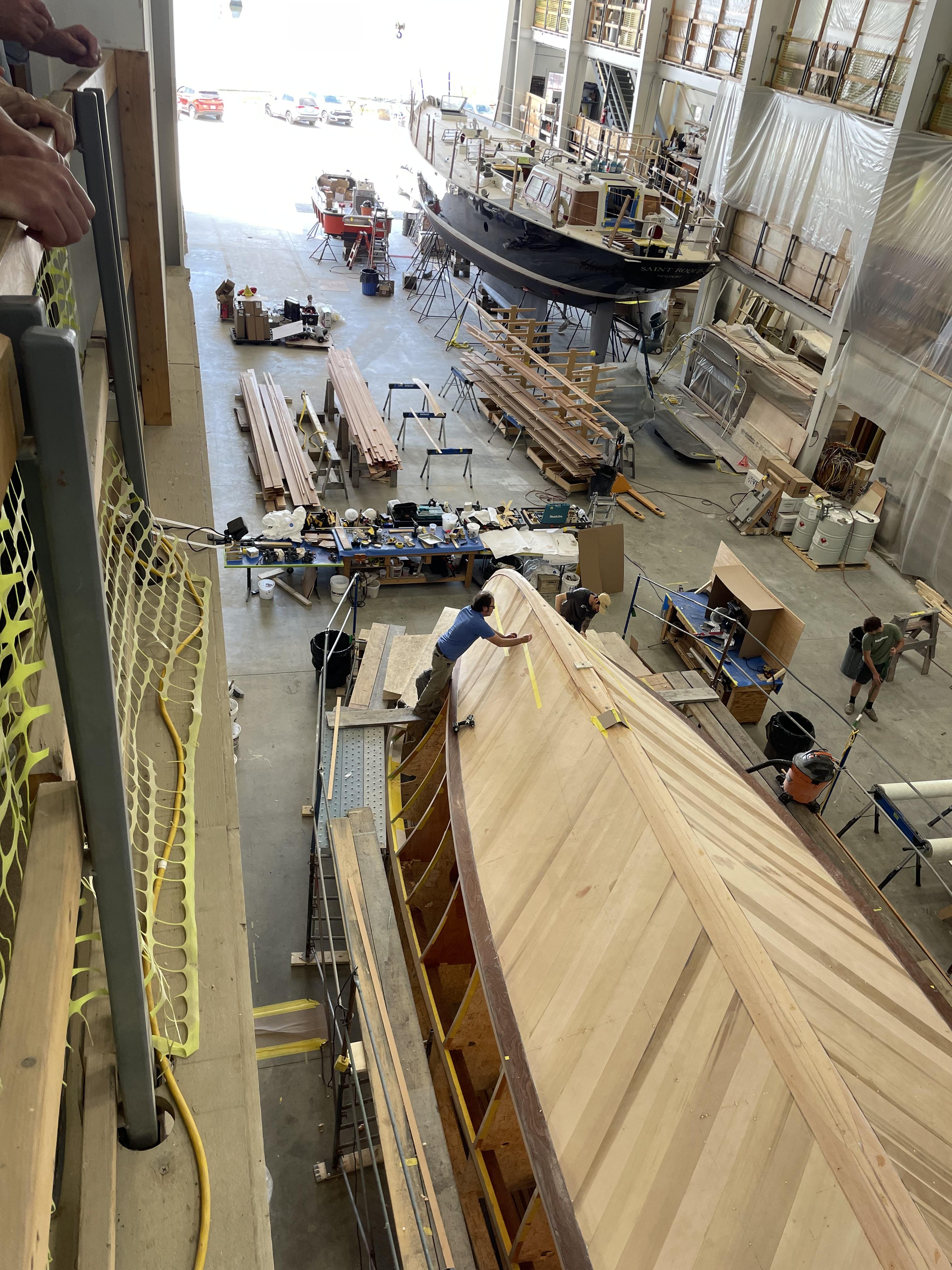
Lyman-Morse comprises some eight buildings in a sprawling facility on the waterfront. One building houses multiple five-axis CNC machines that use files from the engineering department to machine parts for wood, fiberglass, metal, and composite production. Sophisticated equipment is used to spray, form, and cure materials to create all manner of nautical craft.
“Supported by on-site fabrication and advanced composites divisions and the latest technology, the Lyman-Morse crew can handle any project, whether it’s building a carbon-fiber ocean racer, refitting a luxurious motor yacht, or adding a detail to your high-end home,” according to the company’s website.
So respected are Lyman-Morse’s technological capabilities that the company has expanded beyond boat building to a wide variety of industries, including composites and plastics, precision metal fabrication, system integration, rapid prototyping, and small-run manufacturing process testing.
Walking a catwalk in one of the multistory buildings at Lyman-Morse, WCMA tour participants were awed by the scope and scale of the operation and the attention to detail, especially.
Woodex
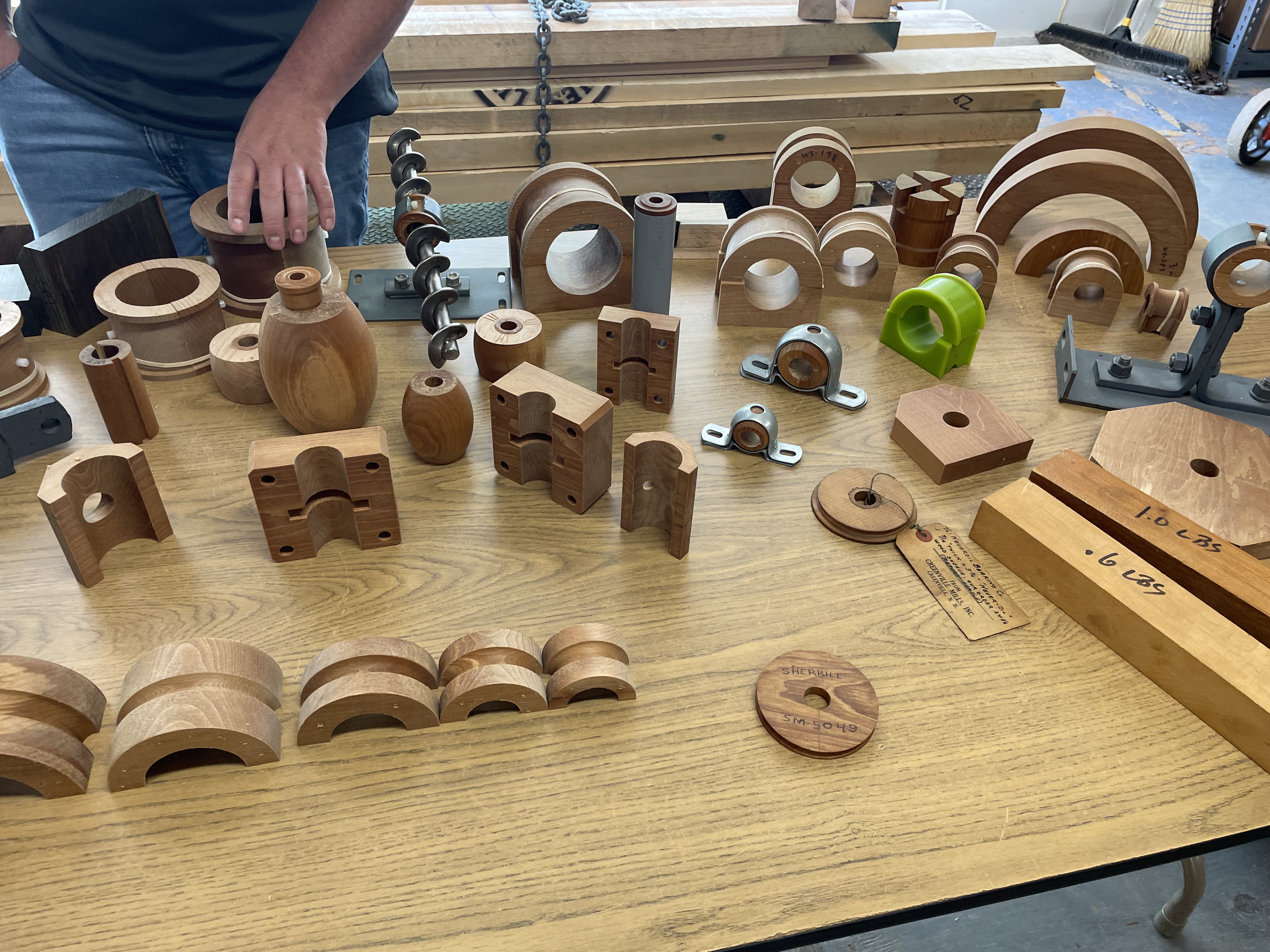
Perhaps the most remarkable of stops on the WCMA tour was a company called Woodex located in Georgetown, Maine, an island on Maine’s scenic coast. The headline on the Woodex website says it all: “Wooden bearings? Come on! No foolin’, wood.”
Since 1905, Woodex has produced bearing material from rock maple impregnated with petrolatum wax.
“This highly-durable material is used extensively in wet and dry screw and roll conveying machinery, frequently in agricultural service,” according to the company. “When the inevitable sand or grit invades the journal interface, a wood bearing compresses, absorbing the pollutant into its surface, and covering it with a film of oil. The substance which typically destroys shafts becomes a benign part of the bearing!”
Wood bearings still account for up to 20% of the company’s output, but in the 1980s the company started making mechanical seals under the brand name of MECO Shaft Seals. Their specialty is split, interlocking seals that can be replaced without dismantling the shaft they seal. These kinds of seals are often used in large screw conveyors used by food processing factories.
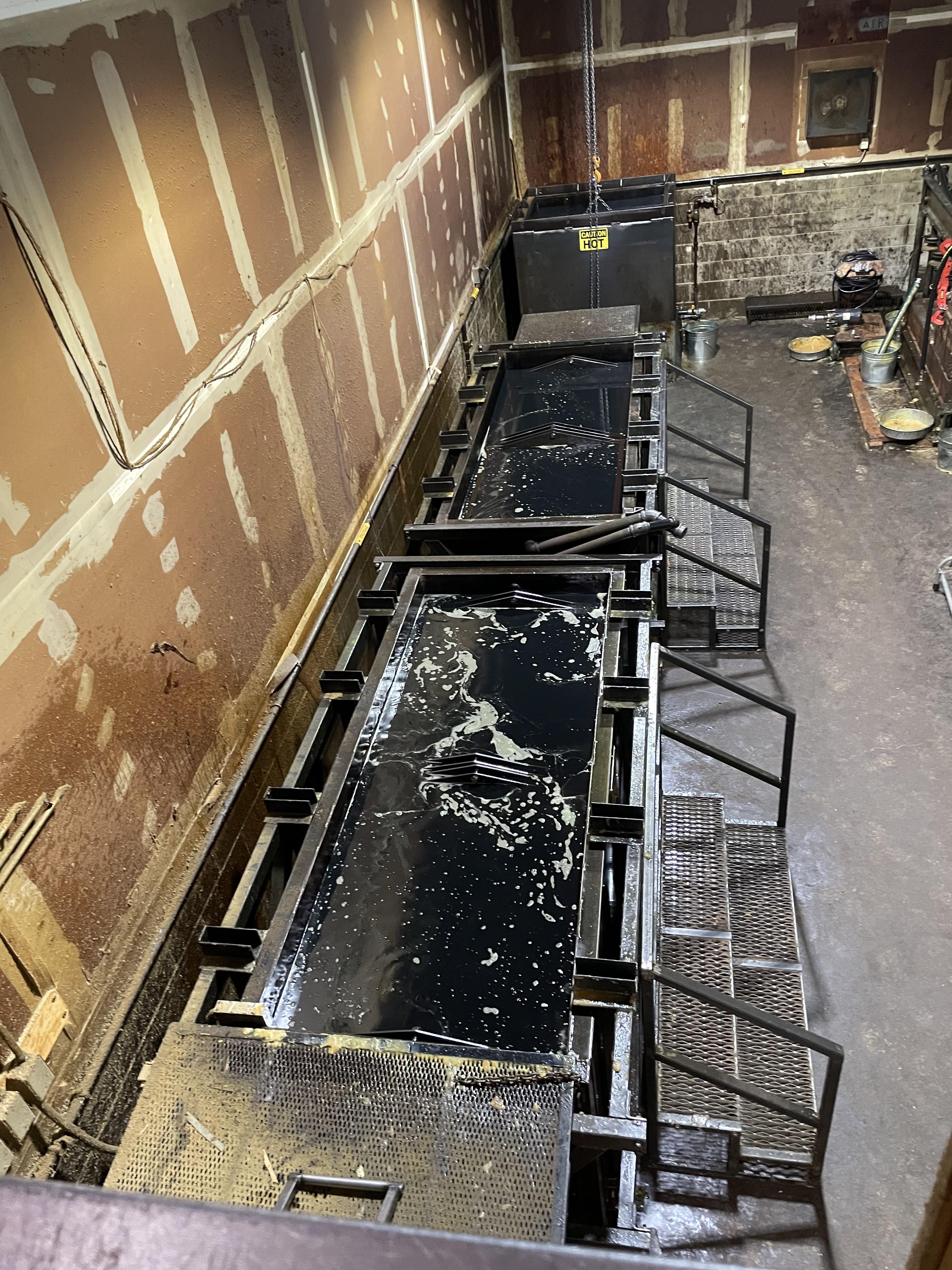
Getting back to the wood bearings, Somchai Taesuwan, general manager, said the company takes hard maple in 6/4 to 12/4 blocks, using only the sap wood and soaking it in wax at 300 degrees. He said they can use only sapwood because heartwood will not absorb the wax effectively. Endgrain in the bearings is oriented toward the shaft, exposing the wax-impregnated pores of the wood to the shaft.
While wood bearings might seem like antiquated technology, the equipment used by Woodex to make wood bearings and mechanical seals is mostly high tech. About 25 employees working in a 17,000-square-foot facility use a combination of conventional machine tools and modern CNC machines to precision cut wood, polymers, and metal for the parts the company makes. Taesuwan also noted the company is now employee owned in an Employee Stock Ownership program.
WCMA hosts regional shop tours around the country cultivating a member networking through exposure to innovations, industry promotion, trends and information, and peer learning in support of the North American Wood Products Industry. For more information, visit wcma.com.




Have something to say? Share your thoughts with us in the comments below.