

Wright Architectural Millwork has a goal in mind. “To be the number one commercial millwork company in New England,” said Jon Buell, company president and CEO.
And, the already well-known, highly respected, award-winning manufacturer of high-end commercial architectural millwork has made numerous strides to reach that lofty goal.
This included sophisticated equipment for more automation. “Not to eliminate people but to better utilize them.”
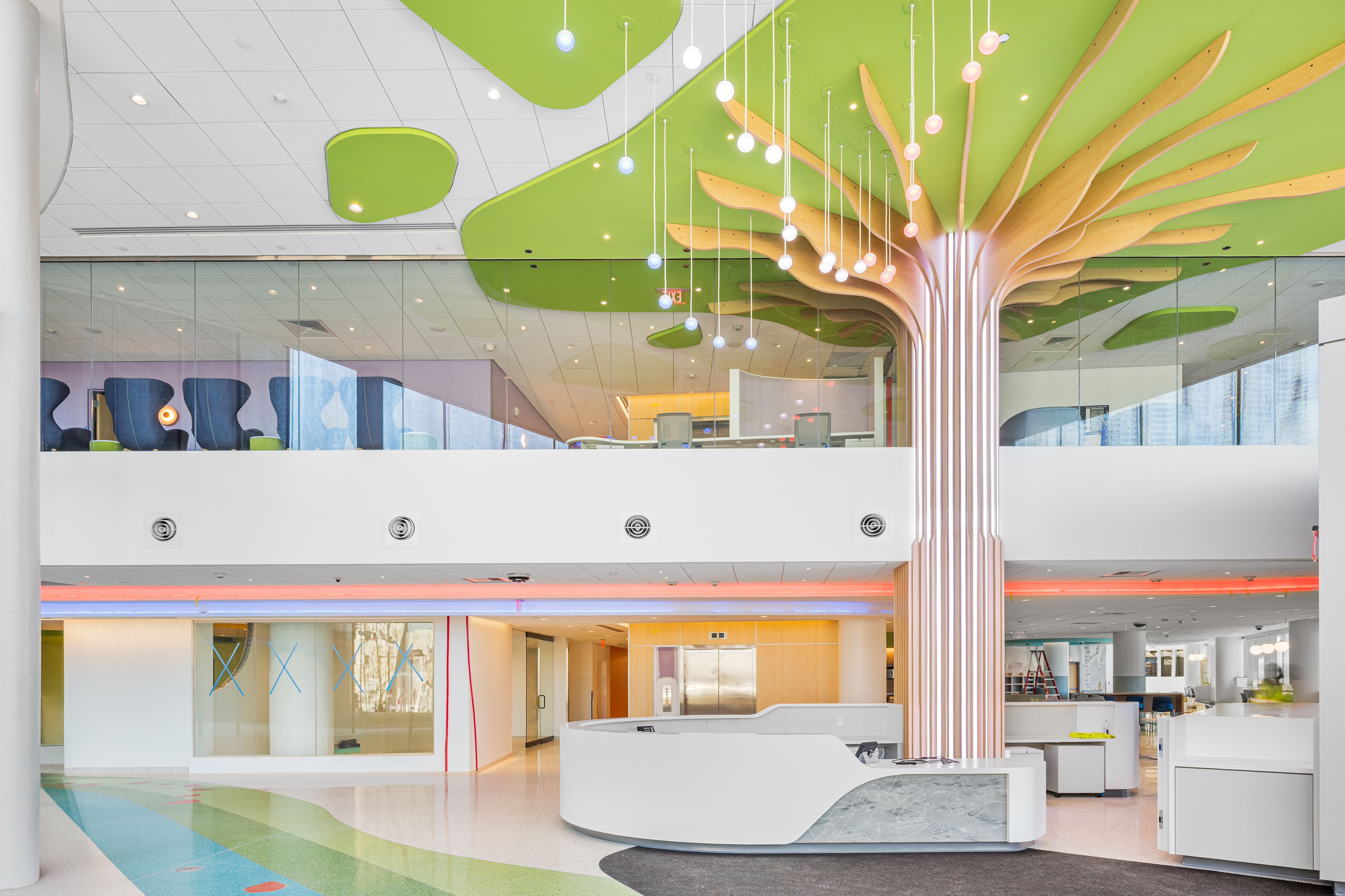
The Massachusetts-based company began in 1974 as a small regional shop serving a local general contractor. Today, Wright Architectural Millwork works with some of the region’s most respected architects, builders, and institutions on massively spectacular projects and has fully blended new technology with traditional woodworking skills.
Over the years, the company has evolved in many ways. Ownership, for example, has changed from founders Len Chandler and Jonathan Wright to Walter Price and Michael Buell, partners who purchased the company from Wright in 1993, and finally to becoming a 100 percent employee-owned company in 2018. Today, the management team includes Jon Buell and his brother Chris Buell, who serves as the company COO, both sons of Michael Buell.
As Price and Buell were transitioning out of the business, Wright Architectural began taking on bigger, more monumental work. The increased level of work, both in terms of project size and number of clients, required them to physically expand the facilities — which initially proved to be insufficient — and to integrate CAD-CAM and ERP systems from Innergy to enhance data tracking and streamline production. And while the company had invested in CNC machinery previously, more was needed. Jon Buell also had his sights on automated material handling and robotic technology.
Scaling up production
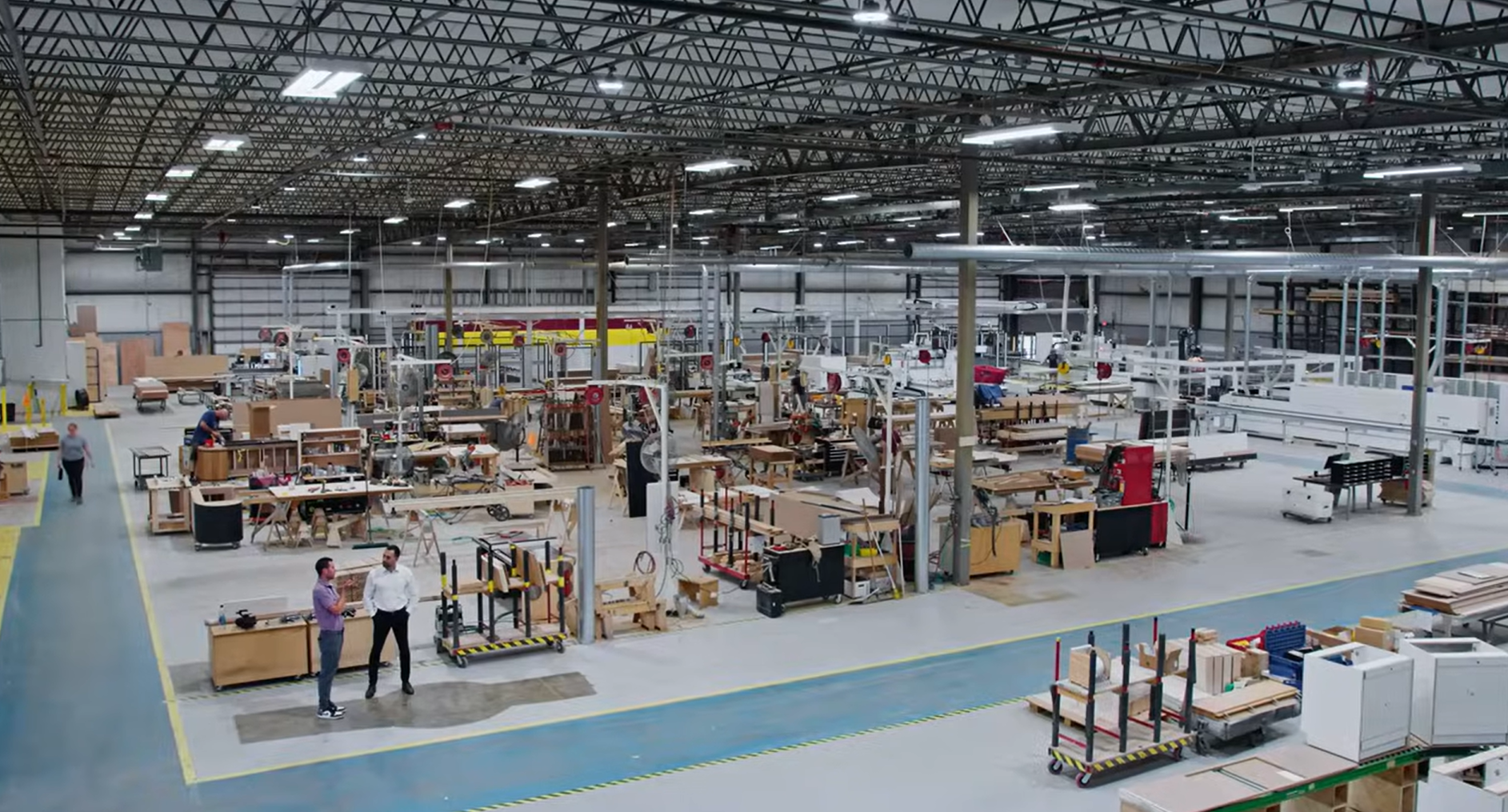
Wright Architectural’s previous plant in Northampton was about 36,000 square feet, but they outgrew that facility and built an addition that doubled the company’s overall size. They soon outgrew that facility and leased a 25,000-square-foot warehouse bringing total square footage to nearly 100,000 square feet.
“We took all of our raw goods and finished goods and put them in the new warehouse and basically claimed the space for production. But, a few years go by, and all of a sudden, we’re tripping over ourselves again,” Jon Buell said.
That was about to change with one phone call. “I got a call from our union representative who told us that a local company was closing a nearby factory. He asked if we were looking to hire, and I said, ‘absolutely, we’d be happy to bring people in for interviews.’”
While the 30 or so union members might have been important resources, with skilled labor being hard to find, the call also triggered another idea.
“I wanted that building,” he said. “I’d wanted to expand, but that was more of a five-year plan. This was a once-in-a-lifetime opportunity that I couldn’t pass up.”
The long-term plan to move everything under one roof, turned into a successful six-month scramble to get the financing to acquire a bigger facility that allowed the company to bring everything under one roof.
Realizing a vision
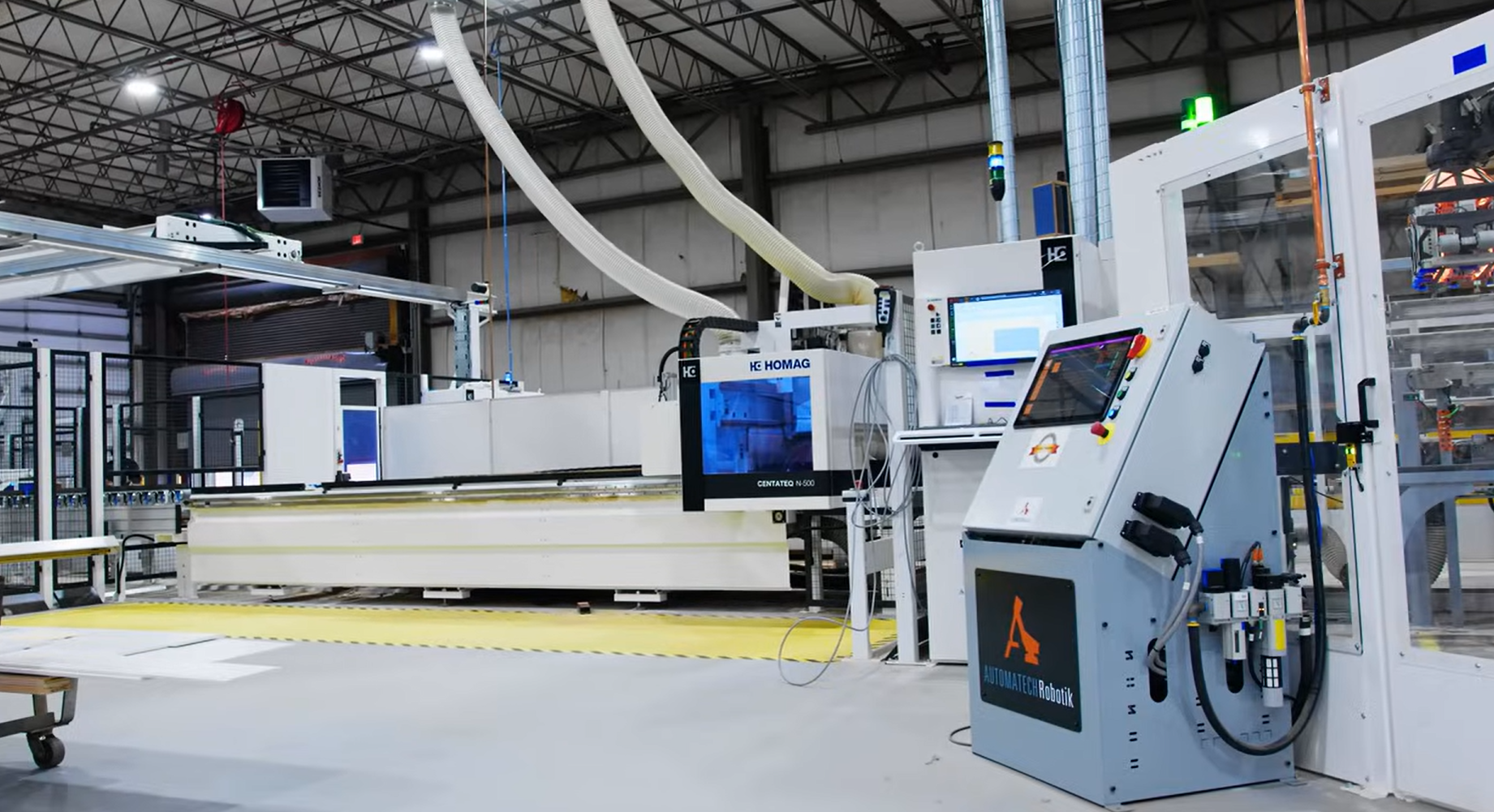
With all the extra space, the new site would also help Buell realize his vision of enhanced production. When he was vetting machinery vendors, he wanted to also upgrade technologies such as the company’s CNC routers — which he did by acquiring multiple Homag Centateq N-500 CNC routers from Stiles Machinery.
“We were able to purchase all new machinery from Stiles including multiple CNC routers, panel saws, edgebanders, the drilling and doweling machine, all that type of equipment for the new factory,” Buell said. But, there was one more purchase he wanted to make, assuming he could find it.
Buell wanted something new, something different. This was realized when Stiles introduced him to a Canadian-made piece of robotic equipment that satisfied his material handling needs, his increased production output goals, and his desire for something new.
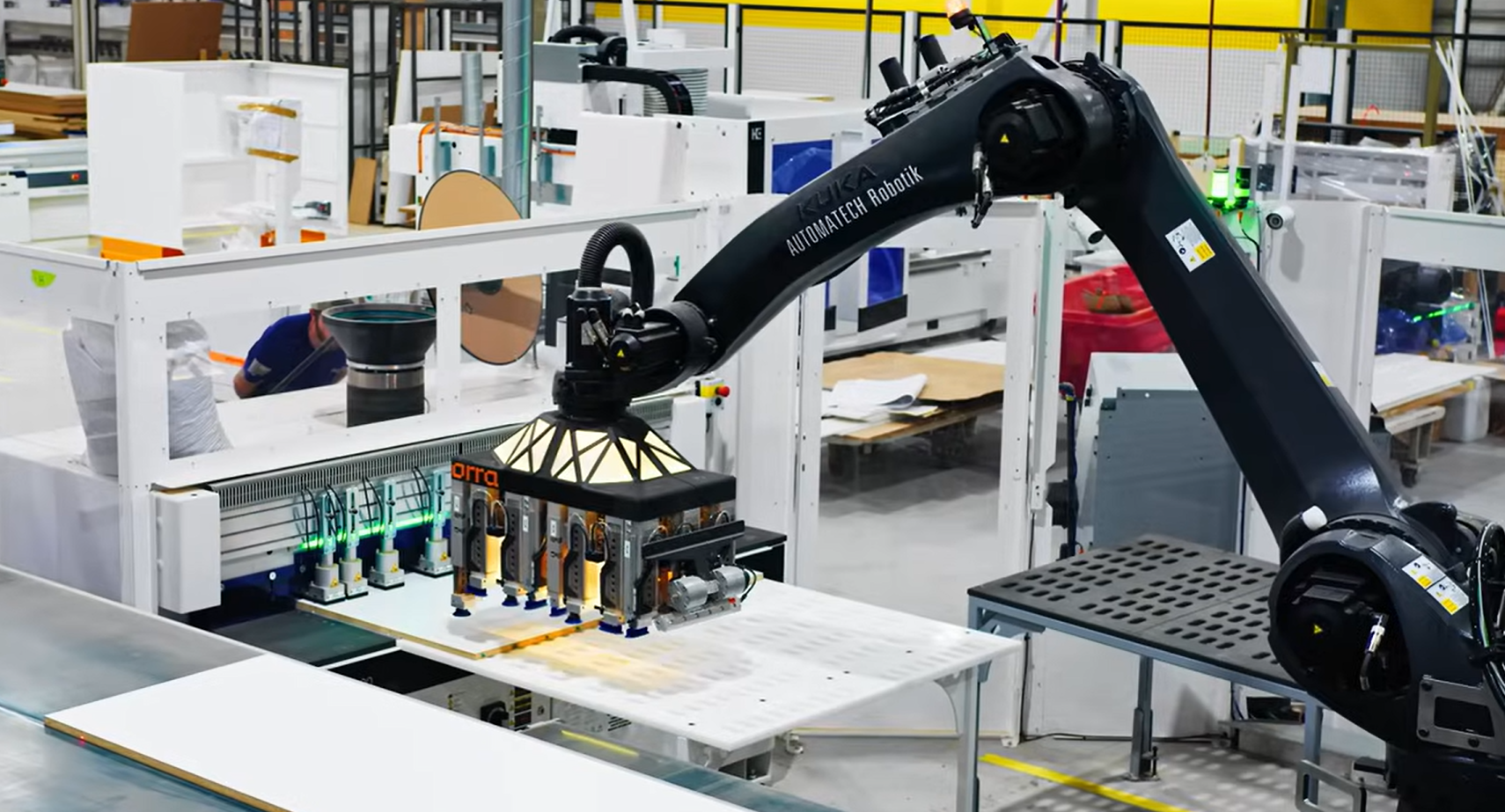
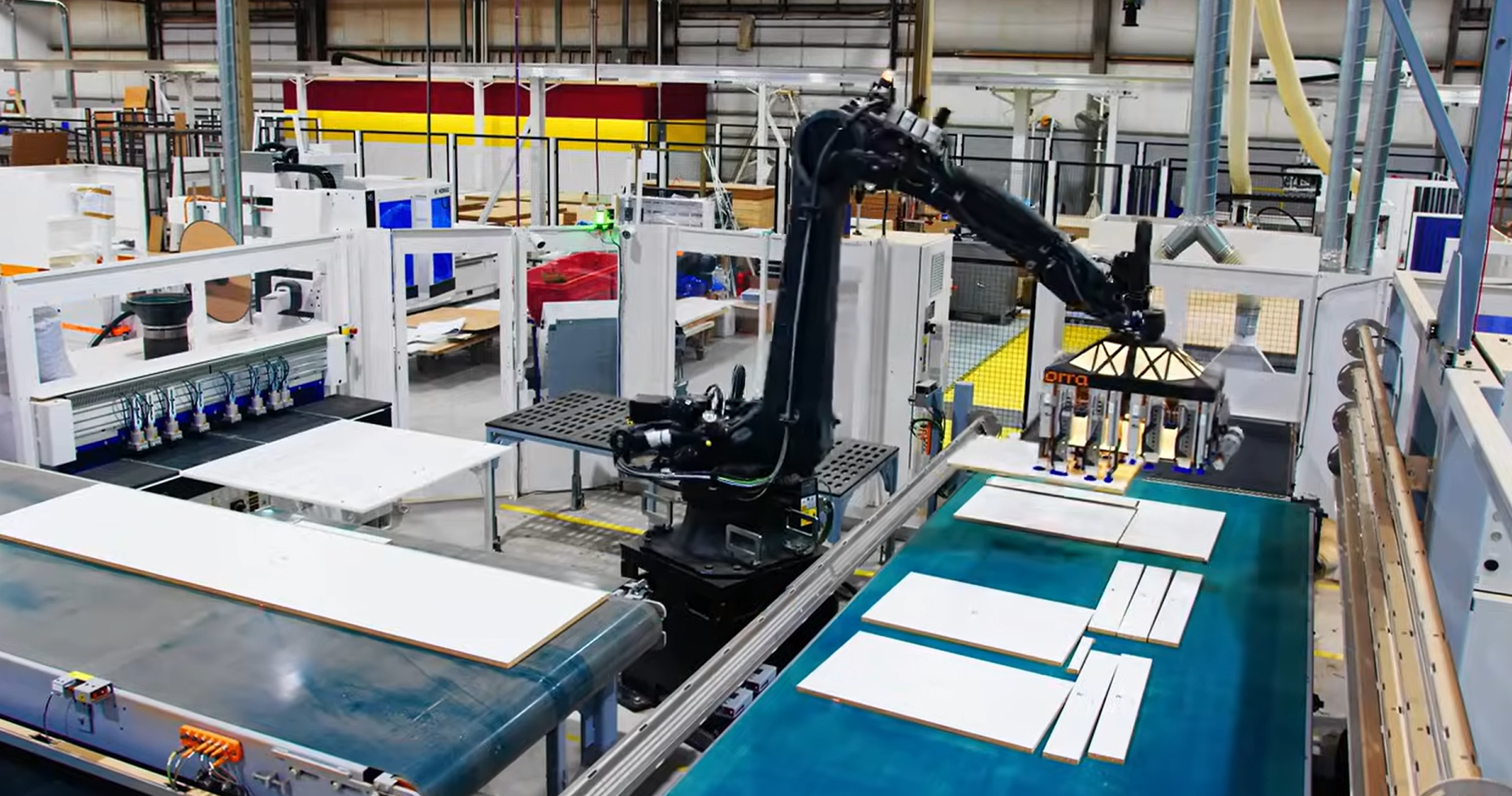
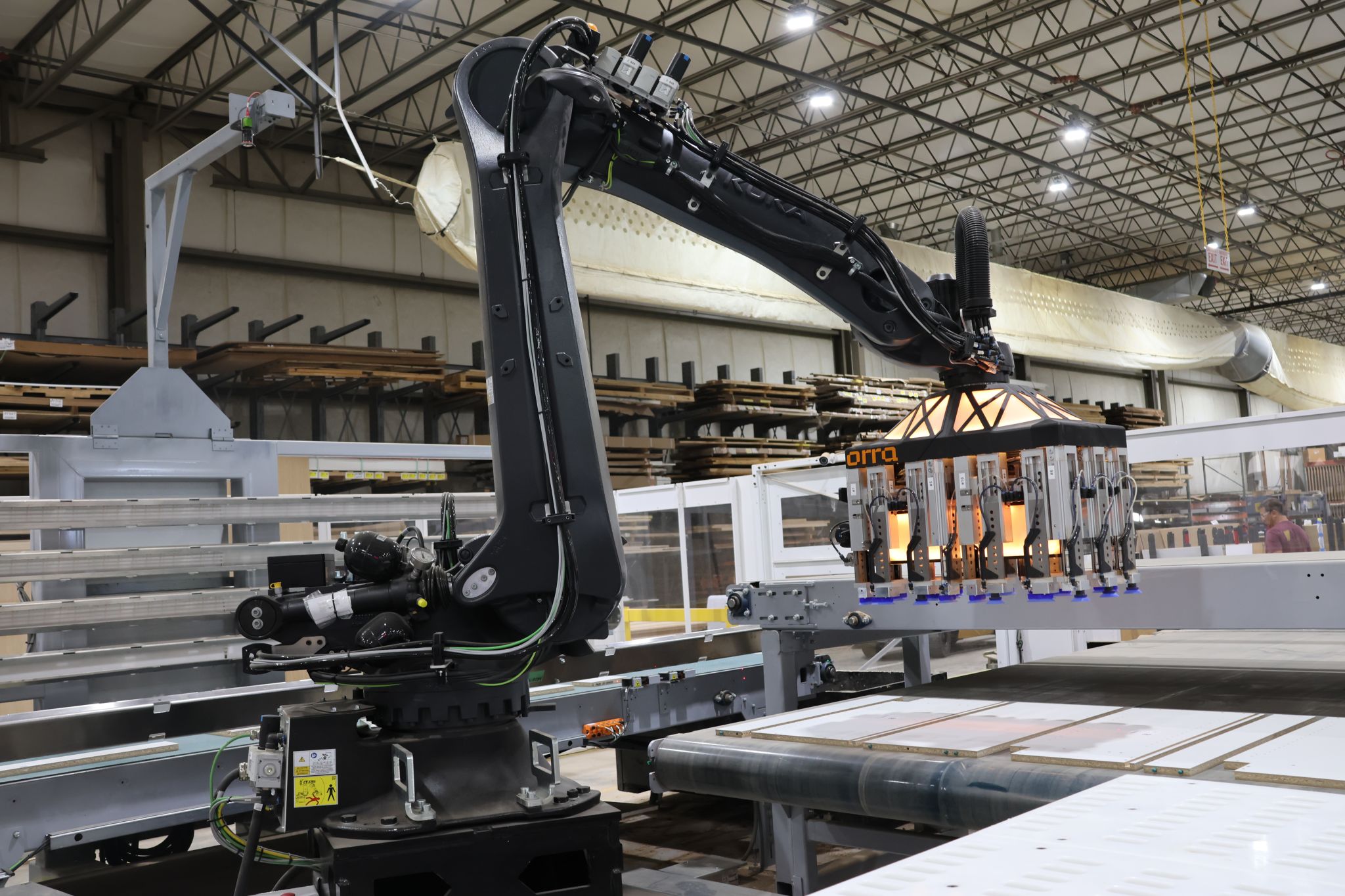
That was the ORRA robotic system from Automatech Robotik. Driven by a Kuka robot and powered by evolving Automatech Robotik software, the patent-pending, AI-driven, modular robotic system features an advanced vision system for high-speed and intelligent picking and sorting of components. It is particularly adept at handling complex, non-rectangular shapes.
Among the things that the robot does at Wright Architectural is read and validate the CNC program, transfer parts, pick-up as many as four components simultaneously, and automatically load the parts into a new dowel inserter.
“With the software, different specifications can be inputted. It‘s able to pick up parts of different sizes, it’s able to rotate parts. It puts parts into the dowel machine, and direct it to do so faster or slower, with more or less pressure,” Buell said. “They’re doing more with AI on their vision system, which identifies the parts on the conveyor belt, and the parts’ orientation, before the robot picks them up.”
The machine was quickly proven out during early beta testing. “The robotic cell was able to do all of our drilling and doweling, and material handling off of our nested CNC router. The amount of sheets that were produced versus our old system just blew our mind. What would normally take three days to do, we were doing in three hours.”
In addition, Automatech Robotik installed cameras around the system to constantly monitor and record production, Buell said. “They were recording what we were doing, so if there had been any kind of error or issue, they could go back to the recording, and can correct the problem offsite, remotely from Canada.”
As the machinery was being installed and beta tested in Chicopee, production continued unimpeded at the Northampton plant.
“It was very costly to do that, but we didn’t miss a beat in production. So, in June, right after Memorial Day, everybody basically left Northampton and showed up in Chicopee. The machinery was already installed and had been running for months on a small scale, so it was just like ‘close shop here on Friday, and on Monday morning report to work in Chicopee’ without skipping a beat. It was relatively seamless.”
SIDEBAR:
A look inside Wright Architectural Millwork’s new facility
What does a world-class woodworking manufacturer look like?
That was the question asked in a video in which the president and CEO of Wright Architectural Millwork, Jon Buell, tours the new facility in Chicopee, Massachusetts.
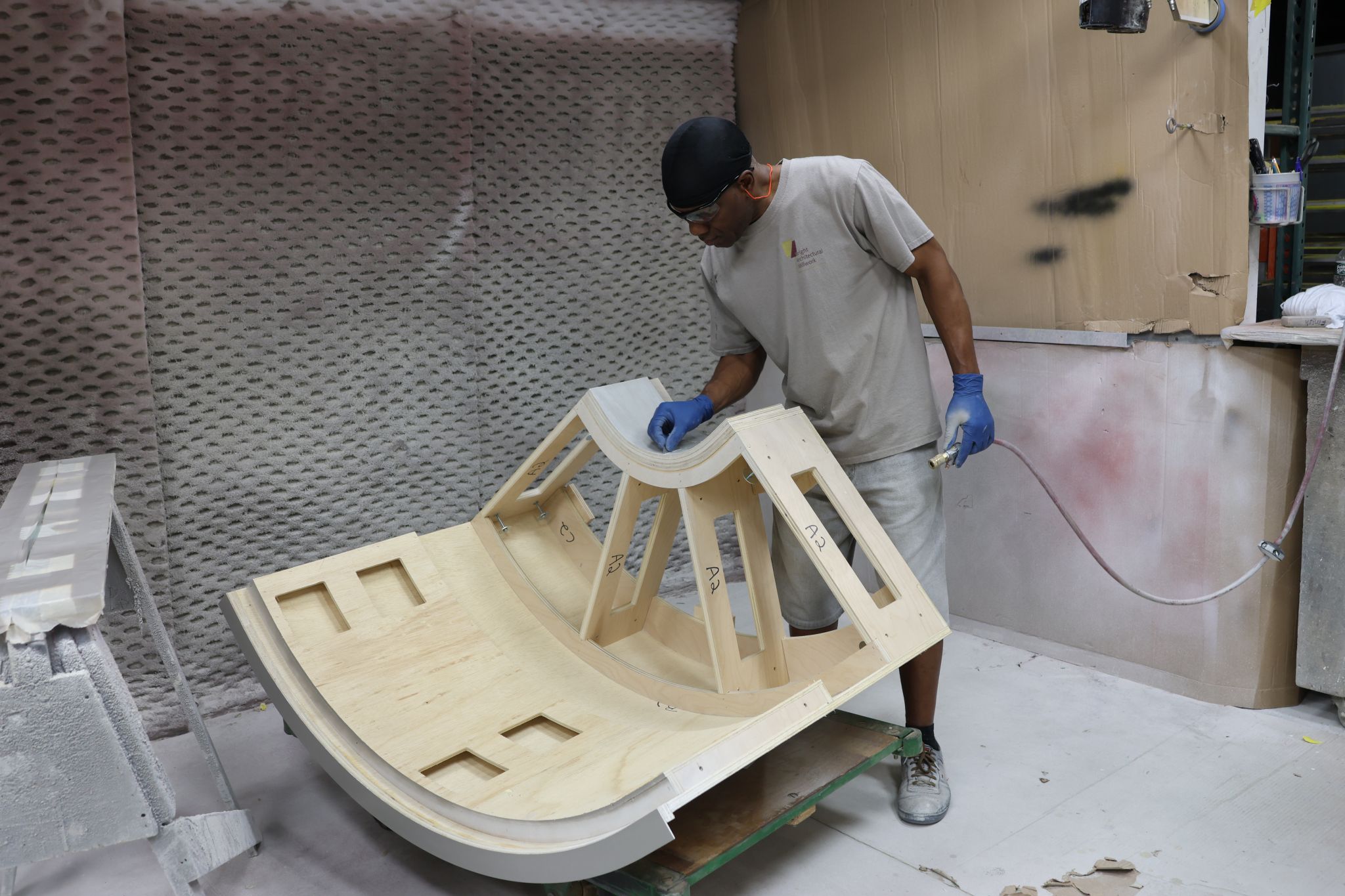
In 2025, the company moved from its home in Northampton, Massachusetts, to the “once-in-a-lifetime” factory it purchased in 2024. In that year, they turned the building into a high-tech facility, optimizing production by integrating advanced robotic and CNC technology.
In a video showcasing the facility, Buell said, “Once this building came up for sale, it changed things dramatically. We could scale a lot more. We could bring in new equipment that wouldn’t have fit into the old place. I met with all the major manufacturers of woodworking equipment and laid out my vision. Part of that vision was that I didn’t want to buy the ‘hot new thing’ from five or 10 years ago. I wanted to be on the cusp of what’s new and innovative.”
One of the benefits of the Chicopee facility is that it was previously owned by manufacturers of custom furniture. “This opportunity allowed us to move everything under one roof and have the infrastructure of a woodworking company in place before we moved in,” Buell explained. “It had tons of power, all the electrical we’d ever need for all the big machinery we were going to buy, a finishing room, compressed air, dust collection ... all things that in any other space would cost hundreds of thousands of dollars, if not millions.”
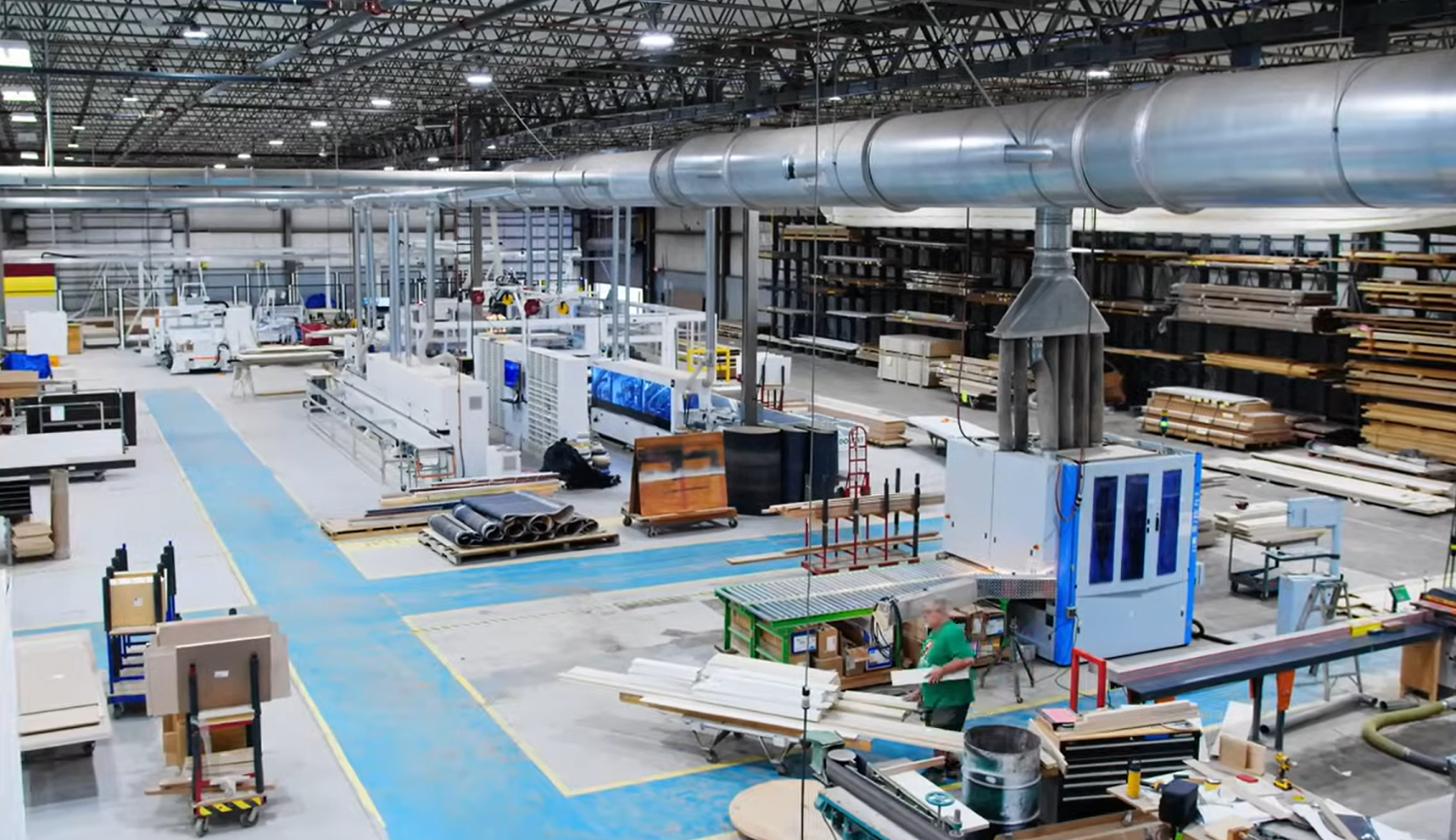
As part of FDMC magazine’s look into the new facility, we talked with Bryan Murphy, owner of Dustpipe.com, Inc., a supplier of industrial dust collection systems, about the upgrades his company made at the factory.
“They had this large old outside collector that needed to be updated,” he said. “We took down the old pipe, and installed new parts designed for the factory and the equipment as it came in.”



Have something to say? Share your thoughts with us in the comments below.