

NAGAWA, Japan — NII, a Japanese office furniture brand, introduced furniture series showcasing the creativity of four designers at the Milan Furniture Fair in April.
NII, a division of ITOKI Corporation, said through its concept of “Ingenious Design,” it develops furniture that supports communication, collaboration, and imagination in shared work environments. The collection embraces flexibility and dynamic configurability, creating spatial frameworks that encourage interaction and collective exchange.
A summary of each of the new furniture series follows:
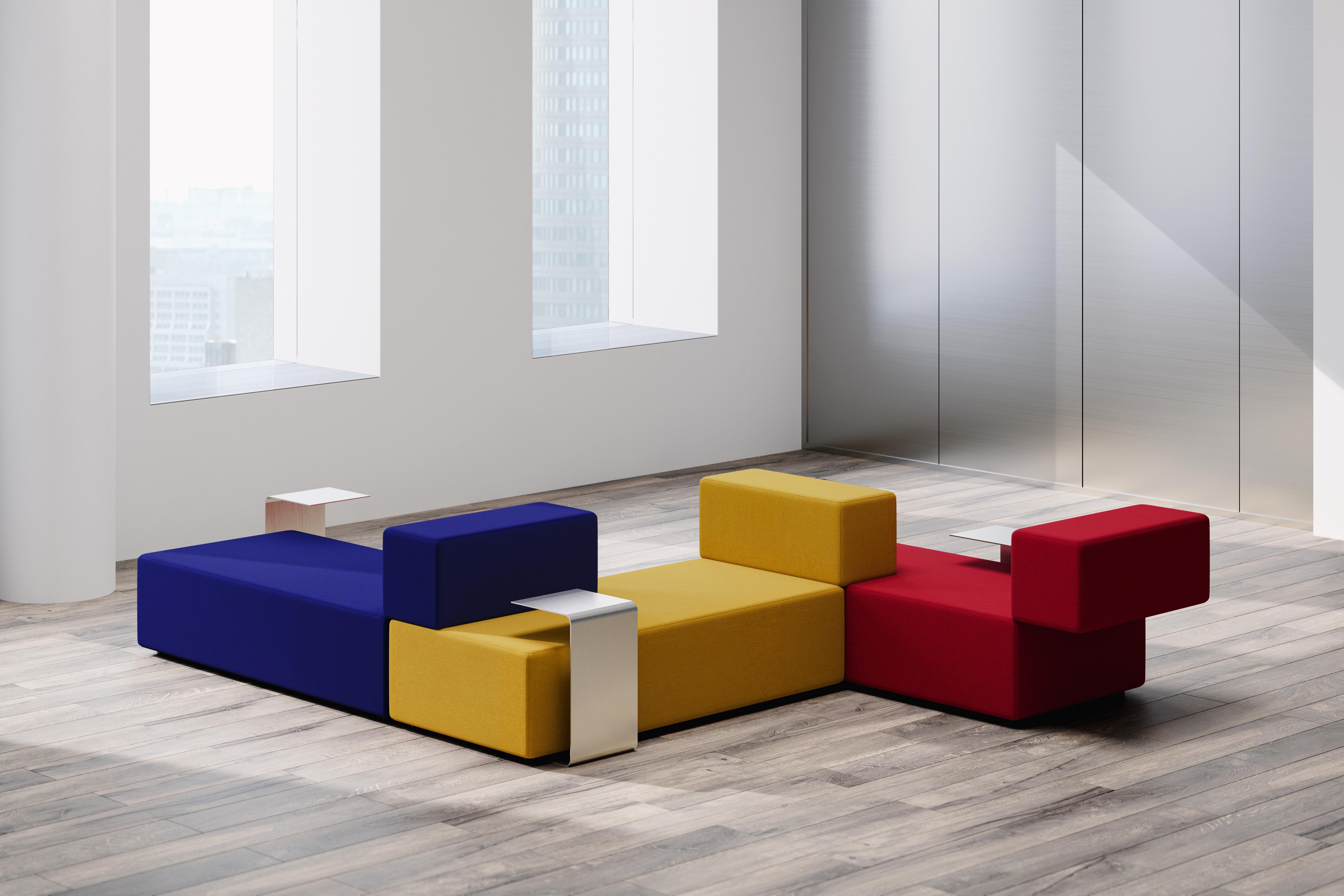
BIitmap, designed by Todd Bracher, is composed of two rectangular volumes — one larger, one smaller — fused along one edge. Where the smaller block meets the main volume, the balance becomes unexpected and the form appears almost suspended.
The smaller block functions as a side table, armrest, or additional seat, accessible from all sides. Although conceived as a single element, multiple pieces can be combined to create modular compositions, encouraging communication in multiple directions — side-by-side, face-to-face, or diagonally.
“Bitmap challenges the way we think about lounge seating,” Bracher said. ”Instead of dictating how people should sit or gather, it creates an open framework for exploration. The modular, pixel-like forms can be nested, stacked, or arranged in unexpected ways—allowing users to shape their space intuitively The elevated perch adds another layer of function, acting as both a seat and a surface for work or interaction. By removing the rigid structure of traditional seating, Bitmap encourages a more natural, adaptable way to engage with space—whether alone or in a group. It’s about flexibility, play, and rethinking how we inhabit our environments.”
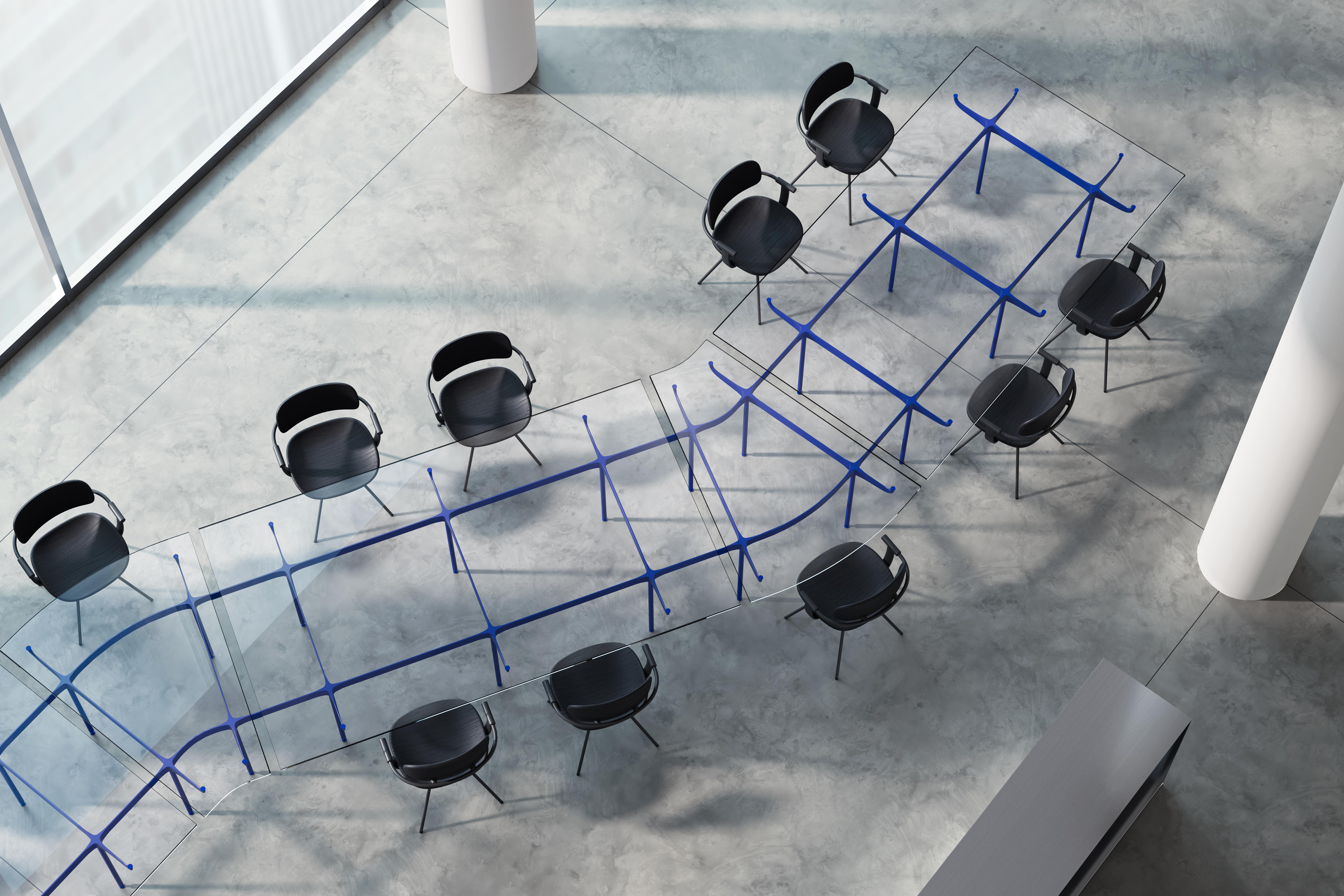
The structural framework of the Connexa table, defines its organic character and supports transparent glass tops through a series of contact points, leaving the structure visible as a defining feature of the project. Designed by Rudolfo Agrella, the composition is essential, and the system allows unlimited combinations and expansions through four different glass tops and five frame types, connected via dedicated connectors that ensure continuity and stability.
“Connexa is a playful and poetic approach to gather around a table for sharing ideas,” Agrella said. “The levitating structure ignites the power of conversations as its graphic and organic shape evokes both nature’s forms and the human skeleton, while presenting itself as crisscross components that enable the full system to be extended. The clear top, a lake when independent, a river when connected, is visibly splashed by the structural supports in the shape of dots that recall blooming water lilies. All poetry to enable human connections and fluidity in residential, hospitality and workplace fields.”
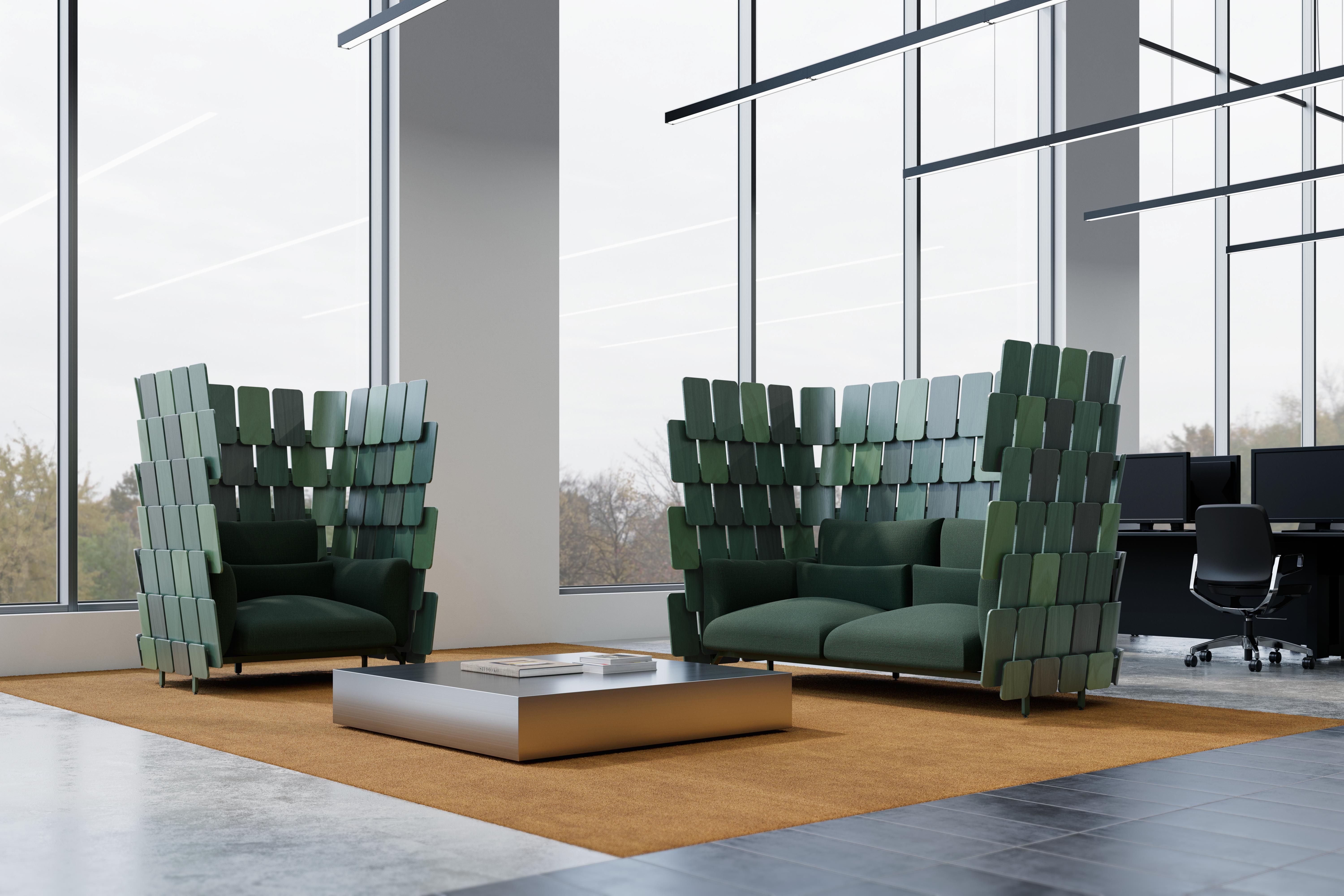
Michele De Lucchi of AMDL Circle designed Pigna to articulate space through two elements: a divider and a sofa. The shingle-like panels gently screen the seating area, shielding it from view while still allowing light and air to filter through.
The collection is available in three configurations, calibrated to different levels of privacy: Low, with a height that preserves the perception of the surrounding environment; Middle, which reinforces a sense of enclosure; and High, offered exclusively as a divider, providing more defined screening.
The seating, wider than standard, ensures comfort. Together, the elements create a space that welcomes and protects, fostering communication within while maintaining a relationship with the outside environment.
“Pigna is a modular system that reinterprets the wooden shingle, a distinctive element of AMDL Circle's design language. By defining pathways, creating scenic backdrops, or enclosing informal spaces, the divider shapes spaces and atmospheres. The walls form a «U» shape, embracing the sofa. The result is a welcoming micro-architecture, ideal for workspaces and conversation areas. Individual elements can be freely arranged to create pathways, rest areas, or decorative partitions. Pigna is a dynamic, ever-evolving system: a new way of shaping work and social spaces.”
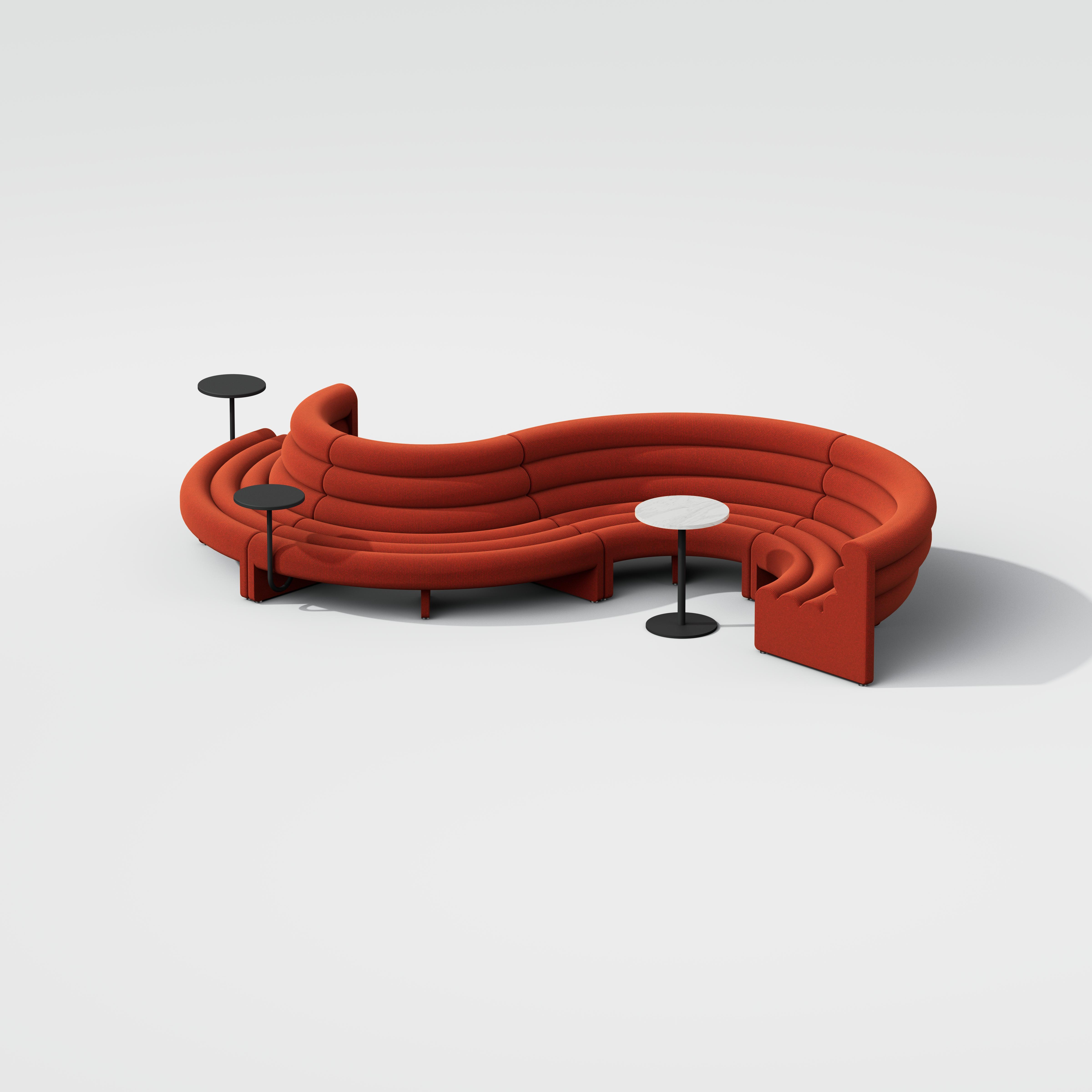
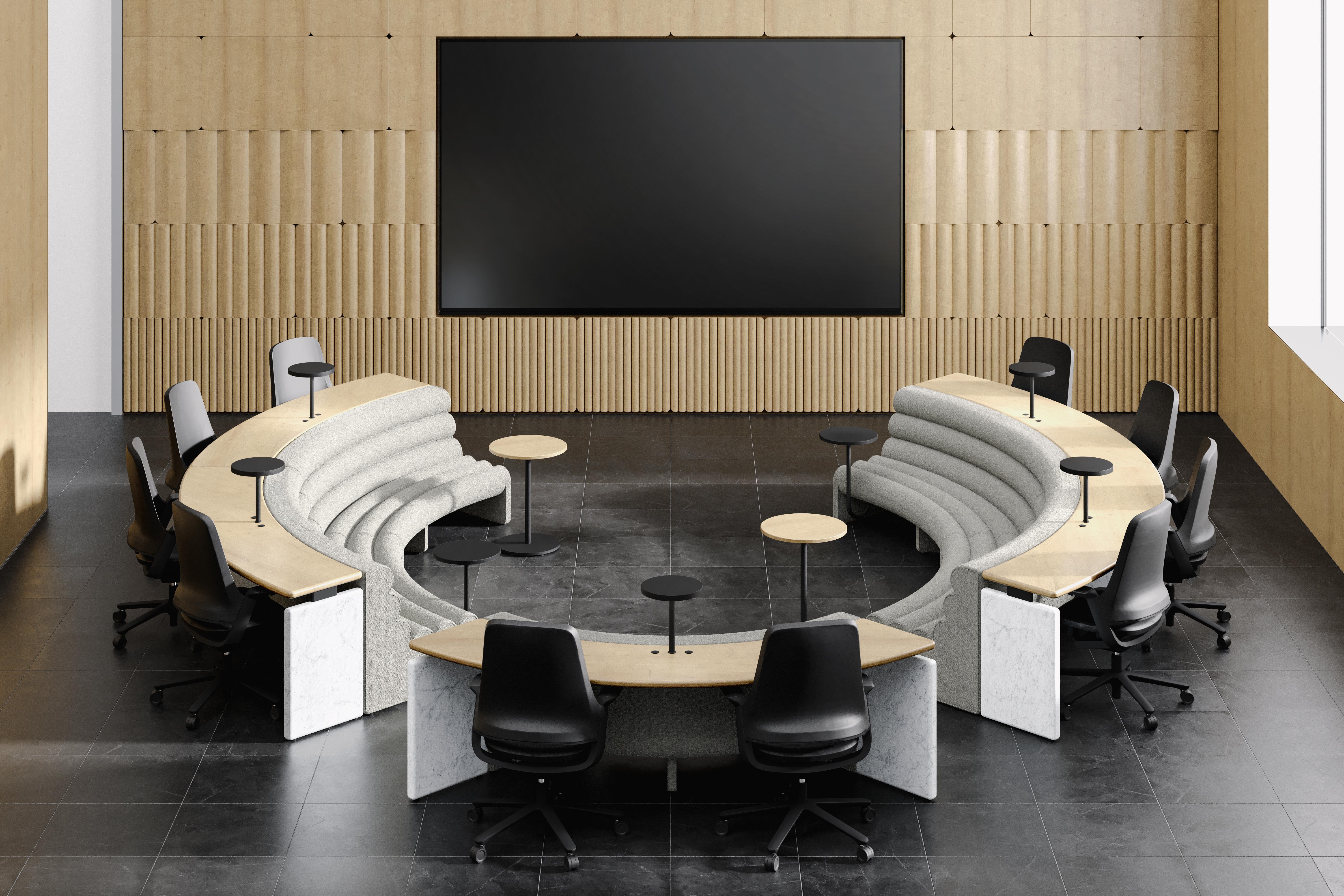
Parlamento, designed by Jun Aizaki of CRÈME, interprets modularity as a space of continuous connection. The system consists of four units of varying heights, designed to generate configurations that encourage interaction among multiple users. Sofas and tables, available in both low and high versions, evoke water ripples and organic morphologies through flowing, curvilinear forms that define space with fluidity.
Designed according to ergonomic principles, the elements facilitate interaction and information exchange in every direction and from any position. Flexible configurations create spatial continuity not only in meeting rooms, but also in reception areas and shared environments, where hospitality plays a central role.
“Parlamento is inspired by the sculptural forms and inviting comfort of 1970s lounge seating,” Aizaki said. “Blending the sensibilities of hospitality and workplace environments, the design offers a versatile and dynamic approach to seating that adapts to the fluidity of modern workspaces. With a wide range of configurations and premium materials playing an important role in distinguishing this collection, Parlamento achieves a level of sophistication not typically found in modular furniture. Designed for the way we gather, work, and connect today, it is a system that feels at home in both professional and hospitality settings—fluid, inviting, and effortlessly modern.”


Have something to say? Share your thoughts with us in the comments below.