

For Egger Wood Products, sustainability is a core component of its business model, a principle that dates to the company’s founding. The global wood-based materials manufacturer has structured its operations around the concept of a circular economy. This strategy is in practice at its manufacturing plant in Lexington, North Carolina, and its dedicated recycling facility, Timberpak, in Charlotte. By processing post-consumer wood waste into finished panel products, Egger provides an outlet for itself as well as other companies aiming to meet zero-waste-to-landfill targets.
This focus on upcycling has been part of the company since its start in 1961. “Fritz Egger started off with a sawmill, and he saw all of the waste that was coming from the sawmill and thought that the waste is much too valuable to throw away,” said Scott Kaminski, head of marketing for Egger North America. “So that’s how we actually got into the particleboard business.” That concept, viewing wood waste as a resource, continues to inform the company’s strategy at its 22 plants worldwide, including its North American operations. The process of converting a discarded pallet into a new cabinet panel involves a series of technology-driven steps, beginning at facilities like Timberpak.
The collection point
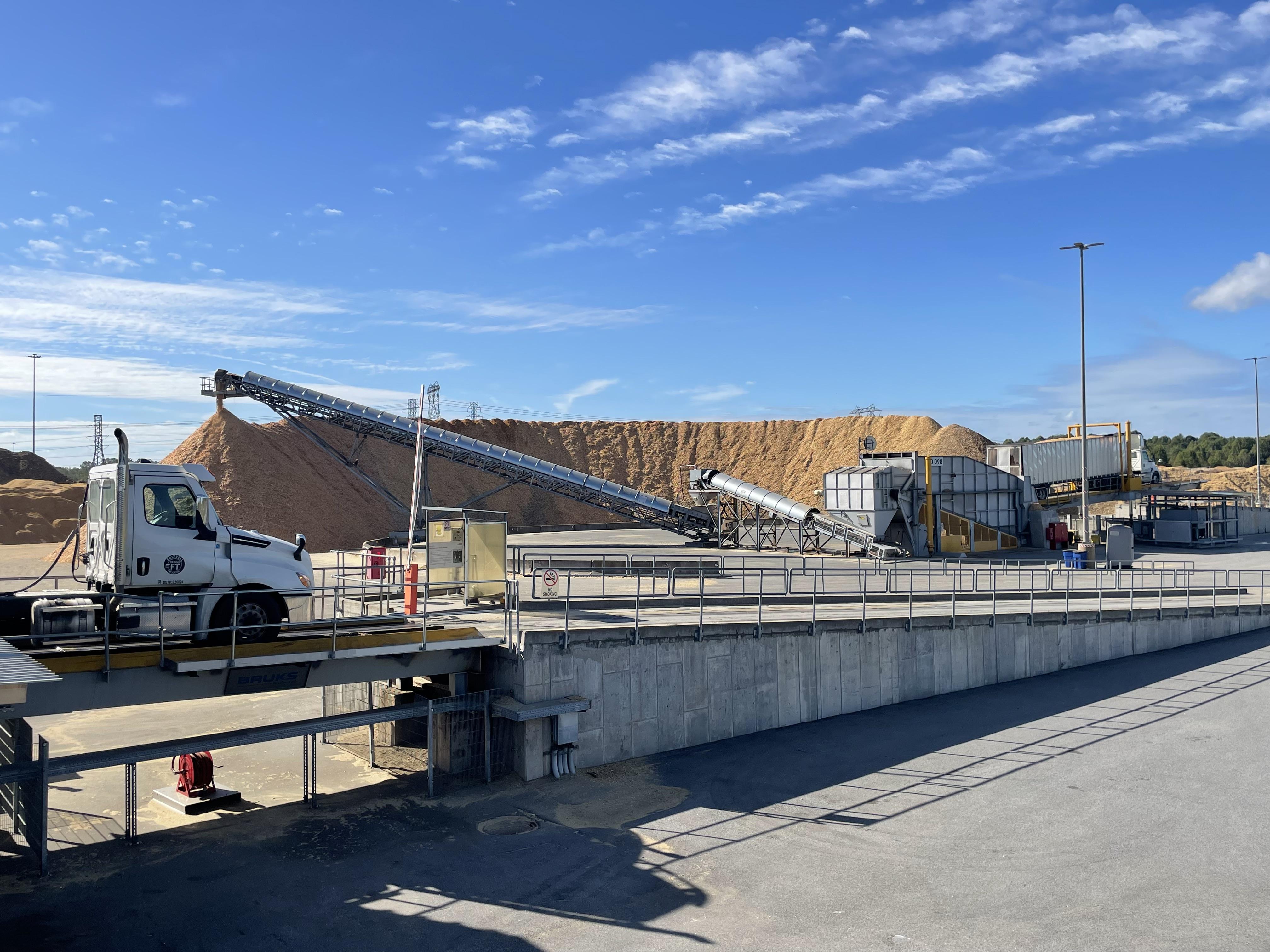
The first step in Egger’s circular model for many businesses in the Southeastern United States is the Egger Timberpak facility in Charlotte. This site, the company’s 15th Timberpak globally but its first in North America, serves as a collection point designed to divert clean wood from the industrial waste stream.
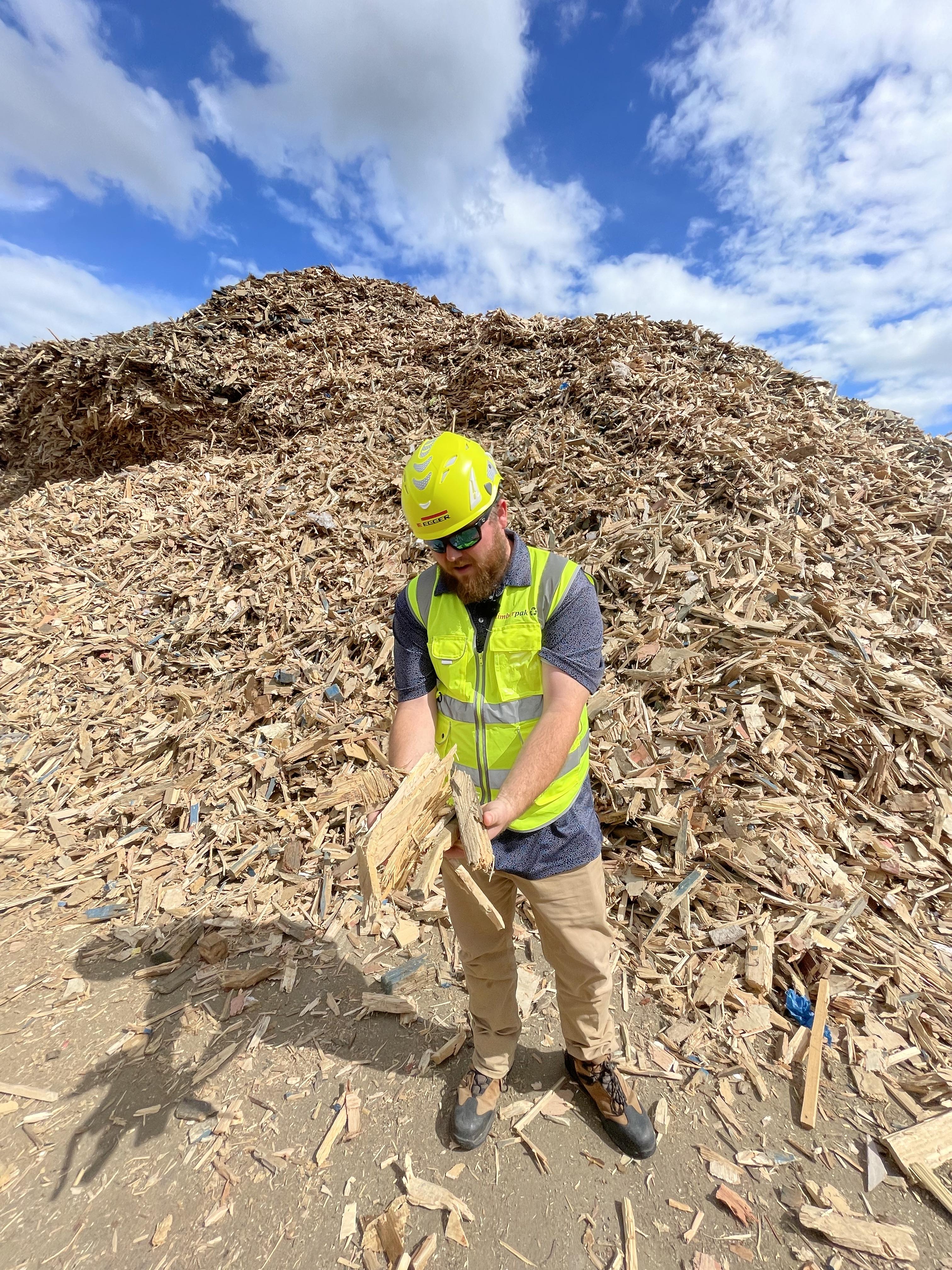
“We work with anybody that has any type of wood waste issue looking to go to zero-to-landfill. That’s where we emerge,” said Patrick Phillips, assistant wood purchasing manager. The facility accepts a range of clean, untreated wood, including pallets, shipping crates, skids, and lumber off-cuts from manufacturers, distribution centers, and logistics companies.
The operational model is designed to be flexible. Companies can deliver materials using their own trucks or use Egger’s roll-off container services, where Egger provides a 40-yard bin on-site for the customer to fill. This arrangement often results in a closed-loop system. “We have some customers that are actually Egger board customers,” Phillips explained. “We sell them their board, and as they do their production process with off-cuts, we provide a roll-off container there. So, it’s a little bit of a full circular economy.”
Once a truck arrives at the Timberpak yard, the wood waste is tipped onto a concrete pad. A material handler equipped with a grapple claw picks up the material and feeds it into a slow-speed shredder, which breaks the wood down into consistently sized chips. A conveyor system then moves the shredded material over a magnet to remove nails and other ferrous metals. The cleaned chips are deposited into bunkers, ready for transport. This processed material is loaded into walking-floor trailers and shipped 50 miles north to the Lexington plant.
The facility’s intake has grown along with the demand for sustainable waste management. “When we originally started incorporating the recycled wood into the board, we were around 10% to 12%,” Phillips noted. “This year, we’re all the way up to 17.5%, and they’re wanting us to grow even more.” This growth is managed through quality control protocols that begin before the material even arrives. Phillips and his team visit potential customers to assess their waste stream, making sure it is free of contaminants like treated wood from railroad ties or telephone poles, or excessive amounts of MDF, which are not suitable for their particleboard process.
High-tech recycling process
When the shredded wood from Timberpak arrives at the Lexington facility, it is combined with scrap material generated from Egger’s own production lines. This material is fed into a dedicated, on-site recycling plant, a highly automated system to purify the wood fiber to specified standards.
“If a board is not correct, we can run it back to our recycling plant,” said Joseph Hernandez, operations manager. “We use every bit of it.” This zero-waste policy is executed through a multi-stage process that cleans, sorts, and refines the wood chips.

The material first moves across a vibrating shaker table, where an operator manually removes any oversized pieces of plastic, paper, or metal that were not caught during the initial screening. It then enters a primary shredder, known as a “grizzly,” for additional size reduction.
From there, the purification process becomes more technical as the chips move through a series of machines: ballistics and fine mills, advanced separators, and screening and sifting.
From fiber to finished board
The cleaned, recycled fiber is then integrated with prime wood fiber from the company’s supply chain. This blend is dried, mixed with a specific recipe of resins, and laid out on a forming line. This creates a thick, continuous mat, sometimes called the “wood cake” by plant operators. The mat is composed of three layers: a bottom surface layer of fine particles, a thick core layer of coarser chips, and a top surface layer of fine particles.
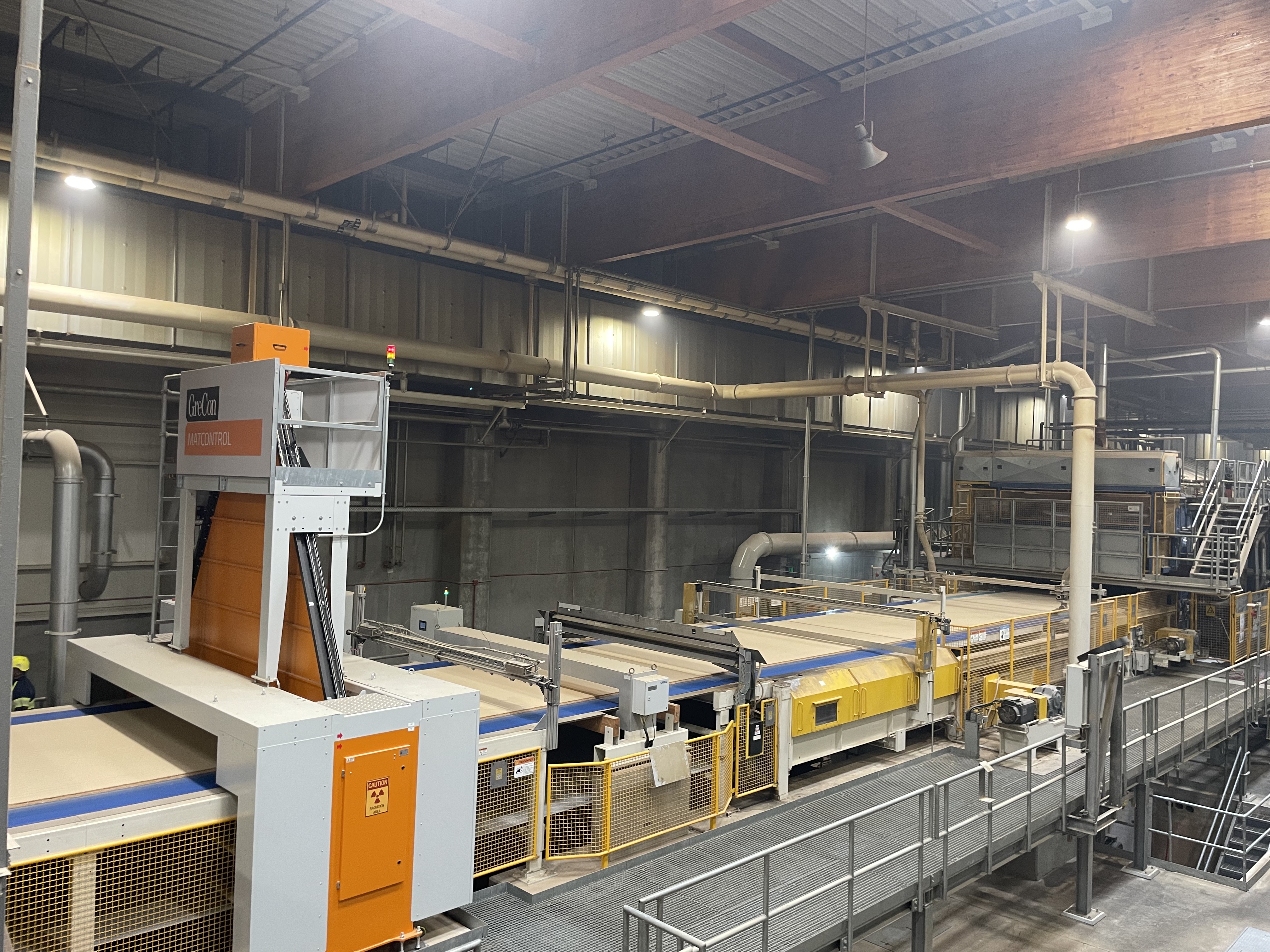
This uncompressed mat then enters the ContiRoll, a large, continuous press that is a central component of the production line. Under high heat and pressure, the resin cures, fusing the wood particles together into a solid, raw board. The material emerges from the press as a continuous panel, which is then cut by diagonal saws into large “master panels.”
These panels, still hot at approximately 270 degrees Fahrenheit, are moved to one of three “star coolers.” The large structures rotate the boards to allow them to cool and stabilize before they are sent to the sanding lines. After cooling, sanding belts smooth the surfaces of the boards, preparing them for sale as raw board or for the lamination process.
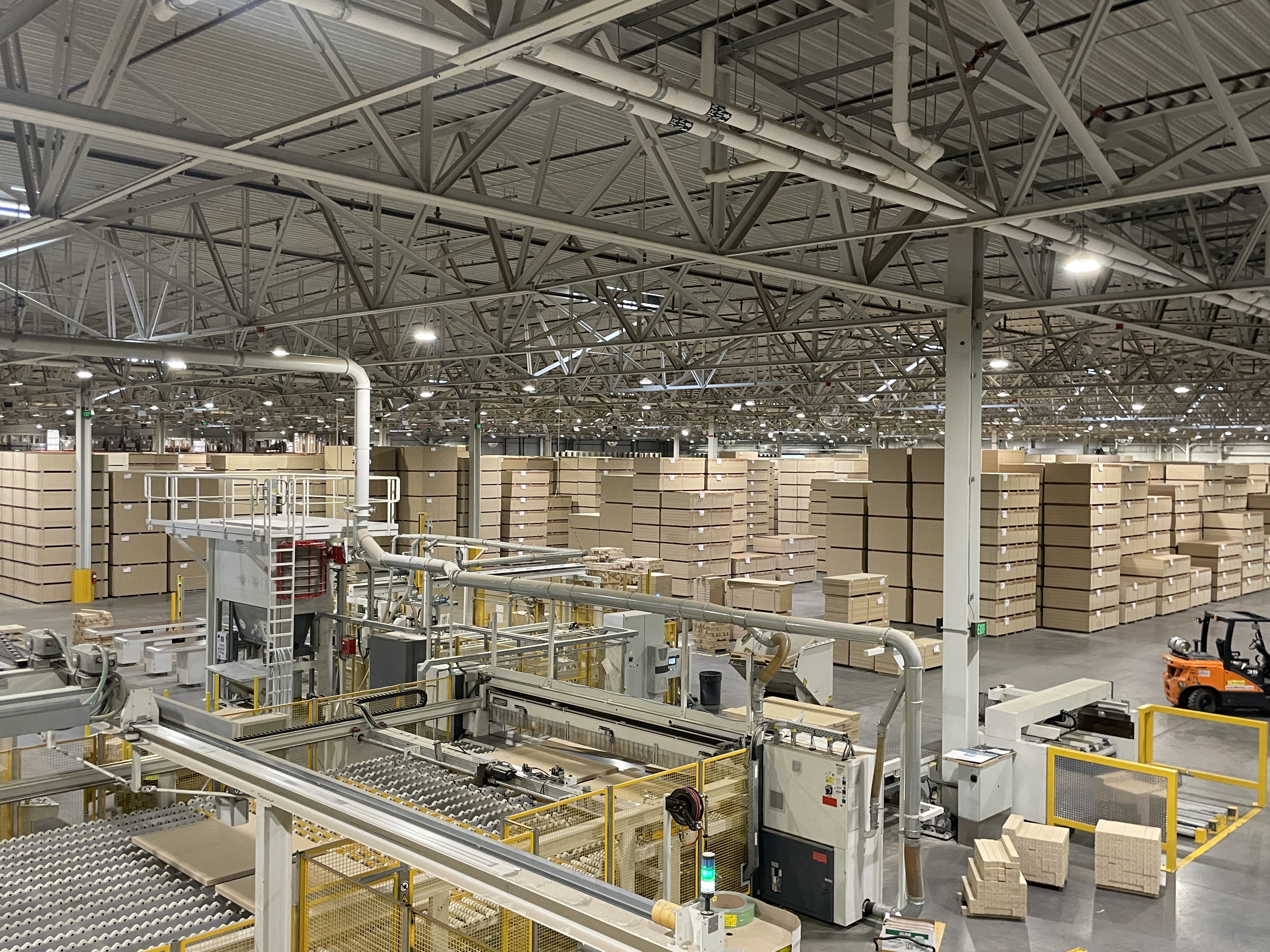
The entire process is highly automated and monitored from a central control room, where a small team of technicians oversees an extensive network of data points and cameras. “The largest single staffing-wise, the largest area of production is maintenance,” Kaminski pointed out. “Egger is maniacal about safety, and we’re maniacal about maintenance.”
Quality control and partnerships
This focus on process extends to quality control, which is integrated into each step of production. From the inspection of incoming loads at Timberpak to the on-site quality lab in Lexington — which conducts tests for tensile strength, density, liquid exposure, and abrasion resistance — materials are checked against company standards. Egger also tests competitors’ materials as part of its benchmarking protocol.
This system supports Egger’s circular economy model and its customer programs. The company has implemented a backhaul program that extends the sustainable loop directly to its clients. For example, Egger trucks that deliver new products to a large closet manufacturer in New Jersey are filled with that customer’s clean production off-cuts for the return trip, avoiding empty miles. This turns a waste disposal cost for the customer into a raw material stream for Egger. Similar programs are in place with other manufacturers.
“It’s a true circular economy,” Kaminski said. “They get the new product, we get what comes out of their factory, and at the end of the day, everybody and the planet kind of win.”
With plans to build a second Timberpak facility in Morrisville, North Carolina, and to continue investing in its technology, Egger is positioning itself as a supplier for industries seeking sustainable material sourcing.
Learn more at egger.com.




Have something to say? Share your thoughts with us in the comments below.