

As battery-powered tools increase, everyone wants to find ways to extend battery life. One great way is to opt for thin-kerf blades that use less power to cut. Besides using them in cordless tools, thin-kerf blades also cut faster and with less waste in corded machinery, too.
Freud offers the Diablo series of thin-kerf blades in a variety of sizes and configurations for different cutting chores, including ripping, combination, and finish options. What’s more, the blades are available through home centers at competitive prices, so if you need a blade in a pinch, they might be closer to hand. I’ve been trying these blades out in my shop for several months.
Three blades, three jobs
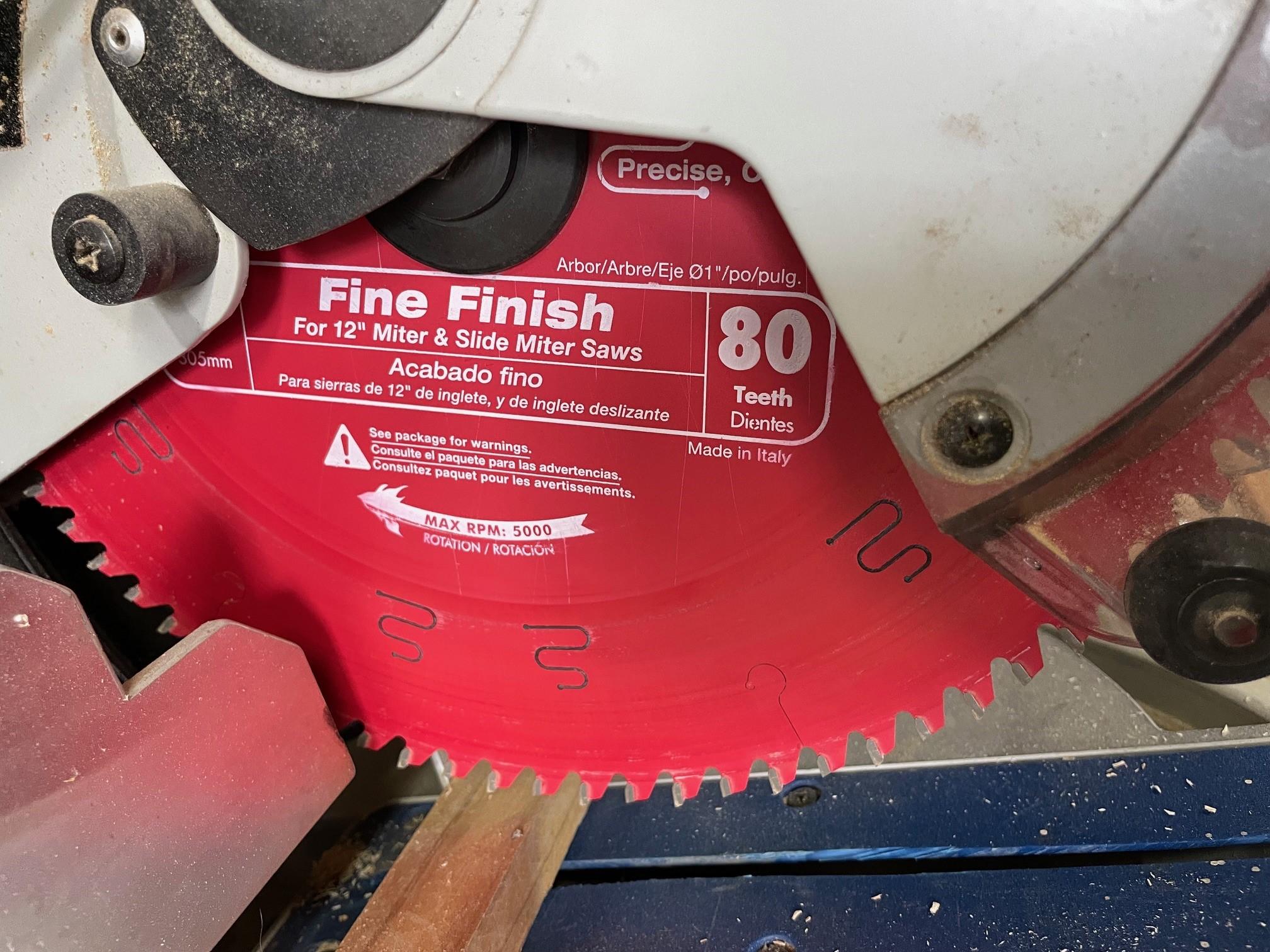
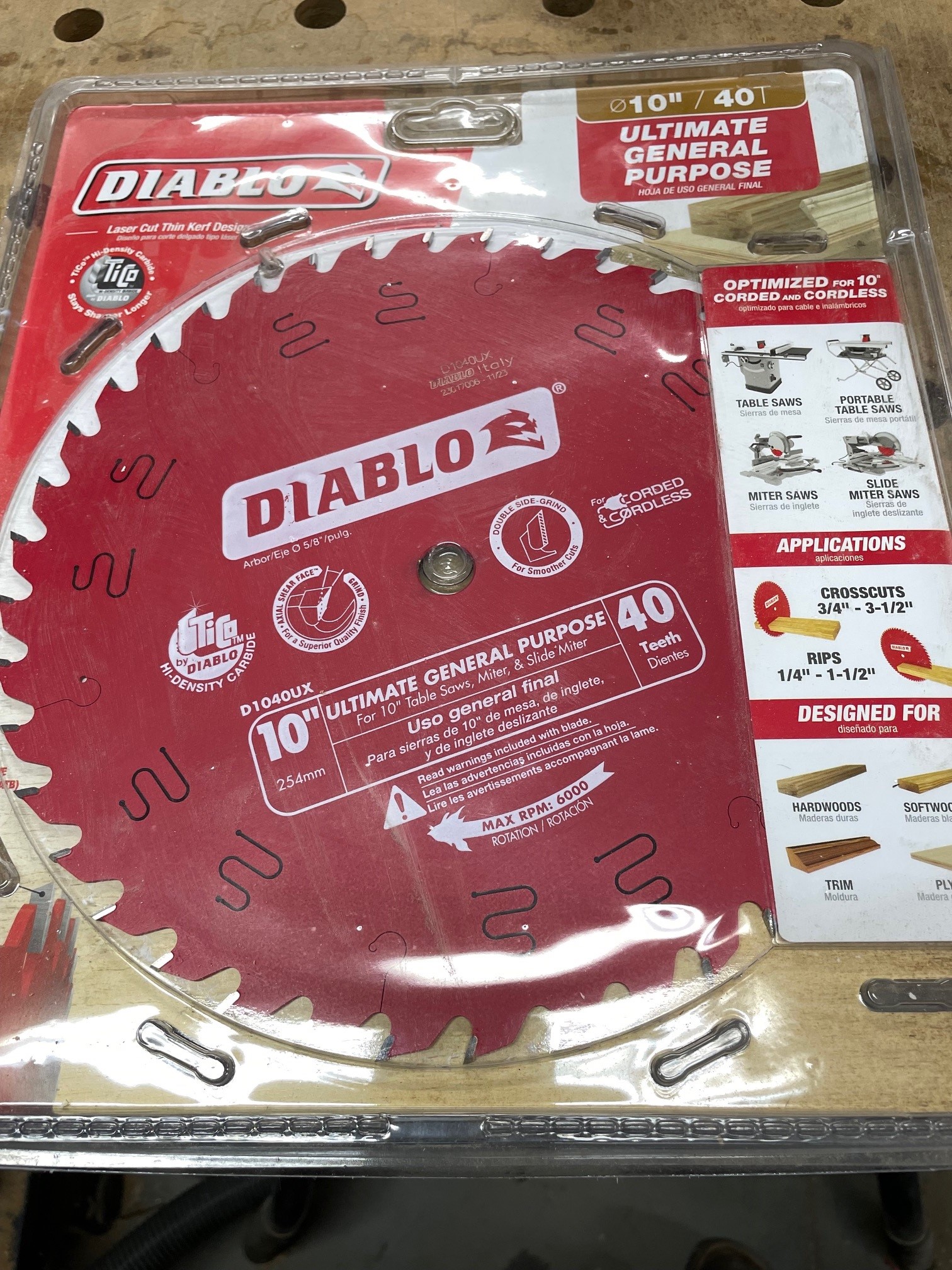
The three blades I’ve been using are designed for use on a table saw and a miter saw. I got the 40-tooth general purpose blade and the 60-tooth finish blade for my 10-inch table saw, and I put a 12-inch 80-tooth finish blade on my miter saw.
Freud says they are “optimized” for corded and cordless use. That’s really just a marketing way of saying the blades are thinner than conventional blades. That means they cut a narrower kerf, which in turn means they take less energy and make less sawdust in the cut. For battery-powered tools that should result in more cuts per charge. For corded tools, it means being able to cut faster or deeper with less power.
All the blades are laser cut, have Freud’s red coating to reduce friction and laser-cut noise-dampening slots. Teeth are Diablo TiCo high-density carbide, with double-side grind and axial shear face grind.
How they work
I did not do any comparison testing to put a number on how many more cuts these blades could do with cordless tools. However, I did compare how they performed in corded tools cutting tough hardwoods, gummy softwoods, and engineered panel products such as plywood, MDF, and particleboard.
I could definitely detect the difference of less load with the narrower blades. Initial cuts were incredibly smooth and chip free. As the blades wore, the cuts remained surprisingly smooth for quite a while with some minor chipout starting to show up in oak after a significant amount of use.
These blades are what might be described as “prosumer” quality: not necessarily professional grade, but approaching that. Definitely worth a try. Learn more at diablotools.com.



Have something to say? Share your thoughts with us in the comments below.