

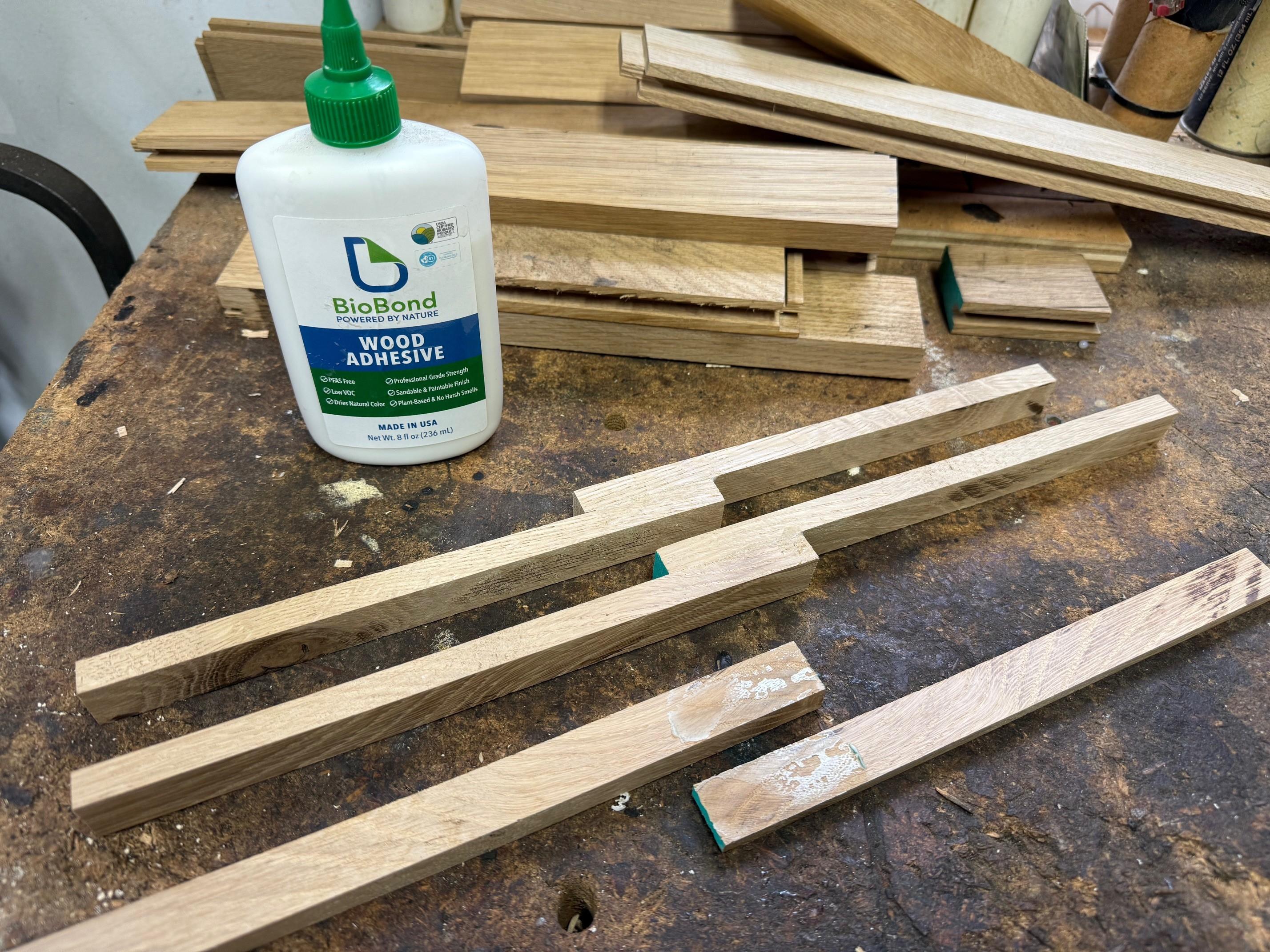
BioBond is a new glue product developed by a team from Purdue University in Indiana, and I was intrigued to try it.
It’s described as a plant-based and water-based product designed to be safe and easy to use while providing strong bonding for hardwoods, softwoods, and particleboard. I was sent some samples, which I tried out on a few projects, and I shared a bottle with Tim Fixmer, FDMC publisher, who was curious to try the glue in a woodturning project.
Initial reactions
BioBond looks a lot like traditional white PVA glues like Elmer’s, but it is tackier and sets up faster. There’s no smell, it’s low VOC, and free of microplastics (PFAS). Technically called BioAdhere SWoA 250, it is chemically a copolymer of vinyl acetate + ethylene.
It sets in just 5 minutes but doesn’t reach full strength for 24 hours. Instructions say to clamp for 15 to 30 minutes, waiting 24 hours for full cure.
Trying it out
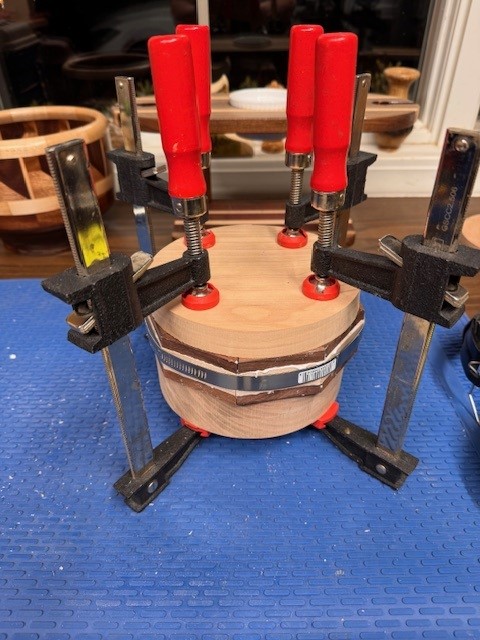
I used the glue on cabinet door frames and some test pieces intended for destruction testing. This glue is definitely tacky. It didn’t seem to run or squeeze out as aggressively as ordinary white PVA glue, but the bond seemed to be as good.
I tried cleanup with a damp cloth immediately and did what I usually do with white glue, which is wait until the glue is set but not cured, and peeling off the squeeze-out with an old chisel. This glue hardens up faster than regular white glue, so it shaves more than peels.
Turning test
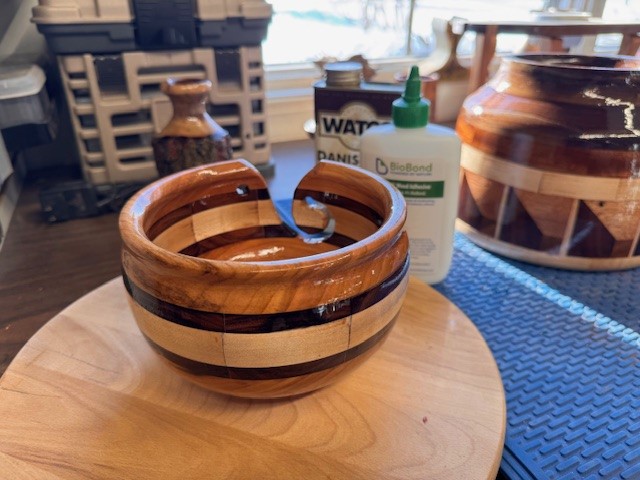
Tim tested the glue in a segmented bowl. He said, “I had no problems with the joints on the lathe. In fact, it seemed to turn with less tool wear than the Tightbond III I typically use.”
I made up some white oak sticks glued with a 2-inch long-grain-to-long-grain overlap. When I purposely broke the joints, most broke along the joint line, but there was some wood that failed before the glue, so it seemed adequate for most wood joinery.
To try it yourself, you can buy a pack of three 8-ounce bottles for less than $16 plus shipping at biobond.myshopify.com or visit biobond.com.



Have something to say? Share your thoughts with us in the comments below.