MONTREAL — The third edition of Complètement Design, celebrated what is usually hidden: sketches, mistakes, raw materials, and first intentions. By placing the process at the heart of the experience, the event celebrated an emerging aesthetic — a living, evolving design, often perceived as unfinished.
Complètement Design, produced by Index-Design and presented by Tafisa Canada, took over the two floors of the Grand Quay in Montreal's Old Port. Two industrial halls, totaling more than 40,000 square feet, served as the backdrop for the scenography signed by Ivy Studio. Two thousand visitors, including architects, designers, manufacturers and artists, attended the annual event dedicated to the design ecosystem.
In a record-breaking installation time, the scenography team achieved the feat of combining the reuse of existing materials with a bold spatial reimagining, perfectly aligned with the 2025 central theme. The iconic Montréal venue was transformed into a fleeting and memorable experience.
The theme for this edition, Generative Generation – Design in Process, celebrated what is usually hidden: sketches, mistakes, raw materials, and first intentions. By placing the process at the heart of the experience, the event celebrated an emerging aesthetic — a living, evolving design, often perceived as unfinished.
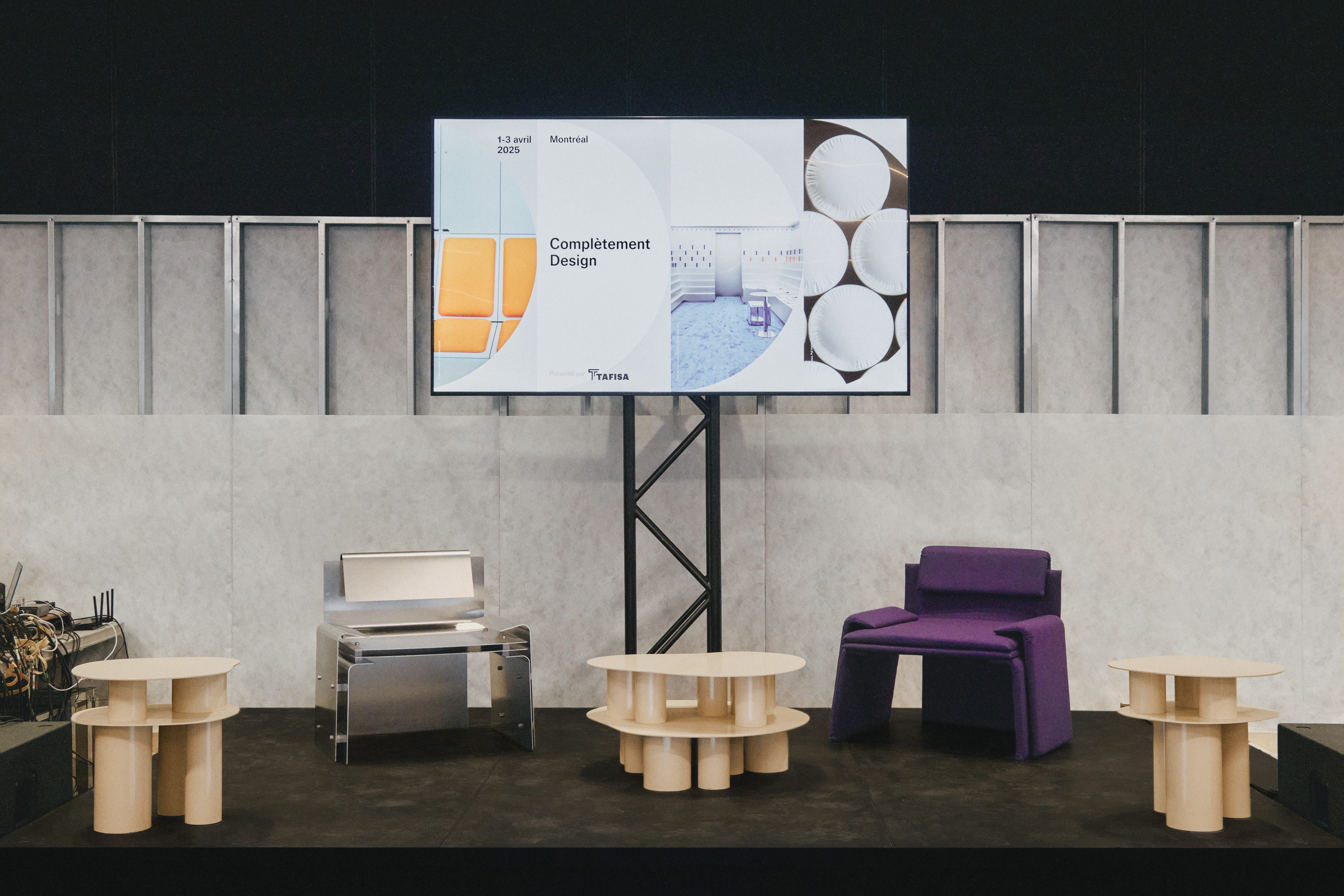
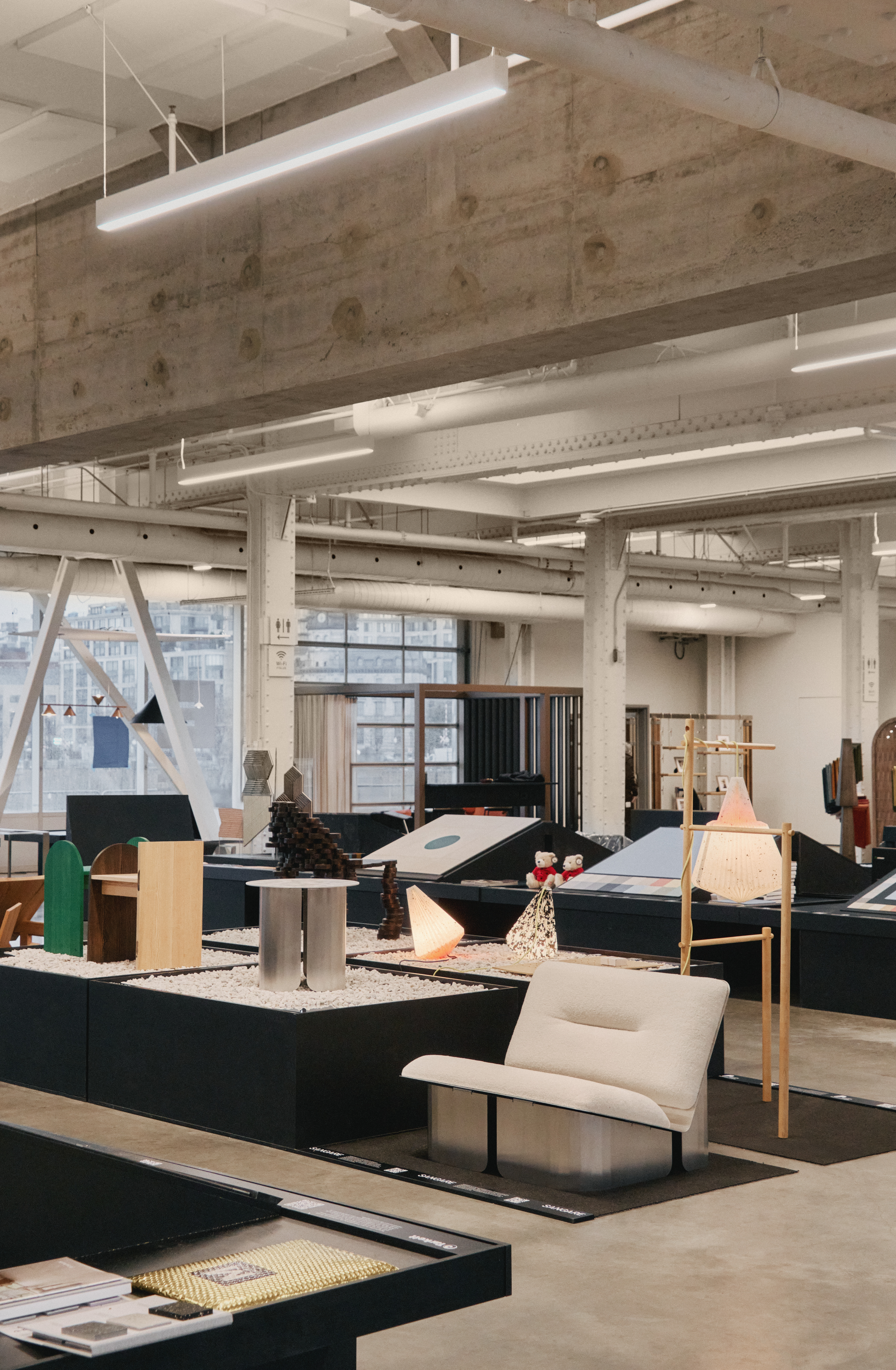
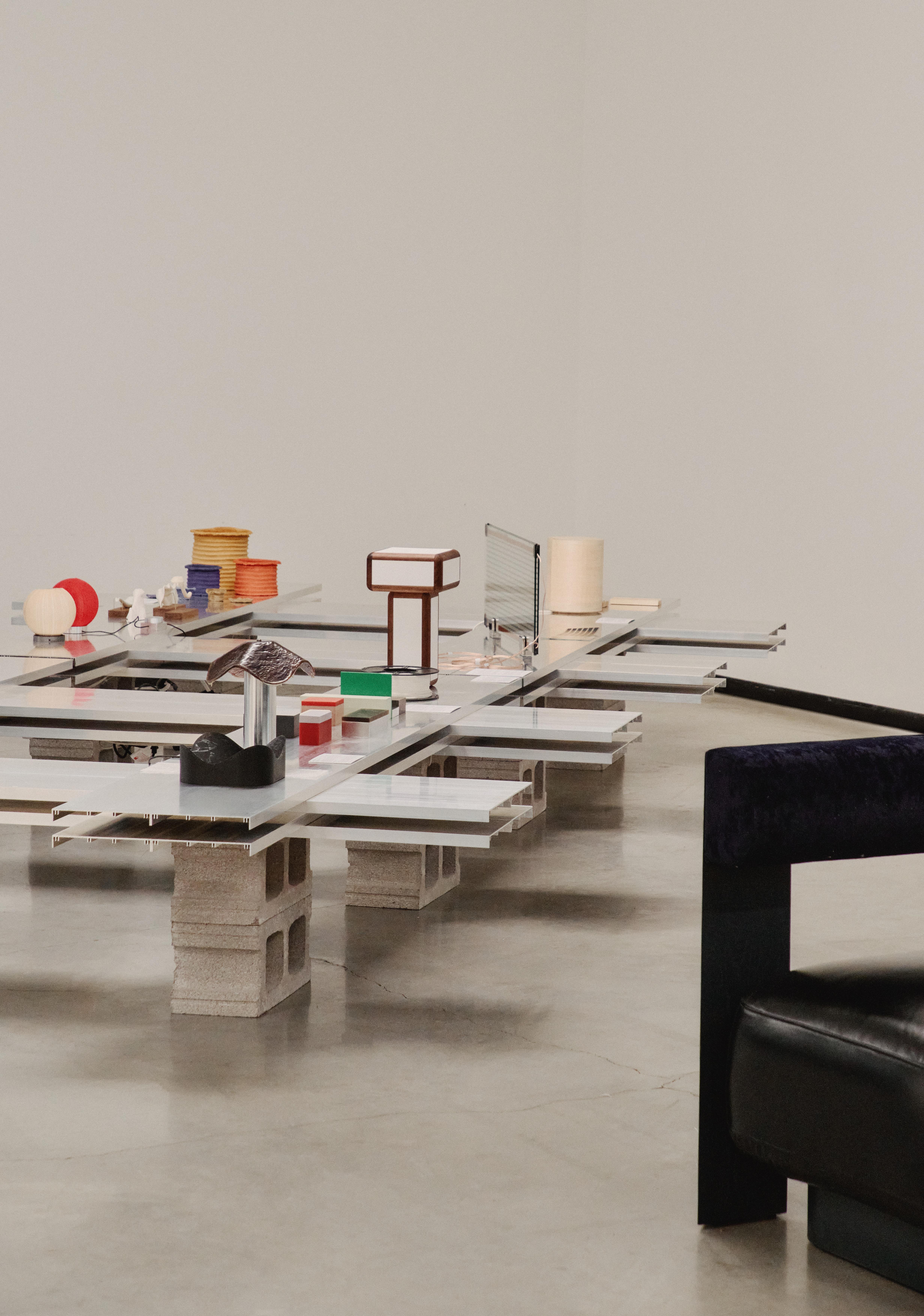
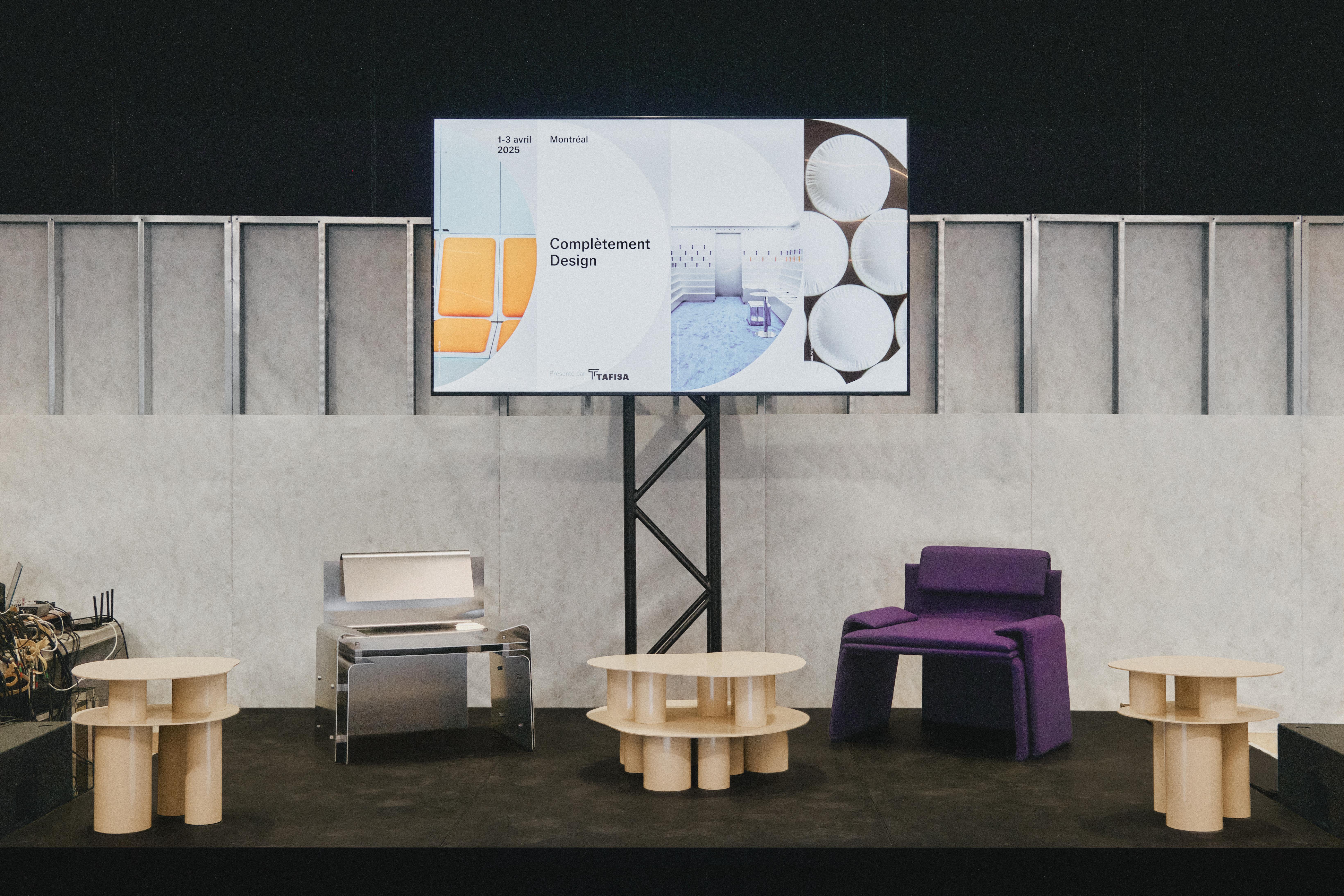
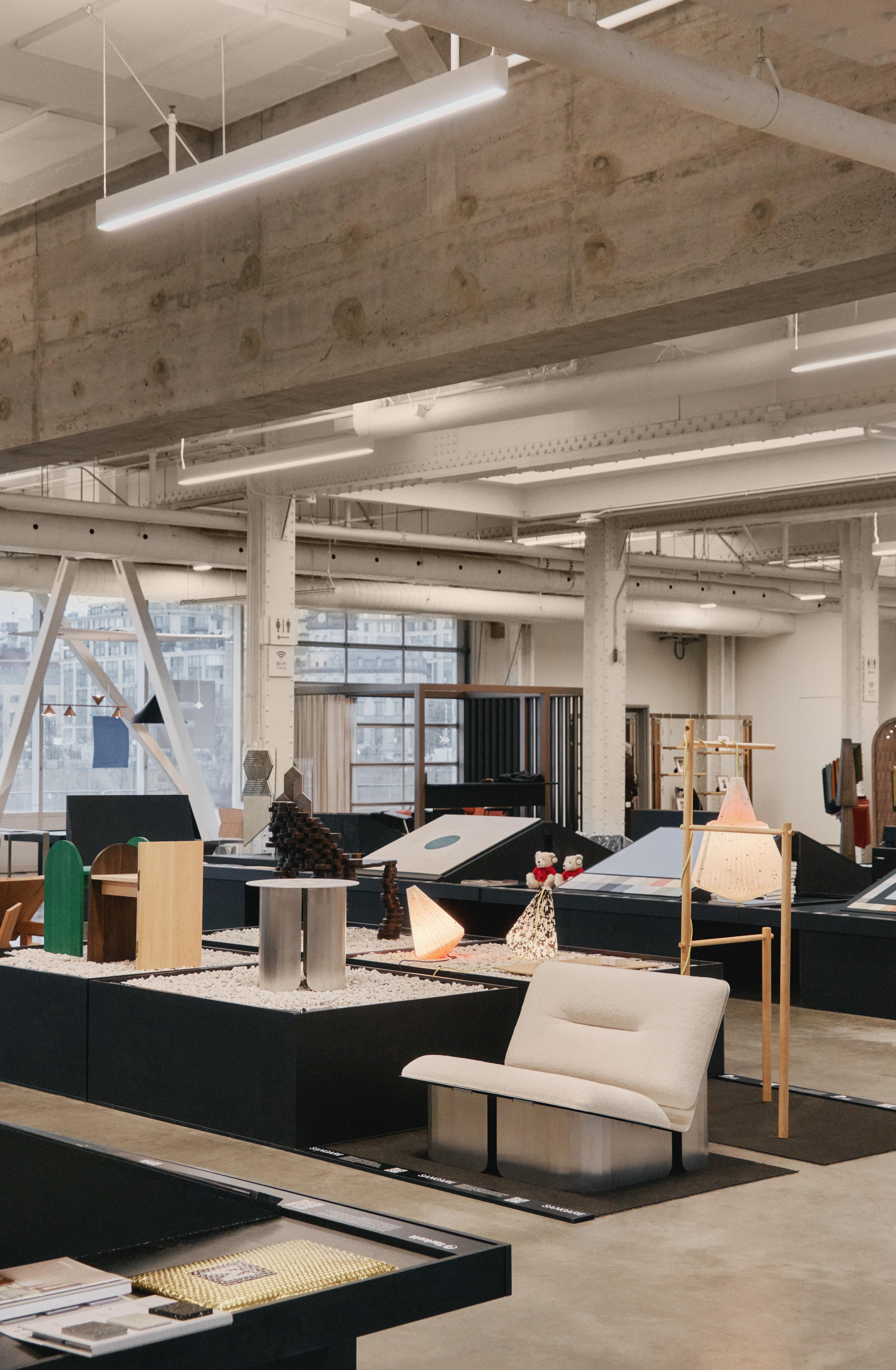
On the ground floor, visitors were welcomed by a reception area and a café-bar. Three curved translucent Tyvek walls filtered the light and space, gradually revealing the event's core: a vast horizontal exhibition hall where nearly 80 exhibitors showcased their products in modular stations. Toward the back, a secondary stage hosted informal talks. A pop-up shop, curated in line with the annual theme and featuring art books and locally made objects, completed this opening sequence.
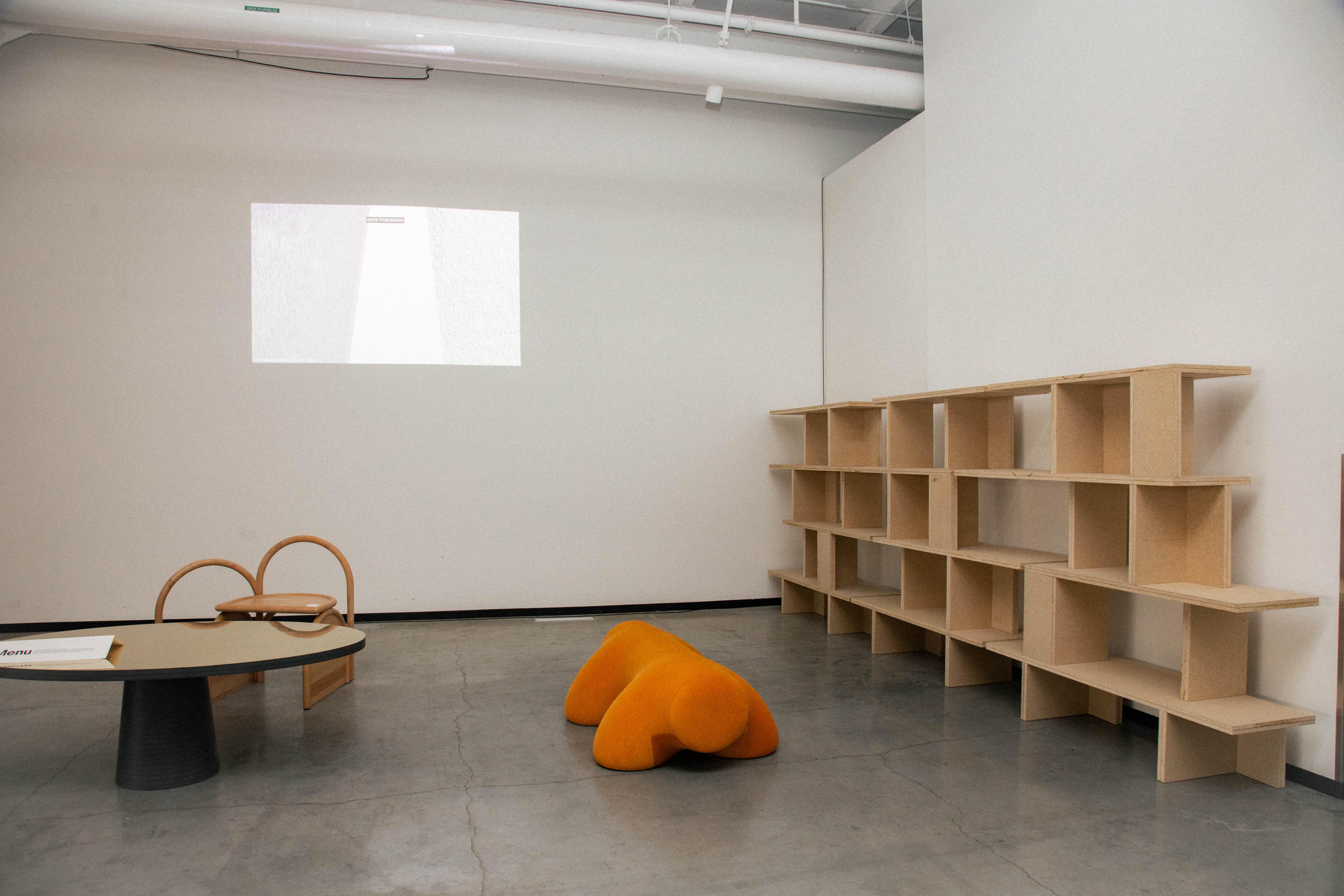
Upstairs, the atmosphere became more contemplative. A 400-seat conference hall hosted a robust lineup of presentations by renowned local and international design figures, including Matali Crasset, Michel Dallaire, Harry Nuriev, Sonia Gagné, and Christopher Dessus. On the opposite side, a concept restaurant offered a culinary experience throughout the day. Between the two, a linear gallery presented a series of art installations and a video projection tied to the annual theme.
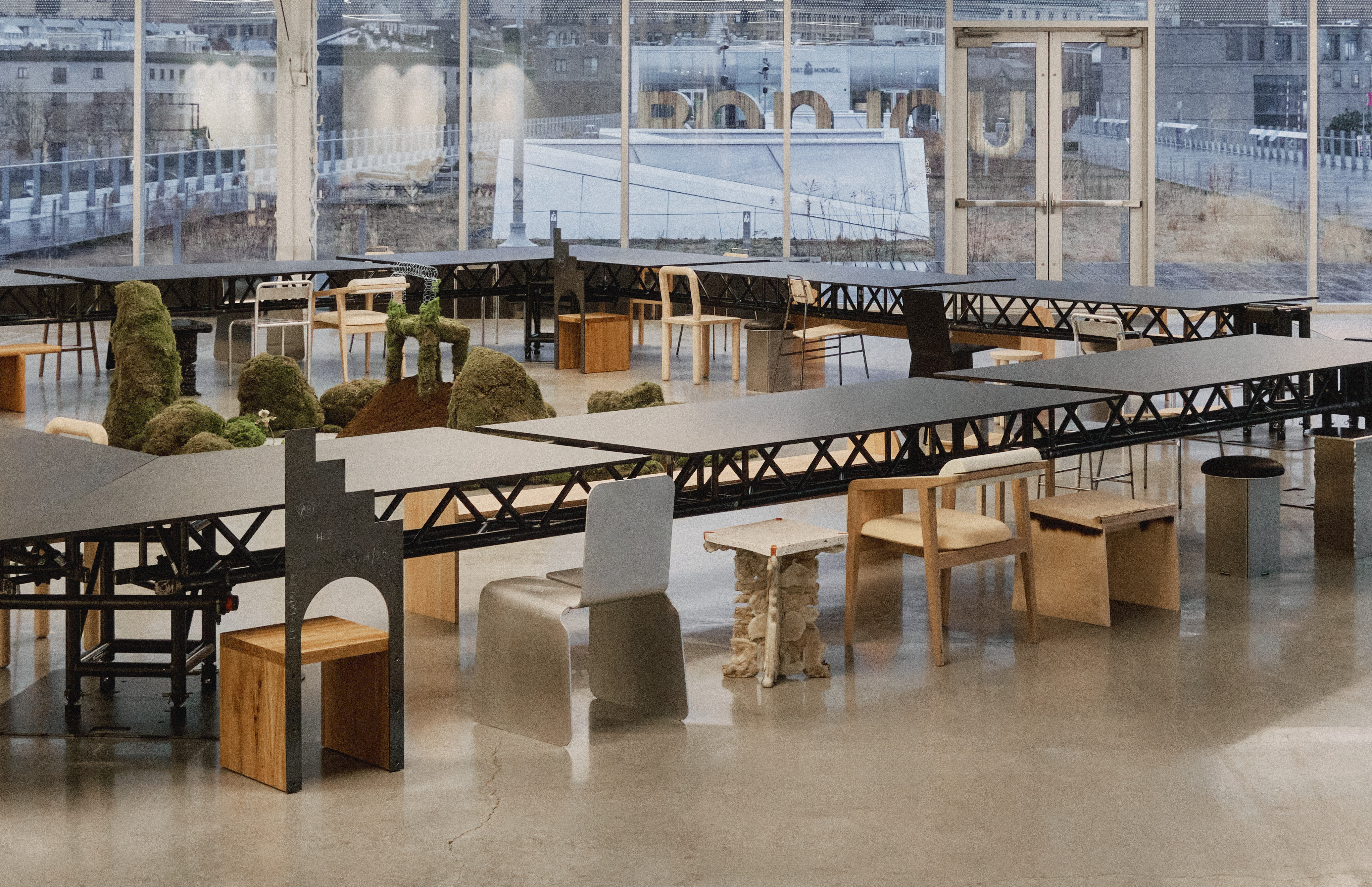
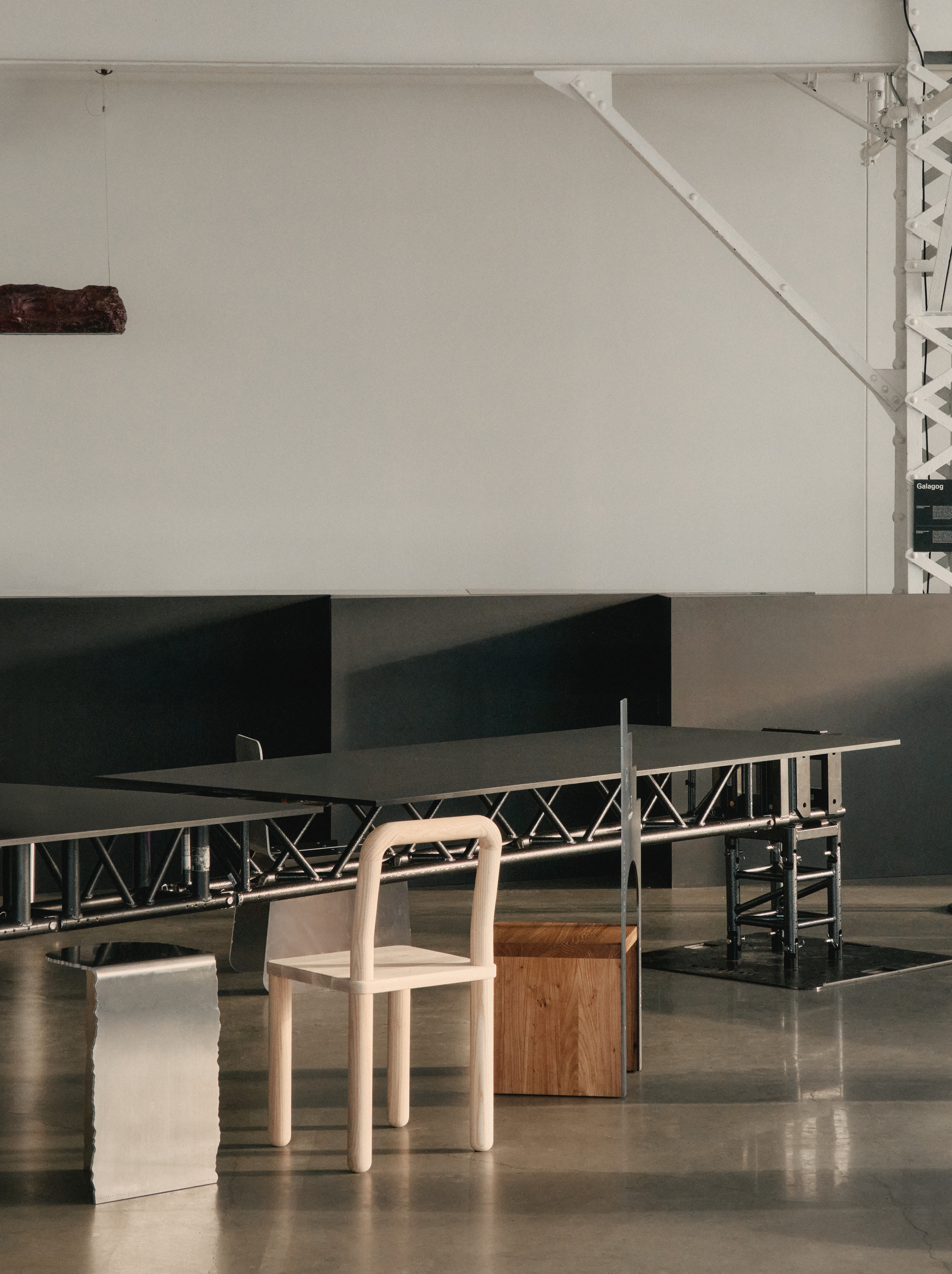
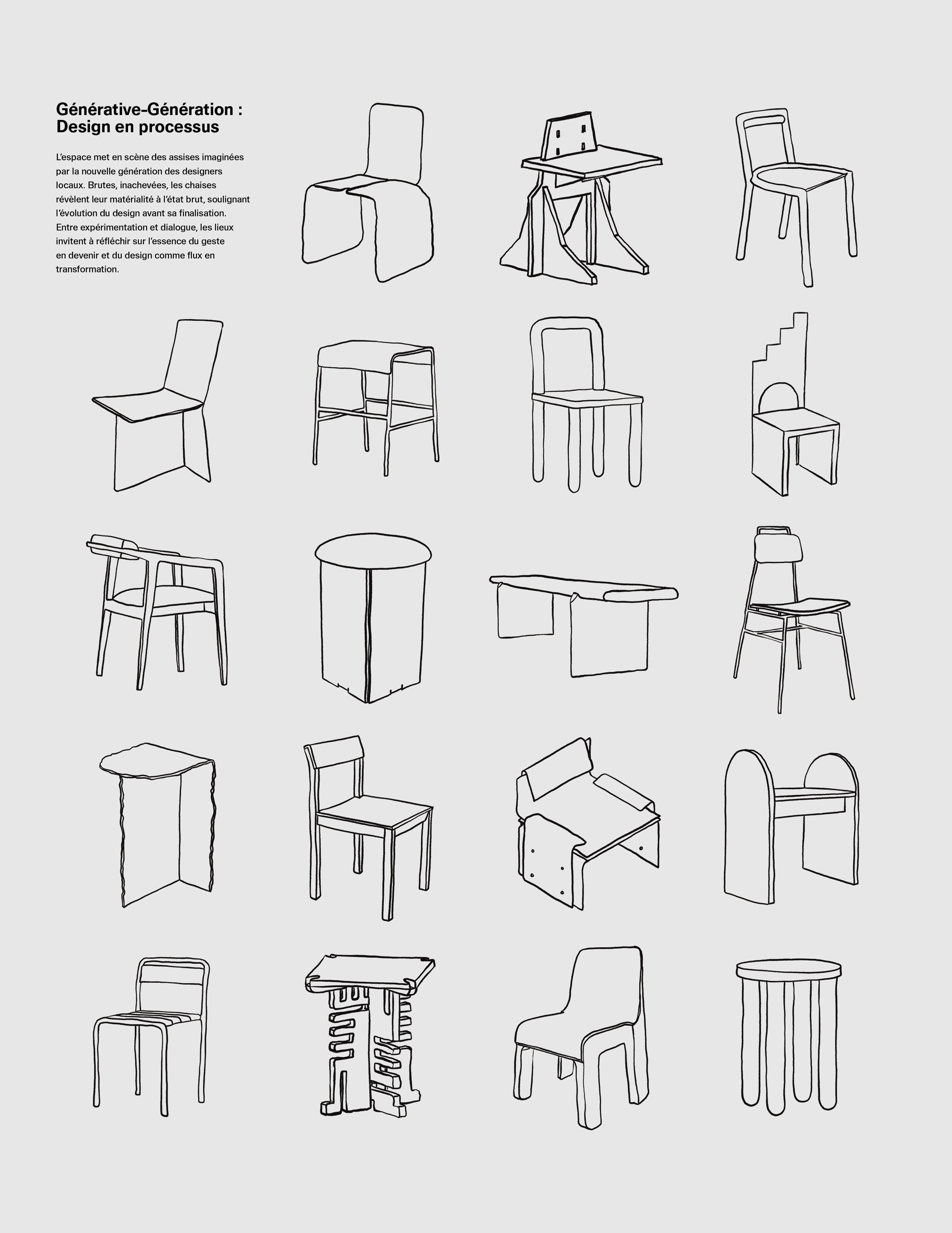
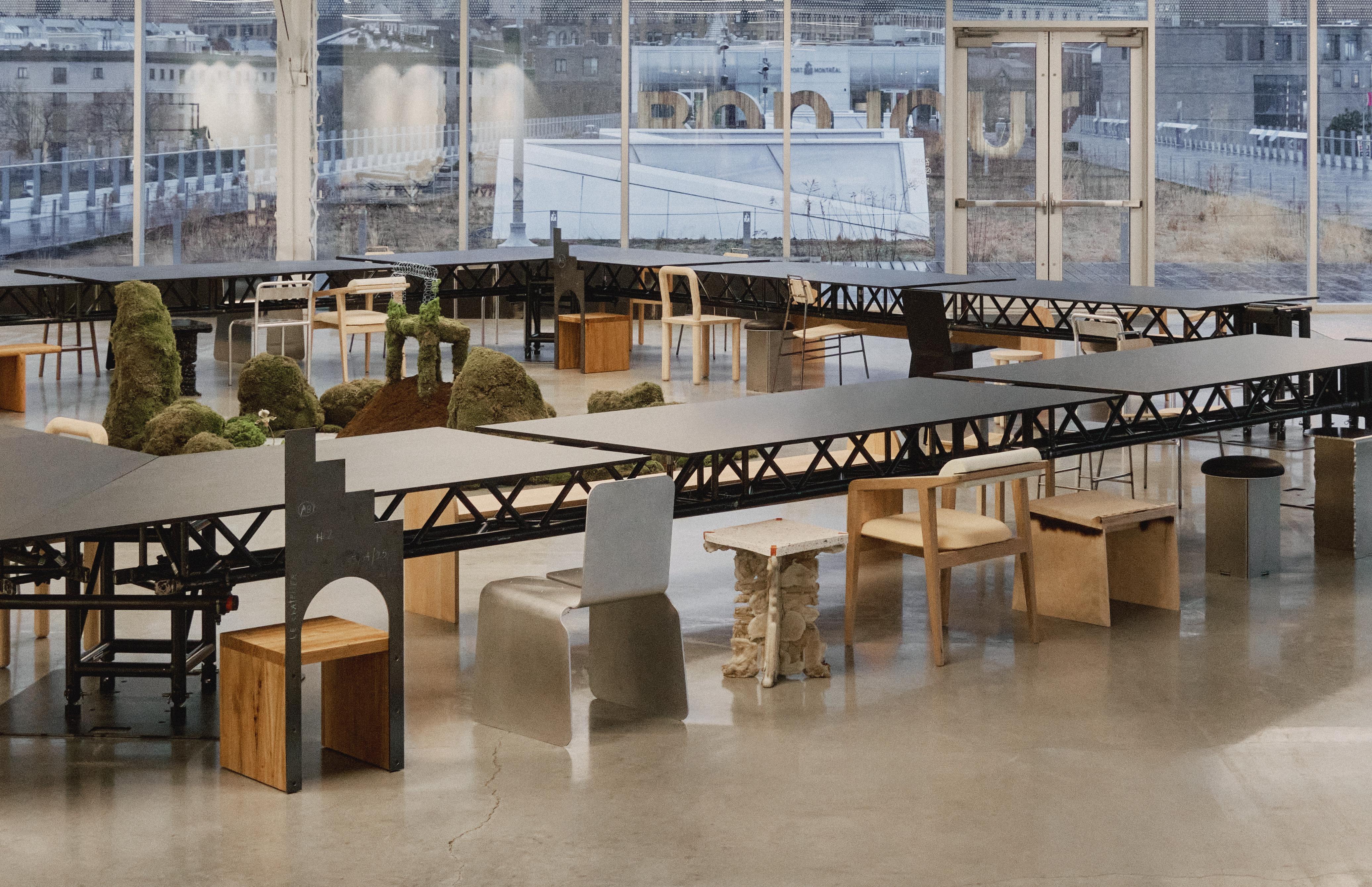
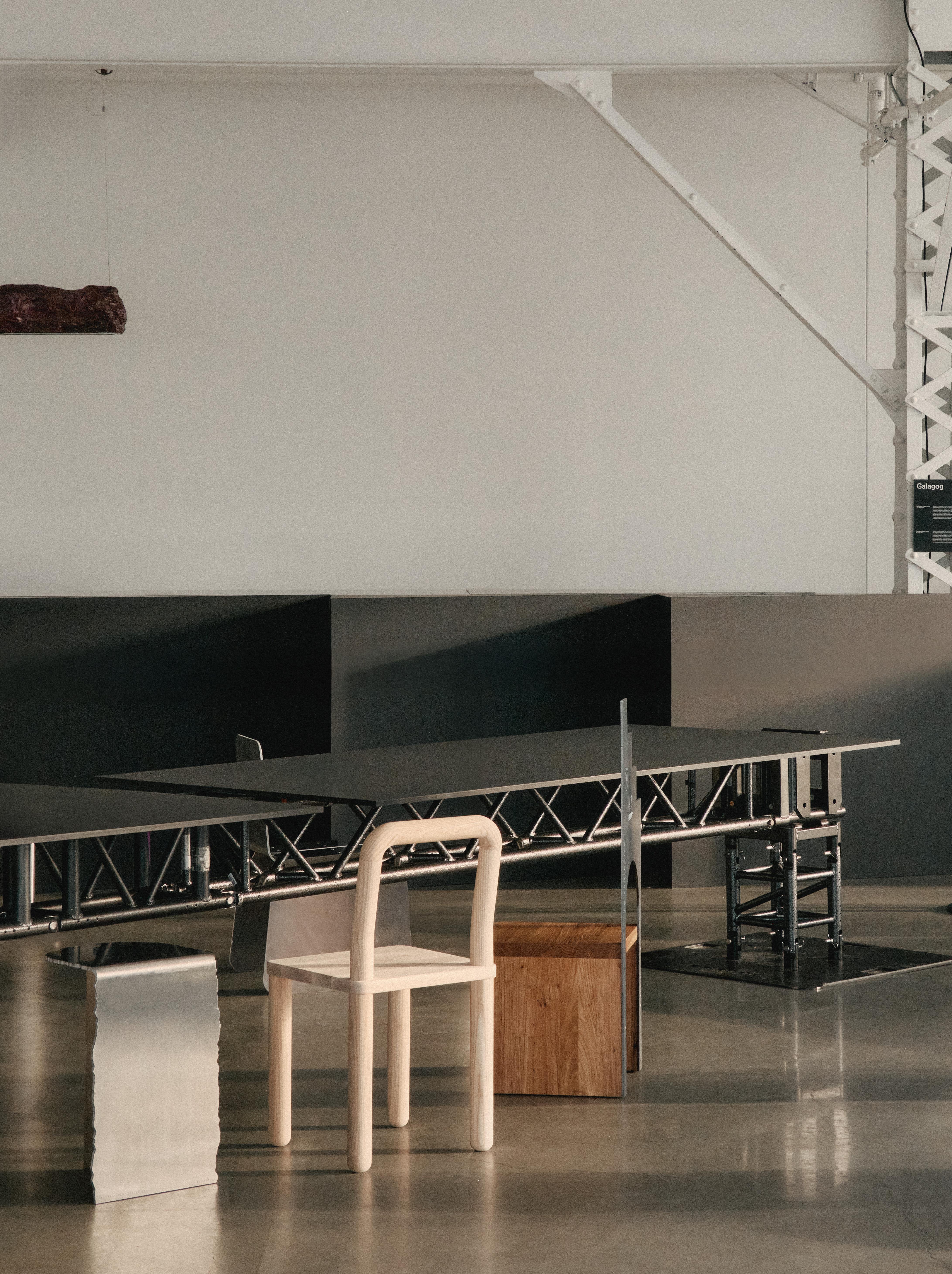
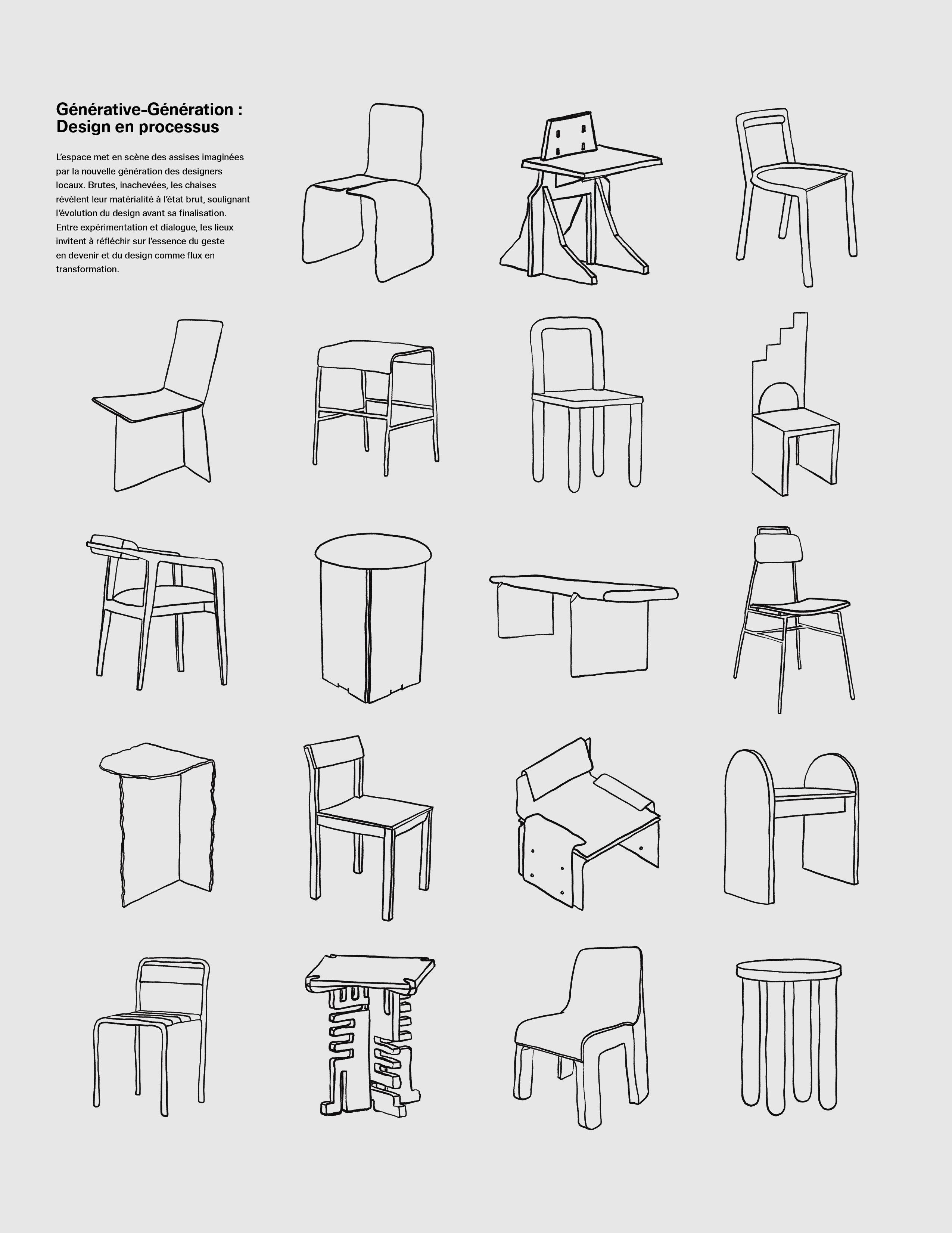
At the restaurant, a large communal table made of black plywood panels and stage rigging occupied the room's center. Around it, a collection of chairs by local designers formed a lively, eclectic composition. Each piece was presented in its raw state: exposed joints, visible materials, unfinished surfaces. Illustrated menus on the table described each chair, its designer, and its making story — like a wine list in a neighborhood bar. At the heart of the space, an installation by Studio Sveja blended foam, soil, and mesh to create a circular landscape dominated by a sculptural, plant-covered chair — a tribute to the elusive beauty of creations in the making. Nearby, Galagog, a light fixture by Gim Bert, along with its imposing mold, stood over the restaurant’s counters.
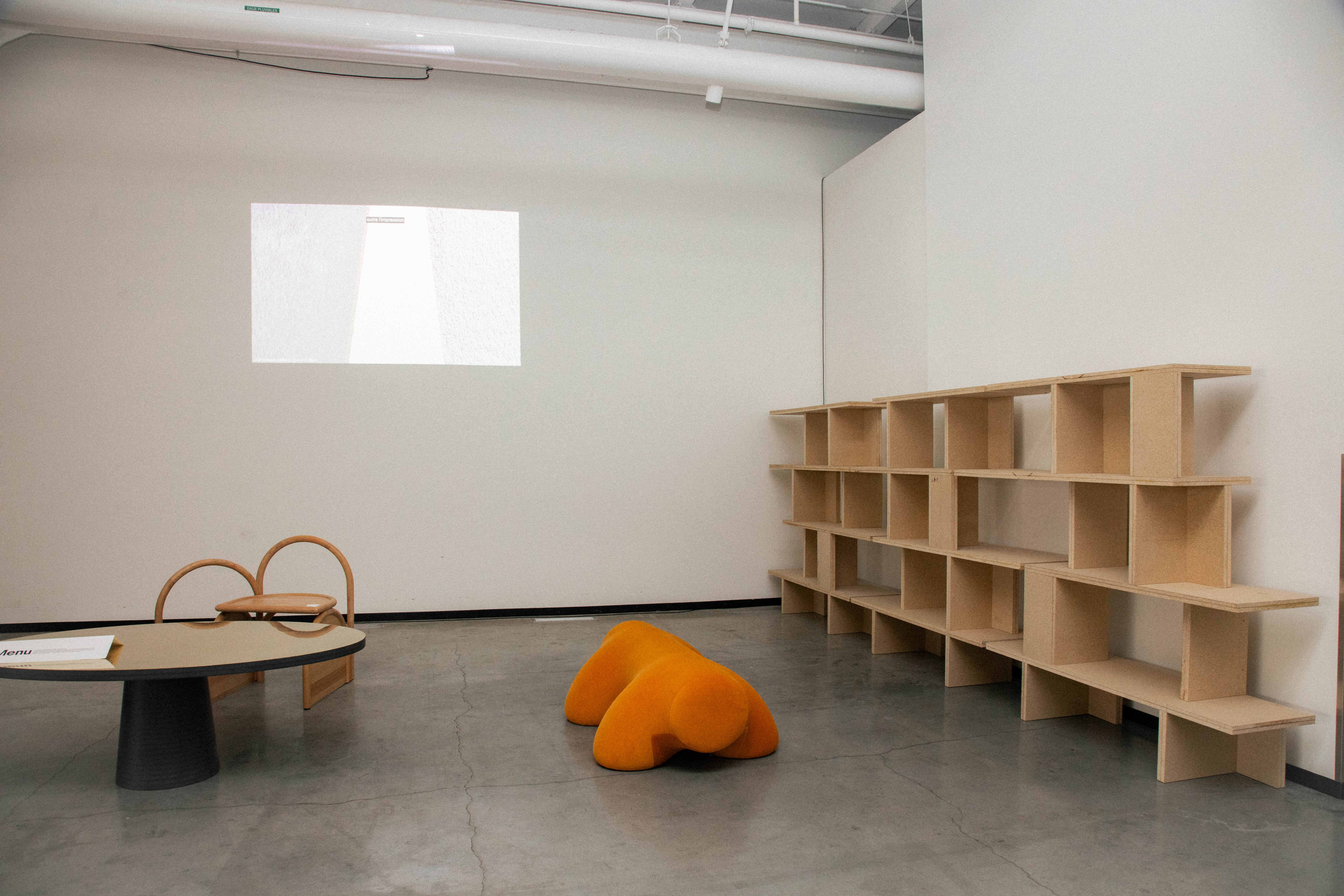
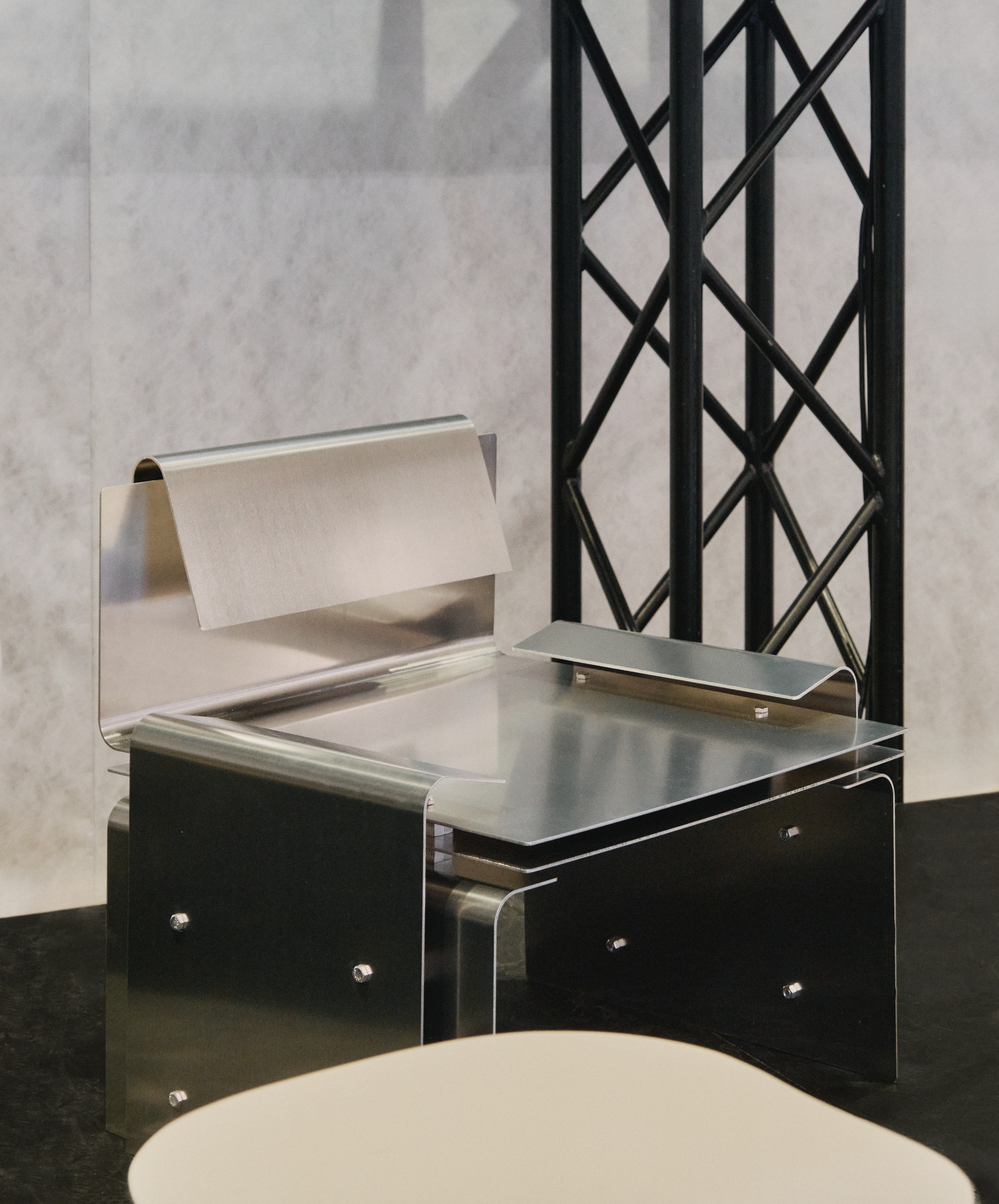
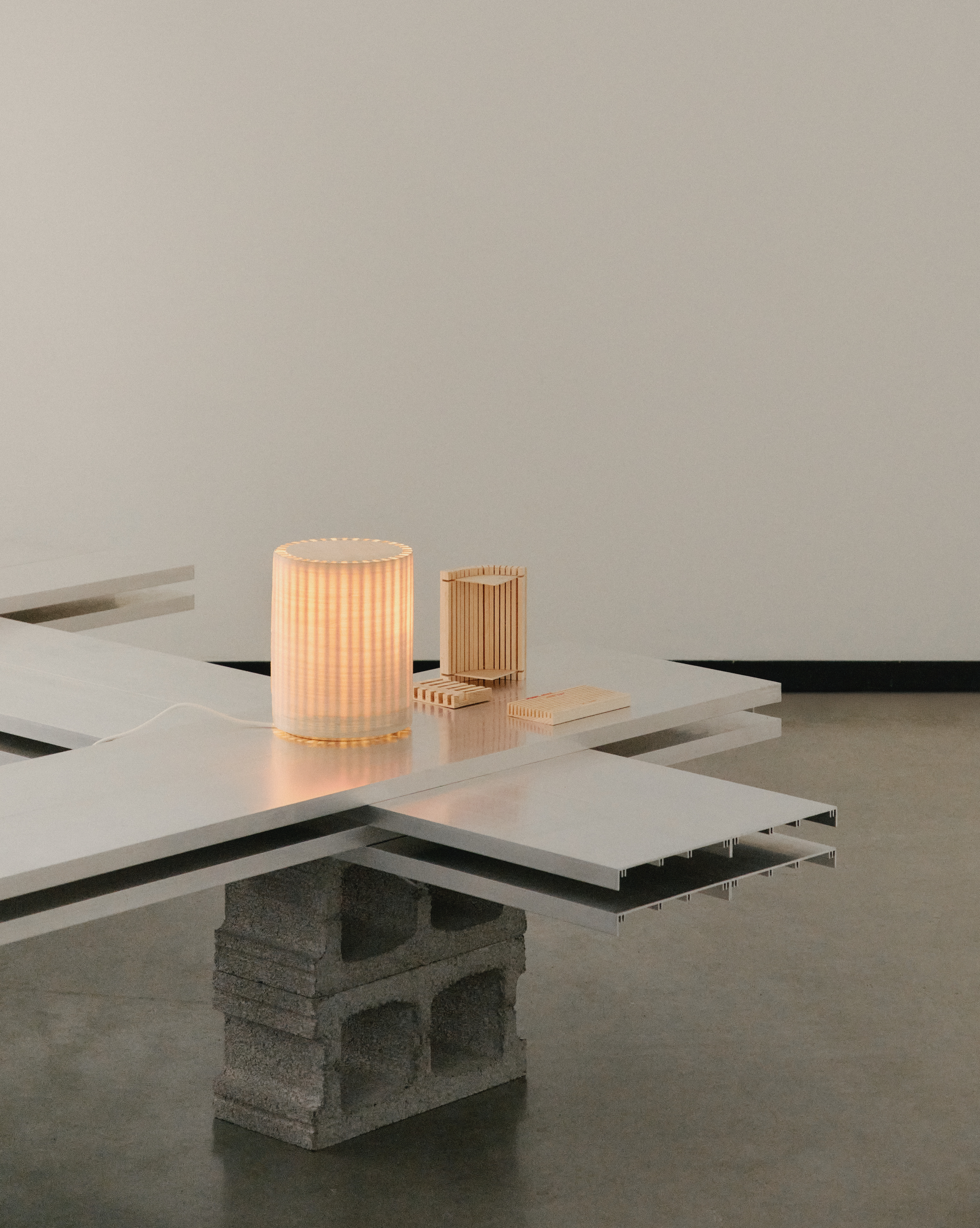
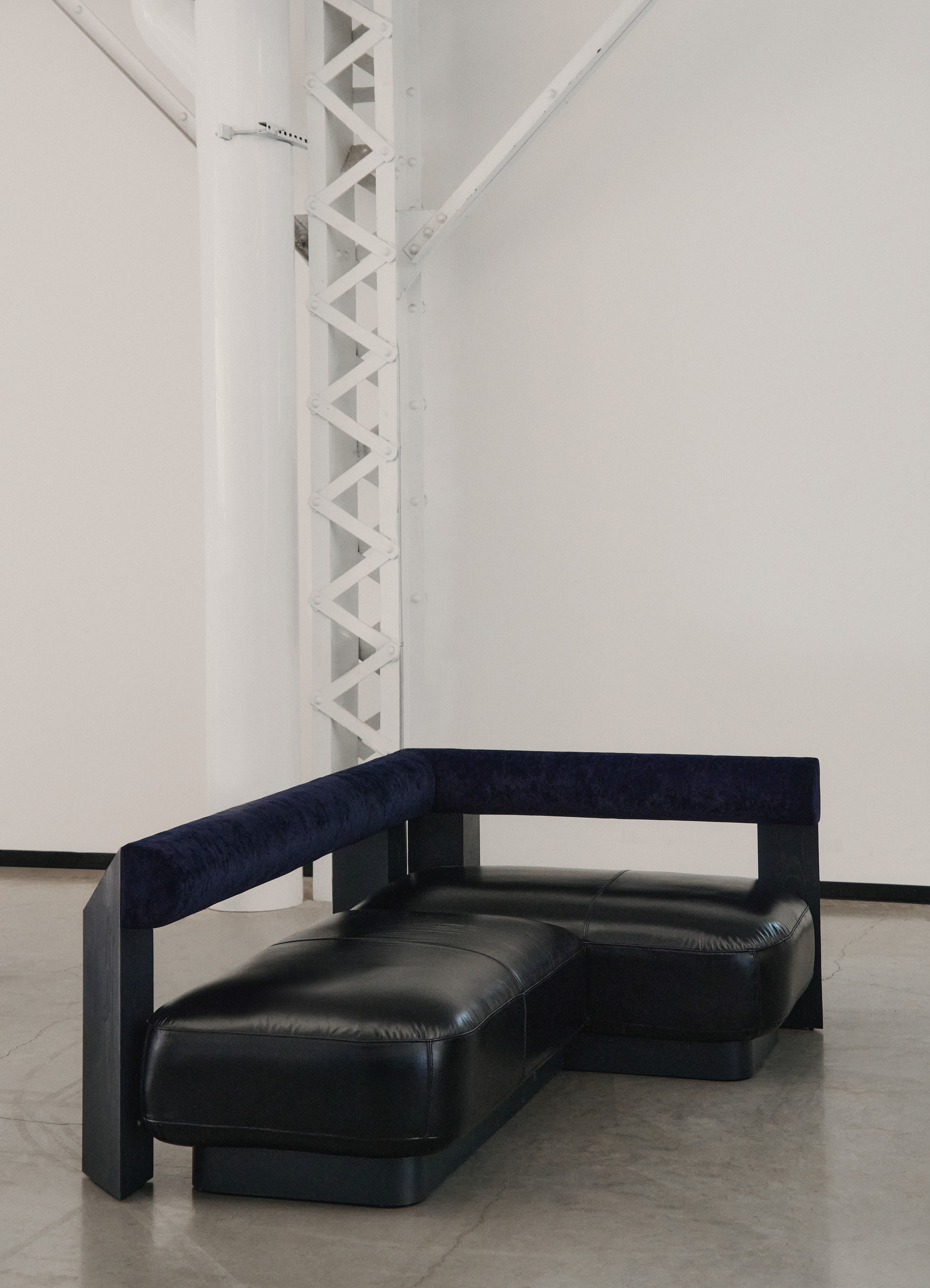
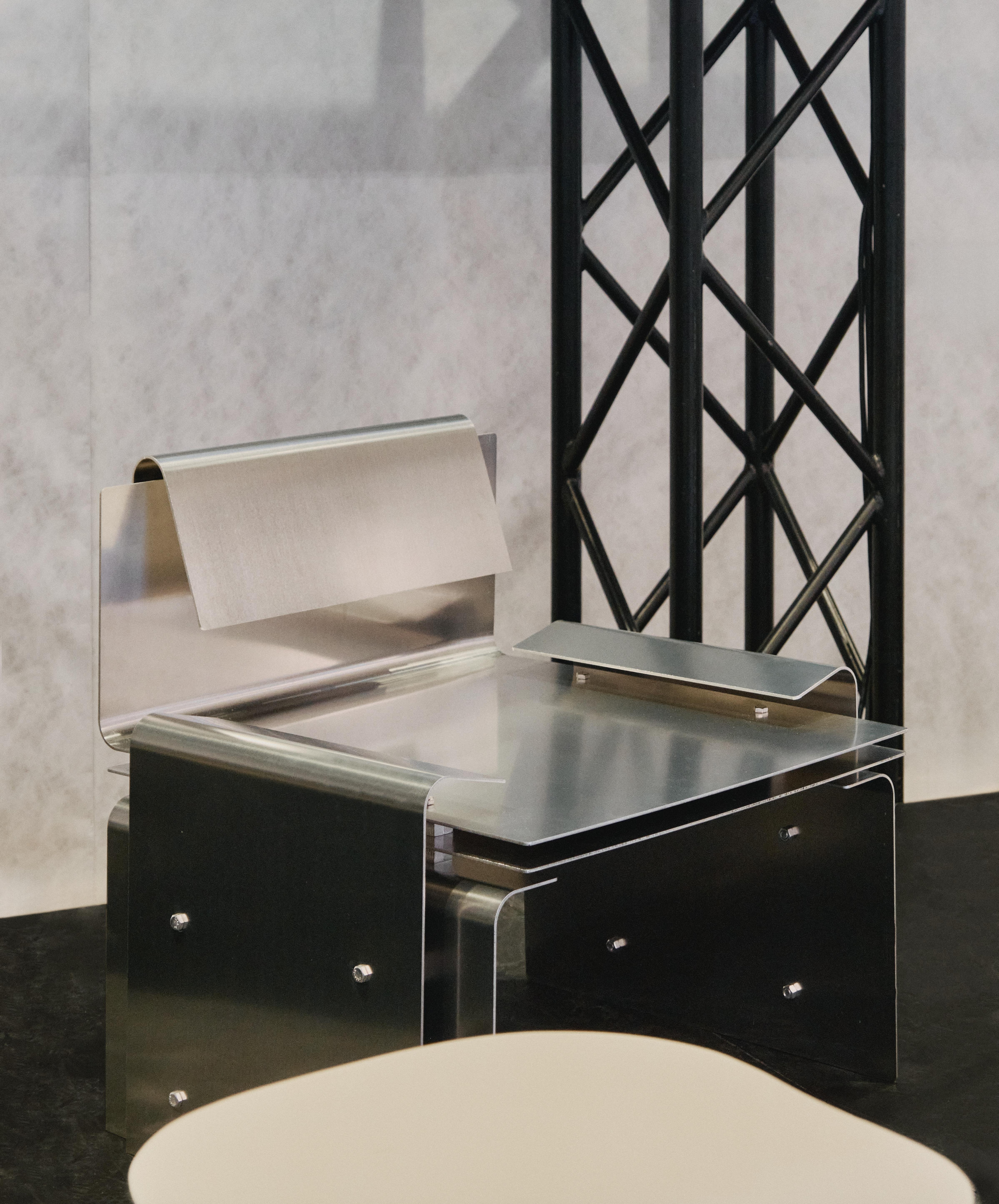
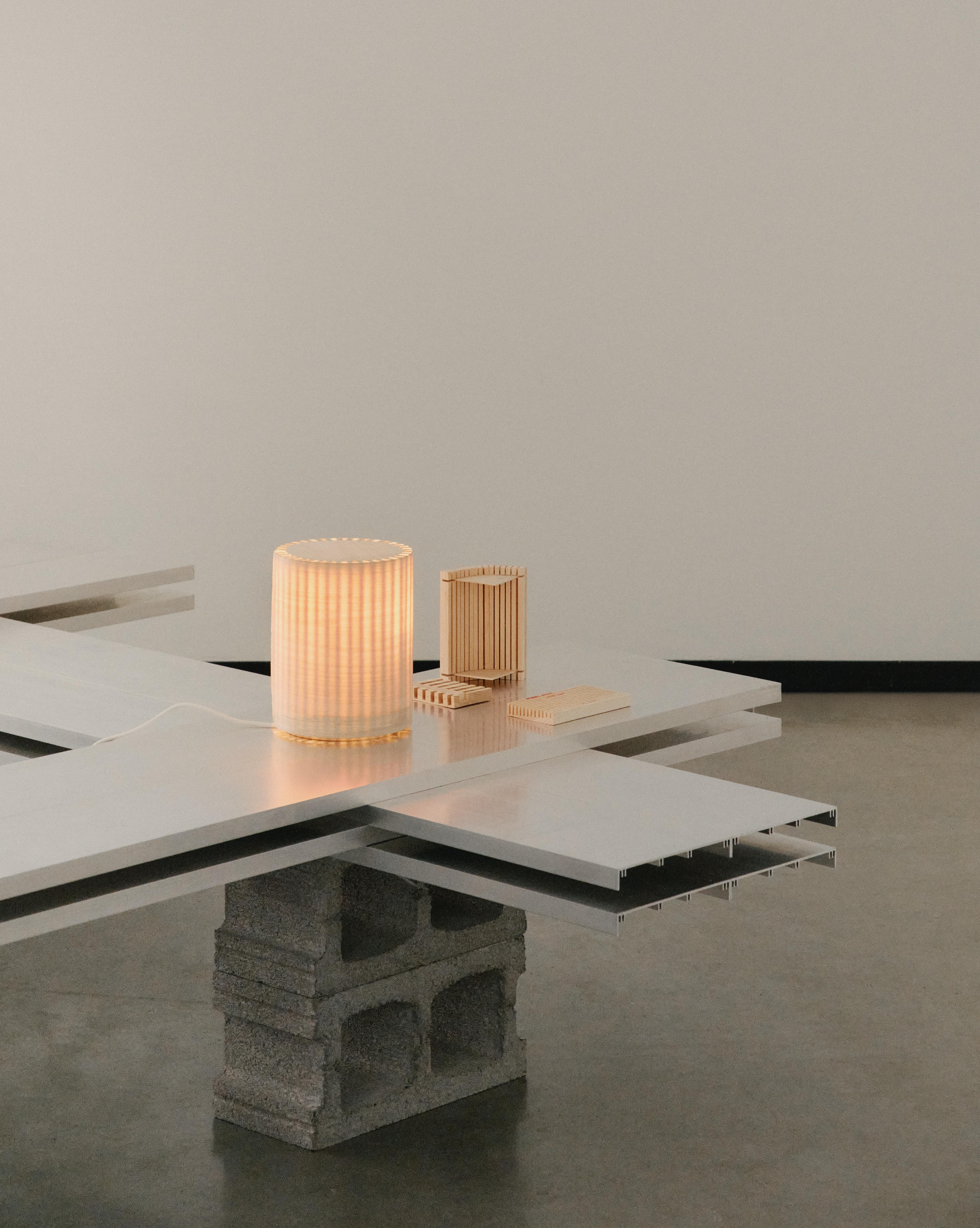
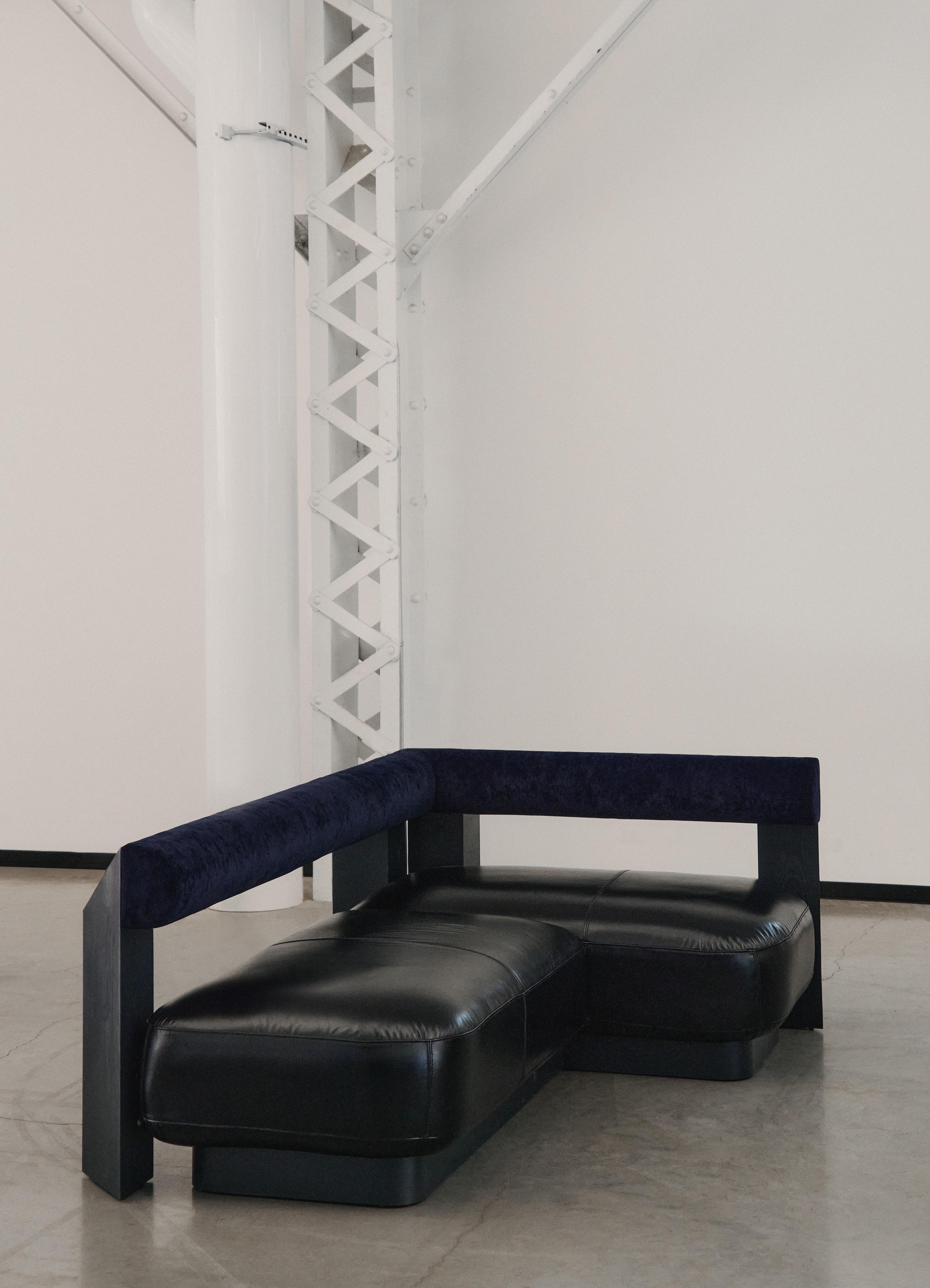
Other interventions punctuated the surrounding area. A prototype lounge showcased furniture in the exploratory phase — the VM02 sofa by Ivy Studio, the Brass et Patina table and a chair by L’Autre Atelier, the Tom bench by Reggy St-Surin, and a shelf prototype by Quinlan Osborne for Claste Collection — some heading toward production, others remaining unique pieces, all in progress.
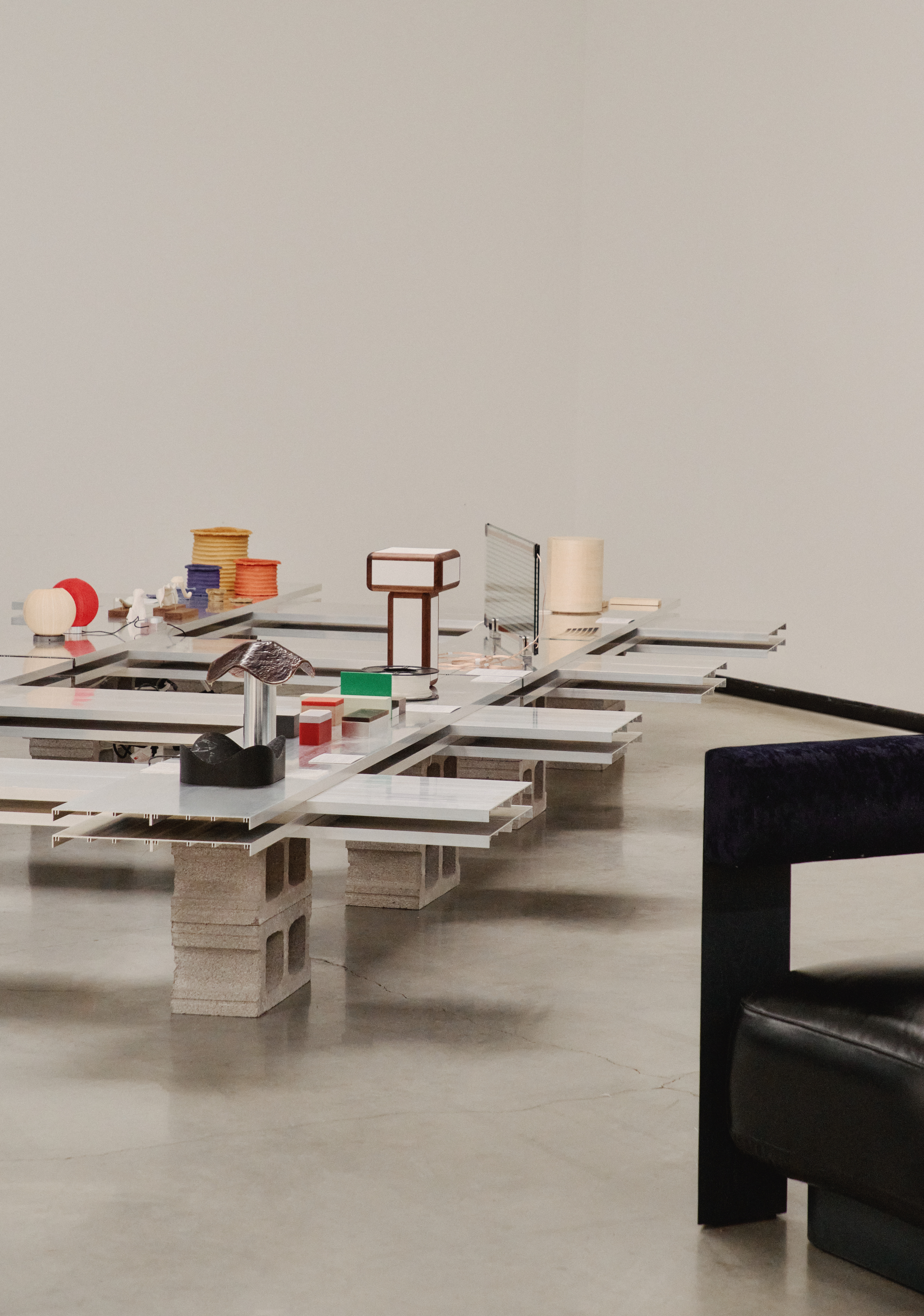
In the main hall, artist Delphine Huguet suspended colorful silks across the frame of an unfinished wall, adding a tactile softness to the construction language. Further on, the Canadian collective Double Entendre exhibited a series of one-of-a-kind objects, each piece revealing its own process through intentionally exposed details, challenging the constraints of standardized production methods.
L’emploi du temps, a video projection by Thomas Balaban, featured Québec-based designers exploring generative AI. The work highlighted creations inspired by ambiguity, reinvention, and the unexpected — a balance between unpredictability and intention.
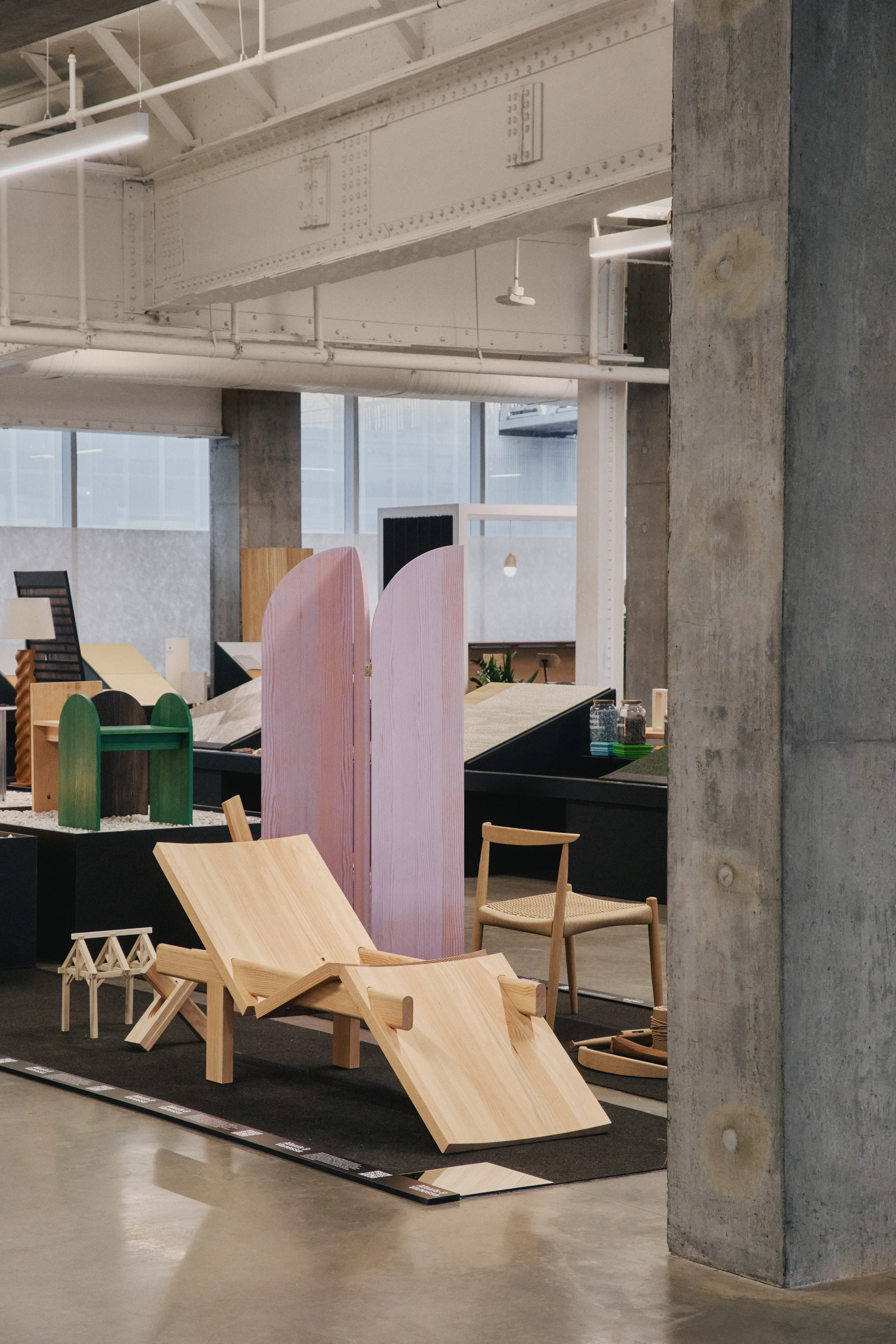
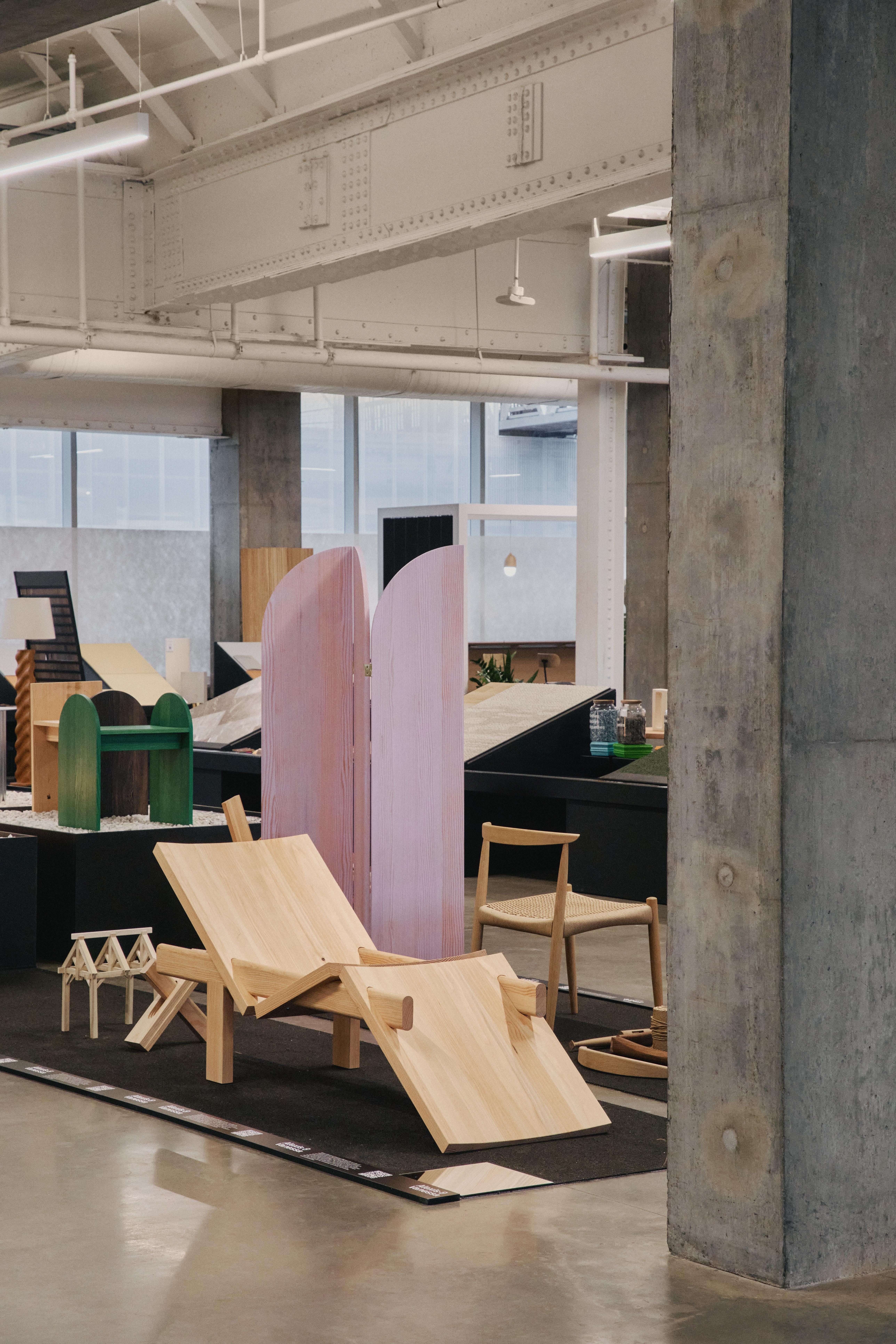
The scenography embraced a raw, transitional, and functional aesthetic. Freestanding walls made of raw wood and covered in construction-grade Tyvek divided the spaces while letting light filter through. Their materiality underlined the temporary nature of the intervention, designed to be reused on future building sites. Some walls guided circulation, while others served as supports for signage or creative expression.
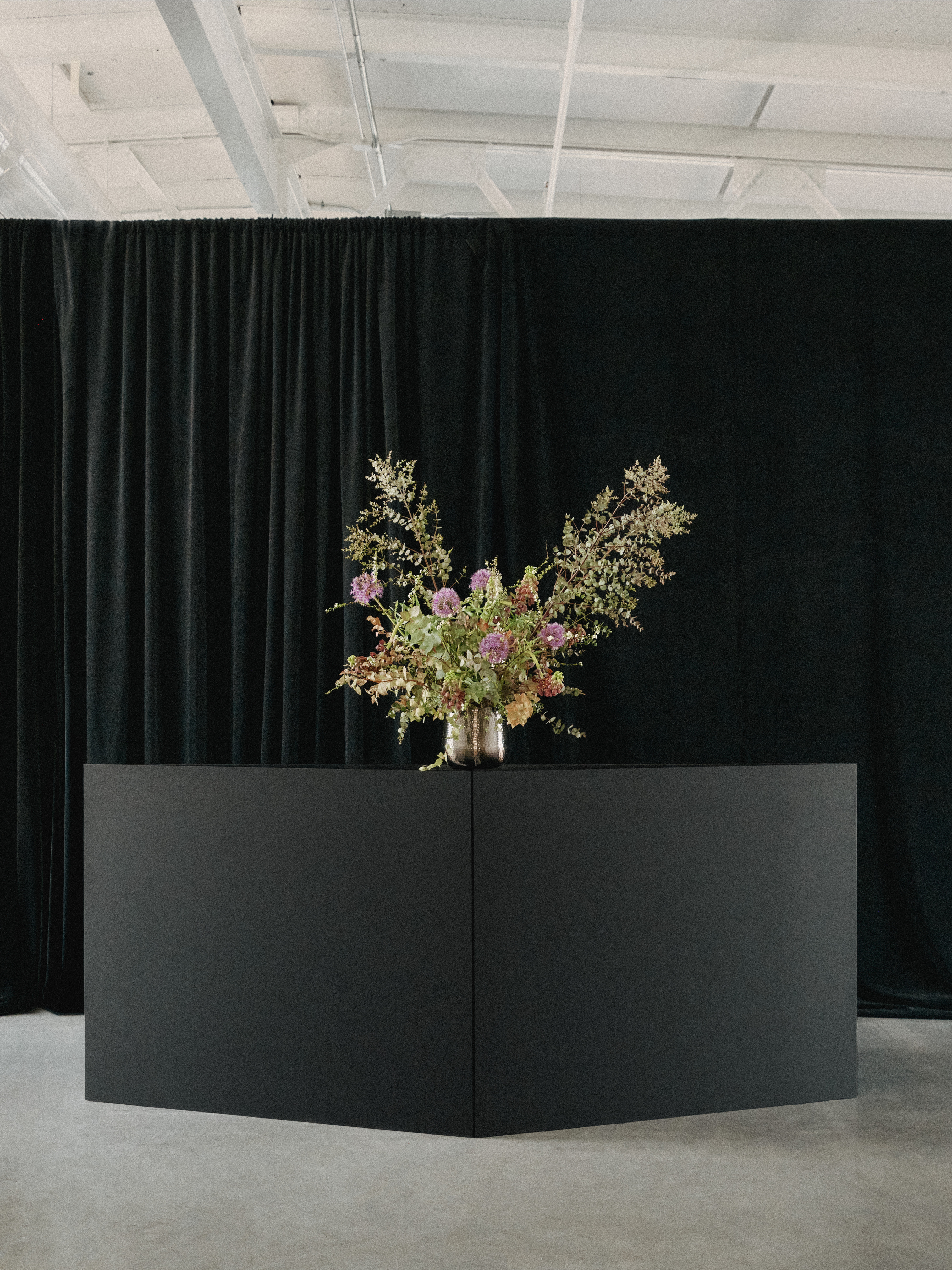
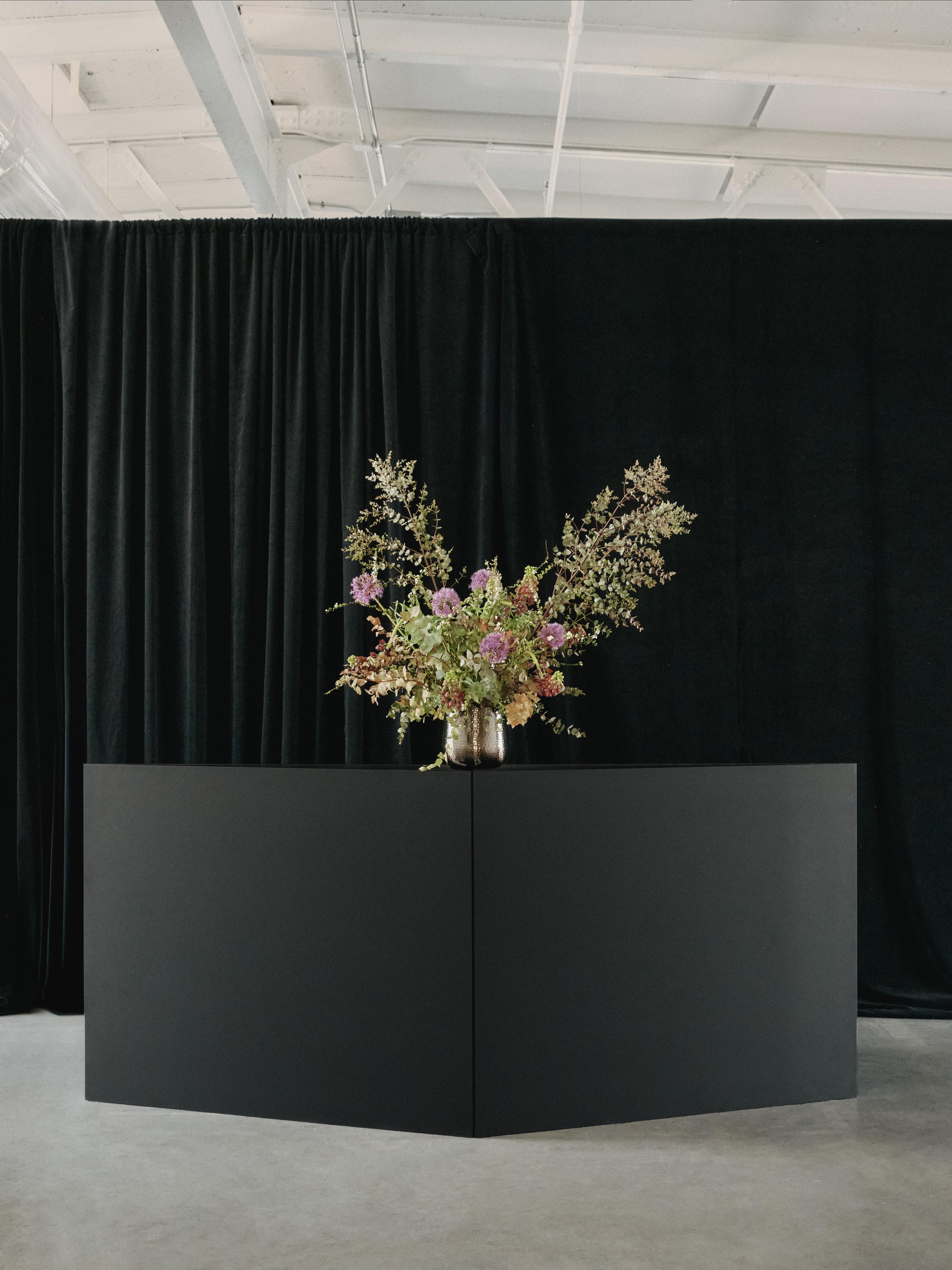
Furniture reused from previous editions was reimagined into new configurations. Rectangular modules, combined with new black tabletops, became exhibition tables. Other modules formed counter fronts or benches. Together, they created a cohesive visual grammar — familiar yet transformed.
Echoing the central theme, each exhibitor incorporated into their space a square mirror, object, or material fragment symbolizing a reflection of their creative process or approach.
Exhibitors included: ALKEGEN, American Biltrite, Arancia Lighting, Atelier Arch, Atelier du Chef, Atelier Fomenta, Atelier MZO, BAINULTRA, Blaise Émilie, Blum, Brochette, Caesarstone, Centura, Céragrès, Ceratec Surfaces, Cime/Haworth, Ciot, COSENTINO, CPL, Disamare, éclairage Hitech, Éditions 8888, edp, Espace Cab Déco, Gabriel Page Mobiler, Garrett Leather, Ghauz, Gim Bert, HydroTuiles, Ināt, Jérémy Paguet, JETA, Johnstone Béton Architectural, Kohler, L’Autre Atelier, La Fabrique Allwood, Laboratoire Textile, Lajoie, Le Tenon La Mortaise, Lightbeans, Lixil / Grohe, LumiGroup, TIBO lighting, MARdiROS, Marie Dooley, Mark Krebs, Matière Buissière, Mobico, Mohawk Group, National Energy, Planchers MIRAGE, Print International, Ramacieri Soligo, Reggy St-Surin, SANGARE, Shaw Contract, Anderson Tuftex, studio botté, Supergrand, Tafisa Canada, Tarkett, Prosol, Taymor, Teknion, ToHook, Turf, Henderson, Typologie, Uniboard, Vicostone, Woodzco, XL Flooring
Watch related video.

















Have something to say? Share your thoughts with us in the comments below.