

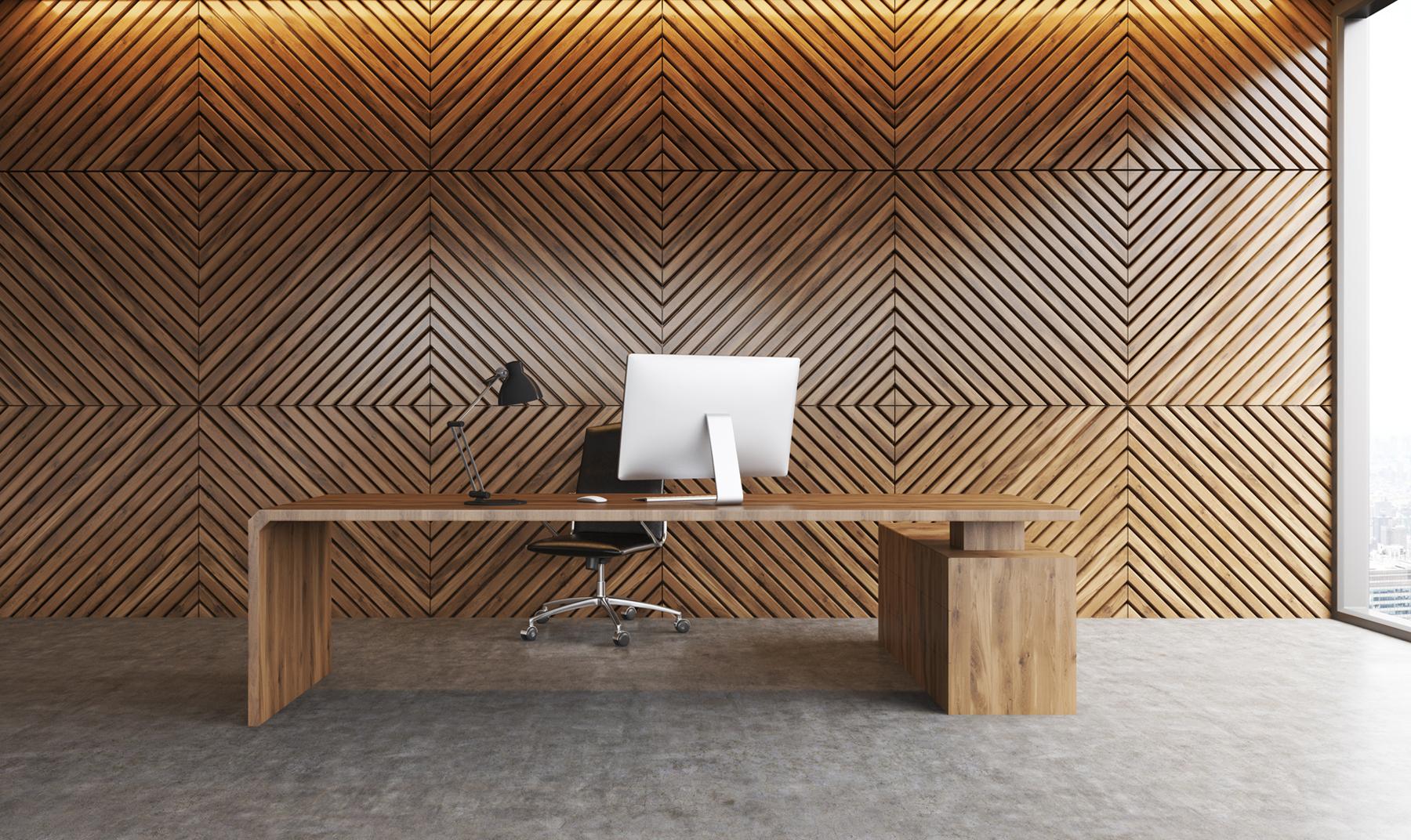
Particleboard is widely specified for its durability and smooth, uniform, defect-free surface. Manufactured to precise thicknesses and offered in a variety of panel sizes, it delivers consistent quality and design flexibility which makes it ideal for efficient production lines and high-quality finished goods that can be easily painted or paired with decorative surfaces for office and residential furniture, kitchen and bath cabinets, shelving, store fixtures, underlayment, and stair treads (Source: Composite Panel Association).
Engineered from cellulosic particles of various sizes bonded with a synthetic resin or binder under heat and pressure, particleboard offers reliable structural performance. Additives can be introduced during the manufacturing process to enhance key properties like improved dimensional stability, increased fire retardancy, and enhanced moisture resistance, allowing the panel to be tailored to specific end-use requirements.

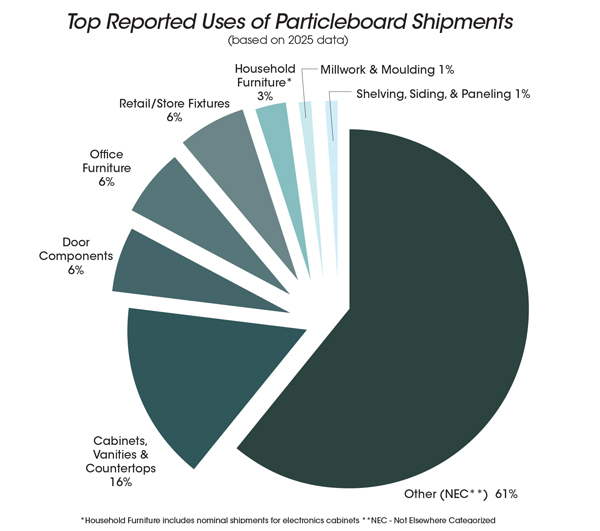
Particleboard: Dependable durability
Particleboard delivers exceptional design flexibility and ease of fabrication, and is available in various dimensions with diverse physical properties. Its superior machining performance makes it well suited for postforming countertops, cabinetry, furniture, store fixtures, and more. Highly versatile, particleboard supports a wide range of uses — from flooring and stair treads to millwork and mouldings — making it reliable for functional and design-driven projects.
 |
TECHNICAL RESOURCE  Looking for More Information on Particleboard?The Composite Panel Association develops industry standards, technical resources, sustainability information, and educational materials for designers, specifiers, fabricators, and manufacturers working with composite wood panels and decorative surfaces. |
Product standards, certification, and environmental specifications
ANSI A208.1 is the North American voluntary standard for particleboard, classifying it by density, strength, and physical properties while addressing formaldehyde emissions. Sponsored by the Composite Panel Association (CPA) and developed with industry stakeholders, ANSI A208.1 is available through the CPA website, CompositePanel.org.
Third-party certification to ANSI 208.1 is required for many applications, including underlayment and stair trends. All manufacturers of particleboard sold in the U.S. and Canada must meet the third-party certification and formaldehyde emissions testing requirements under EPA’s TSCA Title VI and CARB ATCM 93120 and/or the Canadian regulations (CANFER, SOR/2021-148).
Environmental Product Declarations (EPDs) are the widely accepted standardized specification format for communicating a product’s environmental footprint and performance. The EPD for particleboard manufactured in North America offers reliable, scientifically backed data and can be used to directly compare alternative materials.
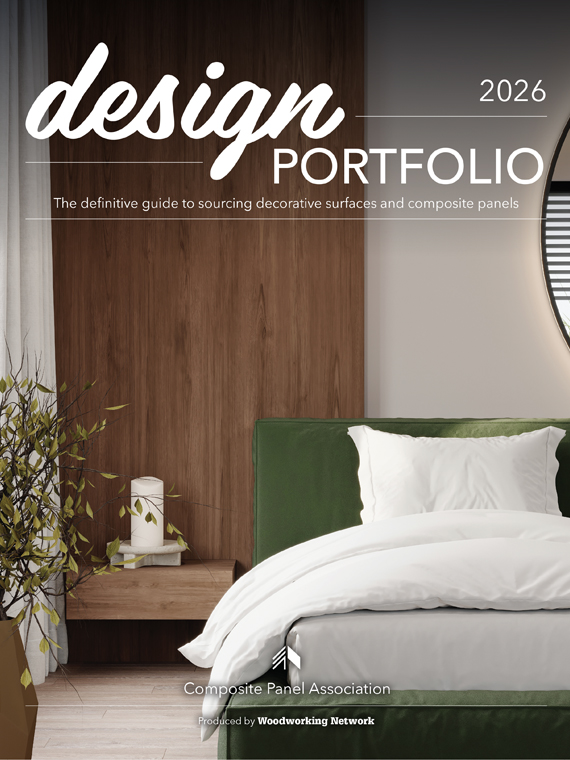
Learn more about the science-based sustainability story of North American-made particleboard and how these wood-based panels that carry the Eco-Certified Composites (ECC) certification label provide verification to high standards for manufacturing renewable materials with near-zero waste. For additional information, see “Choosing Composite Wood Panels” in the 2026 issue of Design Portfolio.
Find more online: Particleboard ANSI Property Requirements & Emissions tables.
| → Particleboard | → Decorative Surfaces |
| → Sustainability | → CPA Product Finder |



Have something to say? Share your thoughts with us in the comments below.