

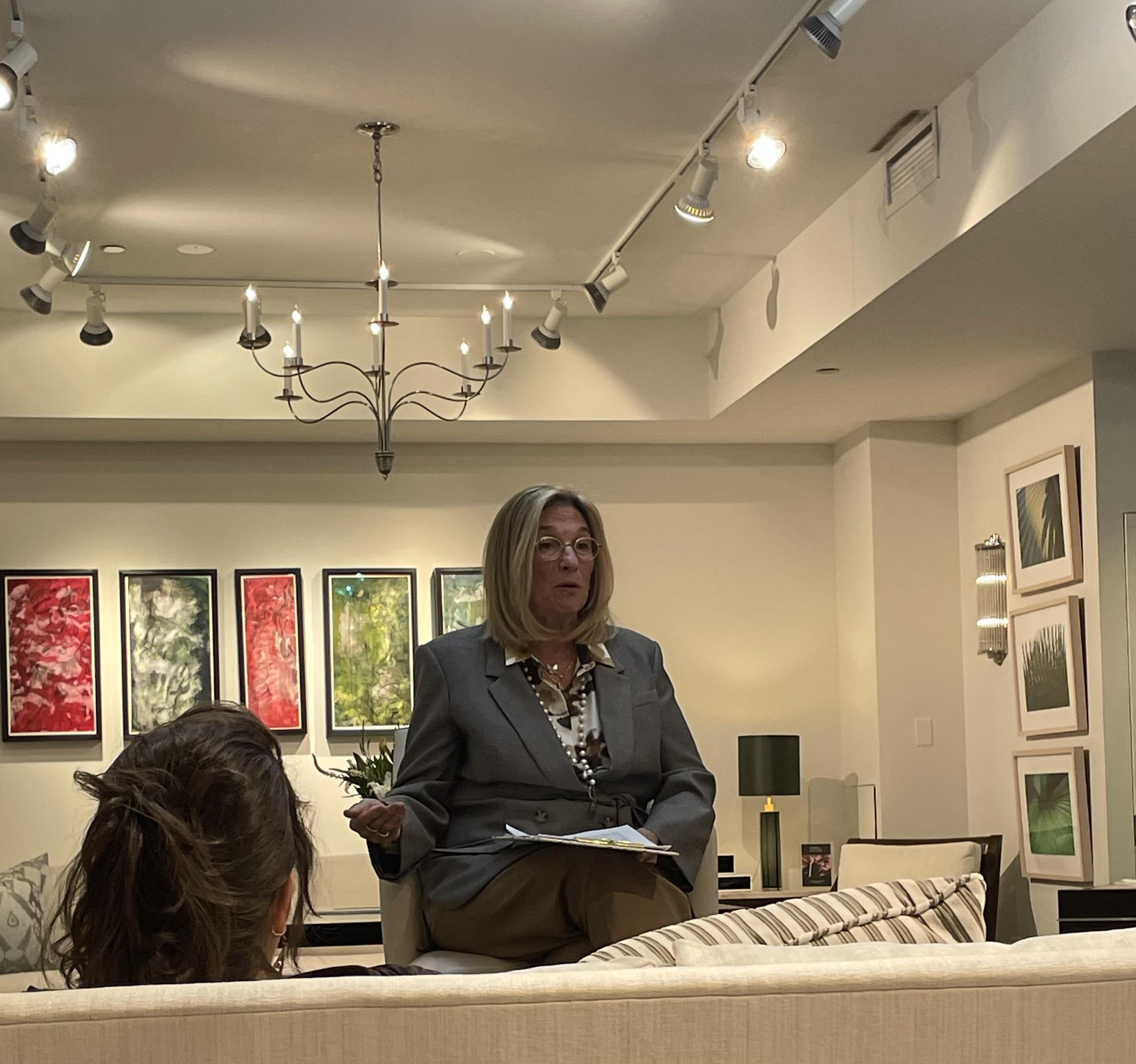
CHICAGO – Art should be treated as an essential, foundational element of interior design, not just a final accessory, designer and photographer Laurel Feldman, founder of Laurel Feldman Interiors Inc., told an audience at the 2025 Design Chicago conference. During a talk hosted at the Ferrell Mittman | Avery Boardman showroom in The Mart, Feldman shared her approach to integrating fine and decorative arts into interior spaces.
"Art is the most intact and defining element within a design space," Feldman said. "It can transform a room, giving itself meaning and depth."
Feldman addressed a common question among designers: Should art be selected first to guide a project, or last as the "frosting on the cake"? "I say art can be both," she stated, explaining the approach depends entirely on the client.
If a client already owns a significant collection or a deeply personal piece, that artwork should become the "guiding force" for the room's color palette, mood, and furnishings. However, when starting with a blank canvas, art can serve as the final, unifying element that "brings the space to life."
Feldman emphasized that it is a designer's professional responsibility to be educated about the art world. She urged attendees to continuously build their knowledge by:
- Visiting art museums to develop a visual understanding of different periods, artists, and media.
- Attending art fairs and antique shows to keep a pulse on the market and discover new artists.
- Building relationships with galleries, which she called a designer’s "most personal resource" for sourcing and consultation.
Art selection is a deeply personal journey, and Feldman provided practical advice for helping clients navigate the process. For those unsure of their tastes, she suggested a simple exercise: have them visit a museum and identify which piece they would take home if they could. "It's very telling and gives us all a bit of a starting point," she noted.
During a Q&A session, Feldman also tackled the common challenge of establishing an art budget early in the design process. She reassured designers that quality pieces can be found at all price points, but that it’s crucial to allocate funds specifically for art to ensure a project feels complete. "The job's not finished 'til there's something on the wall," an attendee commented, a sentiment Feldman echoed.


Have something to say? Share your thoughts with us in the comments below.