

I have heard it time after time. “I wish I could make my sandpaper last longer!” You may not know it, but you could hold some of the keys to doing just that! A few factors that you can control could extend the life of your sandpaper before and during its use. This could cause you to use less sandpaper and save you time and money.
Sandpaper storage
Did you know that how and where you store your sandpaper could affect its longevity?
Three common enemies to long-lasting coated abrasives are temperature, humidity, and dust. We will call them environmental variables.
Temperature
Temperatures vary greatly not only from season to season, but also throughout different parts of the country. If your shop is not sufficiently heated and/or air-conditioned, your sanding disc can experience cold temperatures during the winter and then extremely warm temperatures during the summer. In addition, the rapid temperature changes of the days in between winter and summer can cause the materials that make up the sandpaper to range from cold to very warm within the span of a day.
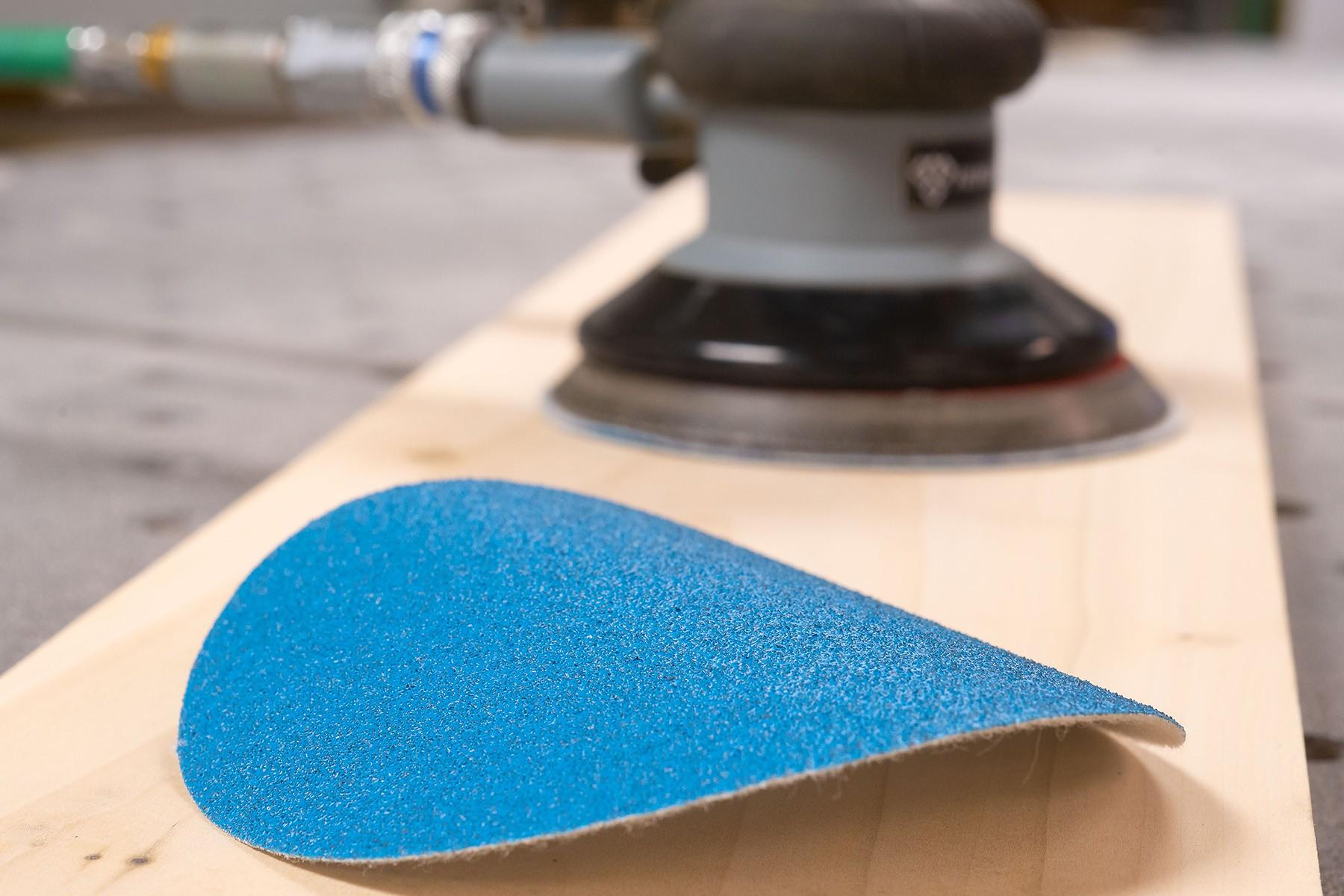
As most materials do, this will cause some expansion and contraction. The next thing you know, your sanding disc can look like a crunchy potato product that came from a can.
You might have hook and loop material or pressure-sensitive adhesive adhered to the backside of the disc and abrasives and resin on the front side. As the temperature changes from cold to hot, these two different types of materials will expand and contract at different rates. This will eventually cause what is commonly called potato chipping, where the outside edges of the discs will curl up into a potato chip or taco shape.
Humidity
Another enemy to protect against when storing your coated abrasives is humidity.
Imagine your sandpaper disc sitting on the shelf in your shop from one season to the next. And as it sits, humidity levels rise and fall.
Remember that this disc has a paper backing. Moreover, let me remind you what happens to paper when it sits in a high-humidity environment. It begins to absorb some of the moisture that is floating in the air, and before long, it becomes softer, more pliable, and weaker.
High humidity causes the backings to swell, and low humidity dries them out. This can, and most likely does shorten the life of your sandpaper.
This would be a good time to think about some of the newer latex-impregnated or polyester film backings that are inherently waterproof. Sure, they may cost a little extra, but if you get more life out of them, it could be worth the added expense!
Dust control
We have looked at temperature and humidity. The third environmental variable we will look at is dust. This one is just as prevalent in a wood shop as the other two. Woodworking creates dust! It is in the very nature of this craft that we all love.
Unfortunately, this woodworking by-product can wreak havoc on not only our tools, machinery, and even our health but also on the longevity of our sandpaper.
Actually, it is somewhat ironic. Sanding creates dust, and dust can have an adverse effect on sanding! If dust is not removed during sanding, it can affect the life of your sandpaper by allowing it to gather in the spaces between the abrasive grains, effectively loading or clogging the abrasives.
The solution? Remove dust from the equation! Employ active dust extraction.
Passive vs. active dust extraction
Passive dust extraction would be that which removes just some of the dust generated by the sanding process. Where it is done almost as an afterthought.
One example of passive dust extraction would be a downdraft table. A vacuum system is attached to the bottom of the table, whose top is full of half-inch holes that allow a portion of the dust to be extracted as you sand your workpiece on the surface of the table.
It removes some of the dust that is released into the air during sanding or that which falls onto the table. However, the dust that gathers on the surface of the workpiece is not affected by this system and stays in play during sanding.
Another example of passive dust extraction involves the random-orbital sander. There are two main types of vacuum systems on these tools. Self-generated vacuum and central vacuum.
The self-generated vacuum employs a small collection bag attached to the rear of the sander and uses the airflow generated by the sander’s normal operation to collect a portion of the dust during sanding. Again, it only collects a portion of the dust, as the vacuum is weak and inadequate to the task. I would classify this as passive dust extraction.
Nevertheless, passive dust extraction is far better than no dust extraction at all!
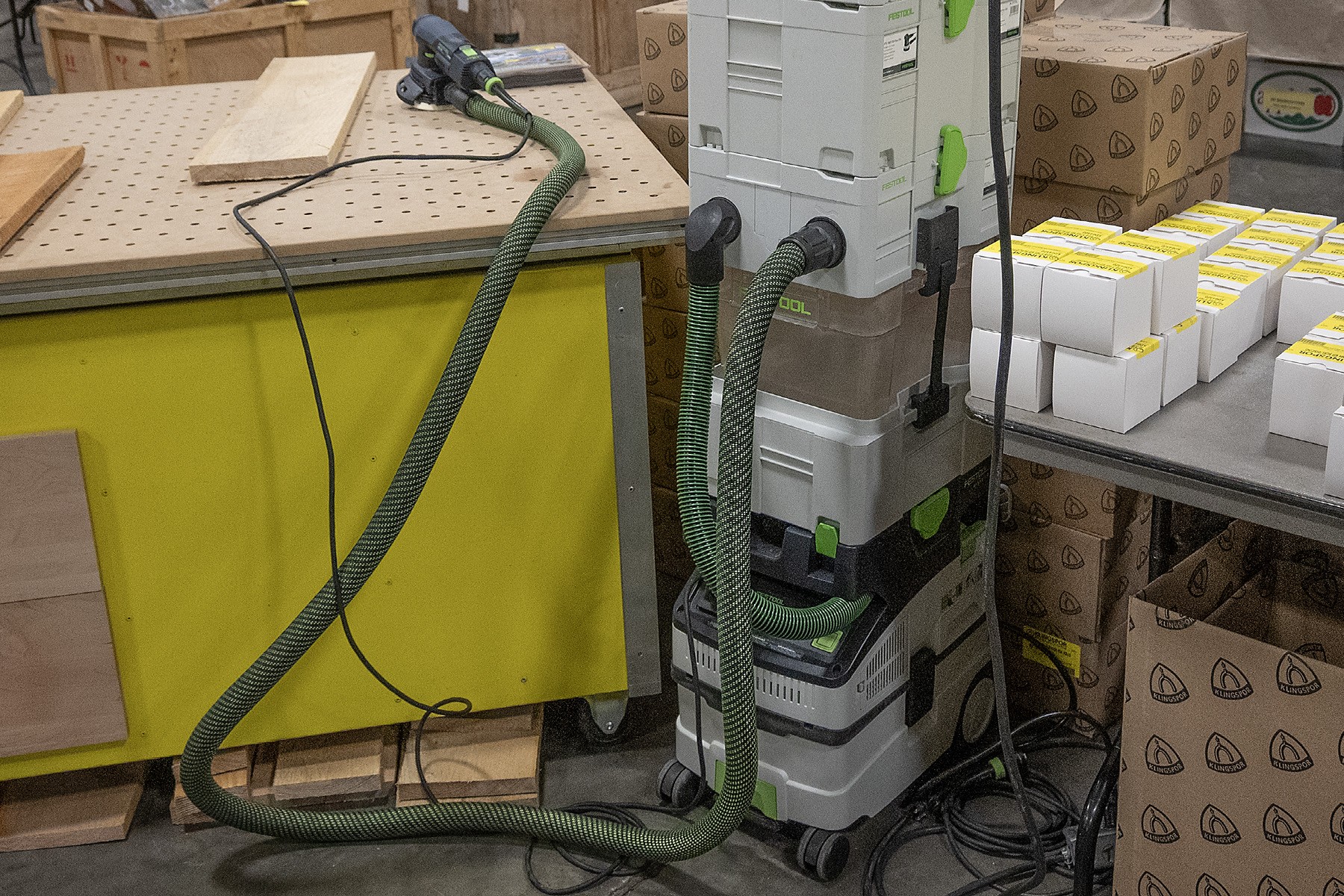
A central vacuum system is wholly dedicated to extracting most or all of the dust, leaving your workpieces virtually dust-free. This is active dust extraction. A dedicated vacuum system whose entire purpose is to remove the dust as it is generated. In addition, as an added bonus, a dust-free work surface can lead to better finishes!
As you see, you can have a measure of control over the life of your sandpaper.
Store your sanding products in an environmentally controlled space and employ active dust extraction. Following these steps can help you get the most out of your sanding discs, belts, sheets, and pads.
Here are some ideal coated abrasive storage conditions:
· Temperature: 60-80° F.
· Humidity: Low- around 45-65%.
· Keep out of direct sunlight.
· Do not store them on concrete floors.
· Keep them clean and dust-free.
Source: Nick DeMars is a product specialist at Klingspor Abrasives Inc. For information on Klingspor call 800-645-5555 or visit klingspor.com.


Have something to say? Share your thoughts with us in the comments below.