

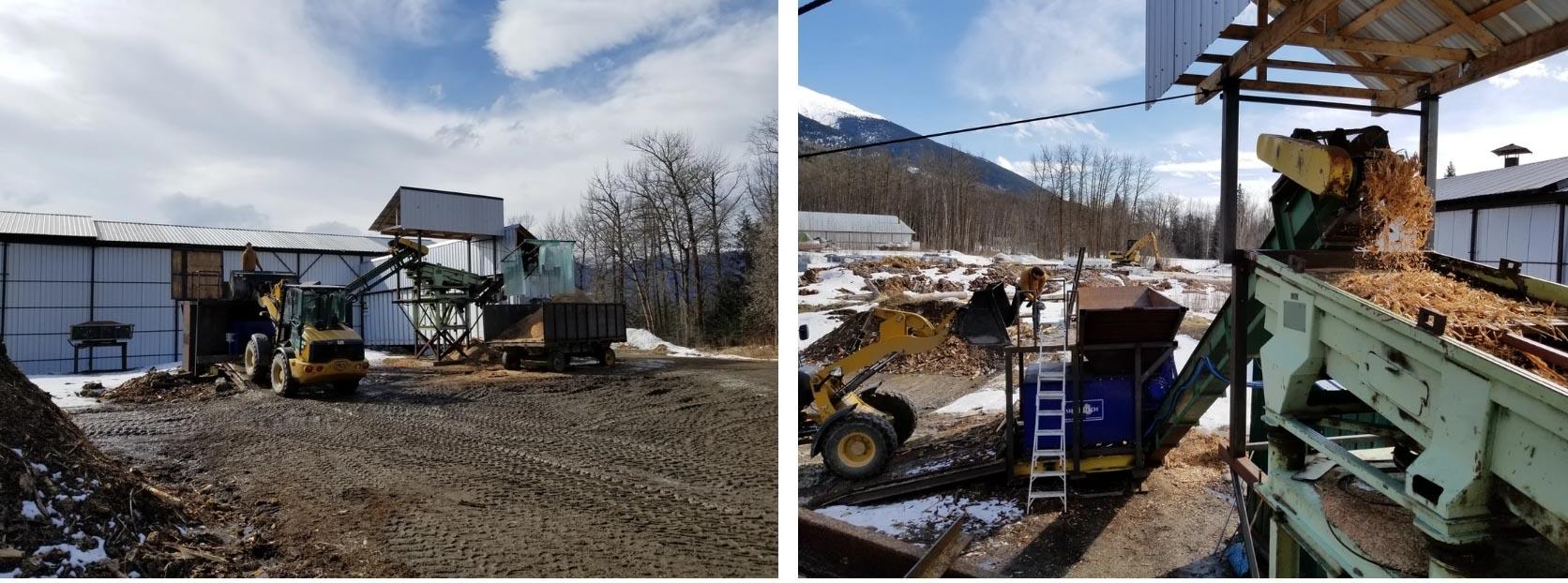
CARROT RIVER, Saskatchewan — Canada's Minister of Natural Resources, Jonathan Wilkinson, announced a $10 million contribution to BioLesna Carbon Technologies LP, a joint venture between BC Biocarbon and Dunkley Lumber Ltd., for a new biorefinery in Carrot River, Saskatchewan.
The contribution comes through the Investments in Forest Industry Transformation (IFIT) program, which aims to support Canada's forest sector resilience through targeted investments in advanced technologies and products.
The Carrot River Biorefinery will utilize BC Biocarbon's proprietary processes to convert residual biomass from Dunkley's forest operations to produce four initial products: biochar, bio-oil, wood vinegar and pyrolysis gas, an important fuel for the chemical and energy industries. These materials can then be further refined into value-added products such as soil additives, filtration media, electrodes and specialty chemicals. Based on the project's ability to substitute products derived from non-renewable sources and the carbon sequestration capacity of the biochar produced, carbon removal credits may also be generated.
Through this project, BioLesna Carbon Technologies LP will create local employment for the Carrot River community and surrounding areas. The Carrot River Biorefinery will also contribute to increased scale-up production and monetization of low-grade feedstock, as well as improve the utilization of forestry-based residuals and increase the diversity of forest products.
The Investments in Forest Industry Transformation program facilitates the adoption of transformative technologies and products by bridging the gap between development and commercialization. The IFIT program aims to create a more competitive and resilient forest sector with a focus on low-carbon projects that result in new or diversified revenue streams.
Through investments just like this, Canada is supporting and diversifying our forest sector in the implementation of more sustainable solutions and technologies that will increase competitiveness, drive growth, lower emissions and grow the economy.
"Canada's forest sector supports livelihoods and drives economic growth in communities across the country. Once operational, this biorefinery in Carrot River will allow residual materials to be further utilized as value-added products, thereby reducing waste and increasing sustainability. Smart investments like this one will ensure the diversification of the sector, providing new economic opportunities for local communities and sustainable jobs for workers," said The Honourable Jonathan Wilkinson. Minister of Natural Resources.
Peter Popplewell, CEO, BC Biocarbon, said "At BC Biocarbon, we are thrilled to have earned the confidence and financial support of NRCan to build this first of its kind facility in Canada using Canadian technology. By supporting BioLesna's project, NRCan has demonstrated their commitment not only to the continued technological evolution of the Canadian forest industry, but also to the importance of continued Canadian leadership in the development and deployment of leading-edge technologies that perform carbon removal and sequestration on an industrial scale."




Have something to say? Share your thoughts with us in the comments below.