

Since building my own home, I’ve decided that all houses are ongoing restoration projects. Before you can check off everything on the new construction punch list, likely something already needs repairing or replacing. But that hardly compares to all the work in keeping an antique New England Colonial home in habitable condition.
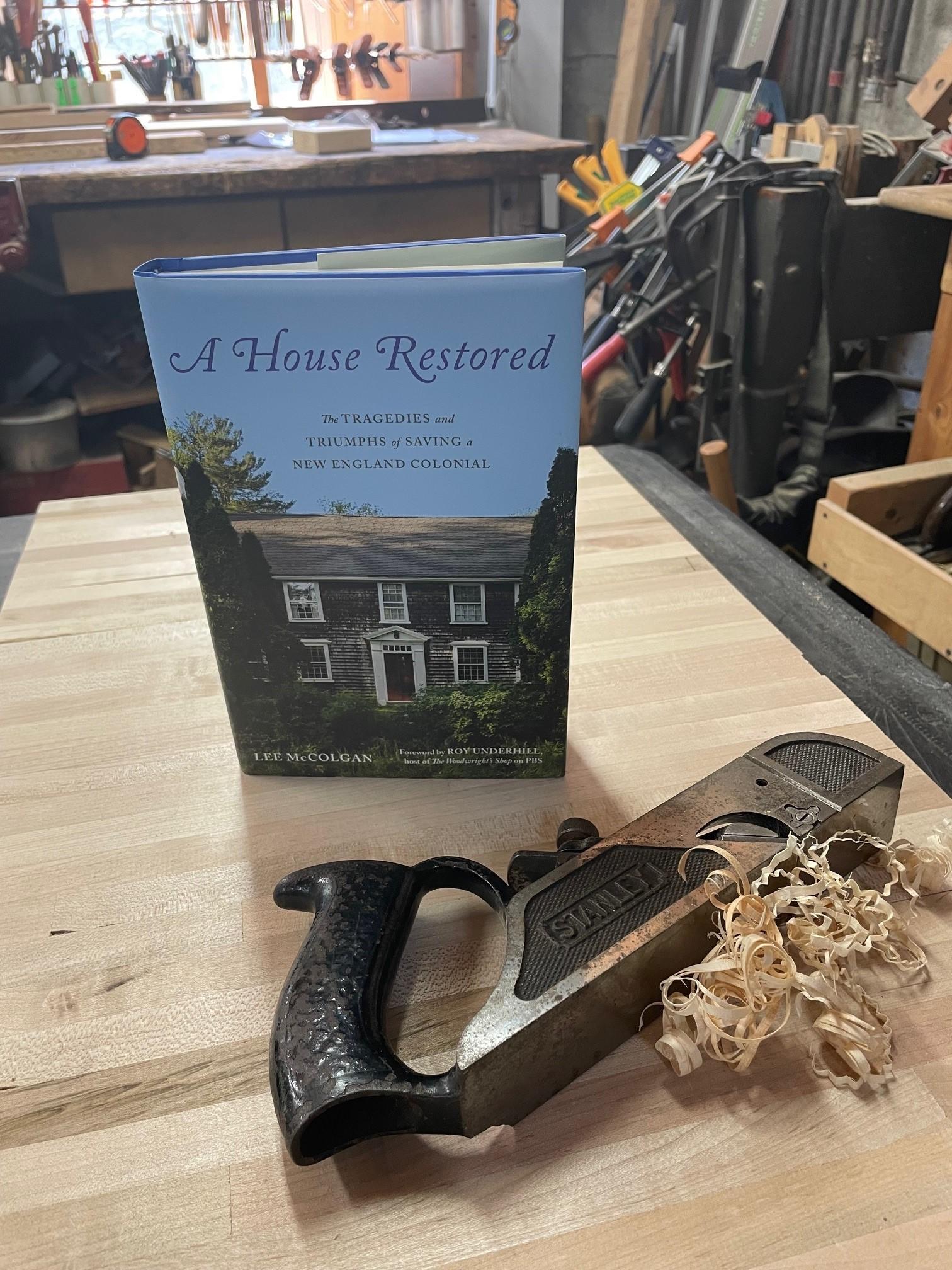
That’s the story behind a new book by Lee McColgan called A House Restored: The Tragedies and Triumphs of Saving a New England Colonial. McColgan left his job at an investment firm and got involved in architectural restoration in the Boston area, including buying the Loring House, which is one of the oldest original Colonial homes in America, having been built in 1702. McColgan and his wife wanted to live in the house comfortably, but also they wanted to keep it up and restore it using the same techniques that were used to build it.
Along the way, McColgan learns about plastering with goat hair, restoring original wood-framed windows, blacksmithing reproduction hardware, and hand-tool woodworking techniques that date back centuries. And if restoring the old house is not enough of a challenge, he starts his own building restoration business using the traditional techniques he learned.
For anyone who does any work on homes, new or old — that goes for professionals or just the DIY homeowner — the book is fascinating. It’s one thing today to rip out some wallboard and put up new, but it’s quite another to deal with plaster and lath, including mixing your own traditional plaster from scratch. That includes blending in goat hair to give it texture and strength. A nice foreword by Roy Underhill, host of The Woodwright’s Shop on PBS, sets the tone for the book.
As the author races toward a Thanksgiving Dinner deadline, last-minute challenges are bound to crop up, but throw in the requirements of maintaining the historic integrity of the home, and it’s more than just a script for some HGTV reality show. I intellectually love all the traditional techniques and stories of learning old skills from remaining practitioners, but quite frankly, I’m not sure I’d have the patience. Sometimes you’ve just got to get it done.
For all of you cabinet installers who complain about working with walls that aren’t exactly square or plumb, try on some 300-year-old construction challenges. Even when McColgan compromises to put in modern electrical and plumbing, you just know your problems pale in comparison. Read this book and relax in the benefits of modern construction technology.





Have something to say? Share your thoughts with us in the comments below.