

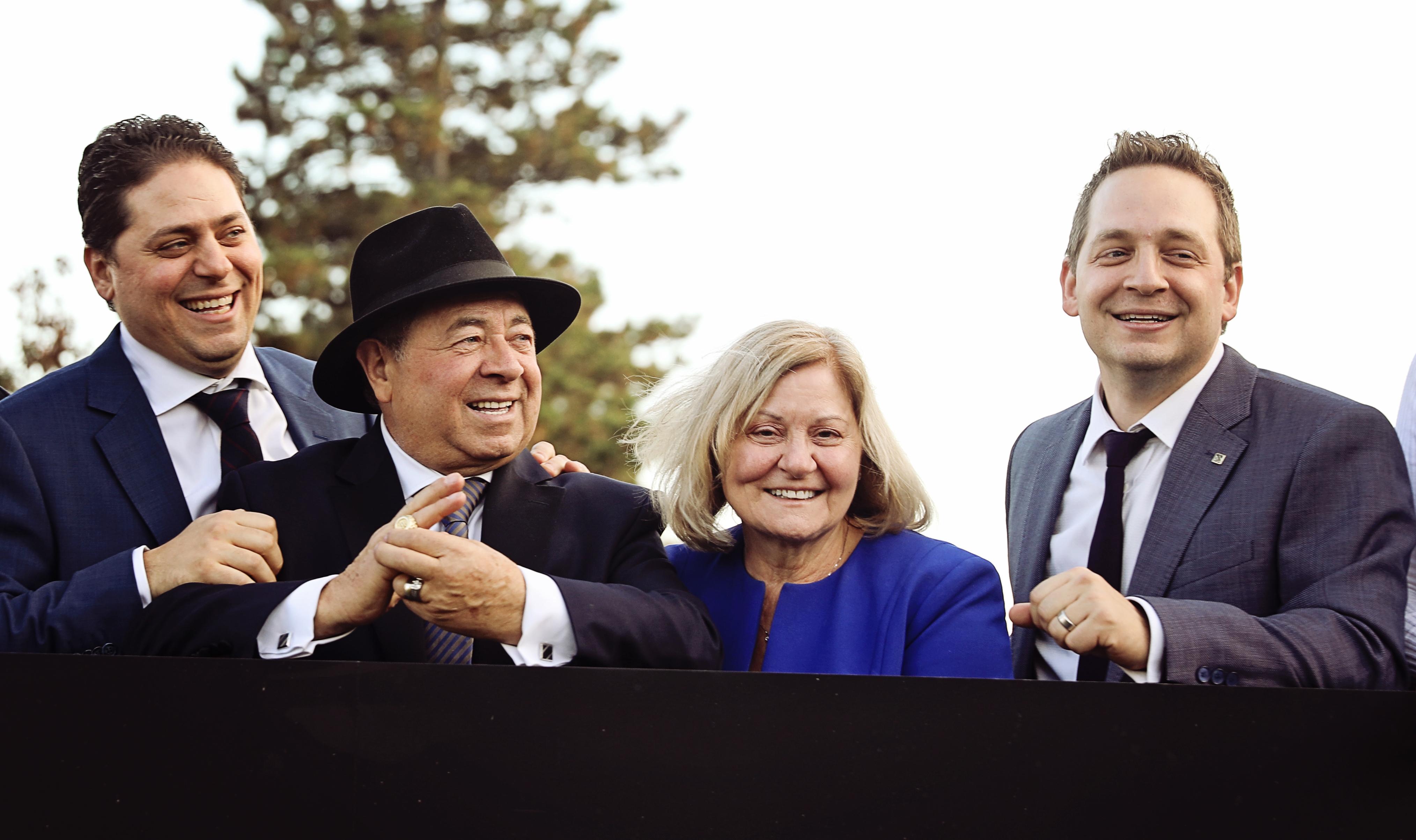
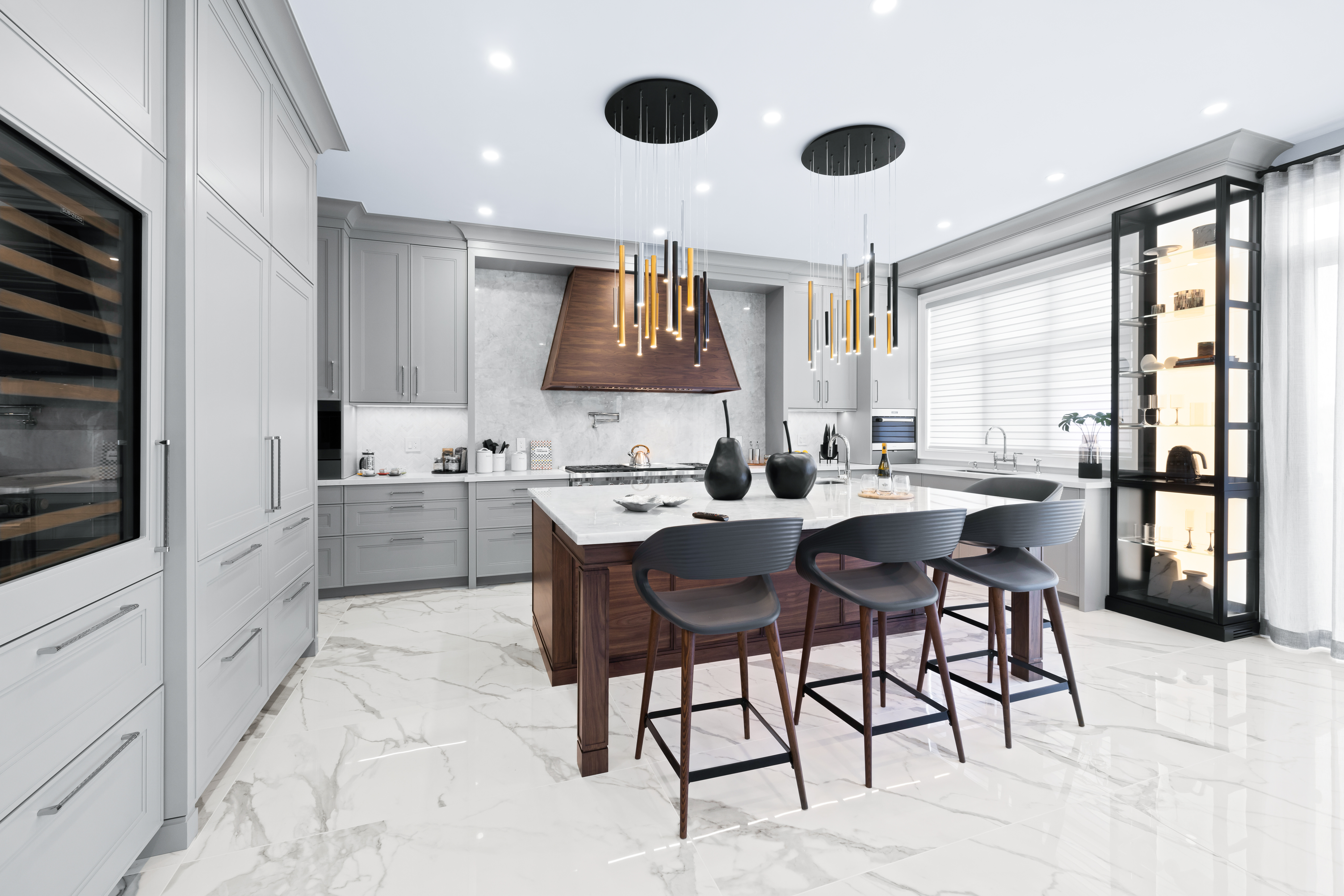
VAUGHAN, Ontario — QTK Fine Cabinetry, a manufacturer specializing in the mass customization of kitchen cabinets, hit the half-century mark of doing business in April.
The company’s current approach to building one kitchen at a time is on a decidedly more technologically advanced and expanded scale than when Tony Toto co-founded the business with his wife, Mary, then called Quality Tops & Kitchens, in the basement of their home in 1974. An Italian immigrant, Toto started making cabinets moonlighting while maintaining his full-time job as a spray finisher at a local cabinet shop.
Emboldened by his initial success, he quit his day job to devote the full of his energies to making his company successful.
“When my dad started out, he mainly made kitchens for other Italian immigrants who had settled in the Vaughan area,” said Daniel Toto, Tony’s son and general manager, of QTK Fine Cabinetry. “They would do a kitchen for someone, and that person would tell someone else. Their growth really came by word of mouth.”
Growth led to moving into a 2,500-square-foot shop and hiring the company’s first employee in 1976. Almost 50 years later, the inaugural hire still works for the company, Toto said.
Moving into a larger, dedicated shop helped resolve space issues, but did not end the company’s challenges to keep its doors open. Cash flow struggles were common in those early years, Toto said.
“My dad will talk about how we buy a truck of material at a time now and how he struggled at times to purchase six sheets at a time,” Toto said. “In 1976, he landed his first home developer client, and we still do work for them. Now 70 percent of our work is with homebuilders and 30 percent is with contractors and designers within a two-hour radius of us. In addition to kitchen and bath cabinets we have expanded into closets.”
As QTK’s business grew it expanded and added more employees, but that was not in itself enough to keep pace with the increasing demand for its products. Tony Toto looked to Europe where the 32mm System was taking the cabinet manufacturing industry by storm. He decided to jump on the bandwagon and invested in the necessary equipment to take advantage of the system’s streamlined cut-bore-dowel approach to more efficiently produce frameless cabinets.
“When my dad first began using the 32mm system he put in dowels and then inserted screws for additional stability. It was a belt and suspenders solution,” Toto laughed. “Years later I was able to convince him that dowels are good enough on their own.”
Over the next two decades, QTK upgraded its arsenal of production equipment to keep pace with its growth, including adding panels saws, larger capacity edgebanders and a pod and rail CNC router.
“In the early 2000s, Chinese imports were starting to come into Canada,” Toto said. “That’s when we started looking at the market and the potential for growth in the future. We realized that if we’re just making stock parts like everybody else, it would be difficult to differentiate our product and compete against lower-priced imports. We looked at different avenues and how we might be able to manufacture things that people wanted faster than anyone else and more flexible than anyone else. We went to EuroCucina. We went to Xylexpo. We went to Ligna. That’s where we really started to see the trends and the number one driving them was software. We discovered that you have to have software to control automated processes to make them work.”
“It was around 2006 that we added Microvellum,” Toto added. “We told the Microvellum representative who came in to train us that we’re a stock part company. He told us that with Microvellum you don’t stock parts; you just cut everything when you need it. That’s when we realized that maybe there was a better way to do it. We used up our inventory of stock parts and started to process parts as we needed them.”
Growth leads to plant expansion and production overhaul
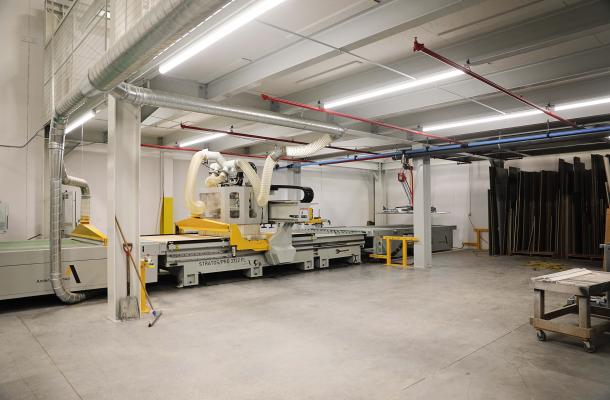
Whereas QTK was an early adopter of the 32mm system for manufacturing cabinets, the company did not fully embrace nested-based cabinet production until 2019. The company now has three Anderson CNC nesting routers. The true workhorse of the trio is a router capable of cutting and drilling a 5 x 9 sheet in under six minutes, Toto said.
“What we like most about nesting is the increased flexibility it provides,” Toto said. “With a panel saw you have to cut a rectangle. With nesting you can cut whatever shape you want.”
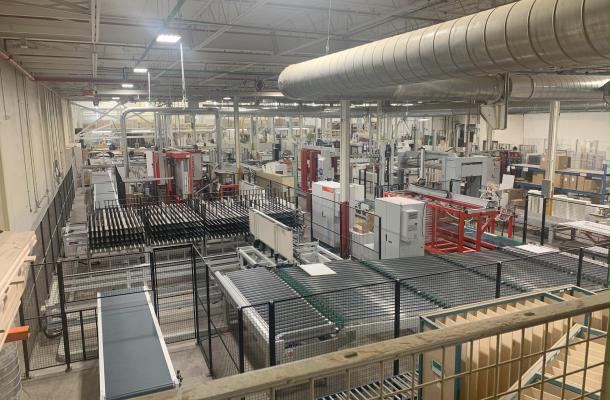
The move to nesting coincided with a complete overhaul of the plant floor in 2019 which had been nearly doubled in size to 80,000 square feet one year earlier. Both the expansion and overhaul were made with an eye toward more efficiently meeting current demand and future production increases as well.
“Before 2019, we were a just-in-time company,” Toto said. “Now we are 100 percent engineered to order. We don’t cut anything until it’s sold. We engineer the job in the office using Microvellum ERP and Ardis software for panel optimization and then release it to production. We cut parts one kitchen at a time and then we go into edgebanding.”
The aforementioned IMA edgebander feeds directly into an automated assembly line that is at the heart of QTK’s ability to efficiently render one kitchen at a time. TOP, which Toto described as a “boutique Italian company that specializes in custom machines,” engineered and built the advanced system that drills holes and inserts the hardware and dowels as each panel requires dramatically simplifying cabinet assembly.
“The machine inserts all of the hardware that we need on the cabinet,” Toto said. “The machine will install one of three different hinge plates. It will install the dowels in the leading and trailing edges, and it will install the drawer slides. While it’s doing that it buffers the cabinets. It automatically tracks where all of the parts are for each cabinet via bar codes on TFL components and RFID tags on painted parts. When we have five or six parts for the cabinet based on whether it is a base or an upper then it starts to exit them from the buffer and send them down the line so that the operator can build them.”
The panels arrive to the assembler in the order that each cabinet will be built. “Everything is sequenced,” Toto said. “The assembler will get the vertical member called the gable first, then the horizontal members, the back, and finally the second gable.”
This process requires only three employees per shift: one to feed the edgebander and two to assemble the cabinets. Daily output ranges between 180 and 200 boxes. In prior days, Toto said five or six people were required for material handling and part sorting, plus two assemblers to build the cabinet boxes.
Because all of the parts come to them perfectly machines and ready for assembly, there is very little thinking involved, Toto said. The assemblers now have the time to fish the LED light wire through the channel running in the back of the cabinet. This means that cabinets requiring lights don’t have to be taken off the line for the lights to be installed later.
All told, QTK has about 50 employees, nearly evenly split between working on the production floor and in the office. In addition, the company has its own installation crews.
Toto noted, “My dad had more employees in 1980 in 11,000 square feet than we have now, and with a lot less volume.”
The expansion and revamping of the factory in 2019 has been followed by less monumental but still important changes. For example, last year, the company decoupled its two Venjakob finishing machines that had been linked by conveyors to stain and seal cabinet doors in one pass.
“We went from two machines to one machine with three ovens. We have a six-level dryer that takes 15 minutes to get the fast-moving solids out,” Toto said. “Next, the doors go to a completely variable 40-tray oven that lets the product cure without anyone having to touch it. Then we have a medium wave infrared oven before the doors go through a cool down tunnel and then inline sanded using MB Machine surface sanders.”
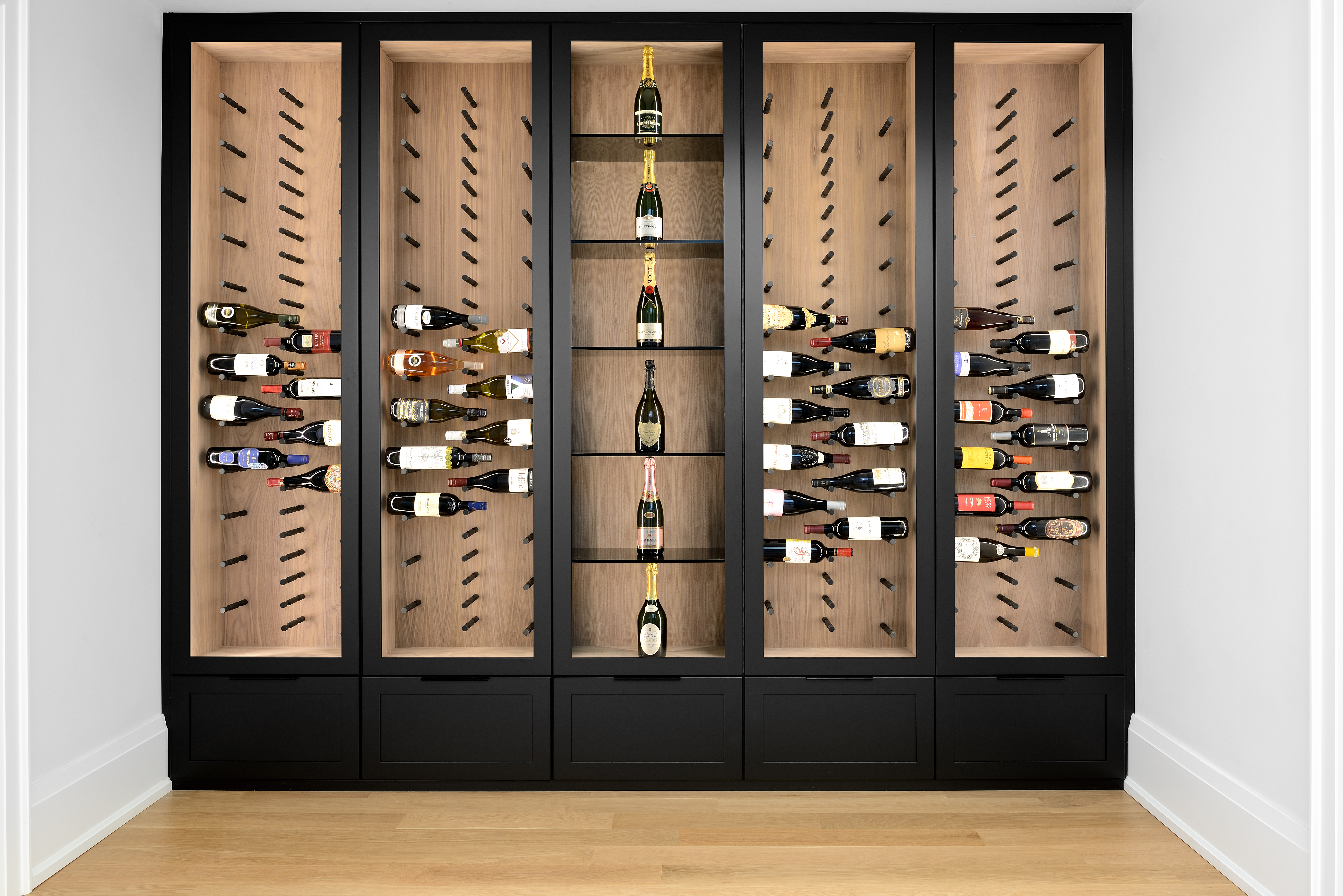
“Solid wood doors have really been dropping in popularity the last five years and especially when lumber prices went through the roof during COVID,” Toto added. “Solid wood doors were only 7 percent of our business last year.” He further noted the advent of more cost-friendly textured 3D laminates that more closely mimic the look and feel of wood has also impacted solid wood door orders.”
Lessons learned and a wave to QTK’s future
Since QTK’s formative years, Tony Toto’s wife, Mary, vice president of finance, has been involved in the business that started just one year after they married. In addition, Daniel’s older brother, Giovanni, serves as vice president handling marketing, sales and design. A third generation of the extended Toto family are beginning to work at the company on an ad hoc basis.
“If they have a passion the way my brother and I have for this business, then we absolutely want them to just us,” Daniel Toto said. “I know how hard my dad worked and hard my brother and I work. We’re definitely not going to have them come here and milk the cow and do nothing. If they’re coming to join us, then they’re going to work.
“My father instilled in me something as a young age and it has stuck with me all of these years,” Toto continued. “He always said, ‘Whatever you do be the best at it. If you play soccer be the best. If you shovel the snow, be the best at shoveling the snow.’” That was the number one thing I learned from him in addition to inheriting his work ethic. Everything that we do we want to be the best at. We’re not going to settle for second best.”
Asked what’s on tap for QTK in the foreseeable future, Toto said, “We have some ideas but none of them are far along enough to talk about. Having another facility is something that we definitely talk about. My mindset is if you are not growing, you’re shrinking. We definitely want to keep growing. A goal I set about 17 years ago was to produce 2,000 kitchens a year. We hit that last year, so I need to come up with a new goal now.”


Have something to say? Share your thoughts with us in the comments below.