

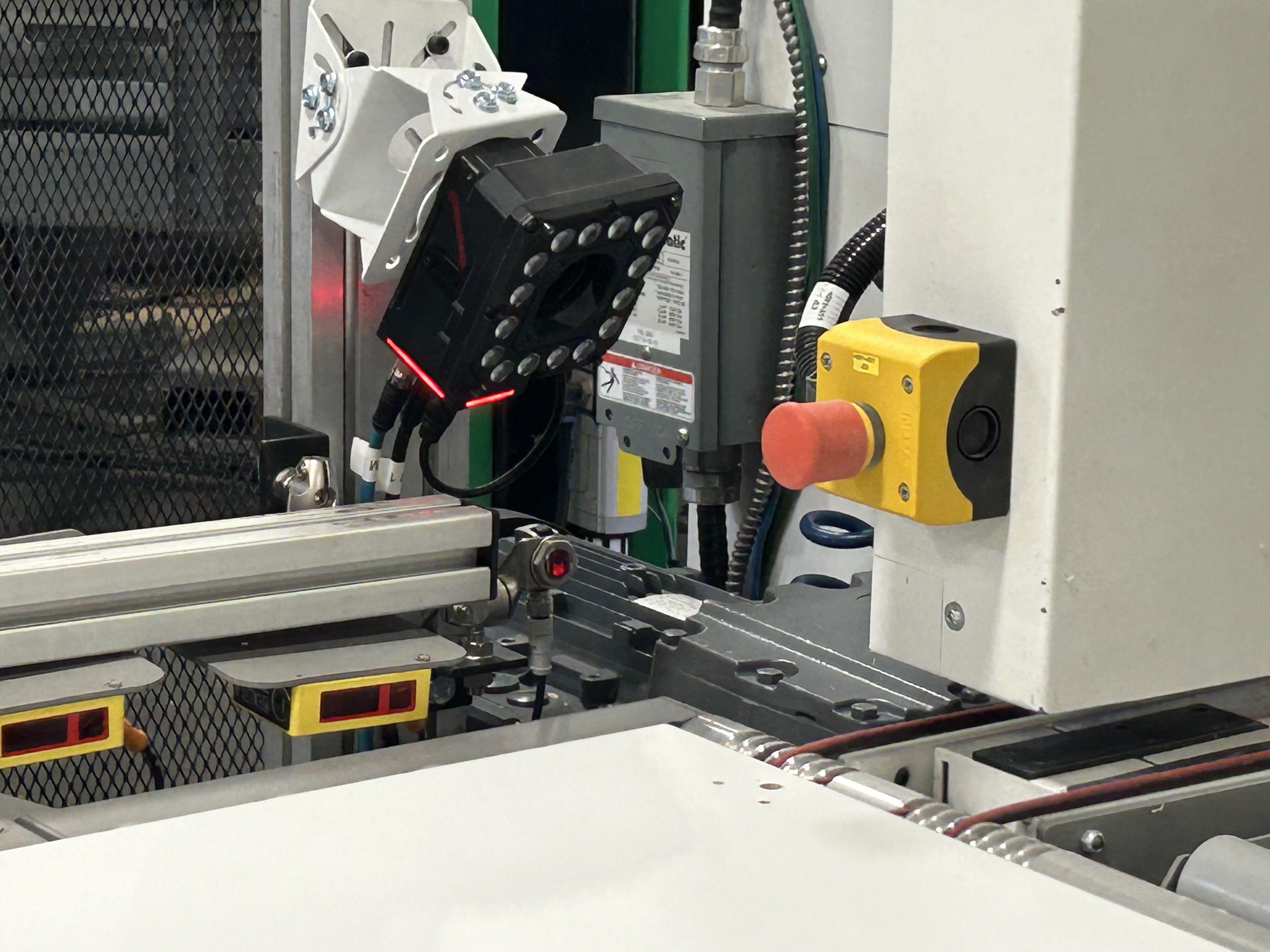
OTTAWA, Ontario — Muskoka Cabinet Company recently completed a pilot installation of an advanced edgebanding defect detection system.
|
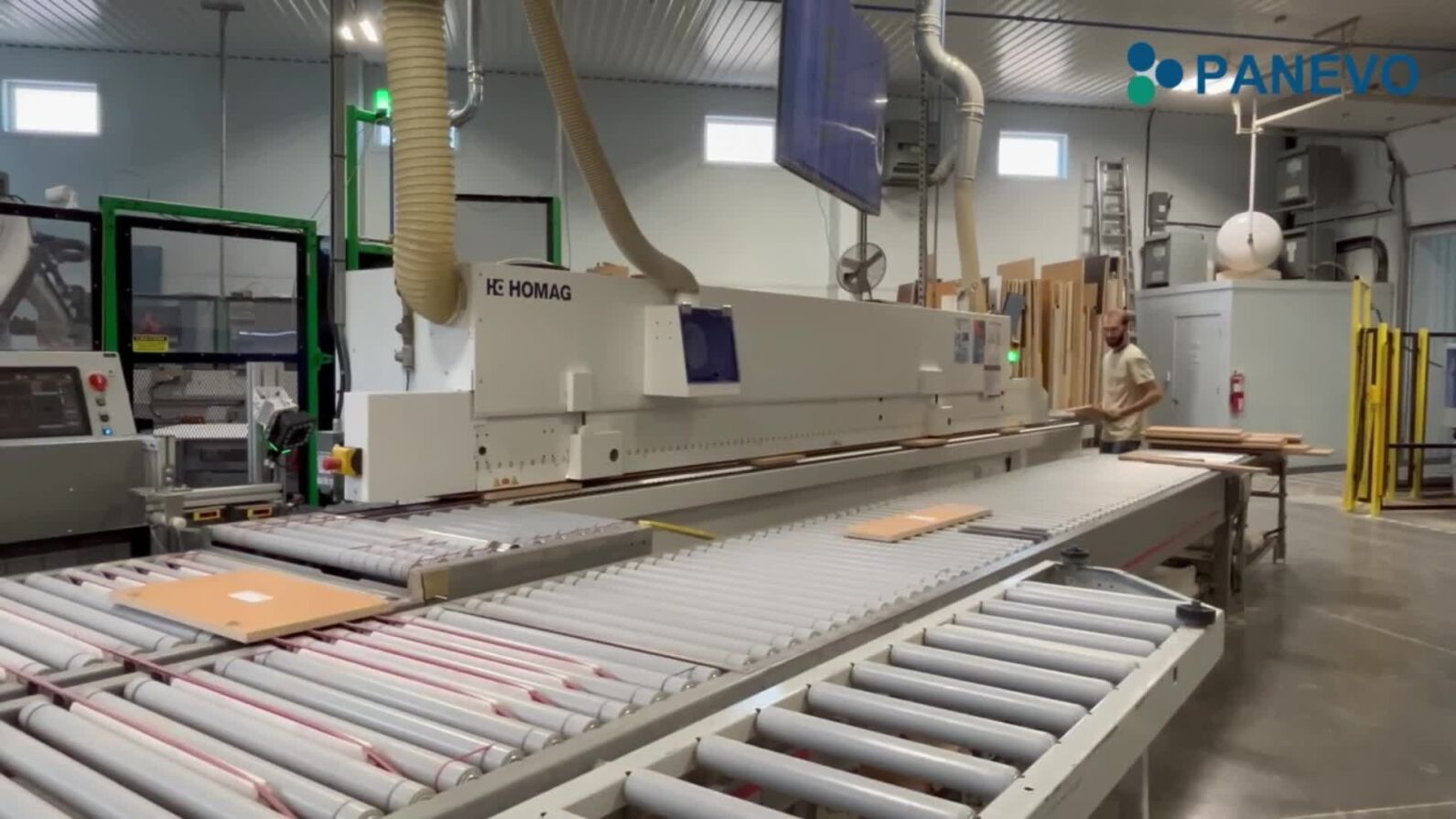
The system, developed by Panevo, a Canadian clear technology and manufacturing analytics company, reportedly achieved approximately 97% detection reliability with minimal false positives of Muskoka’s edgebanded cabinet parts. Ongoing refinements are continuing to improve robustness for daily shop-floor use.
The pilot program was developed and commissioned as part of the Canadian Kitchen Cabinet Association’s Advanced Manufacturing Peer Group (AMPG), an industry-led initiative designed to help cabinet manufacturers evaluate and deploy next-generation manufacturing technologies.
The initiative integrated smart cameras with Panevo’s ioTORQ LEAN manufacturing analytics platform, enabling automated, real-time detection of common edgebanding defects such as chips, under-banding, over-banding, and excess glue.
The pilot addressed a complex technical challenge: applying high-speed machine vision to a highly variable woodworking process, while also enabling cloud-based OEE monitoring and continuous-improvement workflows tailored specifically for cabinet manufacturing.
Real-time inspection
The edgebanding process is fast-paced, and small defects can easily escape detection during normal production. The system uses two high-definition smart cameras to provide approximately 270-degree inspection coverage of the top, side, and bottom of each banded edge in real time as panels move through the edgebander.
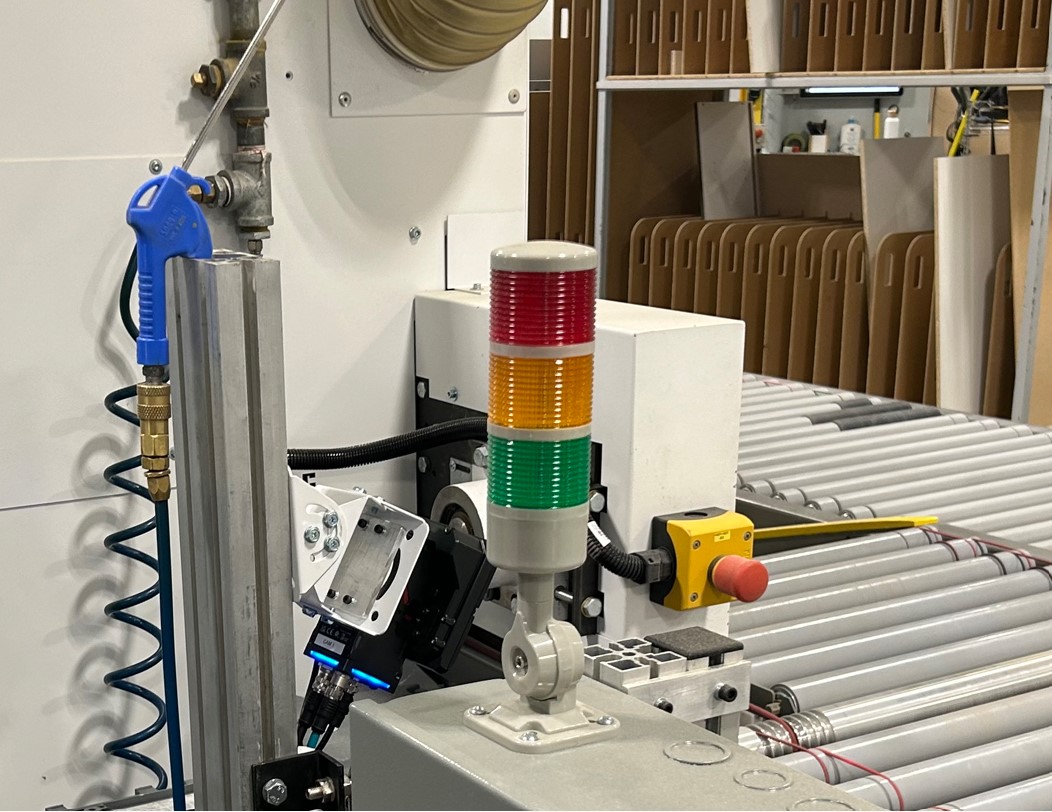
Panevo developed a dedicated edgeband-specific vision ruleset, including color tonality analysis, alignment verification, and region-specific inspection routines. Using industrial IoT technology, defect data and key process metrics are streamed directly into Panevo’s ioTORQ LEAN platform. Each detected defect is automatically categorized, time-stamped, and mapped to machine activity. Operators receive immediate visual and audible alerts when defects are detected, while supervisors gain full traceability of when and why defects occur.
“Real-time vision-based inspection is particularly difficult in woodworking because of material variability, surface textures, and lighting conditions,” said Craig Holden, CEO of Panevo. “The AMPG program gave us the right environment to develop and validate a solution that is both technically strong and practical for production environments.”
Muskoka Cabinet’s continued push into automation
Over the course of more than the last 25 years, Muskoka Cabinet has become widely known for its adoption of advanced manufacturing technologies, from robotics and automated material handling to data-driven production control. Muskoka Cabinet President Luke Elias said he views vision-based quality inspection as a natural next step.
“Quality inspection has remained one of the most manual parts of cabinet manufacturing,” Elias said. “The AMPG initiative gave us a structured way to test whether machine vision could reliably handle real production conditions. Catching defects earlier, especially subtle ones operators may miss during busy shifts, improves throughput, reduces rework, and ultimately improves customer satisfaction.”
Elias added that the data produced by the pilot is already being used to improve operator training and machine setup. “We can now see exactly when and why defects happen, which allows us to make much more precise adjustments before problems escalate.”
A step forward for cabinet manufacturing
The CKCA launched the AMPG to bring together forward-looking manufacturers to pilot and validate advanced technologies, including automation, robotics, and digital manufacturing, in real production environments. The goal is to accelerate adoption of proven solutions across the Canadian cabinet industry.
While vision-based quality control is common in other manufacturing sectors, woodworking presents unique challenges. The AMPG-led pilot demonstrates that automated defect detection is now viable for cabinet manufacturers seeking higher consistency and better asset utilization.
“This doesn’t replace operators, it supports them,” Elias emphasized. “It gives us another set of eyes that never tire, helping us maintain quality as we scale.”
Panevo expects further AMPG-supported deployments in 2026 and is exploring additional woodworking applications.
Learn more about Panevo at panevo.com.




Have something to say? Share your thoughts with us in the comments below.