

You don’t have to read too many books on lean manufacturing before you come across the indisputable fact that standard work is at the core of your lean transformation. My two favorite quotes from my two favorite people are:
“Standardization is the best we know today, but to be improved upon tomorrow.” — Henry Ford
“No standards, no Kaizen.”
— Taichii Ohno
It’s fair to say those two knew what they were talking about. If you run any manufacturing operation you know your biggest expense is your people. Why then do almost all of us put so little effort into setting them up for success?
Here are the top reasons you need to stop putting off standard work.
1. Training. The time between someone starting a job at our factories until the time they are actually useful (a.k.a.: making money for the company) is much, much longer than we probably think. How valuable would it be to cut that time in half? The real super power here is that when you train to a standard, everyone gets the same training. No steps skipped, and the next day, when the new guy forgets what you told them, they don’t have to bug you asking questions, they can refer back to the standard. Clear work instructions elevate everyone in the building. Fewer questions, fewer interruptions, more value-added work.
2. Defects. You might not know the exact cost of defects in your factory. But I can say with absolute certainty, it’s your single biggest waste of money. I know exactly how much we spend on defects, because we track every single one. Last year my company spent $500,000 on defective work. Just typing that makes me sick. Let me show you how we calculate the cost of a defect, and how each mistake is actually three times more expensive than we think.
a.) You make the bad part.
b.) You remake that part
c.) If the part you are remaking had been right in the first place, you would be making a saleable part.
For every defective part, the cost is multiplied by three. Standards can mitgate this. I can hear it now, “We’re custom, we can’t create standard work!” To that I say, “Malarkey!” You might not be able to create a standard for every process, but the vast majority of them will be no problem. Stop saying you can’t, and soon your people will believe it, too.
3.Problem solving. You have to be in manufacturing for only about 15 minutes before you realize that the only thing you will never run out of is problems! And 99% of them arise because there is no standard in place.
Without a standard to review, you end up with a group of people standing around a problem asking “what happened?” People will have a very hard time admitting they did something wrong and will likely go to great lengths to cover it up.
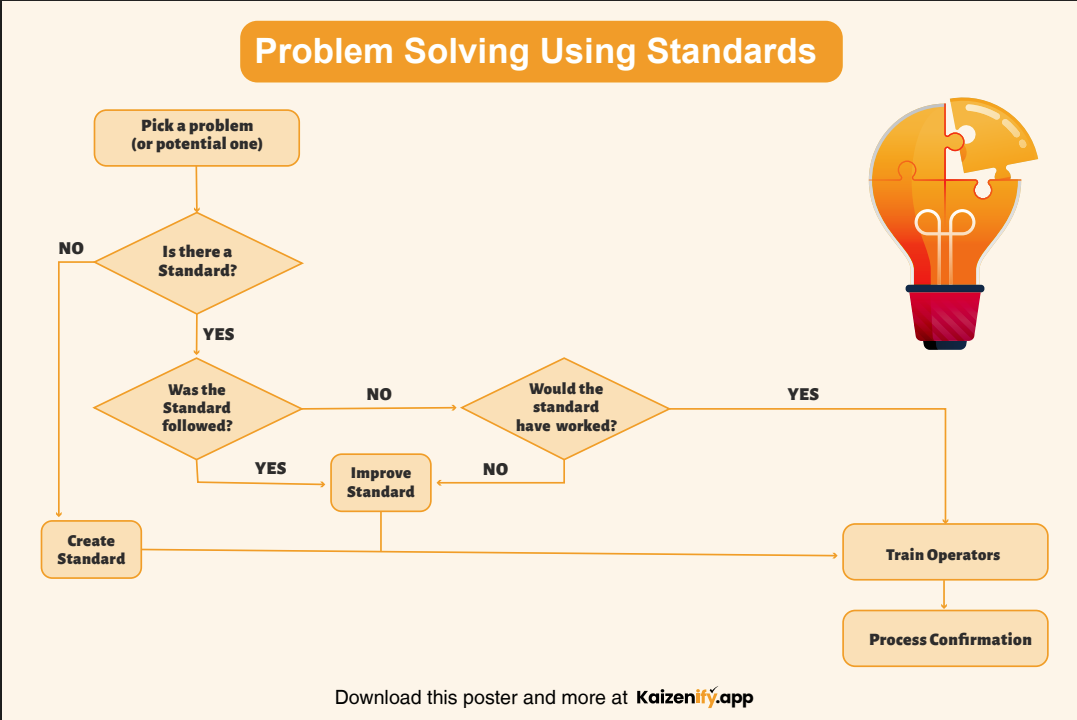
But when there is a standard, you have only two options and one question. The question is: Was the standard followed? If they say, “No,” well, problem solved — please follow the standard. If they say “yes,” then you simply repeat the process according to the standard. When the defect appears again, you know exactly where in the process and how. Then update the standard and go back to work.
Need to increase throughput or improve quality? Examine a standard for opportunities. Encourage all employees to challenge the standard. Not all experiments will work, but when they do, update them.
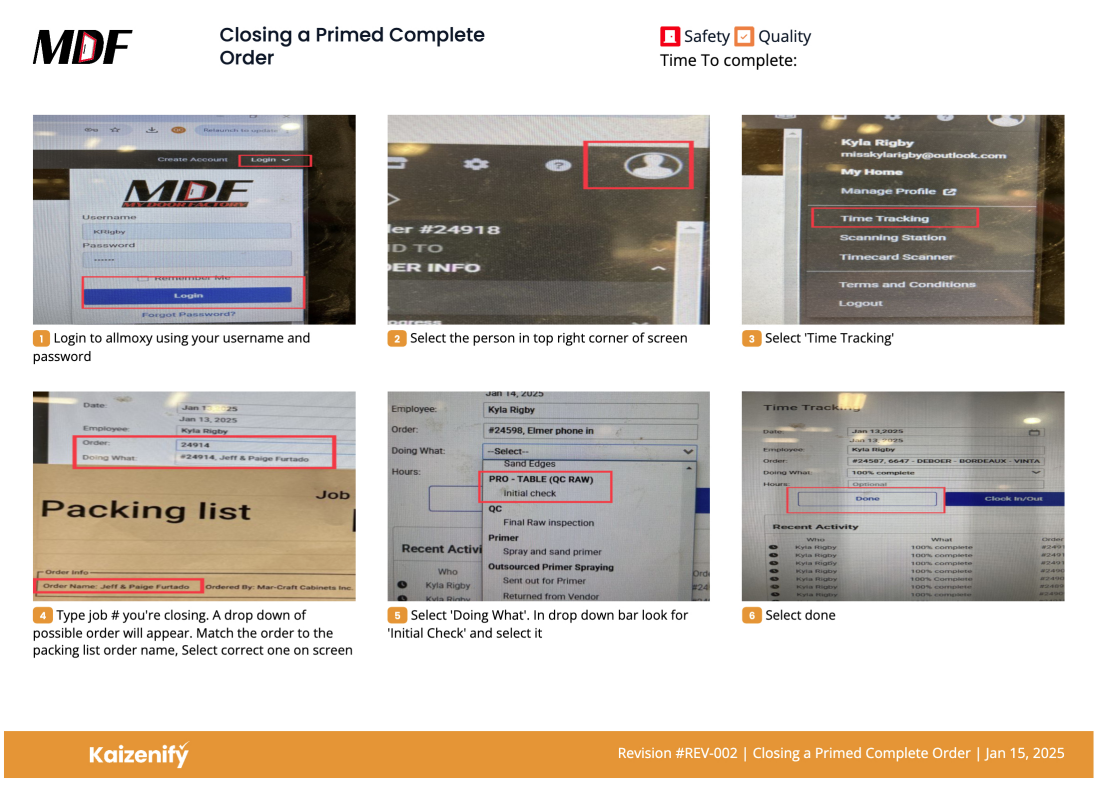
One last tip: Remember, no one reads anymore. So, you want these elements in every SOP:
• Big Pictures
• Brief description
• A video linked to a QR code
Need help along the way? That’s what were here for. If you like the problem solving poster in this column, we will happily send you the artwork. Just text “SOP” to (226) 971-2144 with your name, company name and E-mail address. We will send it right over.



Have something to say? Share your thoughts with us in the comments below.