

How many factories do you have? Yes, that was a trick question , if you said one, I’m gonna say you actually have two. One of them is just hiding in plain sight. And that’s why we call it the hidden factory.
Whether you’re a low-mix, high-volume producer or a highly low-volume producer, you all have something in common. There’s an entire team of people starting from the time the phone rings and not ending until the work order is submitted to the shop, all working diligently to keep that factory going.
It’s commonly referred to as “the office,“ but that doesn’t do it justice. There are so many processes, so many technicalities, and so many things that have to be just perfect. We like to give credit where credit is due; that’s why we treat it as its own factory. I know what you’re thinking: You’re thinking, “Brad, I can see everybody working in my office. Why do you call it the hidden factory?”
The people are there, but the work is hidden. When we go out to the shop floor, all the work is right there in the form of work in process and it’s plain as day. We can see the piles, how big they are, how small they are, watch the machines working and producing parts and for the most part everything going on is highly visual.
In the office, it’s everybody staring into a computer, clicking their mouse. You can’t walk around and see the workload, bottlenecks, any capacity constraints. They’re all somewhere behind those computer screens.
Generally speaking when we get a call to work with a client, it’s always about making the shop go faster. When jobs are late, the pressure always seems to fall on the shop, which makes it seem like the shop needs to speed up. But what if it was actually a hidden factory gobbling up that much needed lead time? What would it look like if you could buy the shop a week or two of extra time on every job? Because it’s not as visible, it’s often overlooked, but the hidden factory is rife with as much or more waste than the actual factory floor.
And quite often it’s our recommendation to fix that first. We’ve seen it 100 times that we speed up the shop only to run out of work because all the jobs are tied up in sales or engineering.
So what is the cure for this disease? Simple, eliminate waste! If you’re reading this article, there is a good chance you are already practicing some form of lean manufacturing and have put it to use on the shop floor. I have good news for you, all the exact same principles apply in the office as well. Granted, it’s a bit harder to see, but the application is literally identical. So, you already know what to do, now let’s dig in how to do it. There are two main tools to deploy when uncovering waste in the hidden factory.
Tool 1
You need to make everything visual. This is a must. You can’t fix what you can’t see. The favorite tool for this is what we refer to as a Kanban board. This is a very simple task-based board with columns and you simply move tasks across it from one column to another as the task progresses.
I will quote my friend Paul Akers (author of the book 2 Second Lean): “Smart people can’t believe it’s this simple.” As we live in the digital age, it’s getting harder and harder to convince people to use manual systems, because in theory, the digital one will be faster and easier. Just remember, that’s half the problem — you still can’t see it.
You could sell me on a dedicated TV on the wall that is always displaying the critical information. In the wise words of Toyota, do it manually first, so you know what you need when you automate it. There is some wisdom there, if you plan on skipping this step, just ask yourself, am I smarter than Toyota?
Tool 2
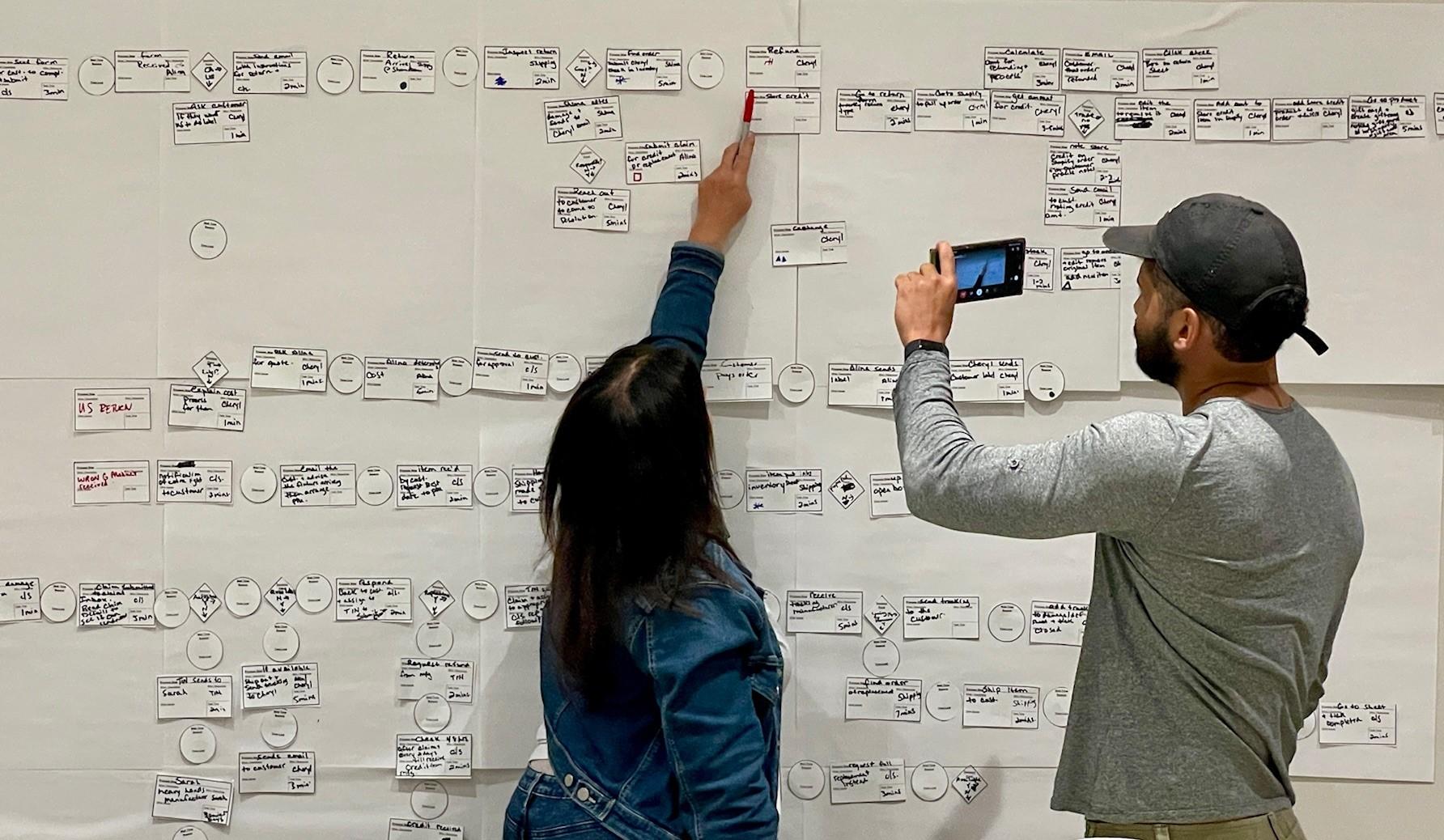
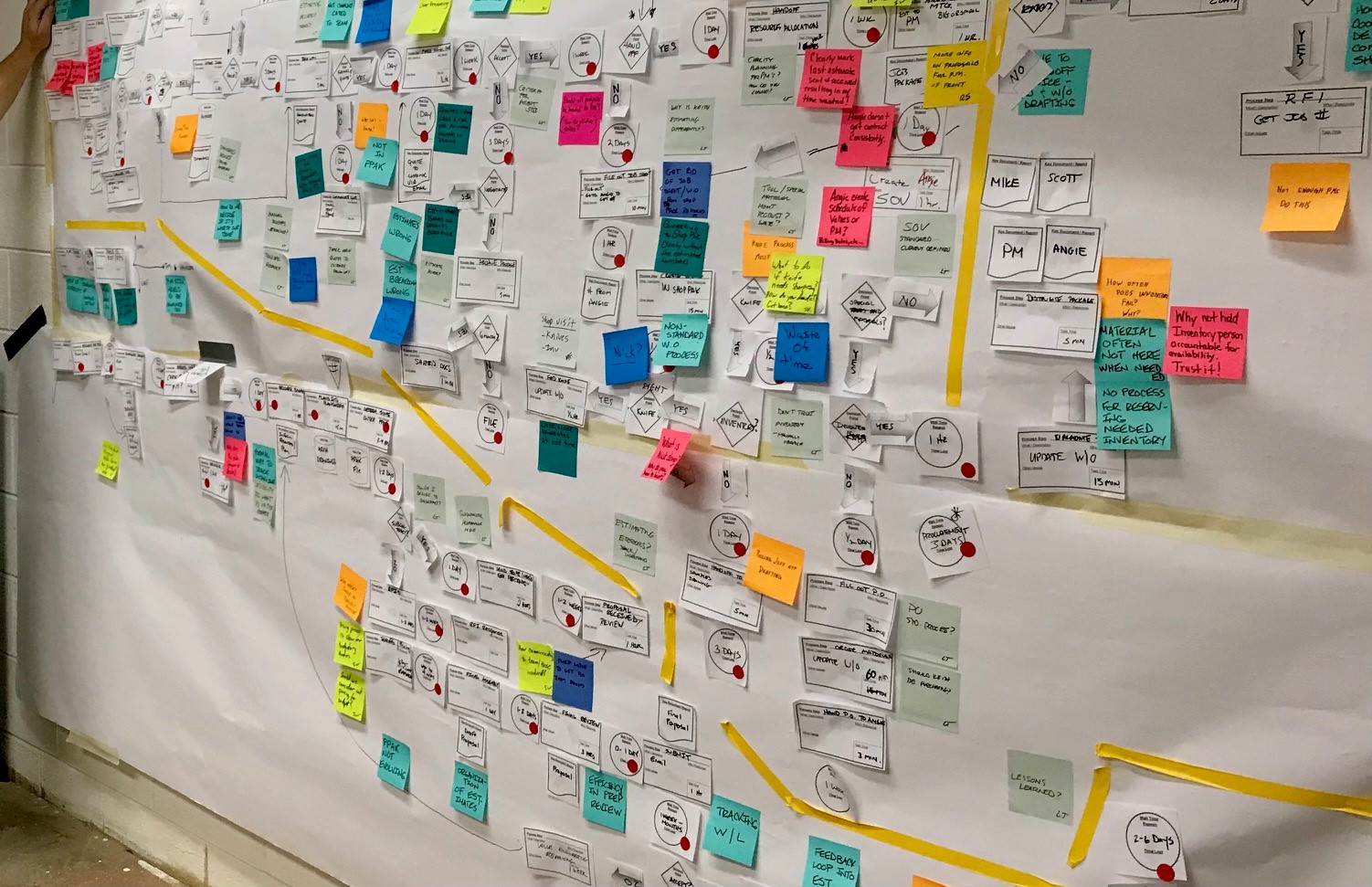
This is also part of making things visual. It’s time to get all that waste out of your computers and minds, and get it up on the wall where we can see it. This is a fairly daunting task, but if you’re serious about eliminating waste in the hidden factory, a necessary step. It’s called Value Stream Mapping.
This is where you get a representative from each department locked in a room for three to four days and we map out every process step from the time the phone rings until the time the work order is ready to be released to the shop.
I can promise you, you won’t believe the amount of waste you uncover during this process. We have seen smiles, tears and a lot of ah-ha moments as we help companies with this process. Lynn Thomas and I try to put enough free content out into the world to help people make these transformations themselves if they want to. However, this is one area where I will recommend you get a highly experienced facilitator to help you.
There are two main reasons for this. First, we want everyone to be participating in the event, and you can’t facilitate and participate at the same time. Second, if the owner or high up manager is facilitating, there will be a general bias towards their opinion because no one wants to contradict the boss. And if you go through the effort of a value stream map, it’s better to come out the other side with the real picture.
To sum up the value stream mapping process, first, you create what is called the current state, then analyze it as a group, eliminate as much waste as you can, then create a future state map along with the game plan to get there. Easy peasy!
This mission here wasn’t to scare you away from taking action, just the opposite, I hope this helps you take action. So many companies are not evaluating their hidden factory and suffering unnecessarily because of it. The shop is getting the blame. Let’s give those hard working shop floor people a break and buy them some much needed time by improving the hidden factory first.
If you need any help with this, please feel free to contact Lynn at [email protected] we are here to help.



Have something to say? Share your thoughts with us in the comments below.