


In more than 20 years of helping companies all over the world, I’ve obsessed over one question: Why do some lean transformations take off like a rocket while others quietly fizzle out?
Somewhere between knowing and doing, some companies accelerate, and others stall. The pattern is unmistakable.
A lot of lean is counterintuitive. It doesn’t line up with our instincts, and that’s exactly why so many companies talk themselves out of it. Shops still think, “This lean thing won’t work here.”
But the truth is painfully simple: Lean doesn’t fail because the tools don’t work. It fails because egos get in the way.
 Everyone needs help
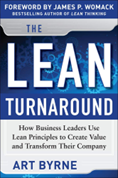
I recently had the pleasure of spending a few hours with Art Byrne, author of The Lean Turnaround. Art has run multiple billion-dollar companies and has more lean success than almost anyone alive. Yet even he went looking for outside help from a Japanese consulting group.But here’s the part that blew my mind.
Before the consultants arrived, Art pulled all his leaders into a boardroom. He looked around the table and said, “When these people get here, we’re going to listen. We’re going to do what they say. It doesn’t have to make sense to us yet, and we don’t have to fully understand it. But as a team, let’s agree now — we listen, and we execute.”
And they did. No ego. No arguing. No, “We already tried that.” The results were outstanding.
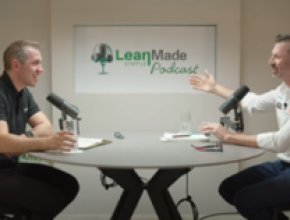
Want the full story? It’s on our podcast with Art. But the takeaway is this: You can’t learn with your mouth open.

Lessons from a door shop
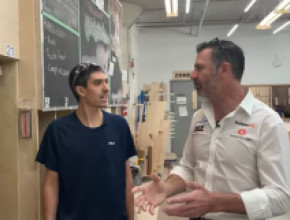
Another example is a small door shop in South Carolina: Mullet Door. I’ve visited only a handful of times, but every visit they shocked me with how fast they executed.
On one trip, we set up a single-piece flow system from the rip saw to the planer. The planer was a heavy, top-and-bottom machine with serious power, dust, and air requirements. At the end of the day, I casually mentioned to Elvin (the owner), “If you ever want to go even faster, you could move the double-sided planer about 20 feet.”
We closed up for the day. Nothing more was said. When I walked in the next morning, I almost fell over. The planer was moved, electrical, dust, air, the whole thing — torn down, moved, re-installed, and ready for 7 a.m. startup. I couldn’t believe it.
On the drive to the airport, I asked Elvin why his team had so much success implementing lean. His answer was beautifully simple: “We paid you a lot of money to be here. I figured we oughta listen.” That’s it. No overthinking. No ego. Just ears open and action taken.
One more example. I was recently working with Higgins Custom Cabinetry as they brought in a sanding robot and edgesander. We spent the day running experiments, adjusting machine placement, and building out true single-piece flow.
I can count on one hand the number of times I’ve seen a crew listen and execute at this level. No pushback. No excuses. None of the typical “That’s not how we do it” reflex you hear in 90% of shops. They just listened and tried the idea immediately.
At one point, parts started stacking up behind a faster machine. Totally normal — everyone wants to “stay busy.” I explained that all activity subordinates to the constraint and that producing ahead doesn’t help. I only had to explain it once. By the next day, the entire cell was flowing exactly as designed.
We went from experiments to fully sanding doors — four edges, front and back — in 2 minutes and 46 seconds per door. And they achieved it only because nobody let ego block the learning.
See the whole video here: Mullet Door Does it again - Lean Manufacturing
Being teachable
Across all these stories the pattern is the same. The winning companies are not the biggest. Not the smartest. Not the ones with the fanciest equipment.
They are the most teachable.
They listen deeply.
They try immediately.
They act decisively.
When you boil it down, lean is not a battle of tools or charts or Japanese vocabulary. It’s a battle against ego. It asks us to set aside what we “already know” to try something uncomfortable, and to trust the process long enough to see the breakthrough on the other side.
Most companies don’t fail at lean because of lack of knowledge. They fail because of excess pride. Meanwhile, the companies that crush it — sometimes small shops in small towns — are simply the ones willing to say:
“Let’s try it.”
“Let’s move it.”
“Let’s listen.”
If you want lean to flourish in your company, don’t start with 5S or kanbans or takt time. Start with humility. Start with curiosity. Start with ears over ego.
Because the truth is as simple as it is uncomfortable: The companies that listen win. The companies that argue lose. And the ones who consistently put listening ahead of ego? They rewrite their future faster than anyone else in the industry. What does your future look like?



Have something to say? Share your thoughts with us in the comments below.