

At EuroCucina 2024, held April 16 to 21 in Milan, Italy, a dynamic fusion of style, functionality, and sustainability characterized the latest design trends in kitchens and bathrooms. Closets & Organized Storage Magazine spoke with Gary A. LeBlanc, Organizational Development manager at Richelieu, to discover what major manufacturers and vendors displayed during the event.
Notably, he said minimalist and linear designs, particularly in cabinetry, were prominent, with clean lines and understated elegance dominating. The color palettes on display included rich blues and soothing greens.
Materials also took center stage, with textured fabrics and sustainable options dominating. Open shelving systems and sliding doors emerged as key elements, offering visual appeal and practical, space-saving solutions.
One emerging trend was the focus on consistent design styles that flow throughout the entire home.
“One of the things that we continue to see is a push to be able to capture all the rooms in the house,” LeBlanc explained. “So, you saw a number of more eclectic displays representing furniture, garages, odds and end rooms, and playrooms. You saw the companies embracing the whole home concept. I think that’s still in its infancy here, but you see that more on the closet side in the United States, with manufacturers being able to go after more rooms.”
Color, materials & lighting
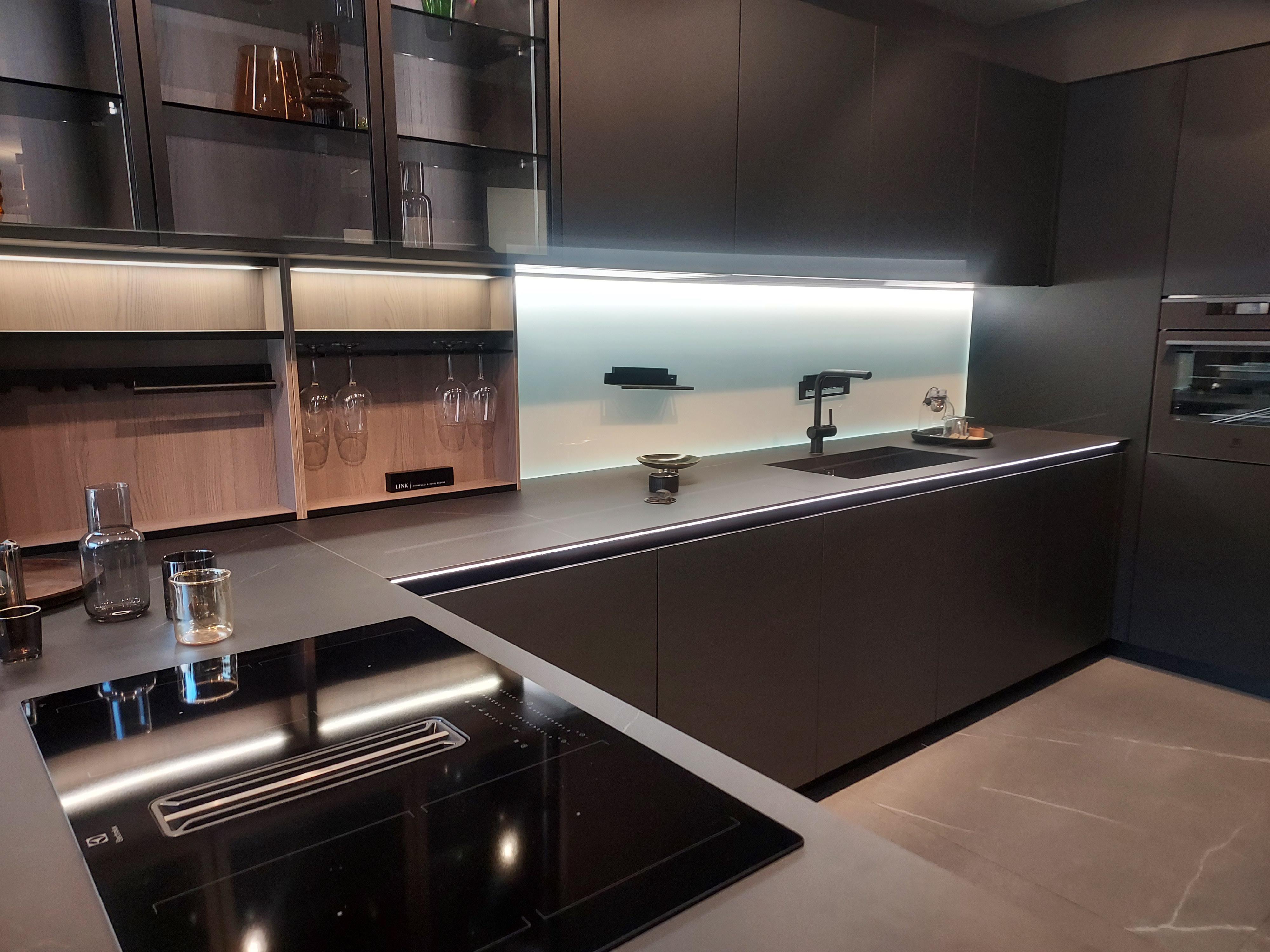
There’s still a combination of light and dark, multiple colors per kitchen, LeBlanc said. In contemporary kitchen design, color palettes are evolving to include a dynamic mix of bold hues and natural tones. The blue-green spectrum, particularly sage and bluish-green shades, has gained popularity. These tones are often paired with metal edging to create striking visual contrasts. Additionally, terracotta, a color that once seemed outdated, is making a strong comeback, providing warmth and an earthy feel. Designers are increasingly embracing multi-color schemes, with up to five different colors in one kitchen, adding depth and visual interest. While white remains a staple, especially in designs targeting the U.S. market, darker shades like black are becoming more prevalent, especially when balanced with woodgrains or metallic finishes.
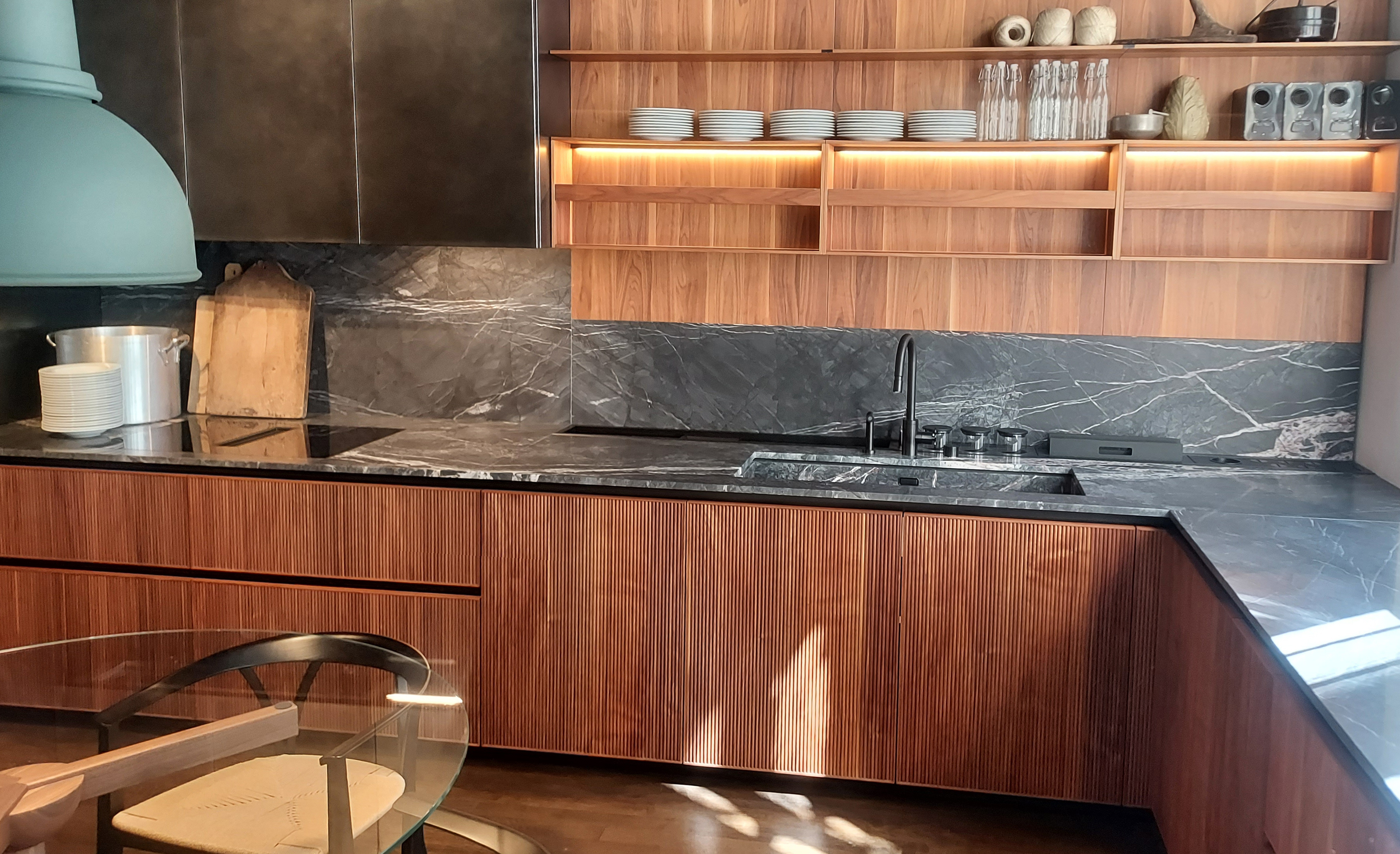
The trend in kitchen materials leans heavily toward combining different textures to create sophisticated yet functional spaces. Porcelain is frequently used alongside engineered materials like lacquered and textured melamine, offering a sleek and modern look. The absence of granite in favor of marble and solid surfaces reflects a shift toward materials that provide both durability and elegance.
“People are looking for a differentiated look and bringing the natural feel of stone into a house, whether it’s synthetic or it’s natural, they’re looking to bring it in,” LeBlanc added.
Engineered veneers are popular in cabinetry, contributing to a more consistent and refined appearance. Contemporary European design trends include a growing preference for very thin lines and continuous surfaces, such as seamless countertops and cabinetry without visible breaks. Open shelving and floating systems, often paired with glass or metal doors, add a sense of lightness and accessibility to the kitchen space.
Lighting is integral to modern kitchen design. The latest trends emphasize indirect lighting, such as polymer tape with peel-and-stick applications, which offers 270-degree illumination. These adjustable lighting systems allow users to control the color temperature from a warm 2700 Kelvin to a brighter 4000 Kelvin, catering to different tasks and moods, LeBlanc explained.
The combination of sophisticated lighting options and the growing use of dark kitchen designs, offset by brighter lighting, creates a more captivating atmosphere. Backlit surfaces, including glass and metallic finishes, enhance the kitchen’s modern look while providing functional lighting solutions for various activities.
Open shelving and sliding doors
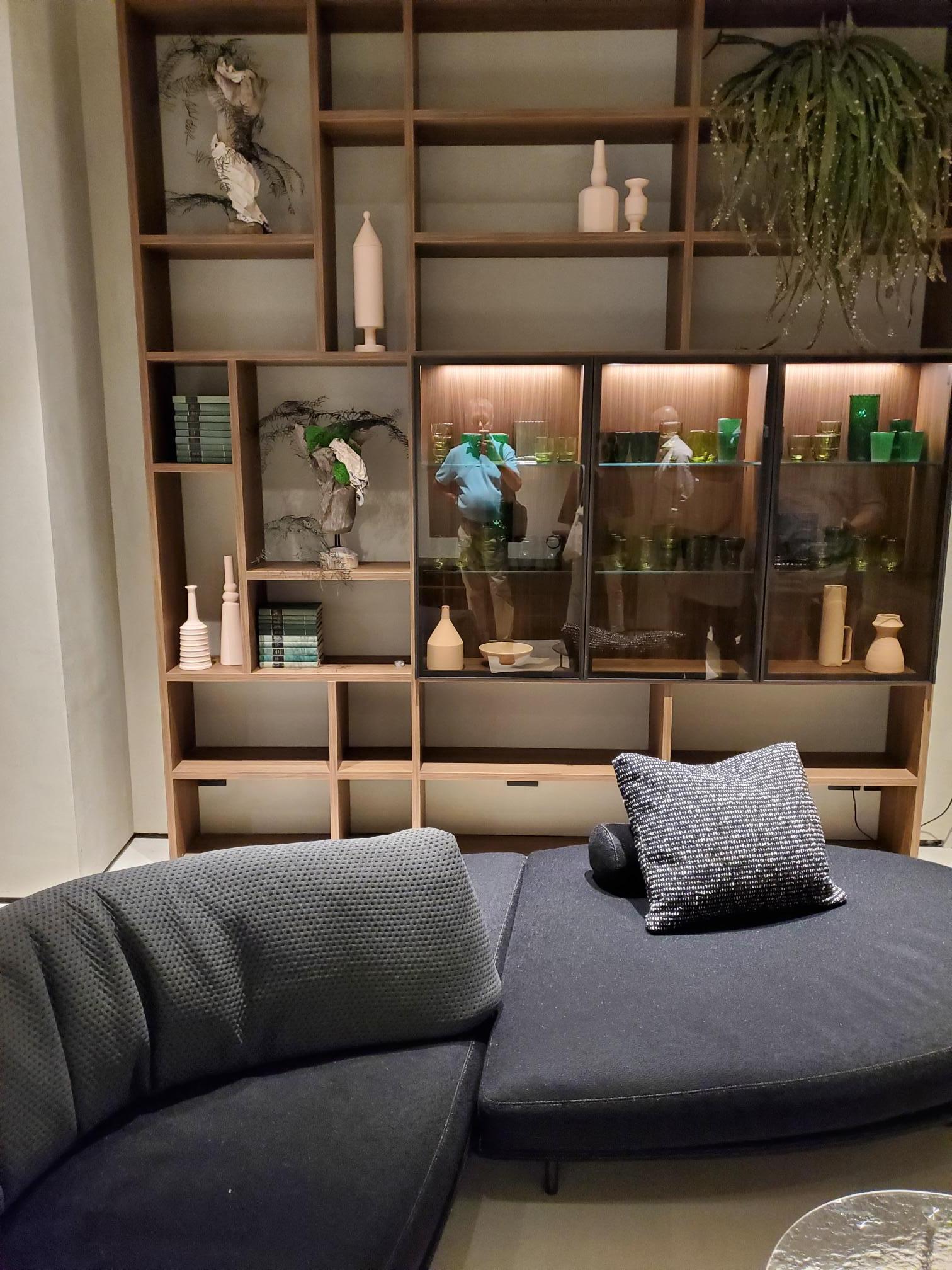
Open shelving has become a symbol of contemporary home design and European designers, in particular, have developed innovative systems prioritizing a clean, minimalistic look. The trend is toward super-thin, cantilevered shelves, sometimes as thin as an eighth of an inch, LeBlanc noted. These sleek shelves are often floating, with no visible supports, creating a light and airy appearance.
In addition to open shelving in kitchens, this trend is expanding into other areas of the home, such as living rooms and home offices.
Sliding doors, particularly coplanar and pocket systems, are gaining traction in home design for their space-saving as well as sleek qualities. These doors, which can disappear into walls or slide seamlessly over them, are ideal for homeowners looking to create a sophisticated, uncluttered look. The latest technology allows these doors to operate with just a wave of the hand, thanks to integrated electric systems that eliminate the need for traditional pulls.
These sliding door systems are being used not only in closets but also as room dividers, allowing for flexible spaces that can be opened up or closed off as needed. For example, sliding glass doors can create a seamless transition between the kitchen and living room.
Outdoor kitchens
Outdoor kitchens are on the rise. “They had a pavilion that was largely outdoor kitchens,” LeBlanc said. “It’s a product area that the Europeans are also seeing growth in.”
One of the most notable trends is the use of textured materials that bring both durability and visual interest to outdoor spaces. These kitchens can be constructed from a variety of materials, including natural stone, synthetic surfaces, and the increasingly favored textured melamine. The latest advancements in compact laminate offer a range of sophisticated patterns that mimic natural materials while providing the benefits of modern engineering. This material’s versatility makes it an excellent choice for outdoor kitchens, where exposure to the elements requires surfaces that are both resilient and attractive.
The color palette for outdoor kitchens is evolving, with earthy tones and bold combinations more in demand. Terracotta, light pink, gray, off-white, and green are among the popular colors recently seen, offering looks that complement outdoor environments. The use of multi-color combinations is also gaining traction, allowing homeowners to create outdoor kitchen spaces that are more personalized.
Brass is making a comeback in outdoor kitchens, in the form of edge profiles and accent pieces. This metal adds a touch of luxury and warmth, contrasting with other materials like stone and textured surfaces. Outdoor kitchens are evolving into spaces that combine modern style, durability, and sustainability and are designed to be both functional and visually appealing.



Have something to say? Share your thoughts with us in the comments below.