

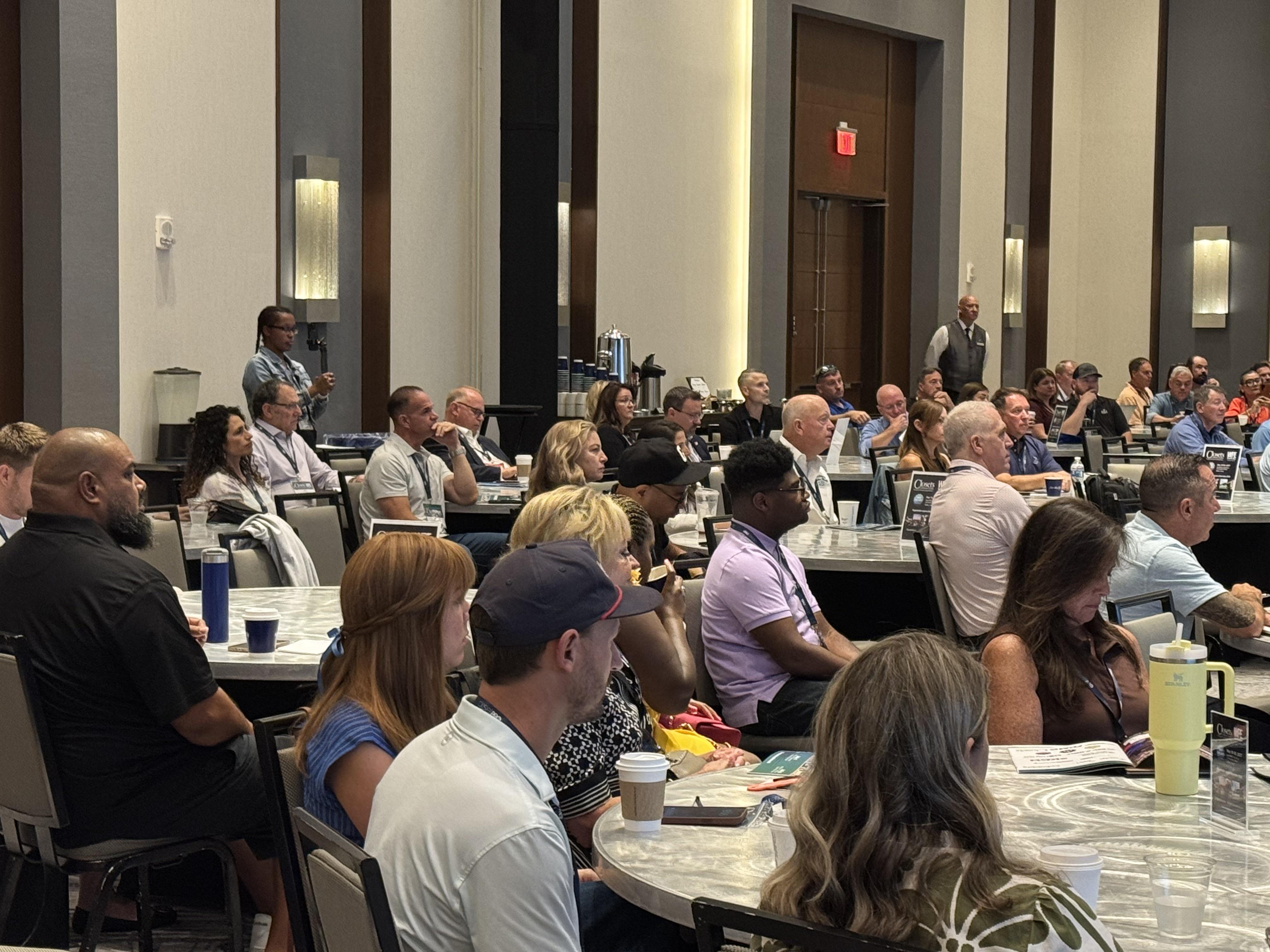
WEST PALM BEACH, Fla. — The opening day of the Closets Conference & Expo delivered a comprehensive look at the closet industry, from high-tech manufacturing and emerging design trends to the core strategic business practices required to scale successfully.
From technical shop floor automation to actionable sales strategies, and drawing leadership inspiration from the baseball diamond, the Closet Track sessions laid out best practice advice for business owners and designers.
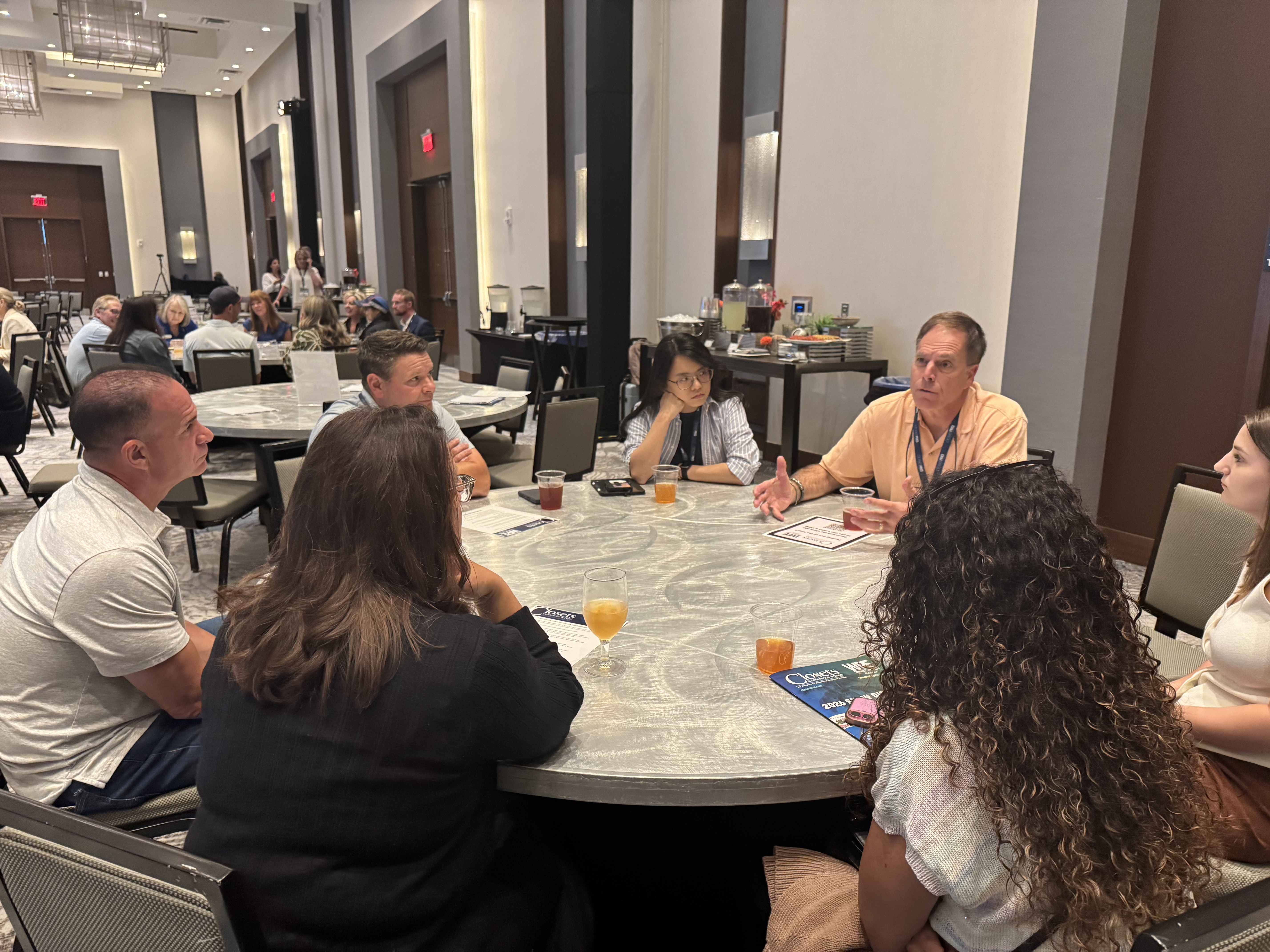
After the presentations wrapped, attendees transitioned to interactive roundtables for deeper discussion of the day's core topics.
Lessons from the diamond to the shop floor
The day kicked off with an inspiring keynote address by Dale Murphy, managing director of Georgia Oak Partners. In his session, "Big League Leadership for Business Owners: Lessons from the Diamond to the Shop Floor," Murphy examined team dynamics and leadership, drawing clear parallels between a successful major league baseball team and managing a growing manufacturing business.
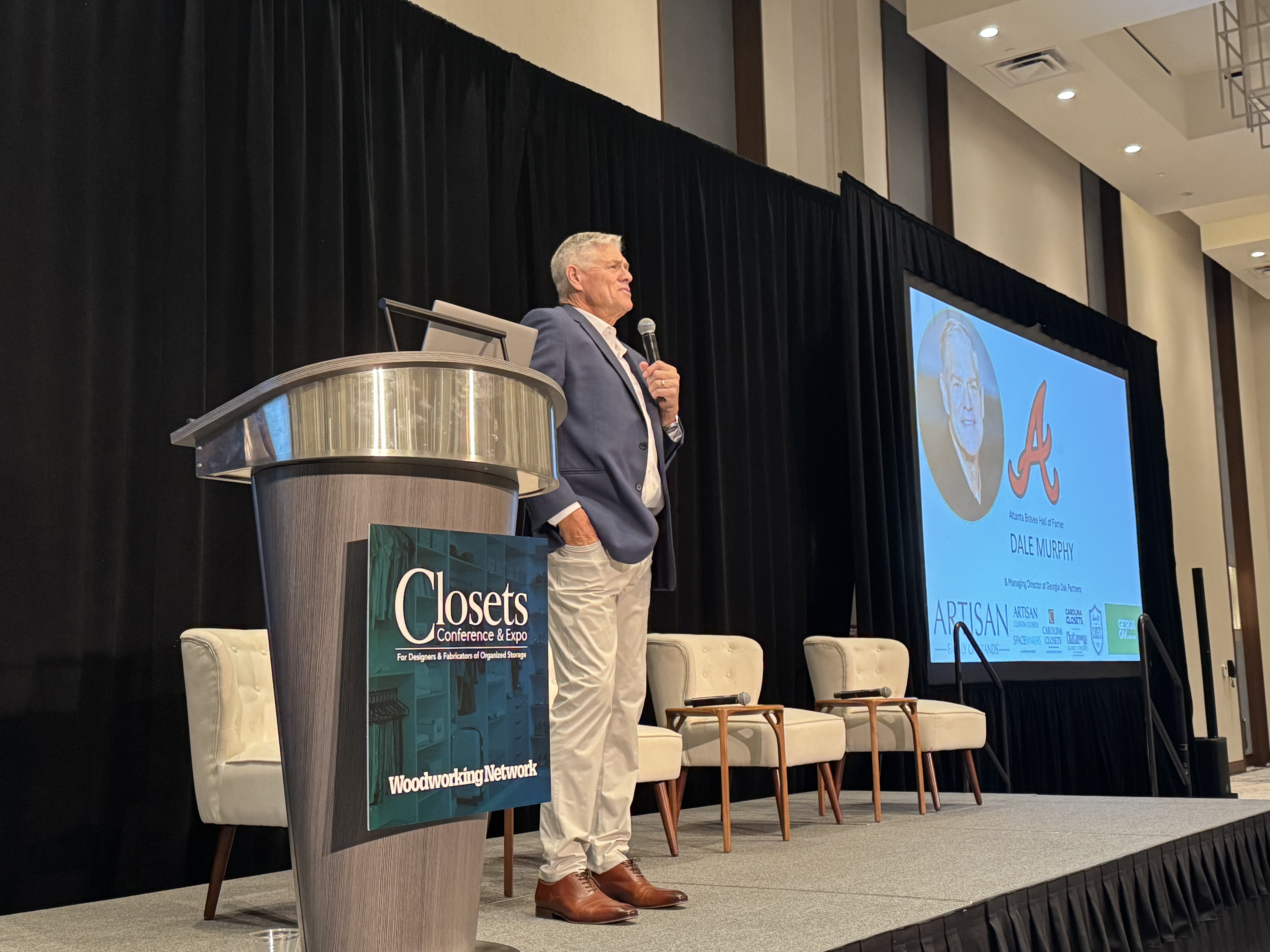
Drawing from his experiences playing under legendary managers like Bobby Cox and Joe Torre, Murphy emphasized that true leadership isn't about top-down directives; it is built entirely on relationships, mutual respect, and a willingness to engage in honest, one-on-one conversations.
Key takeaways from Murphy's address included:
- Autonomy: Leaders must give their teams the freedom to create. When employees are trusted and granted independence, they enjoy what they do, and performance naturally follows.
- Resilience: Setbacks are inevitable in both sports and manufacturing. The future of the industry requires a mindset that embraces resilience—not just the ability to bounce back individually, but the capacity to help teammates and employees do the same.
- Leading: Leadership isn't confined to ownership. Every team member has the potential to influence and change the direction of those in their circle; as teammates, everyone has a chance to help shape the future.
- Having Their Back: True leaders believe in their players, give them a chance to succeed, and establish a foundation of mutual respect that intrinsically motivates the team. Murphy noted a defining mindset for both baseball and business: "Swing hard in case you hit it."
Connected digital workflows
In the technical track session, "From Concept to Client Approval: How Connected Digital Workflows are Transforming Closet Design, Sales & Production," David Skinner of Mozaik Software (Cyncly) examined how data flow defines modern operations.
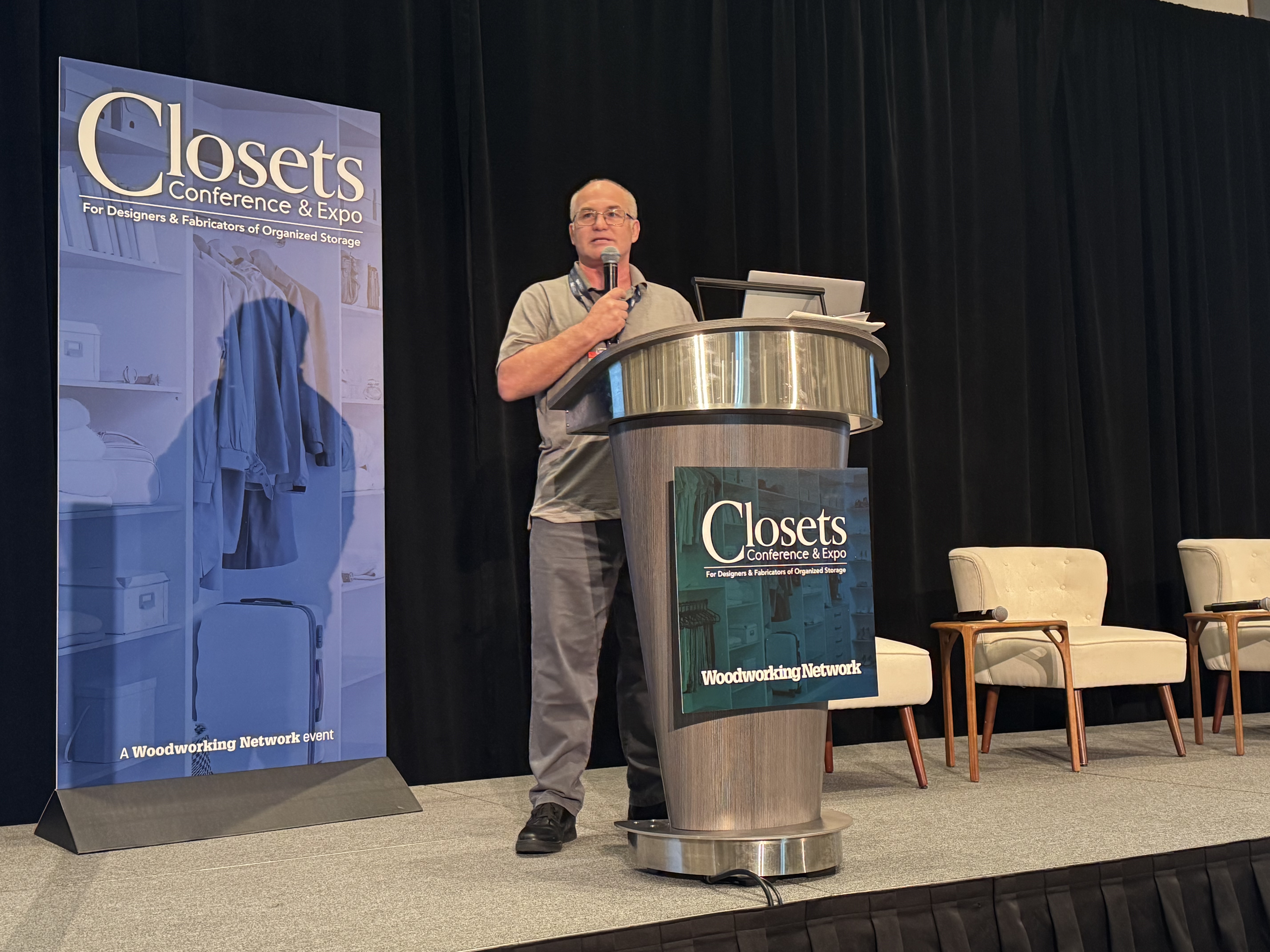
Skinner stressed that a closet business is ultimately an information management business. The core functions selling, producing, installing, and servicing all rely on a seamless data pipeline.
- The Design Hub: The design tool serves as the center hub of the entire operation. True "what you see is what you get" 3D modeling closes deals at a higher rate and aligns the client, designer, and shop floor on a single vision.
- Eliminating Friction: By capturing every detail perfectly at the design stage, companies can prevent transcription errors and proactively address installation hurdles before components leave the shop.
2026 Design Trends Outlook
Design took center stage during the panel session, "What's Next in Closets, Cabinetry & Home Org: 2026 Design & Trends Outlook."
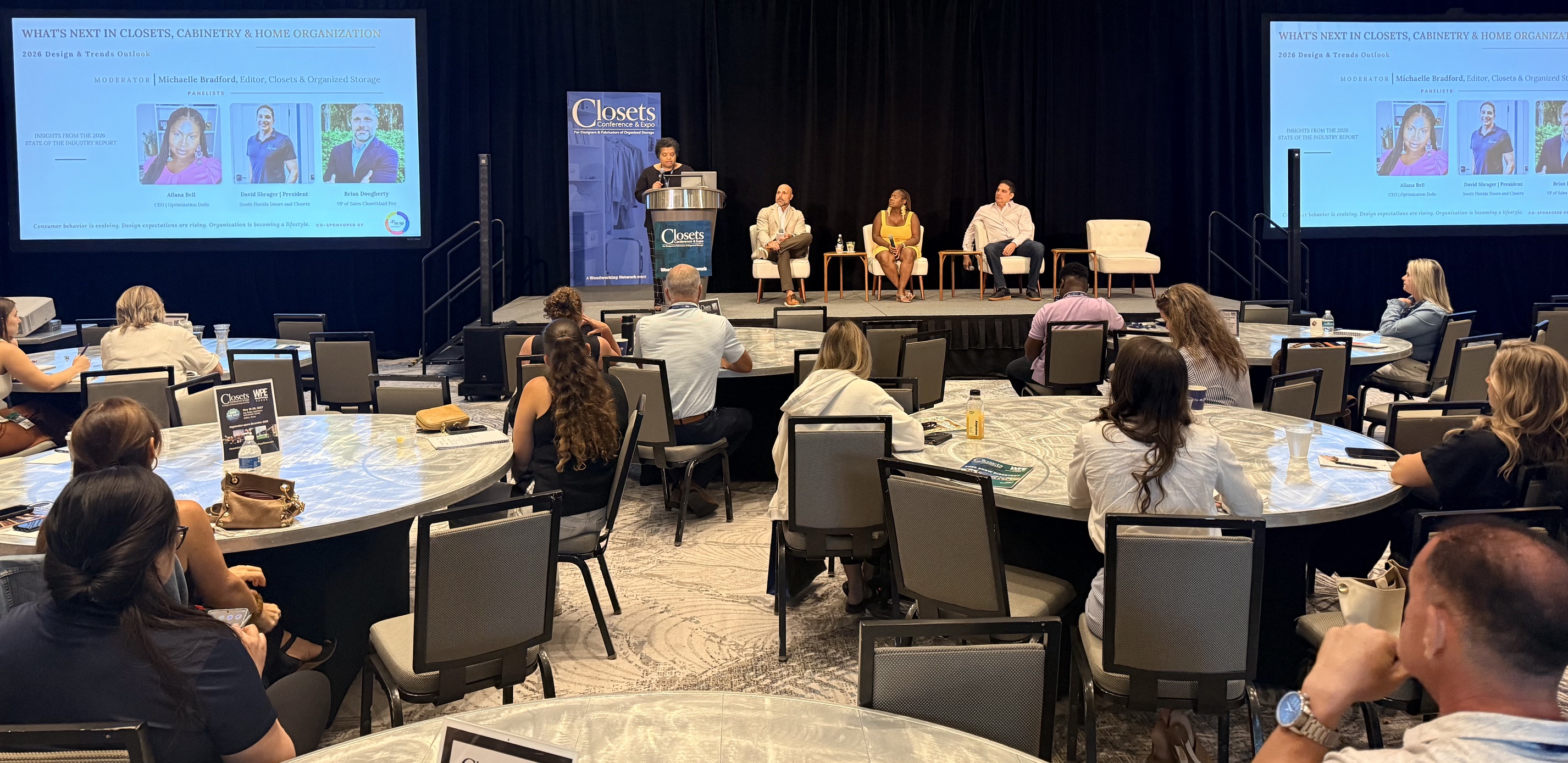
Featuring insights from Brian Dougherty (VP of Sales, ClosetMaid Pro), Allanna Bell (owner/designer, Optimization Dolls), David Shrager (president, South Florida Doors and Closets), and Editor Michaelle Bradford, the discussion explored how consumer expectations are shifting toward premium finishes, highly customized room configurations including hybrid spaces, integrated lighting systems, plus hardware trends and designer collaborations. The panel highlighted that designers must balance design flexibility with structural feasibility to capture a larger share of the market.
Shop floor evolution
Switching gears to production, Ennes Henry of MachMotion led a technical session titled "Optimizing CNC and Automation for Closet Manufacturing." Henry tracked the leaps forward brought on by widespread CNC adoption over the past few decades, noting that today's environment is entirely about intelligent automation and system integration.
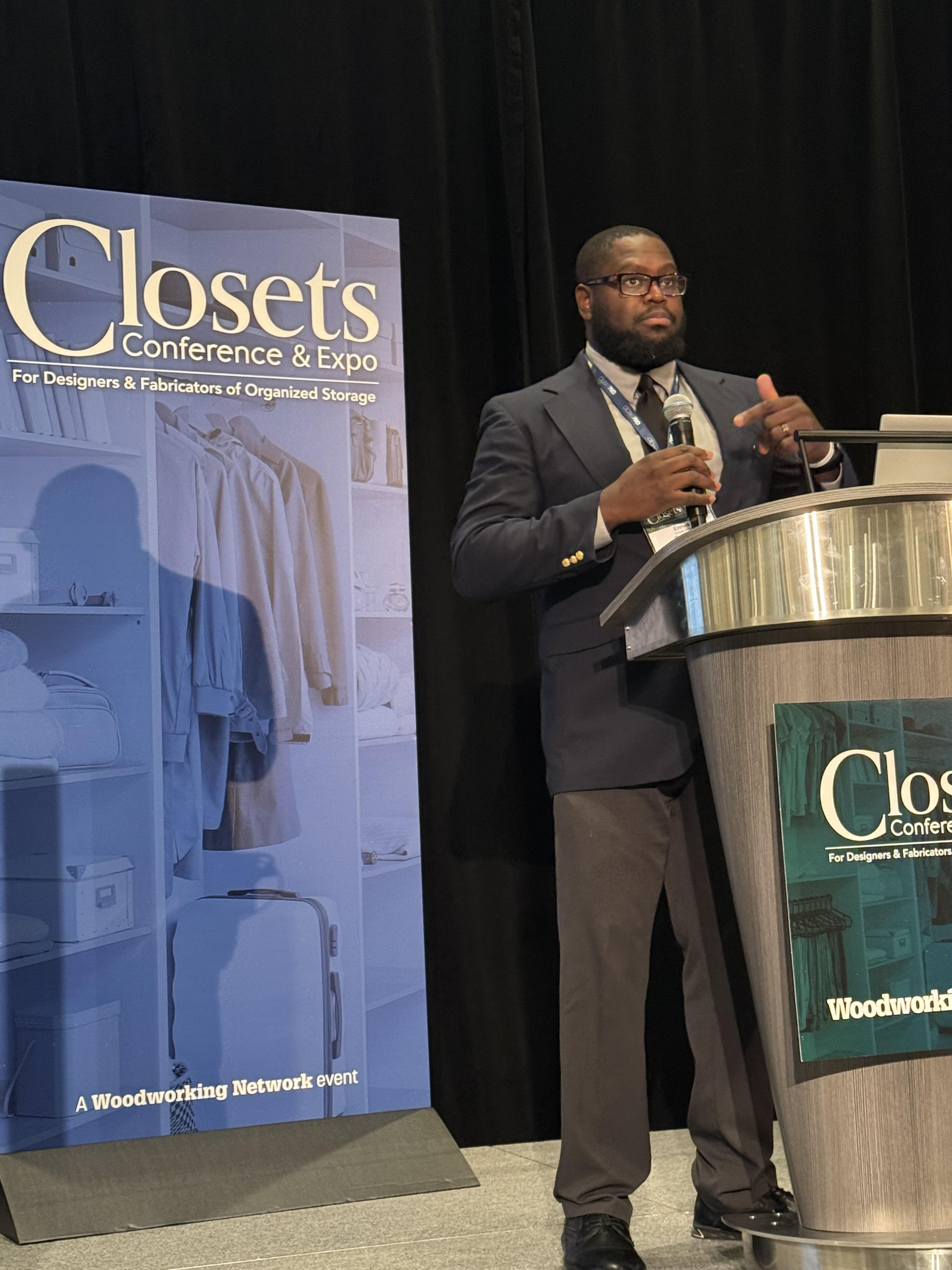
To expand manufacturing capabilities without compounding operational chaos, Henry emphasized two critical components:
- Workflow Optimization: Smooth material flow across the shop floor is the single most important factor in reducing production delays and ensuring predictable day-to-day operations.
- Precision and Quality: Premium products require flawless details. Component quality, particularly edge banding precision, directly dictates the final look and protects the shop from absorbing costly reworks.
Levers of sustainable growth
The business strategy session featured Andrew Wadhams, principal of The Wadhams Group, presenting "Strategies for Growth, Profitability, and Sustainable Success." Wadhams framed the discussion around a booming sector, noting that the Closets and Home Org category enjoys a robust +7.2% growth rate according to 2026 industry data.
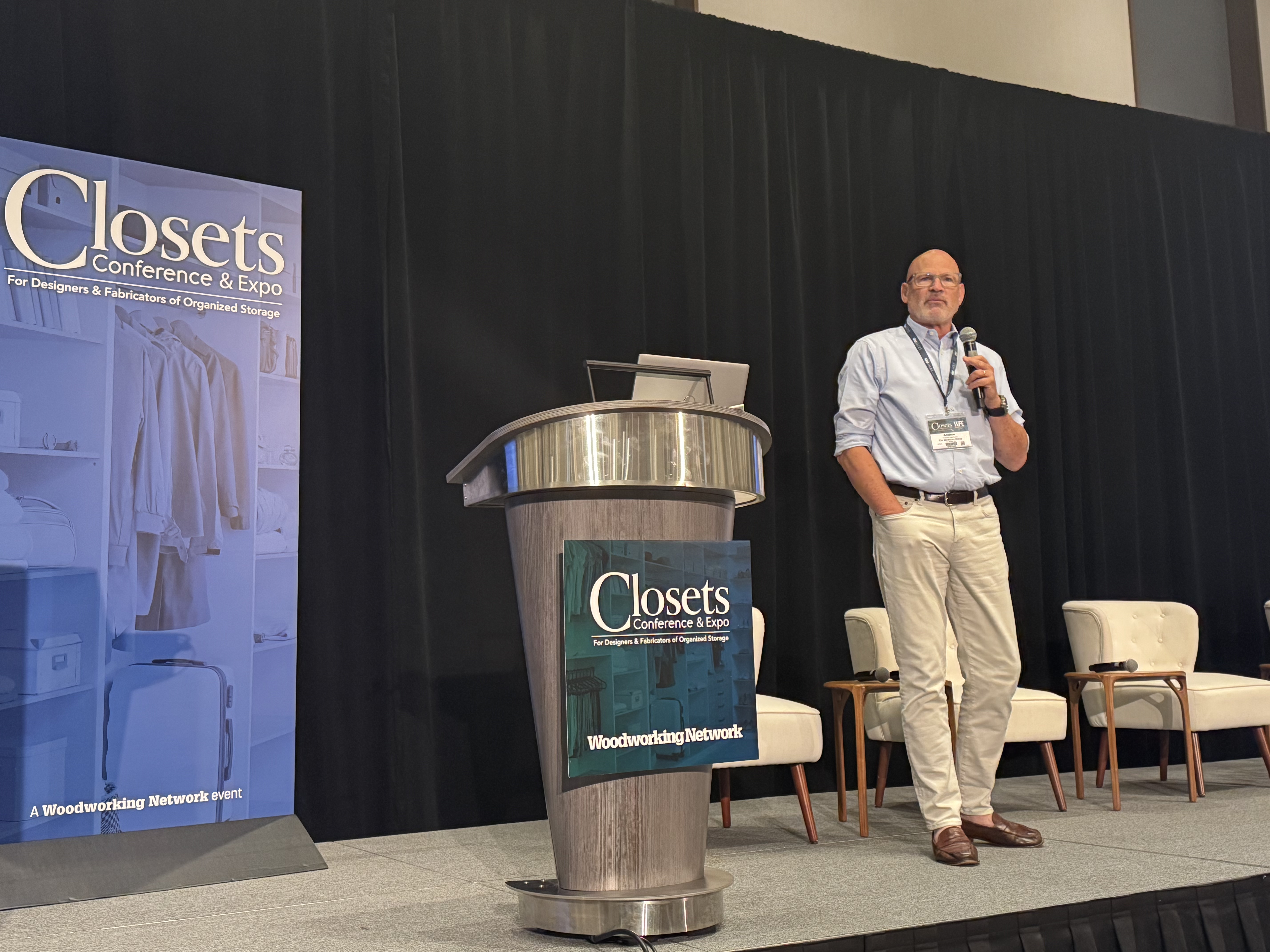
Wadhams challenged attendees to audit their readiness for expansion across two distinct pillars: Are you ready to grow – organizationally and strategically?
He introduced a model sales funnel showing typical conversion drops from initial leads down to a 60% closing rate with an average deal size of $7,500. To maximize profitability within this funnel, he detailed the three core "levers" of growth:
- Drive Appointments: Business owners must look beyond arbitrary marketing spend. Wadhams recommended investing deliberately in high-productivity channels, establishing strict referral performance goals for every designer, and micro-managing inquiry-to-contact latency and cancellation rates.
- Improve Conversion: Elevating close rates requires targeted training. Leaders must analyze exactly where their team loses deals to close those individual skill gaps. Additionally, rising "days to appointment" metrics combined with dropping close rates are often a strong indicator of an understaffed design team.
- Increase Average Job Size: To boost the overall transaction value, Wadhams suggested implementing "second room incentives" to encourage multi-space bookings, keeping pace with design trends to introduce high-margin add-on products, and systematically adjusting base pricing annually.
Wadhams concluded by showcasing a sales funnel calculator, demonstrating how fractional percentage gains across these three levers compound into substantial impacts on top-line weekly and annual revenue.
Virtual plant tour
Following the roundtables, attendees participated in the virtual tour of Quest Engineering's 100,000-square-foot facility in Richfield, Wisconsin..The plant leverages Plant 4.0 technology to process over 500 panels and 7,500 individual components daily. Attendees saw high-speed edgebanding, robotic sorting, and lights-out manufacturing in real time.
“We built this facility as a blank slate to design exactly what we wanted as a manufacturer,” said Chris Lefeber, co-founder of Quest Engineering, who was available for a Q&A with attendees through a live Zoom link. “Today, our entire plant is connected from the robotic storage that live-loads our machines to the sensors on our edgebanders that text our supervisors if a metric falls out of spec.”





Have something to say? Share your thoughts with us in the comments below.