

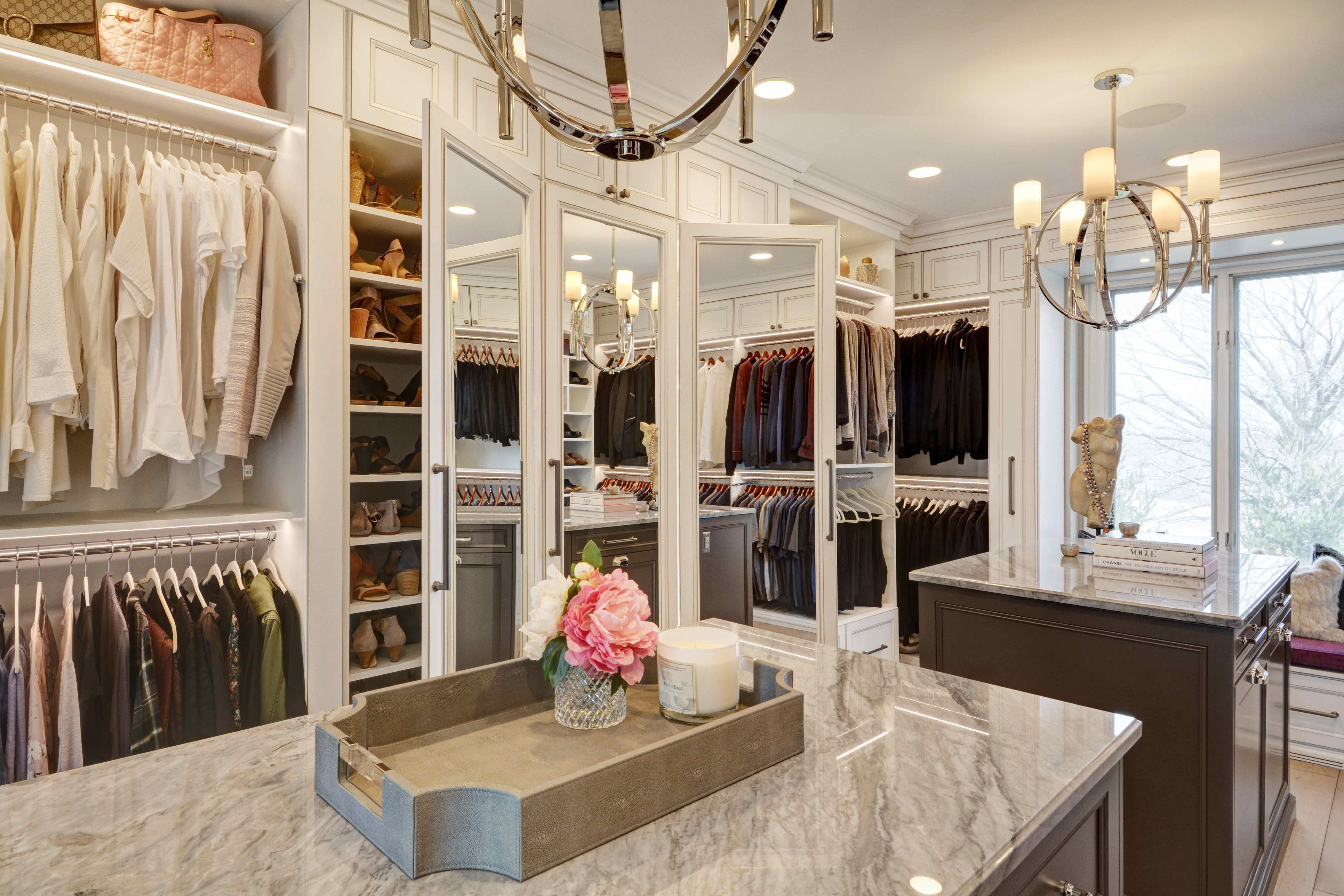
The closets and home storage industry is moving away from simple storage toward complex, integrated environments. According to the Closets State of the Industry 2026 report, the modern closet is a mechanized, multi-use space that incorporates high-end finishes, integrated technology, and security features.
The study, conducted in early 2026, gathered data from 127 industry professionals, including manufacturers (42.3%), designers (24.3%), and retailers. With 81.1% of respondents operating as independent businesses, the findings provide a look at the mid-to-high-end residential market’s current trajectory.
Upgrades and integration
In 2025, projects were defined by a demand for luxury features and enhanced functionality. Accent lighting is still a primary upgrade, requested in 49.5% of projects. This reflects a broader trend in which illumination is used not just for visibility but as a core architectural element.
Following lighting, consumers prioritized specialized organization for high-value items. Jewelry tray inserts (40.9%), soft-close hardware (36.6%), and hampers or sliding baskets (35.5%) were the most frequently added items. Traditional storage solutions are being supplemented by high-visibility upgrades; glass doors were requested in 32.3% of projects, that were often paired with valet rods (32.3%) to create a boutique retail experience within the home.
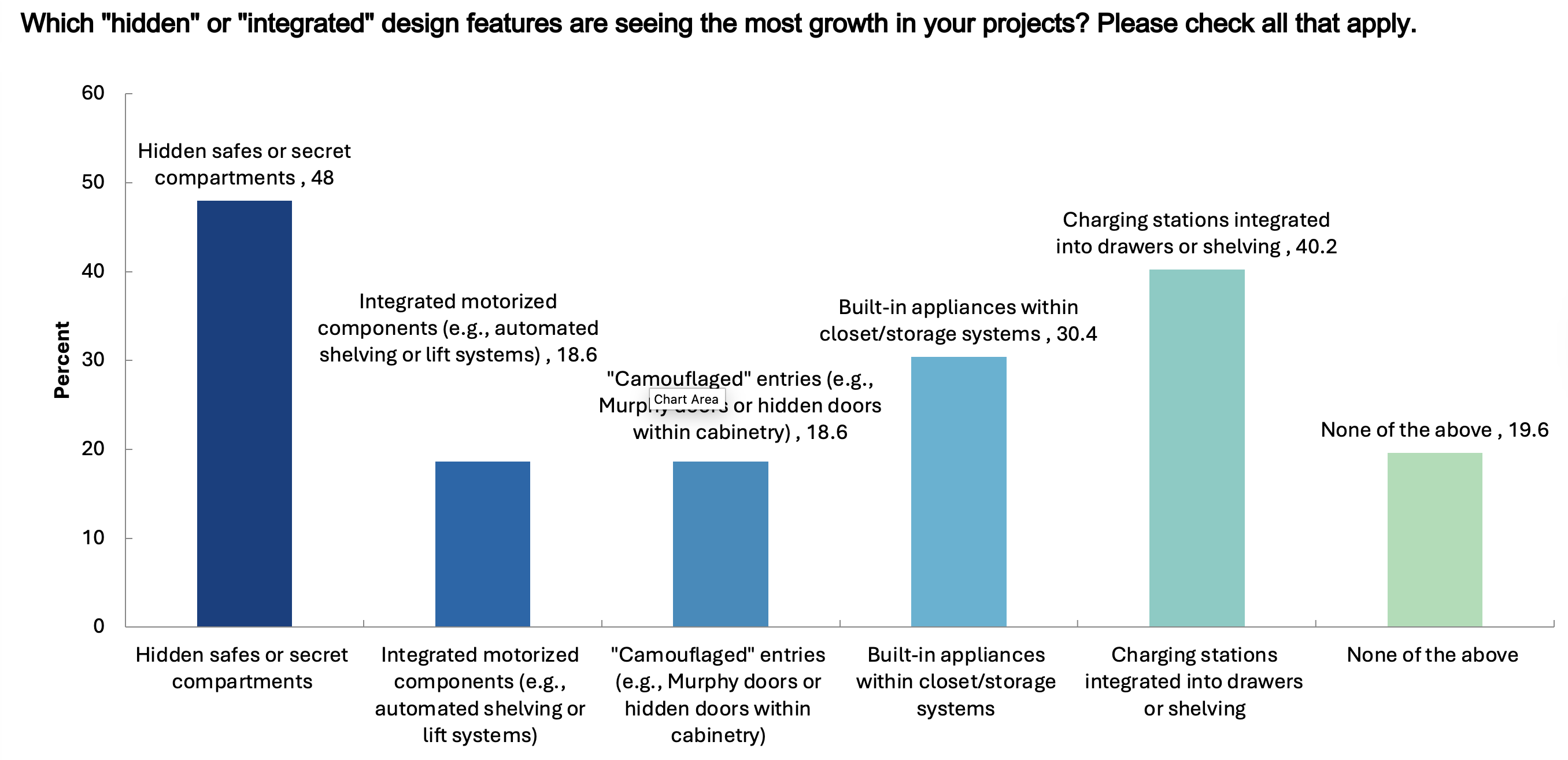
Security and power integration have also become standard expectations. Nearly half of all respondents (48.0%) cited hidden safes or secret compartments as a growing hidden design feature. Additionally, 40.2% of professionals are now integrating charging stations directly into drawers and shelving.
Persistence of white finishes
Despite the rise of luxury materials, the industry remains tethered to a specific palette. White finishes remain the market leader, ranked as the #1 choice by 63.1% of respondents. However, the data suggests a maturing market that is increasingly comfortable with natural textures. Light woodgrains secured the #2 spot for 46.7% of businesses.
Regarding core materials, melamine and laminates continue to dominate the volume of the industry. Many firms utilize these materials for 80% to 100% of their output, prized for their durability and cost-effectiveness. Solid wood and veneers maintain a foothold in the high-end custom market, though they are frequently used as accents rather than the primary material for entire systems. Wire shelving, once a staple of new construction, has seen a significant decline, with many respondents reporting low percentages in their 2025 project portfolios.
Hybrid spaces
One of the most significant findings of the 2026 report is the erosion of the “single-use” room. The industry is moving toward hybrid spaces—environments that serve dual or triple purposes. Common configurations reported include:
- Closet + Home Office: Integrating workstations into dressing areas.
- Garage + Home Gym: Transforming vehicle storage into fitness centers.
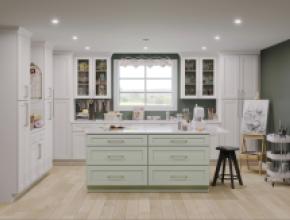
- Laundry + Craft Room: Respondents are finding demand to combine utility with hobby space.
This shift is reflected specifically in the garage sector. While cabinets remain the most requested upgrade (85.9%), the high demand for workbenches (57.8%) and slatwall systems (51.6%) indicates that homeowners are viewing the garage as an extension of the home’s livable square footage rather than a peripheral storage zone.
Wellness trends for 2026
Looking forward to the remainder of 2026, the industry is split between two primary movements. Traditional and Transitional styles (classic moldings, shaker doors) remain the top-requested styles at 40.4%. However, Organic Modern (natural textures, soft curves) follows closely at 38.3%. These two categories vastly outperform Maximalism (4.3%) and Industrial styles (2.1%), suggesting that consumers are seeking longevity and warmth.
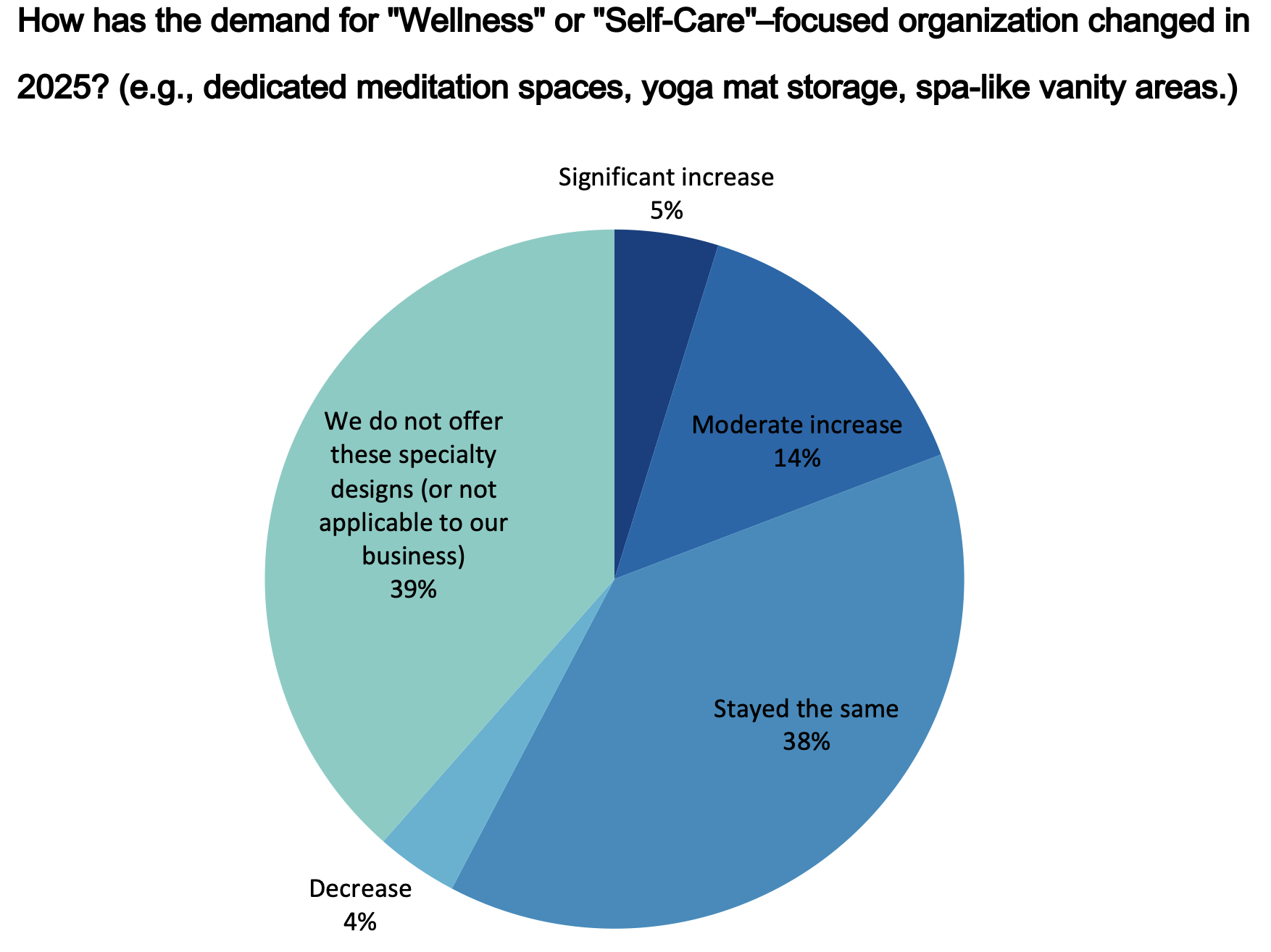
The Wellness and Self-Care trend, encompassing meditation spaces or spa-like vanities, is experiencing a slow but steady adoption. While 38.5% of respondents noted that demand has stayed the same, nearly 20% reported a moderate-to-significant increase. This indicates that while wellness is not yet a universal requirement, it is a growing differentiator for high-end design firms.
Growth of technology
The industry is rapidly digitizing to meet the demand for complex, custom designs. 3D design software is now a baseline requirement, with 78.2% of the industry using it. To further bridge the gap between concept and reality, CNC and manufacturing-integrated software are used by 49.5% of businesses, enabling the precise fabrication of intricate “hidden” features consumers now demand.
While Photorealistic rendering is used by 32.7% of firms, more advanced technologies like AI-assisted design (13.9%) and AR/VR visualization (12.9%) are still in the early stages of adoption. These tools are expected to gain traction as clients increasingly demand to “walk through” their storage systems before manufacturing begins.
Conclusion
The 2026 data show that modern consumers are willing to invest in upgrades, specifically lighting, security, and power, but they are doing so within the context of traditional and organic styles. The successful firm in 2026 is one that can navigate the technical requirements of hybrid rooms while maintaining the classic finishes that U.S. customers continue to demand.



Have something to say? Share your thoughts with us in the comments below.