

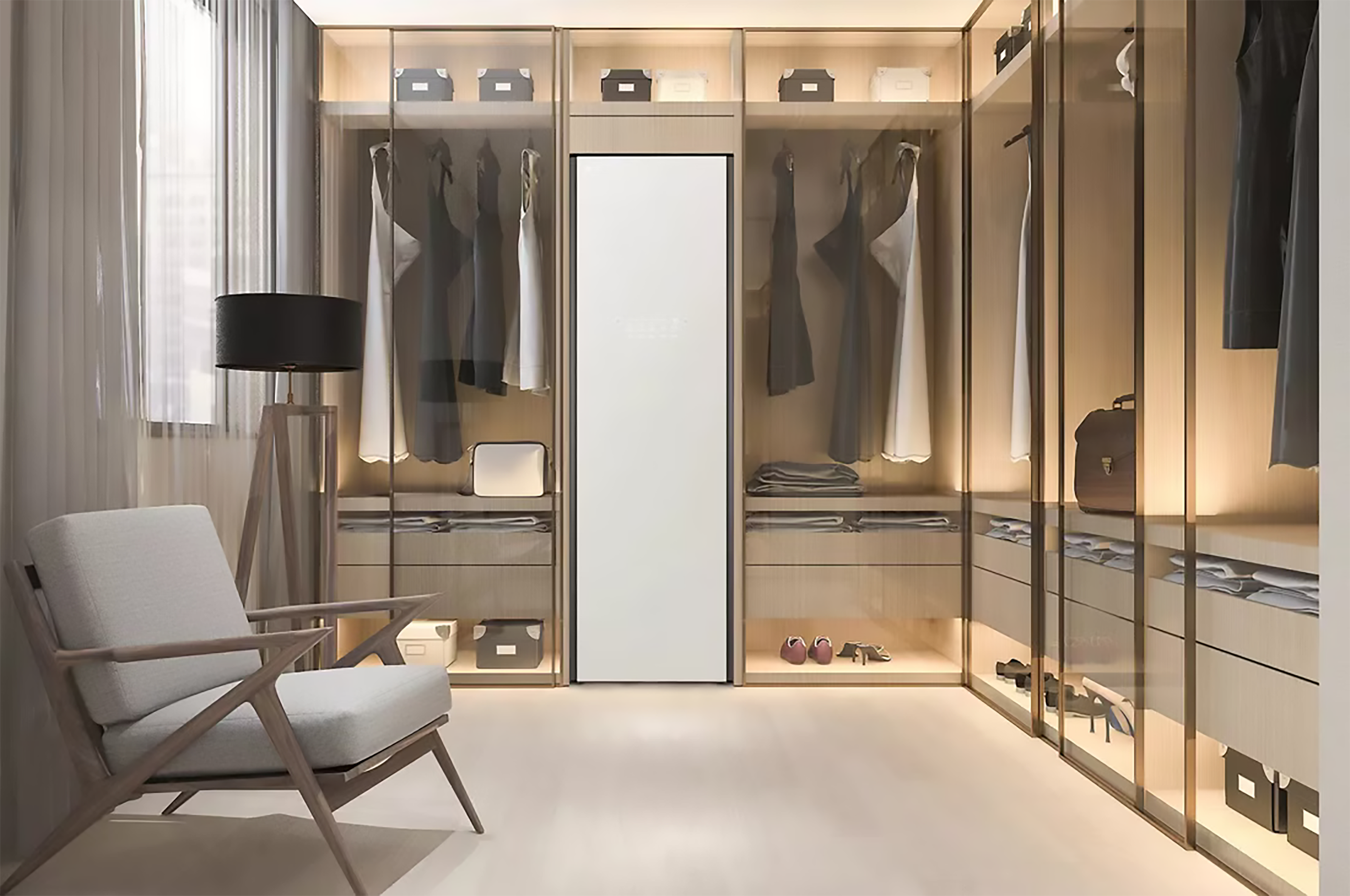
Smart home integration is becoming standard in high-end residences yet closets often remain outside the connected ecosystem. More than 57 million Americans use smart home products, according to Consumer Affairs analysis of Statista data—mostly focused on lighting, security, and entertainment. As expectations shift toward whole-home connectivity, storage spaces are emerging as an untapped opportunity.
Designing the smart dressing experience
Lighting is often the first and most requested smart feature in closet projects. In a 2025 NKBA and CEDIA report, 40 percent of designers and integrators identified lighting controls as the most frequently requested smart upgrade. In dressing spaces, that demand translates into tunable systems that shift from bright morning illumination to softer evening settings, integrating seamlessly with whole-home controls.
HL Burkley, owner of Inspired Closets SWFL & the Suncoast, calls lighting “the most popular and practical smart upgrade,” noting strong client adoption in his Florida showrooms.
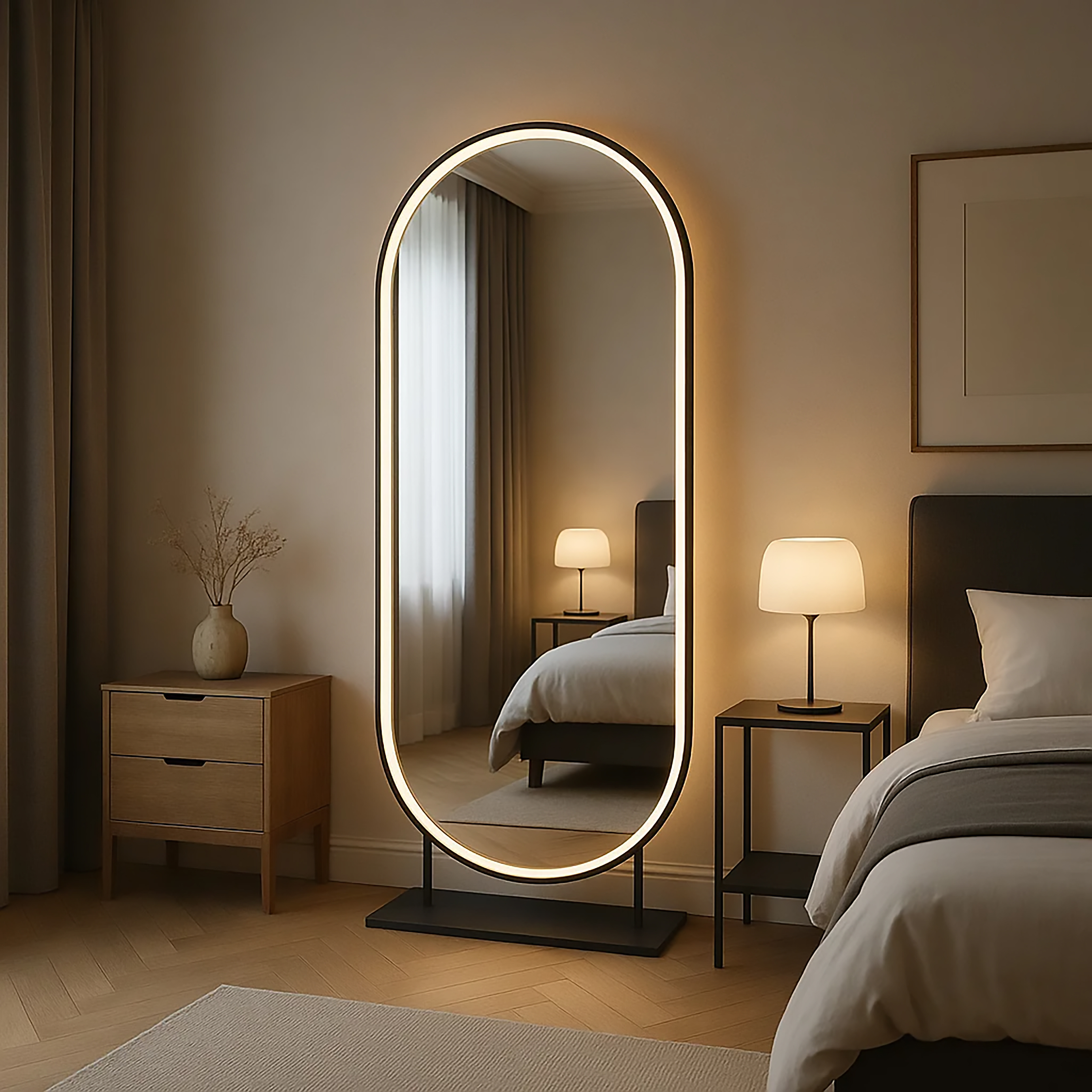
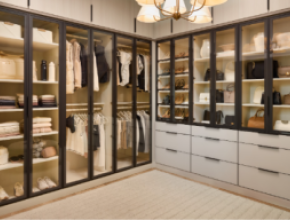
Smart mirrors and wardrobe management platforms are adding interactive functionality and new upsell opportunities. Full-view LED mirrors, such as those from Mi-Mirror, can anchor a dressing area with integrated lighting, controls, and display capability. When paired with wardrobe management apps like Acloset and Whering, homeowners can now plan outfits based on weather, personal calendars, and clothing inventory.
For designers, this means coordinating with smart-home integrators and trades for defined “tech zones” that often include islands and drawer banks. “The key is planning early in the design phase,” says Richie DeMarco of Richelieu Hardware. “Addressing power requirements, clearances, and access points early helps prevent issues later and leads to a smoother installation.”
Security, access, and powered hardware
As homeowners invest more in custom closets, expectations around security and accessibility are increasing. A growing range of hardware now includes fingerprint or app-controlled cabinet locks designed to mount on standard drawers and doors.
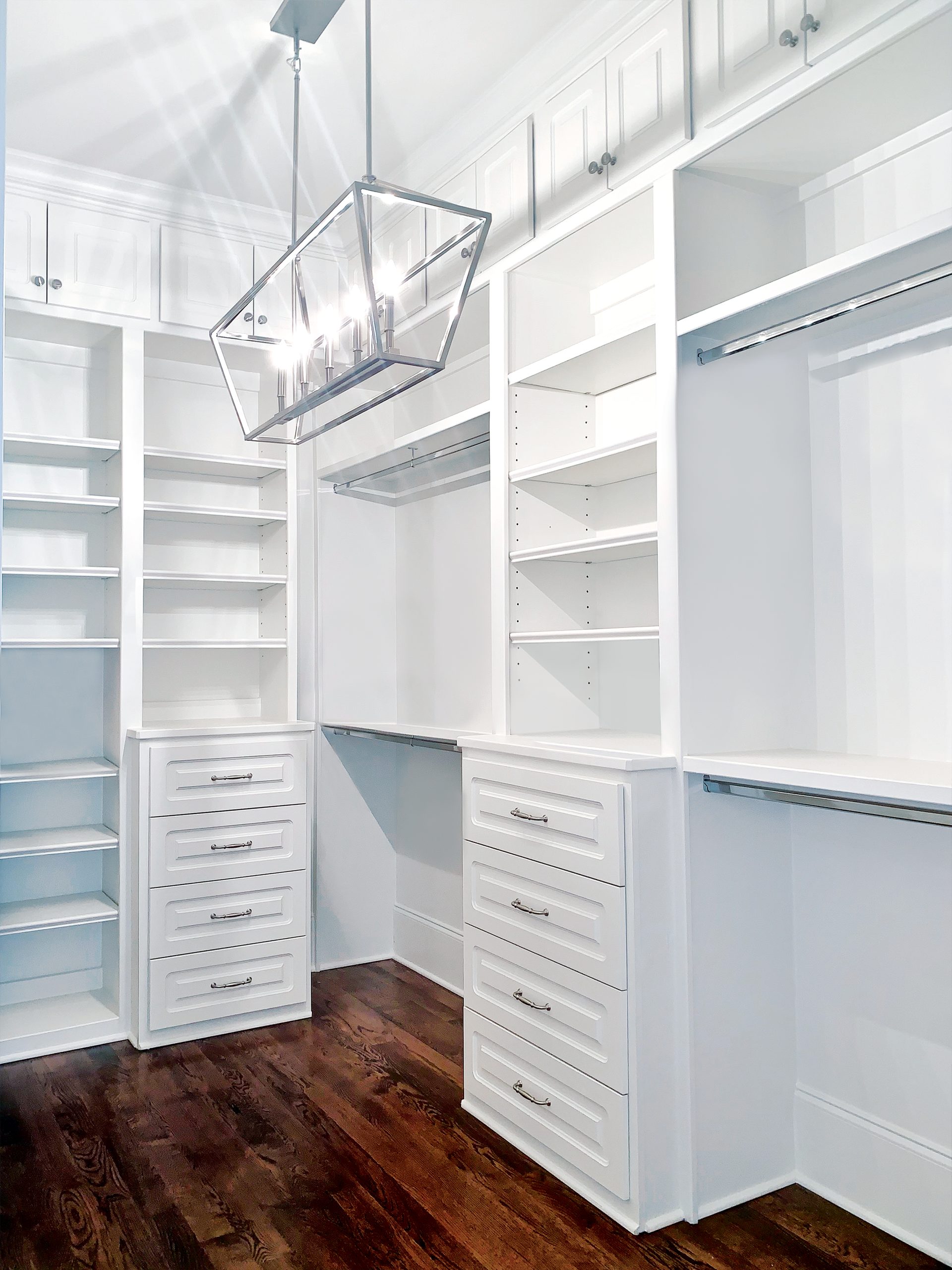
“Closet designers are incorporating biometric locks to discreetly protect valuables, medications, and personal documents without disrupting the overall design,” says DeMarco. “Clients have responded well, especially appreciating the added security and convenience of keyless access.”
For Wendy Scott of Timeless Closets & Cabinetry, electronic locking systems such as StealthLock have shifted from premium add-ons to everyday specifications. “It used to be an upgraded option, but now is a standard,” she says, noting that clients across price points prefer concealed security over visible keyholes that disrupt the aesthetic.
Powered accessories are gaining traction. “We’re also seeing increased interest in motorized wardrobe pull-downs, electric shelving lifts, and voice-activated lighting,” DeMarco adds. “These solutions are being driven by convenience and accessibility rather than technology alone.”
Together, these upgrades expand usable storage and create new opportunities for margin growth.
Smart storage across the home
Smart storage doesn’t have to be confined to closets. The same lighting, sensor, and security systems used in walk-ins can extend to other zones, turning shelving and cabinetry into connected, value-added spaces.
Laundry is a natural crossover point. As sustainability and conscious consumerism gain traction, appliance manufacturers are redefining laundry with steam closets. LG Electronics notes that the Styler’s reflective surface often integrates into closet runs or alongside dressers, serving as a full-length mirror. “Since the LG Styler is a free-standing self-contained unit, the installation has many potential options.” That flexibility lets designers treat a steam closet as either a laundry appliance or a visual anchor within adjacent dressing spaces.
Garages, mudrooms, and craft rooms also benefit from smart storage systems. Overhead lifts, powered work surfaces, zone-specific lighting, cameras, and app-controlled storage help create controlled environments for tools, chemicals, and high-ticket items.
Business impact: planning, process, and profitability
Beyond the features themselves, smart storage is reshaping how closet professionals plan projects, coordinate with trades, and drive margin. Inspired Closets rolled out Envision, an augmented reality (AR) platform that lets clients put on a headset and walk through their designs at scale. The experience is driven by Studio, the company’s design software, which also translates approved drawings directly to production.
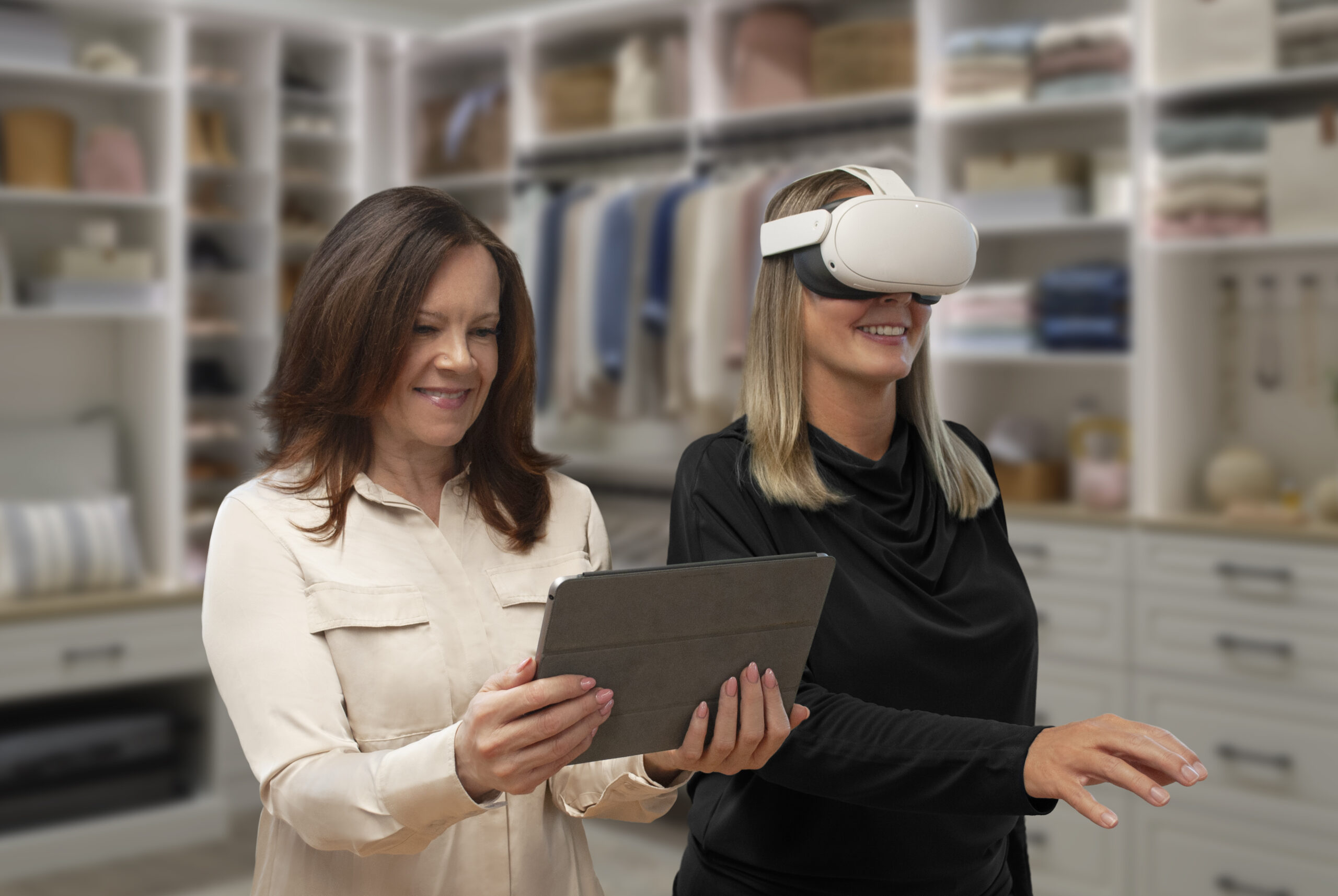
“Nobody wants to make a mistake,” Burkley says, noting that immersive visualization helps reduce fear and hesitation. By allowing clients to feel the solution before committing, designers can address concerns about overdesigning, ergonomics, or accessory placement. Explaining to customers that a space cannot accommodate an island is challenging, but when they experience the layout firsthand, “that changes people’s minds quickly.”
Once approved, the design feeds directly to fabrication equipment, reducing errors and ensuring integrated features arrive as specified. Fewer field adjustments and clearer approvals translate directly to stronger margins and reduced installation risk. Envision also serves as a training tool for new designers and installers, helping teams build muscle memory for stronger designs and installations.
Smart-home expectations will continue to rise, and closet and storage professionals who integrate connected features early in the design and production process will be positioned to capture higher-value projects and deepen collaboration with builders and integrators.


Have something to say? Share your thoughts with us in the comments below.