

The pendulum always swings. After a decade of minimalist calm, culture has had its fill of vanilla. The 2025 “Boom Boom” fashion revival (shoulder-padded, jewel-toned, and spectacularly un-subtle) is proof that restraint has lost its monopoly. Fashion designers are trading sleek silence for playful confidence, and if that’s what’s walking the runways, it’s only a matter of time before it walks into your showroom.
So why is a fashion trend like this showing up in woodworking? Trends move like ripples: first through clothing, then into interiors, architecture, and lifestyle products. The runway teaches people what bold looks like, and once they grow comfortable seeing those colors and patterns in clothes, they start wanting to live with them in their homes. Fashion is the spark; cabinetry and furniture (and other places) are where it eventually settles, and it’s clockwork at this point.
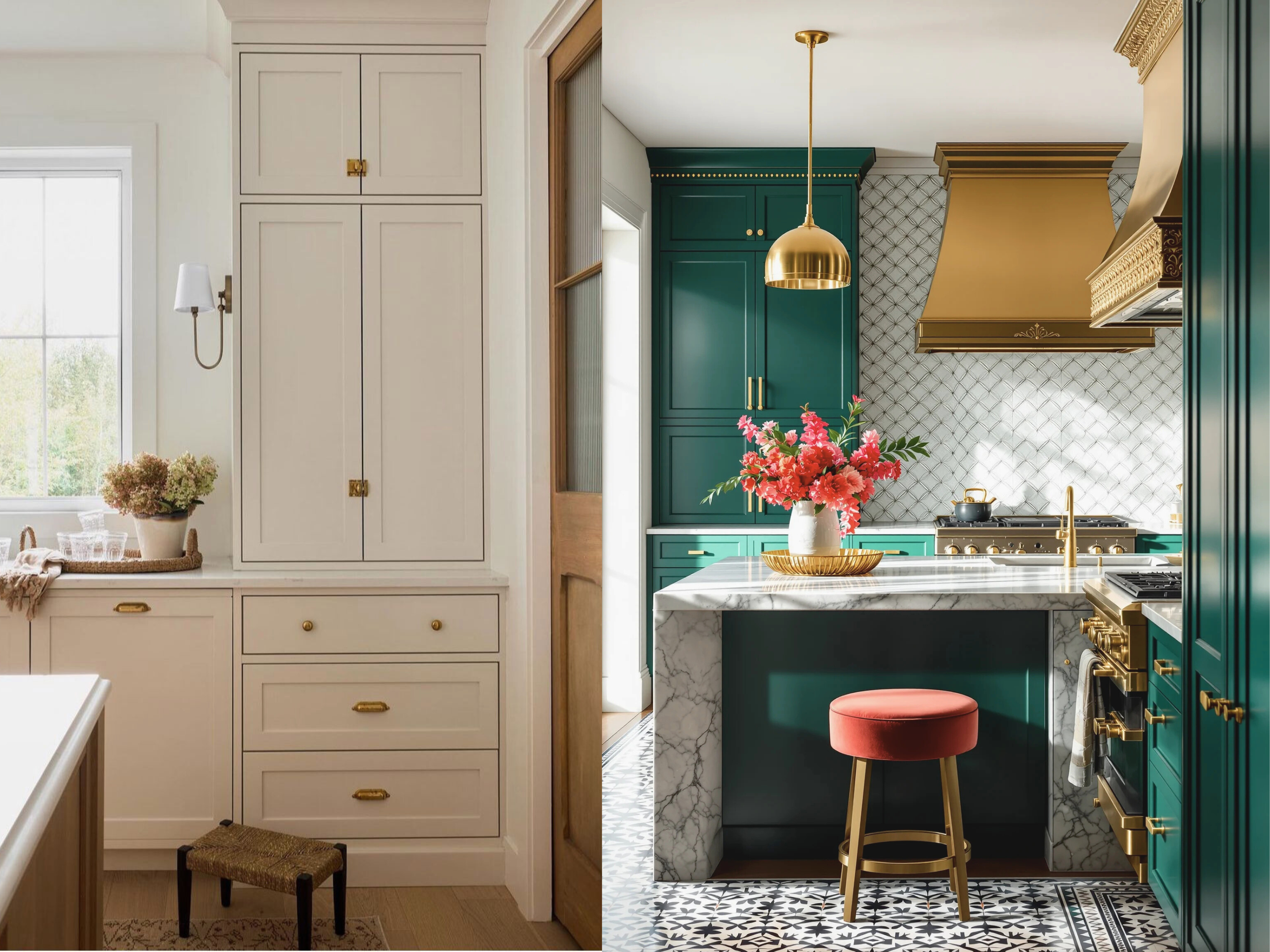
So what does maximalism actually look like? Think bold color blocking, contrasting wood tones, oversized grain patterns, and intricate detailing that draws the eye instead of hiding it. Picture cabinets finished in deep emerald, navy, or even plum, paired with warm brass hardware or marble tops with dramatic veining. Imagine fluted panels, geometric inlays, and high-gloss lacquer mixed with raw wood texture. It’s about layering, storytelling, and making choices that announce themselves instead of apologizing for existing. In short, maximalism is comfort with attention, it celebrates personality rather than erasing it.
What Maximalism Means for Cabinetry
Let’s be clear, minimalist and classic design isn’t dead. It’s still the backbone of North American design. Shaker doors, white kitchens, timeless lines (these are the bread and butter that keep us busy and customers comfortable). There will always be a large part of the population that wants to stay safe, and live in what feels classic and calm. Those projects pay the bills. The secret isn’t to abandon them, it’s to surround them with louder work that draws attention to your shop in the first place.
That’s what trends are for: they’re the feathers the peacock shows when he struts. Trends create curiosity, visibility, and conversation. They make people stop scrolling, stop driving, and stop to look. Even if the customer ends up choosing something traditional, it’s the bold design that got them in your door. Think of it as marketing through artistry.
Minimalism has always rewarded discipline, but maximalism rewards visibility. When everyone’s posting the same white-oak slab door with matte black pulls, the eye starts to wander. Color, contrast, and texture become oxygen for attention. A dramatic island, a walnut interior, a ribbed front catching morning light (these details don’t have to define your whole brand, but they can define your brand’s presence).
The psychology behind this comeback is simple. After years of economic uncertainty and digital sameness, people are hungry for joy again. They want something tactile, expressive, and personal. The same impulse driving neon on the runway is pulling color back into kitchens. But the best designers aren’t swinging wildly, they’re blending. Eighty percent timeless, twenty percent showpiece. It’s the design equivalent of seasoning, enough to taste, but not enough to overwhelm.
The Balance: Classic Pays Bills, Trend Draws Eyes
For us, it’s an opportunity hiding in plain sight. Use the trends to show off your skill (the book-matched veneer, the inlay, the creative joinery) while still delivering what’s functional and familiar. Let bold work be your storefront window, your social post, your “come see what we can do.” Show your “behind the scenes installing a maximalist pantry in Pittsburgh”… on TikTok. The traffic will flow, then let the steady work of Shaker doors and white paint keep the saws spinning.
Trends come and go, but attention is always valuable. Loud design isn’t about replacing the classics, it’s about earning the spotlight so the classics can sell themselves. So, when the world goes Boom Boom, don’t panic, just make sure you’re keeping rhythm. Because even the safest buyer needs a little noise to notice you.




Have something to say? Share your thoughts with us in the comments below.