

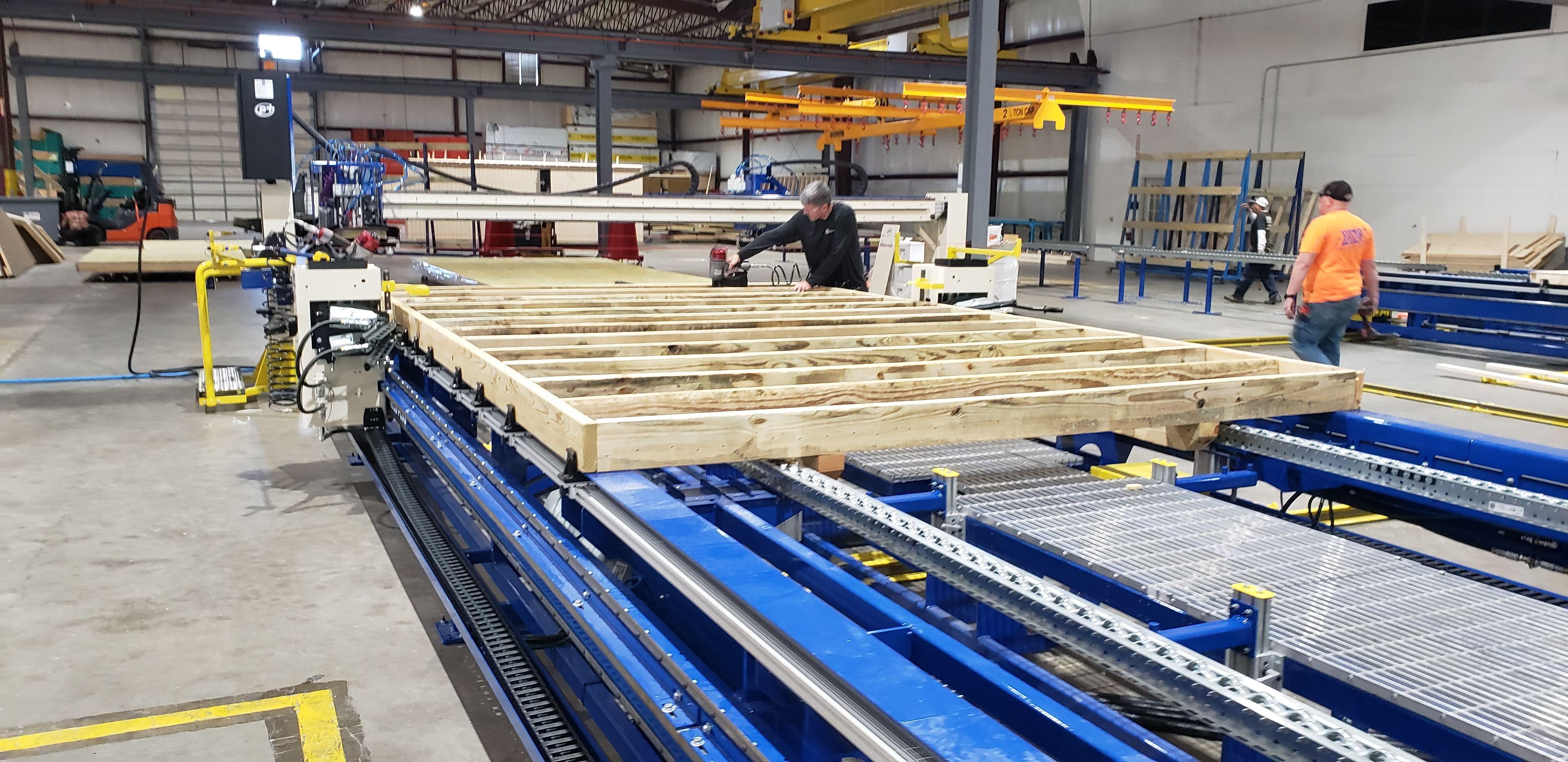
Innovation within prefabricated off-site construction is ever-changing, especially as the demand for faster timelines, higher-quality builds, and safer working conditions continues to grow. Labor shortages and rising project complexity have only increased the need for solutions that improve consistency while reducing physical strain on today’s construction workforce.
For American-made, semi-automated wall paneling equipment manufacturers like Panels Plus, this moment presents an opportunity to highlight how automation protects carpenters from hazardous conditions, strenuous labor, and unpredictable environments that come with off-site building, equipping production facilities to achieve the throughput required to meet modern building demands.
Automation in panelized construction has become a defining factor in how companies scale, remain competitive, and deliver predictable output. As interest grows, so do the questions surrounding how this technology integrates into existing operations. Below are some of the most commonly asked questions when implementing semi-automated wall paneling in a company’s production.
Q. How do you plan the layout of a facility with this equipment?
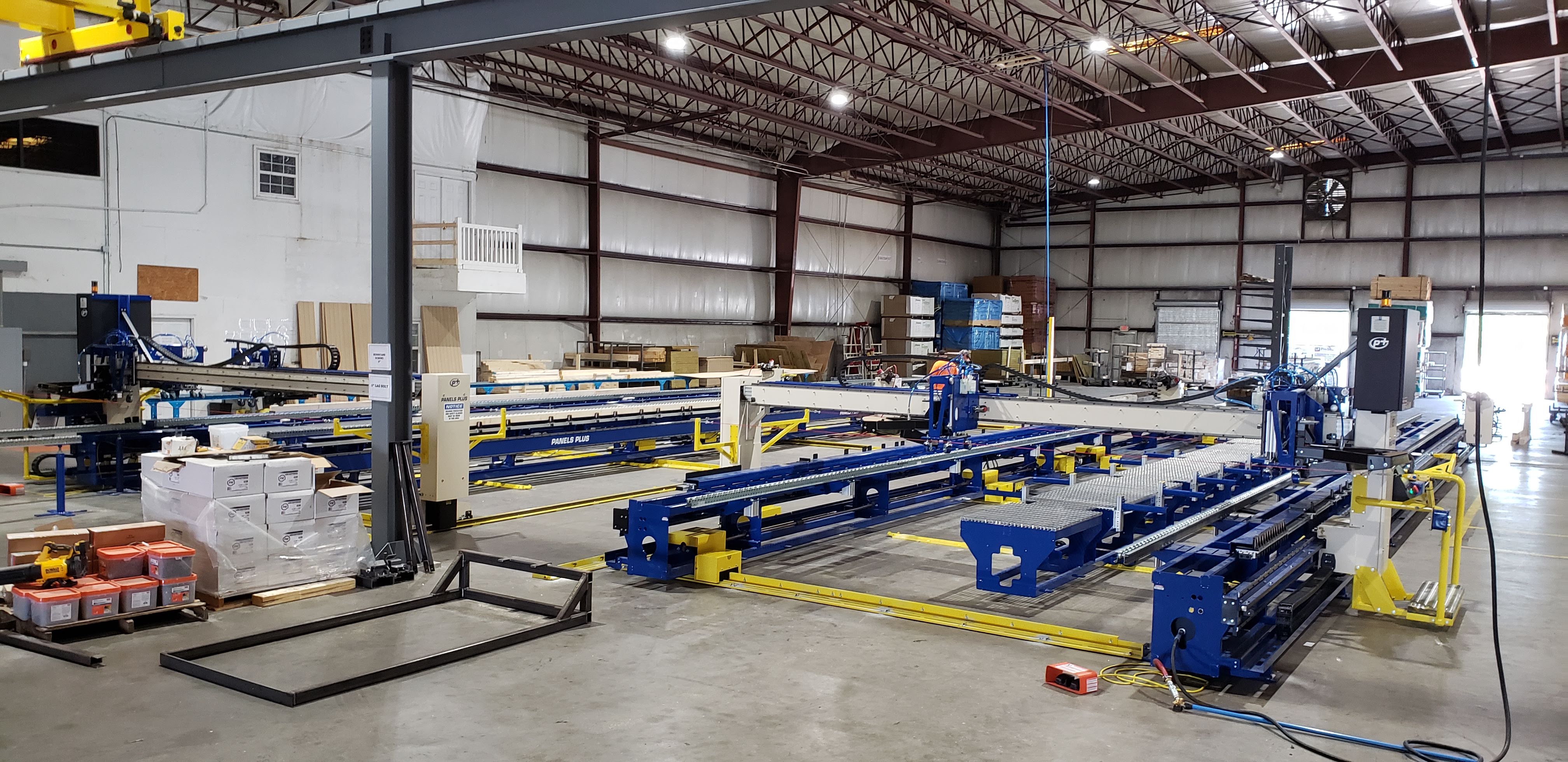
Effective facility layout planning for panelized construction equipment begins with a clear understanding of production goals, building types, and desired workflow outcomes. In many cases, the most successful layouts are those that consider the entire lifecycle of material movement, from lumber infeed and framing to sheathing, fastening, staging, and transport.
Once it’s understood what the production goals and facility constraints are, the next step is to map out where equipment should be placed relative to traffic flow, work zones, and storage zones.
It’s also important to arrange equipment, so that work flows naturally from one process to the next. Efficient panelized production depends on minimizing wasted motion and maximizing logical sequencing.
Lastly, a good layout supports safe operations. There should be adequate space between machines, to account for operator movement and panel handling.
Panels Plus approaches layout design as a strategic exercise in optimizing efficiency and supporting lean production principles. Because panelization operations vary widely, the equipment is engineered with modularity in mind, allowing lines to be configured around available space, staffing models, and automation requirements.
Q. What production output do panelizing companies receive with this equipment?
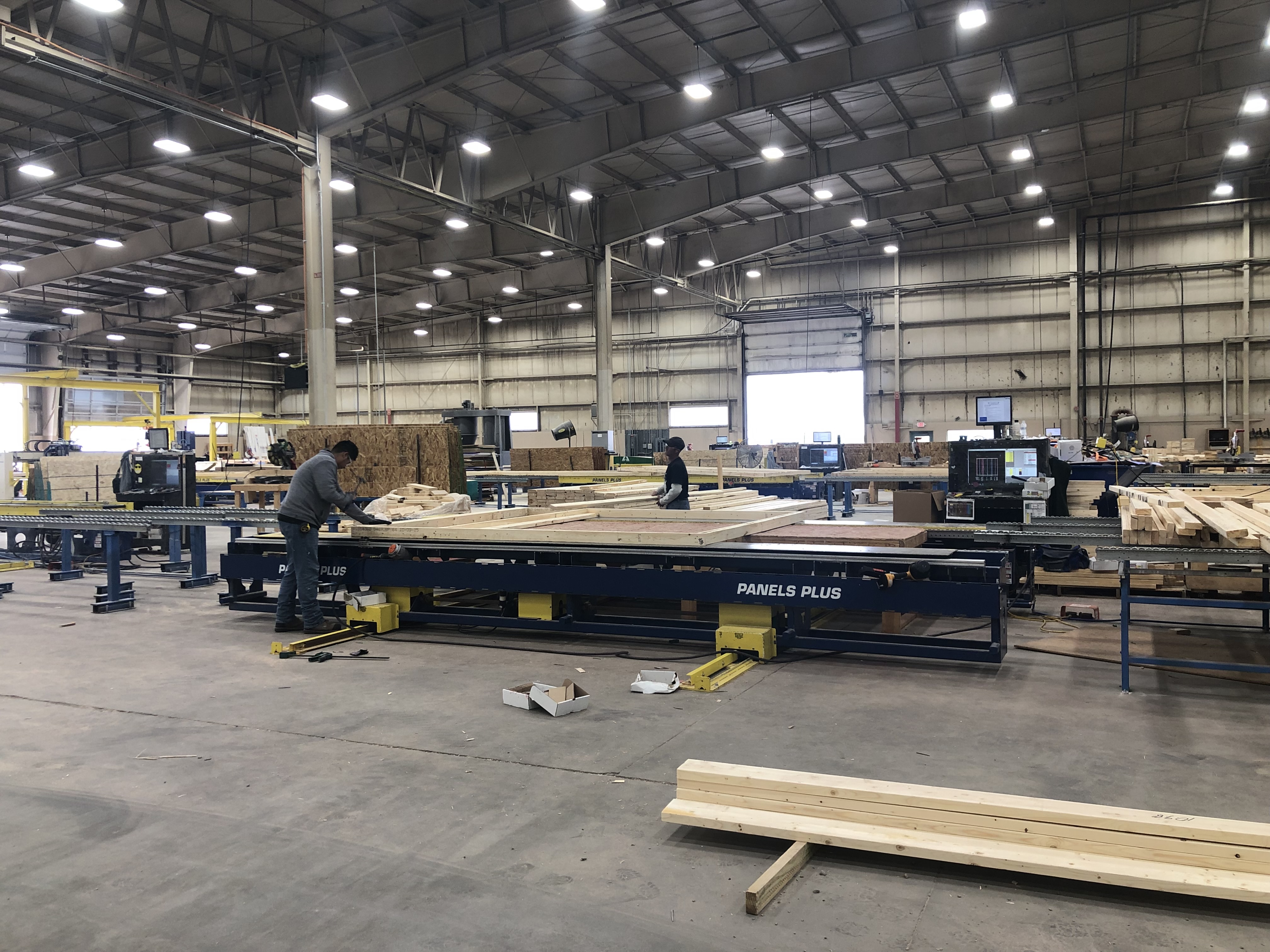
Ultimately, several factors shape production output, including the level of automation selected, the types of wall panels produced, crew size, and how efficiently material flows through the operation. While each facility’s performance varies based on its process design and production goals, panelization systems from Panels Plus are built to support consistently high throughput and predictable cycle times.
In many operations, the equipment allows panelizing companies to significantly increase daily wall panel output compared to traditional manual methods. Panels Plus customers are achieving production rates of up to 1,300 lineal feet of sheathed wall panels in a single day. Semi- automated fastening systems, integrated framing solutions, and ergonomic material-handling features help reduce production time per panel while lowering labor strain and variability. With this combination, panelizing teams maintain steady production rhythms and achieve greater uniformity in finished panels.
Facilities that incorporate multiple panelizing stations or full production lines often experience further gains through continuous-flow manufacturing. By optimizing sequencing and reducing bottlenecks between stages, these systems support higher overall daily output and more reliable scheduling for downstream activities such as transport and site assembly.
Panels Plus technology is designed to elevate performance across a wide range of production models, enabling panelizing companies to achieve output levels that align with both current demand and long-term growth objectives.
Q. What is the overall cost for automating panelized construction?
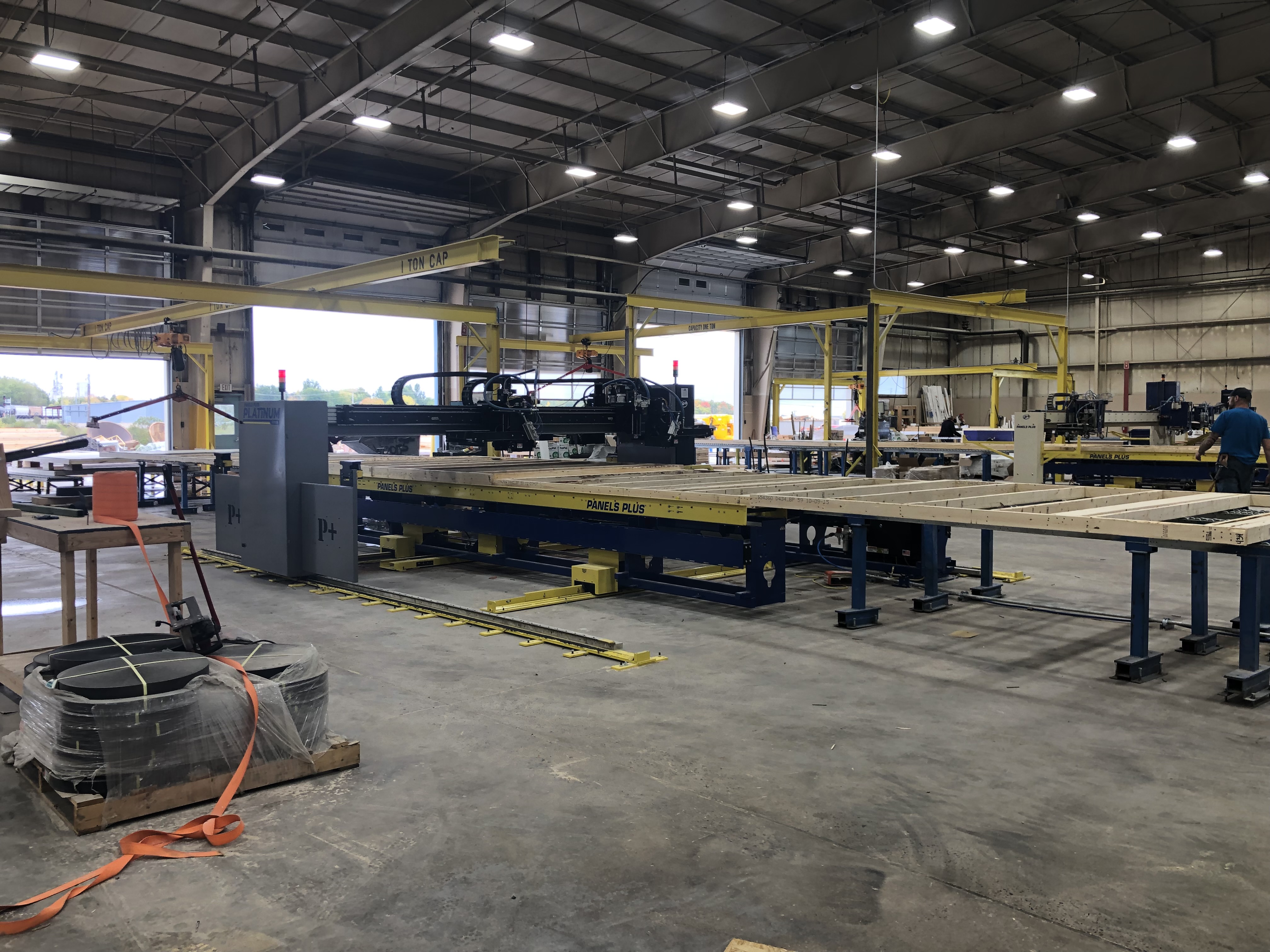
The overall cost of automating panelized construction depends on the scale of the operation, the level of automation selected, and the specific production goals of the facility. Panelization technology can range from individual stations, such as framing tables or semi-automated fastening systems, to fully integrated production lines designed for continuous-flow manufacturing. As a result, investment levels can vary widely across the industry.
Panels Plus views cost through a long-term operational lens, recognizing that automation delivers value not only through faster production but also through improved labor utilization, reduced rework, consistent quality, and more predictable scheduling. Many companies begin with a single workstation or targeted upgrade to address a specific improvement, while others invest in complete lines to support higher-volume or multi-shift production models.
Key cost considerations typically include equipment selection, facility layout adjustments, installation and training, and any upstream or downstream process changes that enhance overall efficiency. Over time, semi-automated panelization systems often offset initial capital costs through increased daily output, stabilized labor requirements, and a more scalable production environment.
Q. How will this technology fit my shop’s production?
The equipment is designed with modularity and flexibility at its core, allowing it to adapt to a wide spectrum of production environments. This semi-automated technology works for the operator, not the other way around, enabling integration into both high-volume manufacturing settings and facilities that are introducing panelization in a phased or scalable manner. As a result, the technology aligns naturally with existing workflows, supports lean production methods, reduces repetitive tasks, and enhances material movement across the line.
During the assessment process, Panels Plus considers existing bottlenecks, current labor distribution, and the general flow of materials through the facility. These insights help identify where panelization equipment can generate the most meaningful improvements through semi-automated fastening, streamlined framing, more ergonomic handling, or tighter cycle-time control. In many cases, the technology not only fits within established production patterns but helps reshape them to achieve higher efficiency and long-term consistency.
About the author: Jeff Brown is director of products and sales at Panels Plus. To learn more, visit panplus.com and read through the educational blog series, “Foundations of Panelized Construction.”



Have something to say? Share your thoughts with us in the comments below.