

Before you can calculate the drawer size, you must determine which hardware and drawer box thickness you will use. For this example, we will focus on using the most common undermount hardware.
Most other major brands of undermount hardware follow the same rules; however, you should check the documentation for any brand.
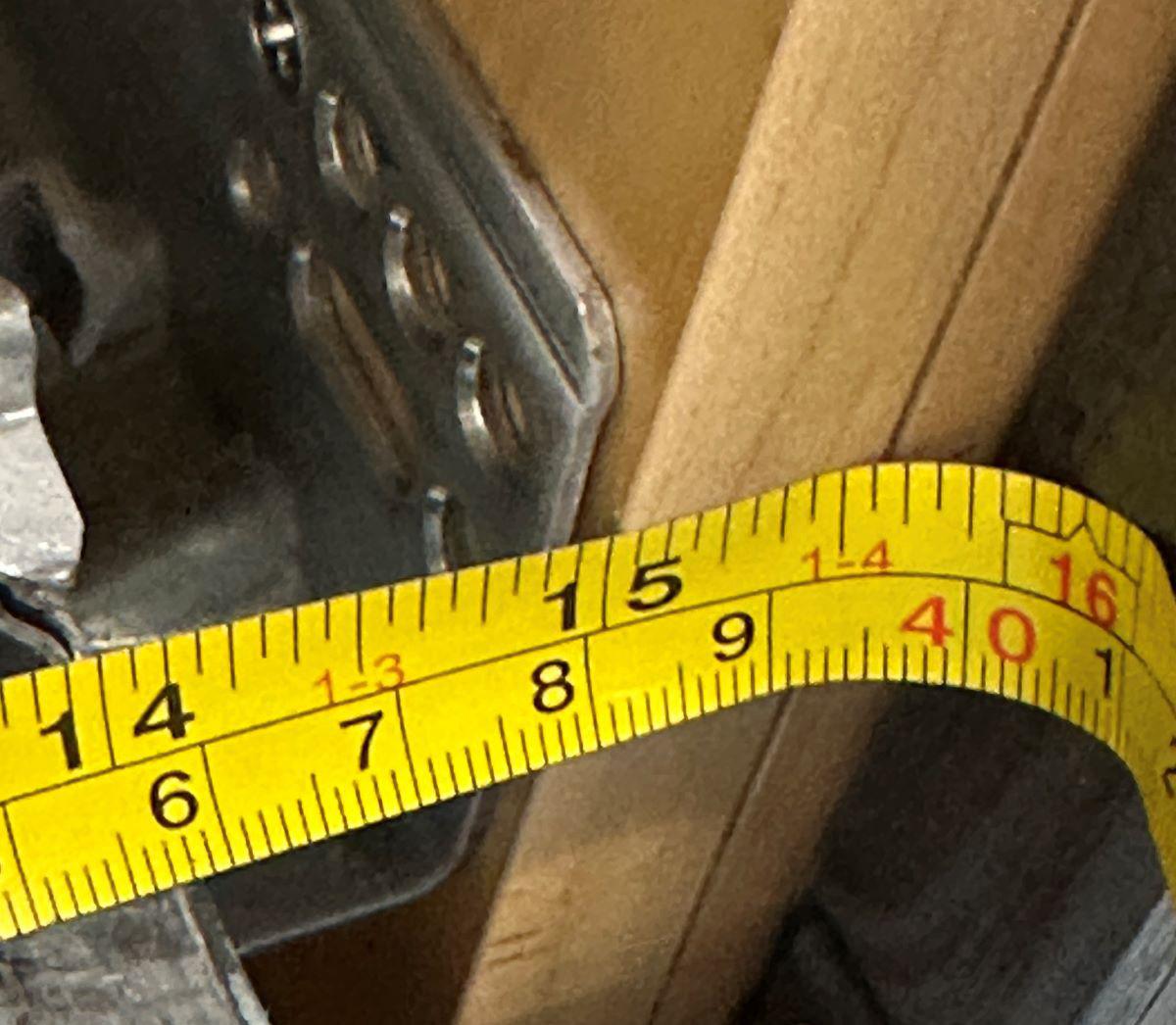
1. Measure the cabinet opening
Accurate measurements are crucial to ensure the drawer fits properly within the cabinet. Use a reliable tape measure and follow these steps:
Width: Measure the inside width of the cabinet opening where the drawer will slide. Take measurements at multiple points to account for any variations and use the smallest measurement. Specifically, measure at the bottom of the opening where the slide will be installed, and if possible, measure at the front of the opening and the back of the opening inside the cabinet to make sure the cabinet is square, and the sides are parallel.
Height: Measure the inside height of the cabinet opening from the bottom to the top. If there is not a horizontal cabinet member between the drawers, then use the top of the drawer front below as the bottom of the opening, and if there is not a top member, use the bottom of the front above as the top of the opening.
Depth: Measure the inside depth of the cabinet from the front edge of the cabinet to the inside of the back wall. The front would be either the face of the face frame if it is overlay, or the back of the face frame if it is inset. If there is no face frame, then it would simply be the front edge of the cabinet box. Be mindful of any obstacles, such as nailers or stretchers, or plumbing and electrical obstructions.
2. Calculate drawer box dimensions
Once you have the cabinet opening measurements, determine the appropriate drawer box dimensions based on material thickness and slide type.
Width calculation for most undermount slides
The width of the drawer box depends on the thickness of the drawer sides and the type of drawer slides being used:
For 5/8-inch drawer sides, subtract 3/8 inch from the cabinet opening width.
For 1/2-inch drawer sides, subtract 5/8 inch, from the cabinet opening width.
Height calculation
To allow for proper clearance, subtract 1 inch from the cabinet opening height. The slides sit under the drawer bottom and raise the drawer about 5/8 inch from the bottom of the slide, where it meets the bottom of the opening. Additionally, you should allow up to 1/8 inches of adjustment clearance for the height adjustment feature on the slides. Space above the drawer is also necessary to ensure the drawer stays below the top of the opening or the drawer above it, 5/8 inches below the drawer plus ¼ inches above, plus 1/8 inches for adjustment clearance is 1 inch.
Note: If you are using pre-drilled system holes (5 mm drilled in a line) in the cabinet that do not allow the slide to be at the bottom of the cabinet, then the bottom of the opening is measured from the bottom of the slide after it is mounted in the system holes.
Depth calculation
The depth of the drawer box should match the length of the undermount slides.
Recommendations include selecting slides that are 3 inches less than the overall cabinet depth. (This is the nominal outside dimension of the cabinet.)
3. Choose undermount slides
Proper slide selection is critical to ensure smooth operation and durability.
Length: Choose undermount slides that match the drawer box depth.
Slide Lengths: 9 inches, 12 inches, 15 inches, 18 inches, 21 inches
Heavy-duty models are available in lengths starting at 18 inches and 21 inches, but continuing up to 24 inches, 27 inches, and 30 inches
4. Important considerations
Before finalizing drawer-box dimensions and cutting materials, keep these factors in mind:
Notching for undermount slides: Different models of slides require different notching widths. Ensure the drawer box is notched properly to accommodate the undermount slides.
Clearance allowance: Provide adequate clearance above and below the drawer for smooth operation.
When using rear mounting brackets, make sure the slides you are using are compatible and that there is between 1 inch and 2 inches of space behind the drawer. Less than 1 inch of space will be too tight, and more than 2 inches of space will be too loose. Heavy-duty slide models over 21inches do not work with rear mounting brackets; they must be mounted to the sides only.
Material thickness
The thickness of the drawer side material (1/2 inch or 5/8 inch) directly affects width calculations. If your drawer sides are not ½-inch or 5/8-inches thick, please see the more detailed sizing below. Always factor in material thickness when determining final drawer dimensions.
Full inset versus overlay design
Full Inset: Drawers fit inside the cabinet opening and require precise measurements based on the back side of the face frame.
Overlay: Drawers extend beyond the cabinet walls to the front of the face frame, which may allow for minor flexibility in sizing and is based on the thickness of the face frame. The slides may be screwed directly to the edge of the face frame.
Euro Style: Drawers are mounted directly to the sides of the cabinets, often using 5mm system holes that are pre-drilled in the cabinet sides. The first row of holes is set at 37mm back from the front edge of the cabinet sides.
Obstacles inside the cabinet
Be aware of any internal obstructions such as nailers, stretchers, or plumbing fixtures. Adjust the drawer box size accordingly to prevent interference. And if plumbing or electrical work interferes with the drawer, such as a drainpipe under a sink, consider a U-shape drawer to get around the obstruction.
By following these steps, you can ensure that your drawers fit perfectly within the cabinet, operate smoothly, and maximize storage efficiency.
Source: Max Hunter is the president of Western Dovetail. For information on Western Dovetail, call 800-800-3683 or visit drawer.com.


Have something to say? Share your thoughts with us in the comments below.