

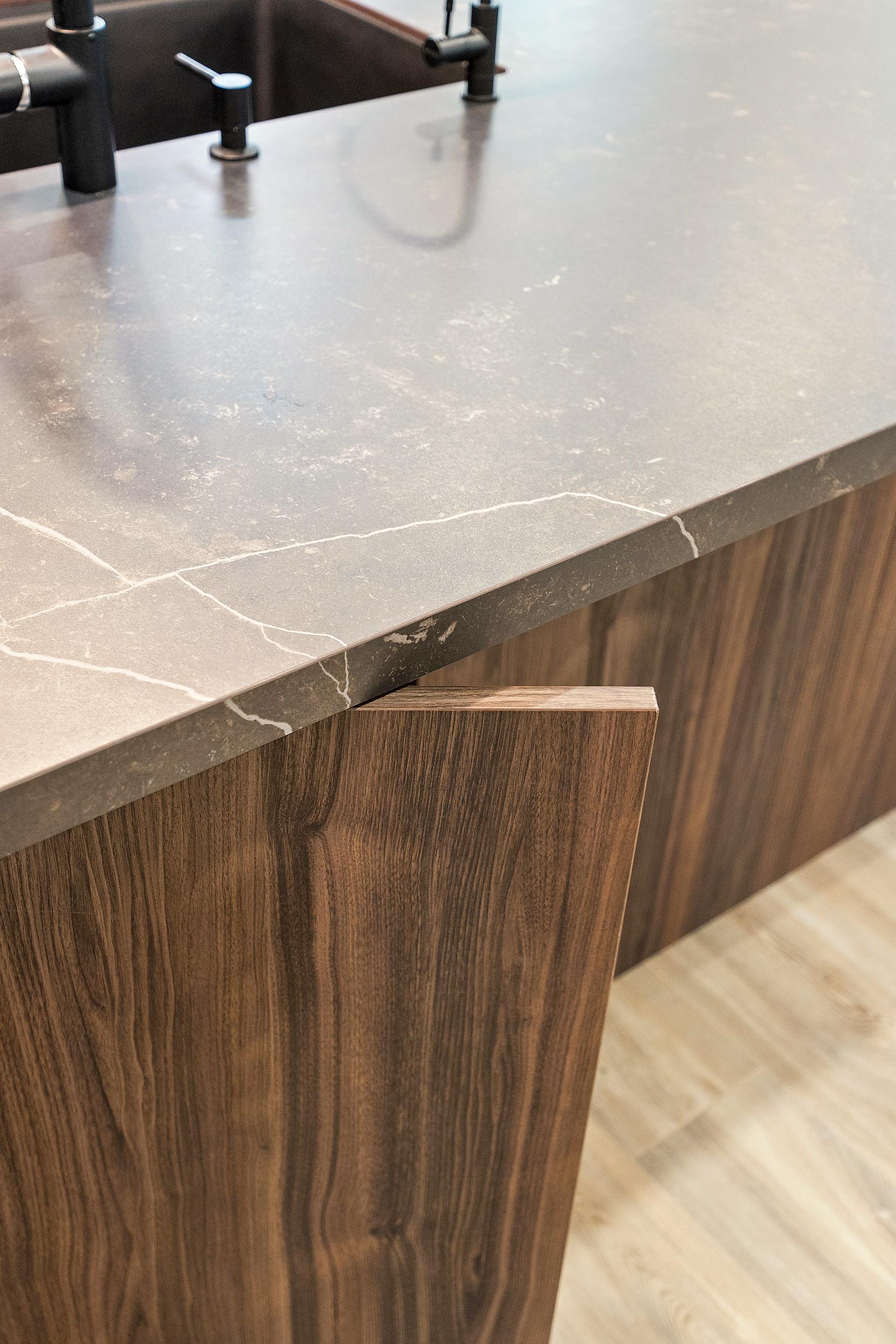
In the world of woodworking, every detail matters – and perhaps no such detail is as crucial as edgeband.
This narrow strip of material covers the exposed edges of cabinetry, shelving and other furniture components. It enhances the aesthetic of the design, increases durability and provides a polished finish to protect vulnerable edges.
To choose the right edgeband, consider the application and material compatibility with your machinery in addition to qualities such as color, pattern, texture and gloss. Below are factors to contemplate when sourcing edgeband for a project.
Material choices
There are several edgeband material options available to meet your project’s needs and your shop’s capabilities. Customers can choose from Polyvinyl chloride (PVC), Acrylonitrile butadiene styrene (ABS), polypropylene (PP), and specialty types.
PVC is available in a range of colors, woodgrains and patterns designed to match popular high-pressure and TFL surfaces. It possesses superior machinability for easier processing. It can be manufactured in super thin material for shelving and cabinets or thicker for more high-traffic areas.
ABS is a non-PVC option for shops looking for more sustainable solutions in their manufacturing processes. It provides an easy transition between standard and zero-joint edgeband with one type of polymer. Lightweight and highly heat-resistant, ABS is chloride-free and 99 percent naturally recyclable. Most shops make the leap to ABS easily because there are no changes in planning, running or adjustments on machines.
UV- and color-stable polypropylene has the highest degree of heat resistance and ecological benefit. It also has an extremely low shrinkage rate. Manufacturing PP may require slight machinery and process adjustments, so facilities that engineer PP tend to be set up specifically for it. It is ideal for large facilities running products at high speeds and companies prioritizing sustainability goals.
If edgeband is needed with a unique finish – such as mirror gloss, 3D or metallic – be sure to partner with a manufacturer who can create these matches in the preferred material.
Showcasing variegated detail
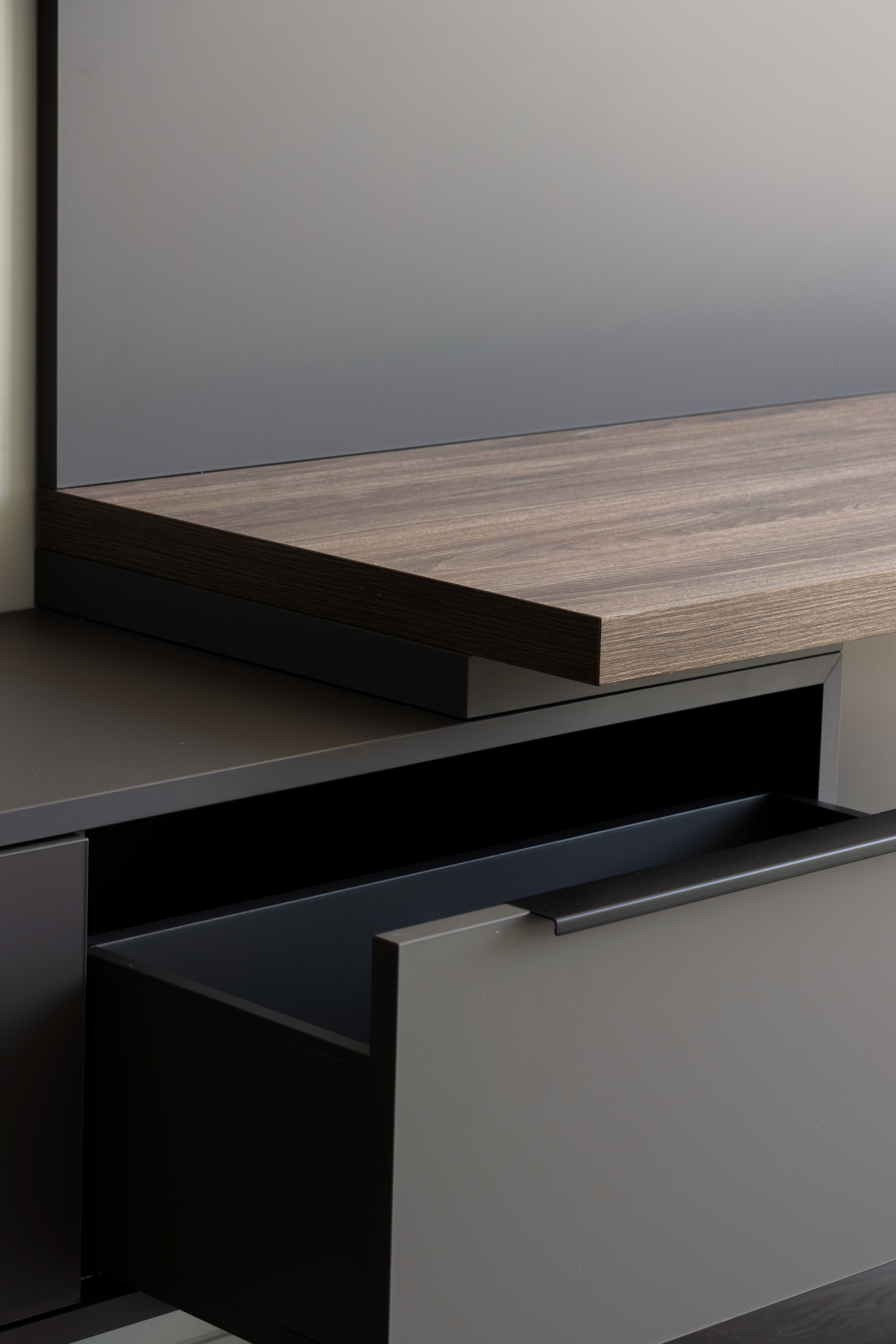
Edgeband must blend seamlessly with its matching board or laminate, which can be challenging with intricate finishes. If the finish is a textured woodgrain or other pattern, the edgeband must show these tonality differences. Several print wheels and ink formulations may be incorporated to achieve an authentic finish that showcases variegated detail.
To ensure visual cohesion, edgeband encompasses a substrate color, print wheels, embossing and gloss. Identifying how these elements contribute to the perfect match begins with understanding each.
The substrate color is the color of the edgeband polymer. It’s crucial because the substrate color appears when edgeband is cut, so it needs to blend with the overall tone of the board. This serves as the foundation for applying inks, creating a final color that flows smoothly throughout. The success of a solid-colored match can be measured through a colorimeter, which offers a Delta E reading to show the difference between the color of the edgeband and the board or the color between two edgeband matches.
Print wheels provide the appearance of woodgrains or patterns – large or small cathedrals, large ticking or tight arrangements. Several may be incorporated into a match to achieve an authentic woodgrain finish or detailed patterns. Color experts choose from a library of print wheels or create new ones for the best match, visually evaluating the combination.
Embossing refers to the texture being applied to the edgeband’s surface, whether plain or printed. For optimal results, partner with a manufacturer who embosses edgeband right as it comes out of the extruder, allowing the effect to be etched in while the material is still hot and soft, resulting in realistic texture. Like print wheels, color experts choose from a library of options or create a new embossing wheel, then visually assess the outcome.
Gloss or lacquer on top of the surface appears differently depending on other elements in the edgeband. It's important to note that gloss level affects the visual appearance of color, typically making it look darker, so one color can come in multiple gloss levels. Like the base color, gloss can be measured through a tool called a gloss meter.
When the substrate color, print wheels, inks, embossing, and gloss application are completed correctly, it limits the chances of discrepancy with an edgeband match and reduces the chances of metamerism, which occurs when color appears differently under different lighting conditions.
Preventing metamerism
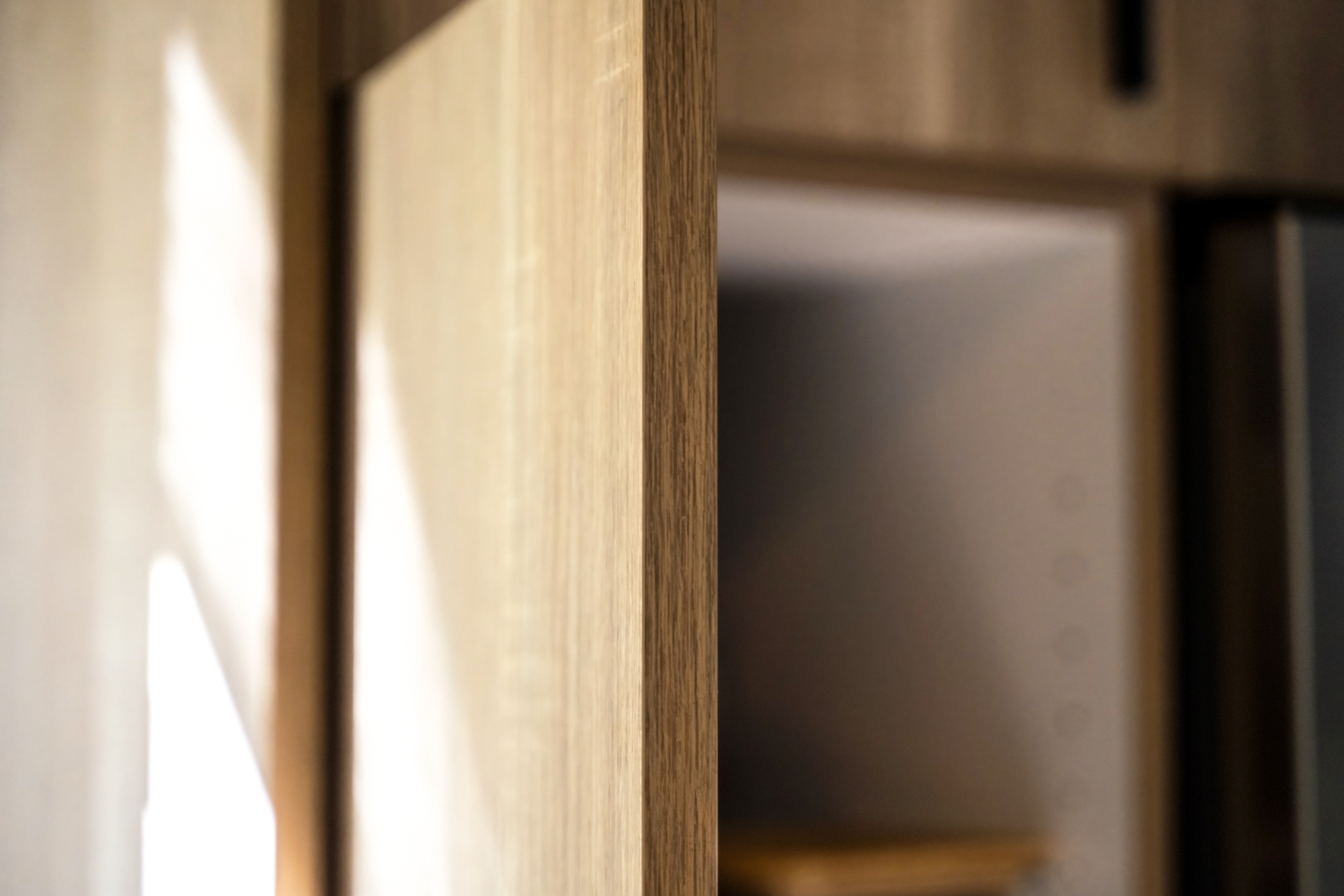
Metamerism occurs when a color presents differently depending on the light source, meaning materials may appear consistent in one environment but not another. Edgeband and boards must be evaluated under different lighting conditions to ensure uniformity.
To create a perfect match, the manufacturer must balance inks and lacquers during production, testing each board and correcting the tone if necessary. Selecting the right type of ink and combination of inks can help combat metamerism.
Color matching
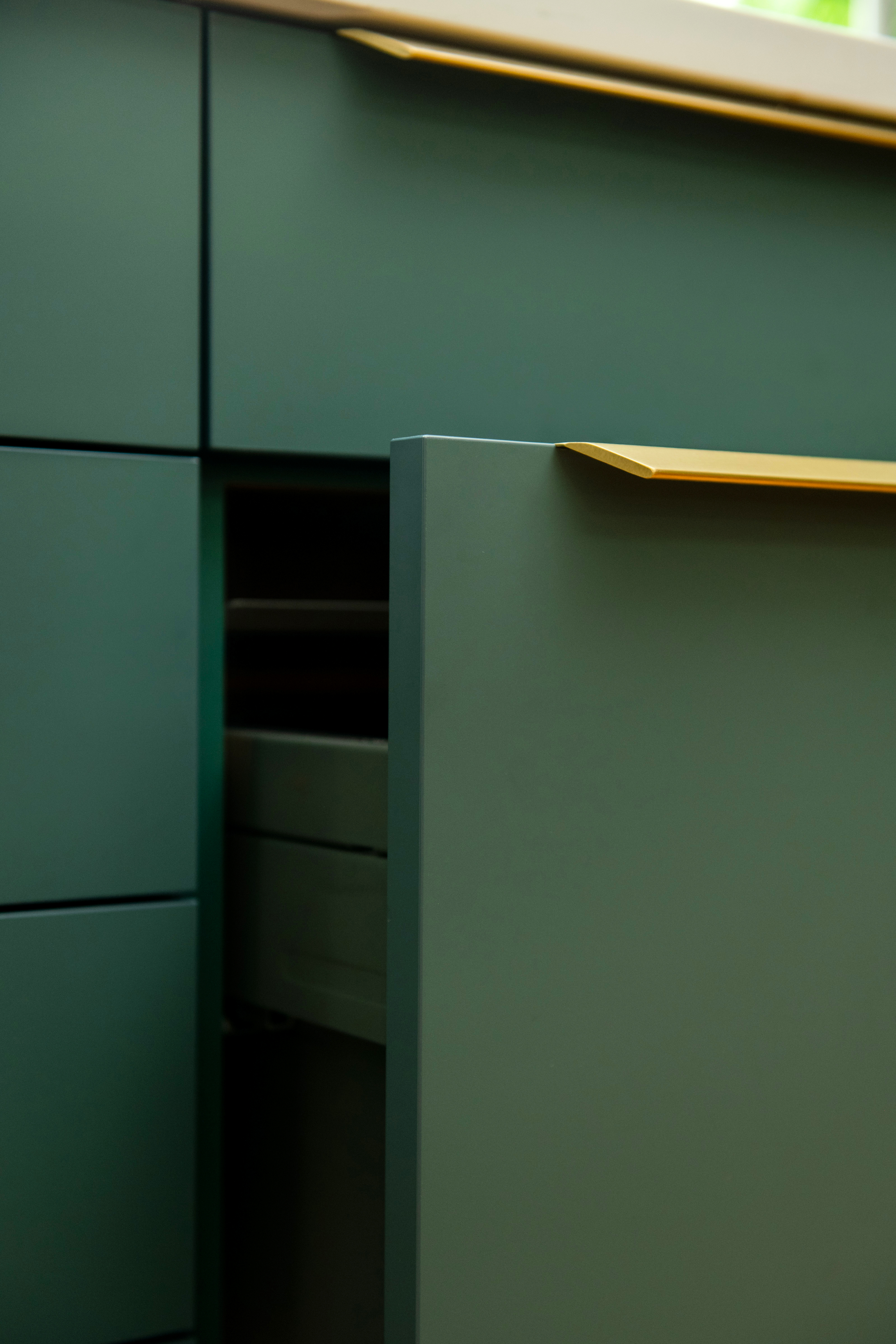
To begin color matching, there are tips that can help the user achieve best results.
For example:
- Be sure to identify a minimum 2-inch-wide by 10-inch-long section on the board with the desired color and structure for the edgeband sample. Since the color and structure of a board can vary, it’s important to specify an area for matching to help your edgeband manufacturer create the perfect counterpart.
- When multiple edgeband widths are required, use a wider size for color matches. Using a narrow size limits the amount of structure and grain that is on the master sample, which can make the design appear mismatched on wider edgeband. Using a wider size allows the design’s details to appear throughout all the required edgeband sizes.
- When matching multiple formulations, start with one formulation, and get it approved before doing another.
When choosing edgeband for cabinetry or other furniture components, several factors must be considered to ensure a seamless look. The right material varies depending on your machinery and your project’s application, environment and visual requirements. Edgeband must blend seamlessly with its matching board or laminate, showcasing variegated detail when using textured and patterned finishes.
Additionally, the color must appear identical under any lighting condition. Choosing an expert manufacturer is the first step in achieving a cohesive design. Attention to detail in the manufacturing of the edgeband ensures easy application and long-term performance, making it an essential component in both the aesthetic and longevity of the final product.
About the author: Mark Kraus is director of engineering for the furniture solutions divisions of REHAU Americas. He spent the first half of his 30-year career as production engineer and plant manager of REHAU’s edgebanding production facility. After relocating to the company’s Leesburg, Virginia, headquarters, he spearheaded the first laser edgeband production line in North America and the company’s first furniture components production facility in Sturgis, Michigan. He can be reached at [email protected].



Have something to say? Share your thoughts with us in the comments below.