

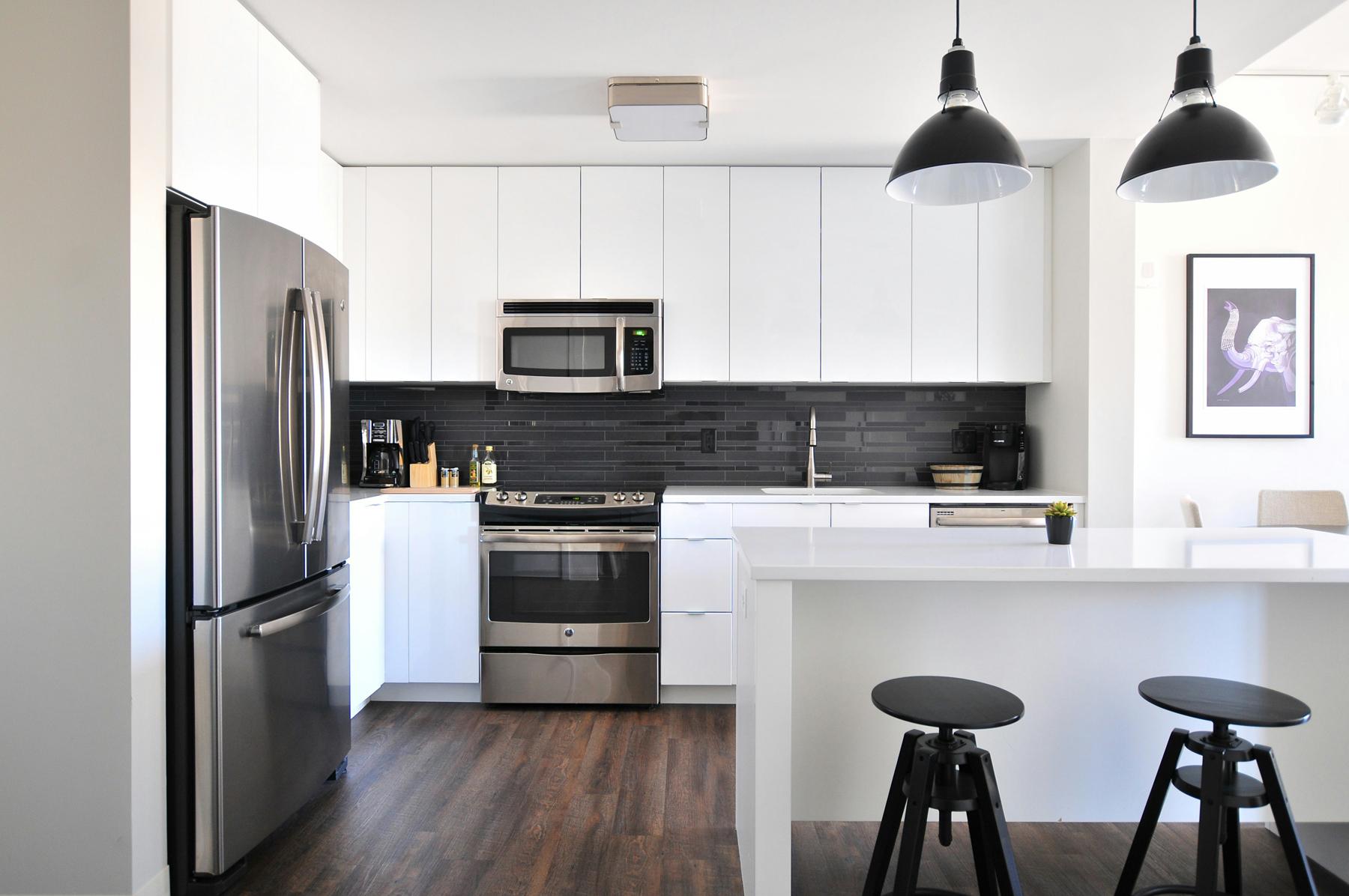
Decorative surfaces are applied to panel products using various techniques. A brief overview of some of the products is presented below. Additional information on decorative surfaces and panel products can be found in the Design Portfolio and at the Composite Panel Association’s website, CompositePanel.org.
Thermally fused laminate (TFL) decorative panels can be manufactured with enhanced visual and performance characteristics and can mirror the tactile and aesthetic qualities of wood grain, stone, or abstract designs. TFL panels have excellent scratch and wear resistance and are widely used in flooring, office furniture, closet system components, store fixtures, and cabinets.
Two-dimensional laminates (2DL), and three-dimensional laminates (3DL) are made from thermoplastic films, and are versatile for a wide range of residential and commercial applications.
2DL is primarily used in flat lamination and profile wrapping of trim and mouldings. Other common uses for 2DL include RV walls and ceilings, retail fixtures, cabinets, flooring, and residential components. 3DL can be membrane-pressed to create contoured components with seamless edges. Highly resistant to impact, chipping, and cracking, common uses for 3DL are retail fixtures and displays, hospitality, healthcare, office furniture, RV tables, and cabinet door/drawer fronts. 3DL can also be embossed-in-register (EIR), where the embossing aligns precisely with the pattern.
Decorative papers, otherwise known as light basis weight papers (LBWP) and decorative foils, can be printed with high-fidelity patterns. Optional chemical, optical, or gloss-matte embossing of these papers enhances the realism of woodgrain and natural patterns. These laminates have long been common in higher levels of value engineering and are widely used in cabinets, store fixtures, paneling, shelving, closet systems, RTA, and home office furniture.
High-pressure laminate is considered one of the most durable decorative surface materials and is available with special performance properties, including chemical, fire and wear resistance. Due to its durability, HPL is a common choice for high-traffic environments, including hospitality, office furniture, healthcare, retail casework, commercial interiors, and educational facilities.
Wood veneer is a popular decorative surface on panels. It is typically sliced between 1/25 and 1/50 inch (1.0 mm to 0.51 mm) and is available plain or with a paper or fleece backer with varying degrees of flexibility. Common uses include furniture, cabinetry, casegoods, and store fixtures.
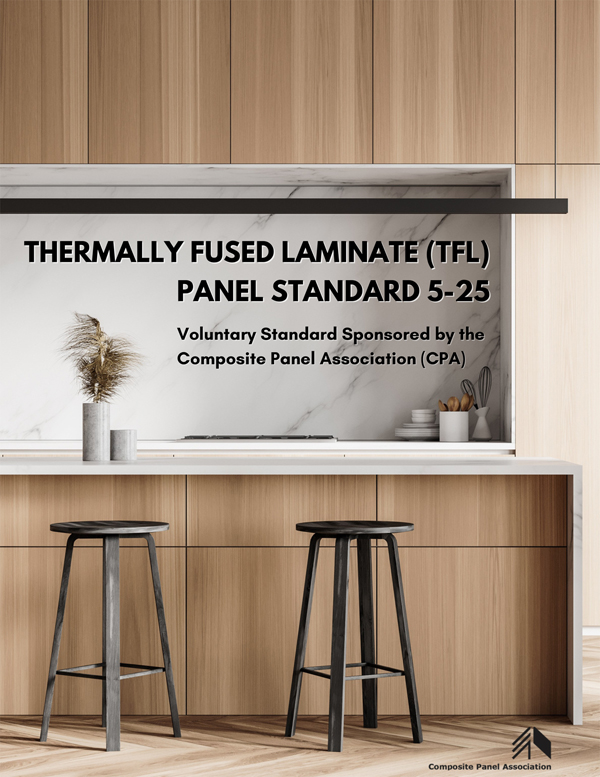
New TFL voluntary standard announced
Sponsored by the Composite Panel Association, the new Thermally Fused Laminate (TFL) Panel Standard provides a common basis of understanding throughout the industry, and among those specifying and using TFL panels and components for various interior end-use applications (excluding flooring).
The standard includes a technical definition of TFL panels and sets forth requirements for surface performance and dimensional properties of these decorative panels in North America. It also provides test methods, including large ball impact, scratch, and wear resistance.
The standard is the first of its kind in North America. A copy of is available for download at wdwrk.net/CPA-TFL. Contact the CPA for information about compliance testing or other questions at CompositePanel.org.
Source: Composite Panel Association. For information on panel products and decorative surfaces, call 703-724-1128 or visit CompositePanel.org.



Have something to say? Share your thoughts with us in the comments below.