

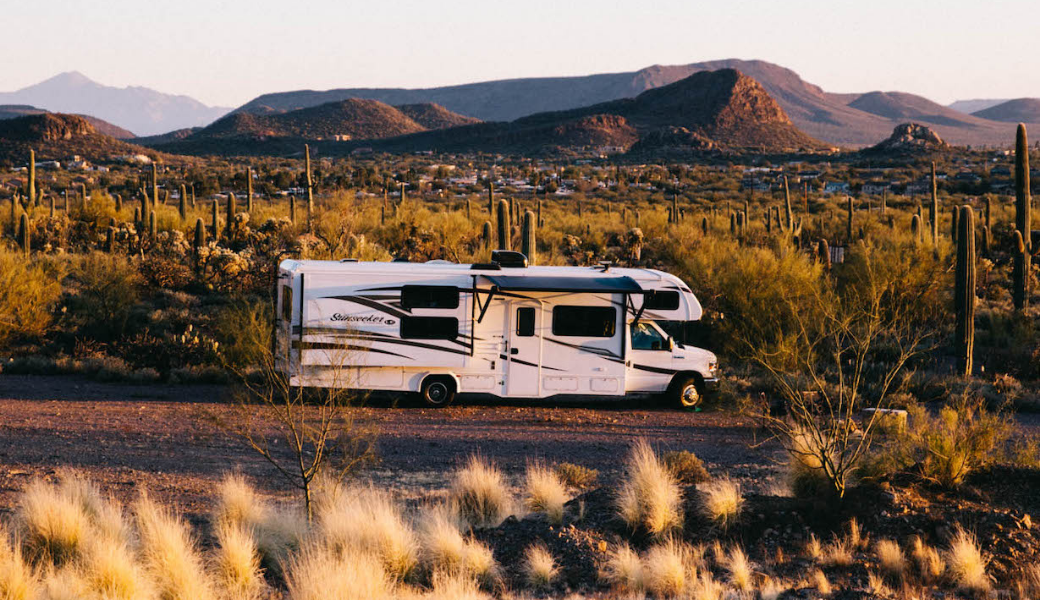
Six states are on a collision course to limit the sale of new gas- and diesel-powered RVs.
The states — California, Washington, New York, Oregon, Massachusetts, and New Jersey — are poised to effectively eliminate the sale of new gas- and diesel-powered RVs starting January 1, 2025.
RV Industry Association Government Affairs staff, along with several of our motorhome manufacturer members, met on Tuesday. Nov. 19, with the California Air Resources Board (CARB) staff overseeing the Advanced Clean Trucks (ACT) regulation.
According to the RVIA's most recent newsletter, the meeting was requested by CARB to discuss in more detail the RV industry comments submitted as part of the ACT amendments proceeding in October.
"They also wanted to hear more directly from our members about what they are being told by the chassis manufacturers about why they are unable to deliver products," according to the newsletter.
RVIA representatives repeated its belief that an "exemption or a delay in implementation from the ACT would be of greatest benefit to allow the industry to continue to provide motorhomes to dealers and customers in the state."
CARB said it does have the authority to create exemptions to the regulation. This is different than what CARB has said on other regulations when they stated that allowable exemption are set by the law which created the rule, not by CARB.
"While no final resolution was attained, all sides agreed to continue talking and another meeting is being arranged in early December. The RV Industry Association will continue to explore all its options to find an equitable solution."
In 2025, California's Advanced Clean Trucks (ACT) regulation, aimed at promoting zero-emission vehicles (ZEVs), will create a near-total “ban” on motorhome sales in the state, as well as in additional states that follow the California Air Resource Board (CARB) regulations. While the regulation does not specifically ban motorhome sales, the ACT regulation mandates manufacturers of medium and heavy-duty vehicles to sell an increasing percentage of ZEVs each year. This has led chassis manufacturers to halt sales of traditional internal combustion engine chassis for motorhomes in California, stemming from the lack of ZEV chassis suitable for motorhomes.
Since 2020, the RV Industry Association has been working with CARB on the ACT regulations through conversations directly with CARB staff as well as written and oral testimony at multiple public hearings. When CARB filed its proposed amendments earlier this year, the RV industry met with CARB staff to discuss the impact on the industry. The Association also submitted comments laying out the negative impact of the regulation on the motorhome industry.
Unfortunately, CARB did not make any further amendment that would alleviate the problem of motorhome manufacturers being told by chassis manufacturers that they would not be able to supply ICE (internal combustion engine) chassis for sale into California since they could not offset their ZEV deficits by sales of a ZEV motorhome chassis.
Making the matter more complicated, it is not just the ACT that is causing the issue right now; it is the trio of regulations passed in the last 2-3 years: the ACT, along with the Omnibus Low NOx rule and the Advanced Clean Fleets rule. These three rules work together to gradually transition medium- and heavy-duty vehicles to zero-emission vehicles (ZEVs) by 2036. We have commented to CARB on each of them, and also on the Small Off-Road Engine regulation which threatens spark-ignition engines on generators.


Have something to say? Share your thoughts with us in the comments below.