


Residential home sales are surging in September, according to data from both government and business groups.
Sales of new U.S. single-family homes surged to a 19-month high in September. A Reuters analysis of recently released data attributed that growth to the drop in annual median house prices by the most since 2009 amid discounts offered by builders to woo buyers, but mortgage rates flirting with 8% could curb demand.
A chronic shortage of previously owned houses is driving buyers to new construction, a situation that builders are taking advantage of by giving a range of incentives to improve affordability. The bulk of homes sold last month were in the $150,000 to $499,999 price range, the report from the Commerce Department.
CNN Business reported that this represents the fastest pace of sales since February 2022 and easily exceeds analysts’ expectations of a sales pace of 680,000.
The U.S. Census Bureau released its September data on Oct. 25. The agency found that sales of new single‐family houses in September 2023 were at a seasonally adjusted annual rate of 759,000, according to estimates released jointly by the U.S. Census Bureau and the Department of Housing and Urban Development. This is 12.3 percent (±16.6 percent)* above the revised August rate of 676,000 and is 33.9 percent (±22.9 percent) above the September 2022 estimate of 567,000.
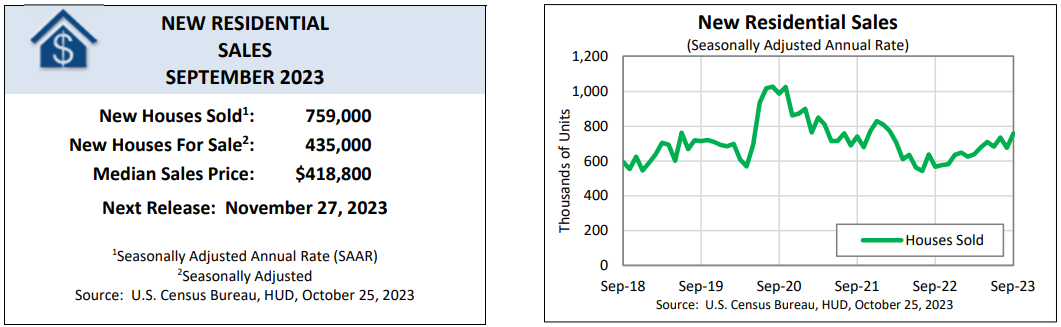
In its analysis of the Census Breau Data, the National Association of Home Builders attributes the increased number of buyers purchasing new homes to a dearth of inventory in the resale market.
The NAHB's look at the data from the Census department and the \Department of Housing and Urban Development found that overall housing starts increased 7% in September to a seasonally adjusted annual rate of 1.36 million units.
The September reading of 1.36 million starts is the number of housing units builders would begin if development kept this pace for the next 12 months. Within this overall number, single-family starts increased 3.2% to a 963,000 seasonally adjusted annual rate. However, single-family starts are 12.8% lower year-to-date due to higher interest rates. The multifamily sector, which includes apartment buildings and condos, increased 17.6% to an annualized 395,000 pace.
“The uptick in single-family production was somewhat unexpected as our latest builder surveys indicate that starts are likely to weaken in the months ahead due to recent higher mortgage rates that were near 7.6% in mid-October,” said Alicia Huey, chairman of the National Association of Home Builders (NAHB) and a custom home builder and developer from Birmingham, Ala. “Meanwhile, builders also continue to face persistent labor shortages, a lack of buildable lots and higher financing costs for acquisition and development loans.”
The National Association of REALTORS' September survey also showed positive gains, but their enthusiasm was muted. Pending home sales augmented 1.1% in September, according to NAR. The Northeast, Midwest and South posted monthly gains in transactions while the West experienced a loss. All four U.S. regions had year-over-year declines in transactions, however.
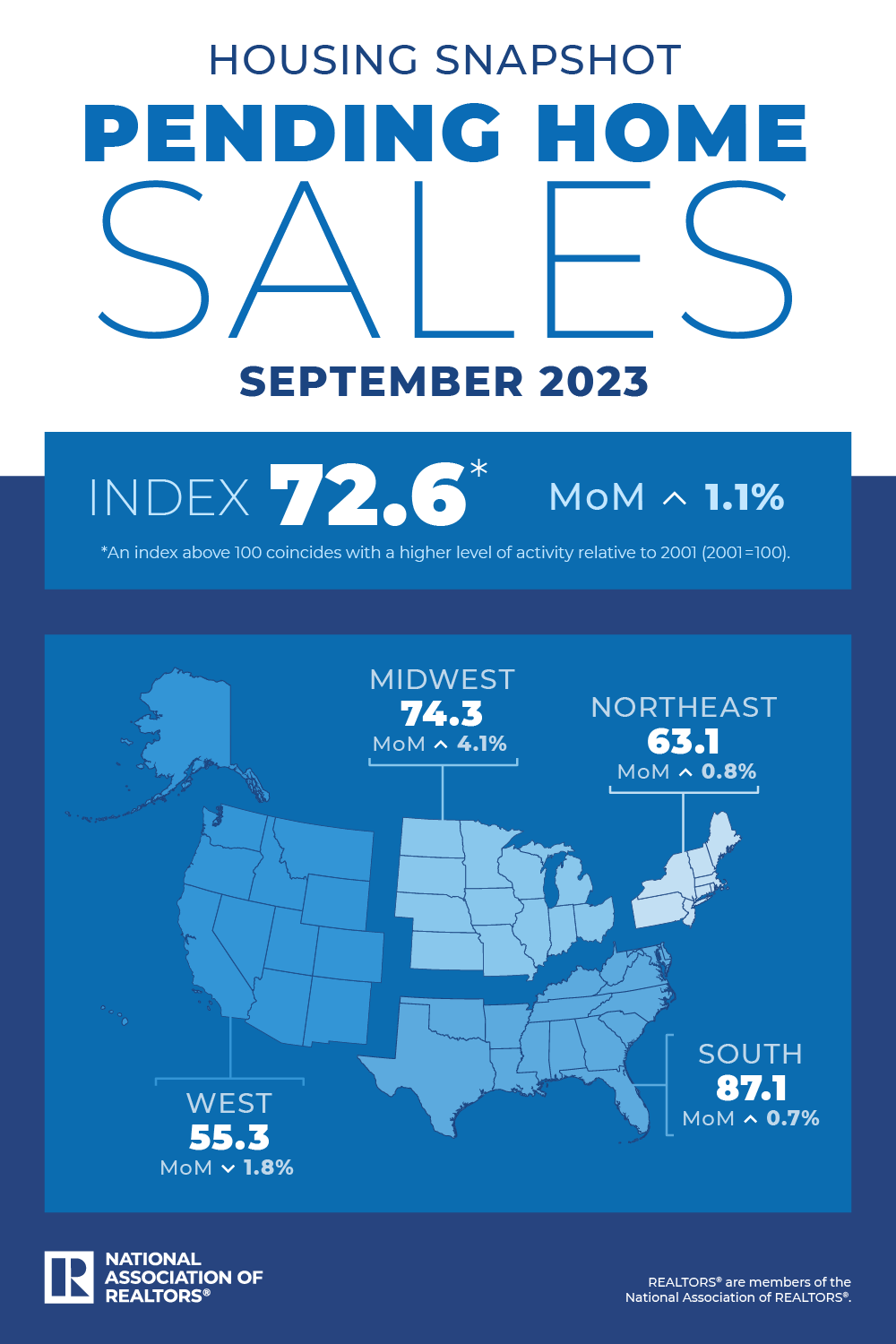
"Despite the slight gain, pending contracts remain at historically low levels due to the highest mortgage rates in 20 years," said Lawrence Yun, NAR chief economist. "Furthermore, inventory remains tight, which hinders sales but keeps home prices elevated."
Existing home sales dropped to a 13-year low in September as surging mortgage rates and tight supply combined to reduce affordability for many first-time buyers. Existing home sales fell 2.0% last month to a seasonally adjusted annual rate of 3.96 million units, the lowest level since October 2010, Reuters reported.





Have something to say? Share your thoughts with us in the comments below.