

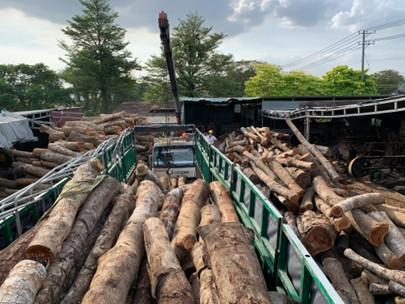
Over $1.56 billion worth of ‘blood timber’ has illegally entered the European market since sanctions were imposed on Russian birch nearly three years ago following the invasion of Ukraine. Over 20 container loads of illicit birch continue to arrive every day, often re-routed through countries like Kazakhstan and Turkey to evade detection. This issue is not just confined to Europe – it is also impacting the North American market where Russian birch is being illegally imported by a different country of origin. This severely undermines government efforts to penalize Russia and risks companies’ Forest Stewardship Council (FSC) certifications, which Russian timber no longer holds.
Russia remains the world’s leading producer of Baltic birch plywood, which has been widely used in furniture, cabinetry, and construction. Following Russia’s invasion of Ukraine, the U.S. and Canada imposed steep tariffs—50% and 35%, respectively—on Russian and Belarusian wood products.
Rather than halting exports, the imposed tariffs on Russian birch have driven circumvention efforts through China, Vietnam, Indonesia, Kazakhstan, Georgia, Turkey, and Egypt. Logs and veneers from Russia are shipped to these countries, processed, and then exported as ‘non-Russian’ plywood, allowing some suppliers to evade sanctions. This deception not only undermines trade policies but also puts companies at risk of unknowingly purchasing sanctioned materials.

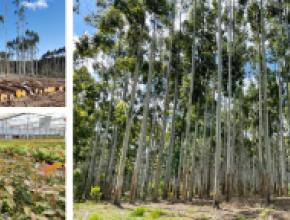
By opting for certified alternatives, the architectural and design industry can ensure they avoid risks associated with illicit trade and protect their reputations and certifications. Garnica, a global supplier of sustainable plywood solutions, renowned for its eco-friendly certifications and sustainable focus is working to be part of the solution with their line of Reinforced Globulus plywood. A PEFC and CE2+-certified product, it offers the same quality and durability as Russian birch, but is sourced ethically and sustainably.
A new method of timber analysis developed by researchers from the University of Gothenburg can "confidently identify the location in which the tree was harvested."
The Sweden-based institution developed the method to determine the tree's identity to combat illegal timber imports from Russia and Belarus.
Businesses in Europe and North America must be vigilant in ensuring the wood products they use comply with regulations and ethical sourcing standards. Here’s how industry professionals can protect their supply chains and avoid financial and reputational risks:
• Sourcing from reputable suppliers with transparent supply chains.
• Conducting independent site audits to verify logging practices.
• Testing wood samples to confirm species and origin.
• Obtaining third-party certifications such as FSC (Forest Stewardship Council) or PEFC (Programme for the Endorsement of Forest Certification) to reduce risk.
To ensure compliance, buyers should:
• Avoid products from known intermediary countries unless suppliers provide verified documentation.
• Source locally or from EU-based manufacturers to guarantee legal and ethical procurement.
• Scrutinize supply chains for irregularities, such as sudden shifts in supplier origin.
Under the Lacey Act, U.S. companies are responsible for ensuring their timber imports are not illegally sourced. Violations can result in substantial fines, product seizures, and criminal charges. However, not all global markets have the same level of enforcement. While the EU’s new European Union Deforestation Regulation is setting stricter requirements, other regions remain at high risk for illegal logging.



Have something to say? Share your thoughts with us in the comments below.