

Founded in 1947, HNI Corporation is a leading manufacturer of workplace furnishings and residential building products. Since its ]inception, HNI has prioritized and valued their members and customers time by striving to operate at maximum efficiency to achieve the best results.
Focused on providing high levels of quality and customer service, HNI over the last 75 years has grown into a global leader and premier supplier of office furniture, fireplaces, and heating stoves. With a team of expert analysts and managers, the company manages 400 suppliers and procures 400,000 different parts.
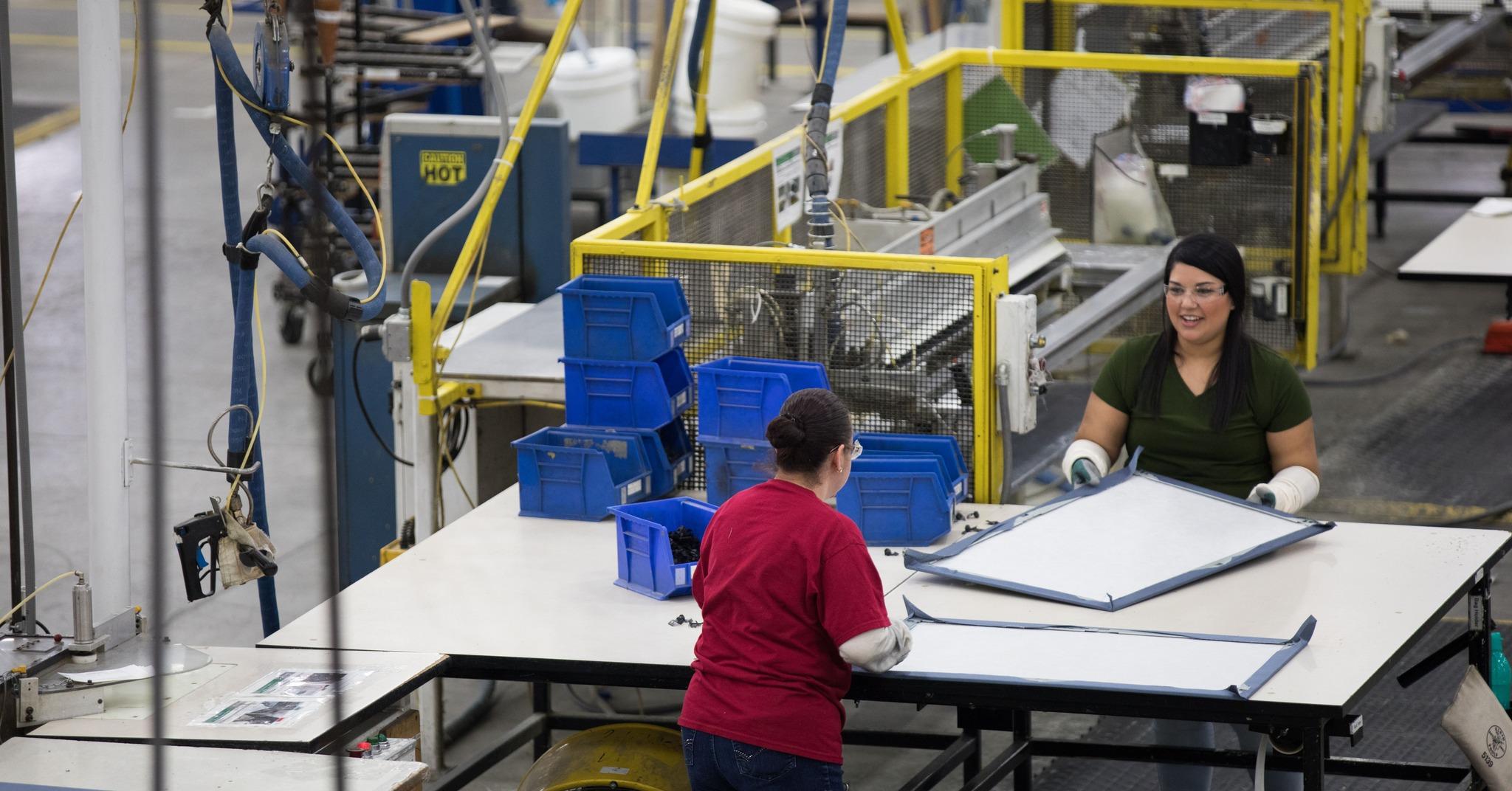
HNI has numerous manufacturing plants, support facilities, and distribution centers strategically placed throughout the US, where large quantities of business and residential furnishings are produced.
“We identify local suppliers to support us to reduce transportation costs,” said Jay Senatra, Director, Supply Chain at HNI.
Managing the complexities
As a leading manufacturer of business and residential building products, HNI’s highly complex manufacturing process is about 95% build-to-order with a high number of SKUs and customizable options.
HNI began exploring LeanDNA’s analytics platform to find a solution that their analysts could utilize to easily identify issues to proactively plan and respond faster when they arise. LeanDNA’s
platform improves on-time delivery, optimizes inventory, and reduces operational costs by aggregating, sorting, and organizing complex data sets automatically.
By leveraging LeanDNA, Senatra said that HNI was able to save time, money, and resources by alleviating the cumbersome task of manually exporting and analyzing stale spreadsheets.
As an Oracle user, HNI was drawn to LeanDNA’s ease of implementation, low cost, and low risk. “No other solutions offered this,” said Senatra. “Every other solution we explored was an enterprise-wide solution. We needed a very specific solution and needed it quickly. LeanDNA met that requirement.”
Two distinct challenges
HNI had two distinct challenges to address:
1. Planning
HNI analysts are overloaded with the cumbersome task of manually managing disorganized, hard to digest, complex data set through traditional spreadsheets.
“Our analysts spent a lot of time getting the data cleaned up so that we could actually use it,” Senatra said. “As we re-analyzed our parts year after year, it was taking us 3-4 months to manually go through all 400,000 parts.”
2. Execution
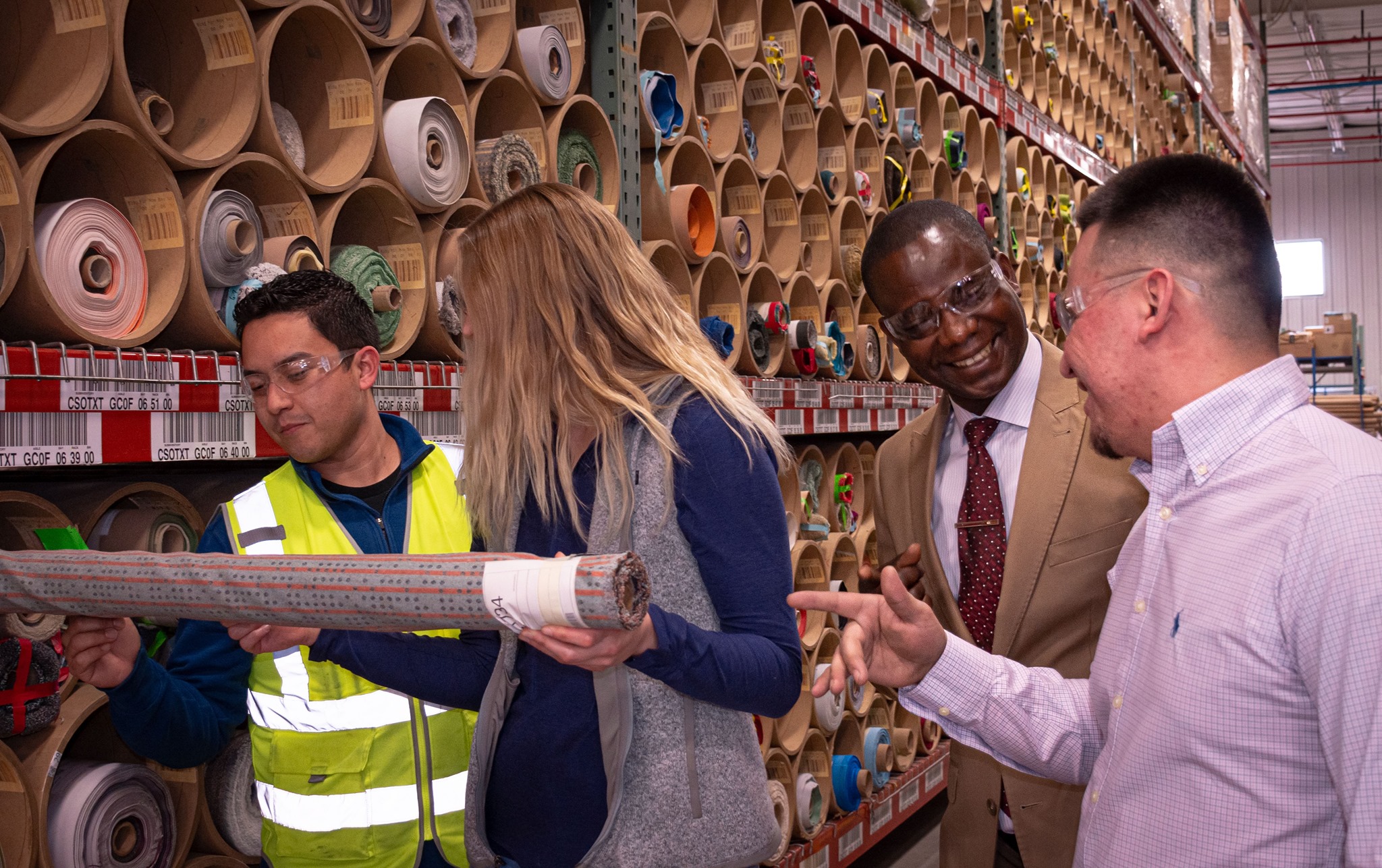
The company’s seating business alone uses 50,000 different fabrics that customers can buy. HNI also offers several thousand different finishes for all of the wood desks, credenzas, filing cabinets and other products that it makes.
“We offer a lot of special, unique and different designs across our product lines,” said Senatra, “all of which add to the complexity of our operations. Our analysts were spending 80% of their time cleansing and massaging the data, and 20% analyzing it and making decisions. We wanted to flip that.”
Doing the math
HNI integrated LeanDNA’s inventory platform to alleviate their challenges by reducing manual processes so their employees can shift their focus to higher valued tasks and operate more efficiently to increase on-time deliveries for their customers.
By using this advanced technology, HNI was able to proactively manage inventory and minimize the impacts of shortages to save money and resources.
“We now have days or even weeks to solve the problems before they happen,” said Senatra, “versus having to solve the issues after they’ve occurred. We can get a sense of where the trend is heading and get in front of it.”
LeanDNA’s platform has helped prioritize exception alerts by relevancy to save time and allow the procurement team to focus on higher-valued tasks such as PO management, exception management, inventory strategy, and delivery, and planning for every part (PFEP) governance.
The procurement team benefits from the platform through its automated filtering of excessive, unnecessary alerts.
“Now LeanDNA handles the heavy lifting – You just open a report and the shortage list is right there.”
Through this feature, the team reduced repetitive tasks which saved them time and enabled them to focus on more important matters.
Senatra added, “We have great members, but they’re human beings and humans make mistakes from time to time. It was up to them to
populate a spreadsheet with a list of parts that were most important and also use a ‘manual shortage’ list,” said Senatra. That meant running
an Oracle report, creating a pivot table, slicing and dicing the data, and then populating the shortage list.”
Efficient resource management
Most US manufacturers added headcount during the global pandemic to keep up with demand for their products.
However, HNI was able to maintain the same headcount, and even dedicate some of its members to implement continuous improvement initiatives around supplier risk, inventory targets, and solving technical issues.
“Our supply chain is in a much better place than it was during the early stages of the pandemic,” said Senatra. “LeanDNA helped lessen the pain and get us out of that trough.” LeanDNA provides comprehensive shortage visibility which allows HNI to accurately assess, identify, and manage inventory to improve on-time delivery.
“LeanDNA has also improved supplier on-time delivery and provided better visibility into which parts are falling below inventory targets," said Senatra. "The system was fairly easy to get up and running, which can be attributed to HNI’s quickly achieved return on investment (ROI).”

Since implementing the platform, the company has already achieved significant results with plans to continue enhancing processes by identifying and addressing demand spikes that are 3x the standard deviation greater than the mean.
“We’re incrementally building one process on top of the next,” said Senatra, “knowing that if we keep suppliers’ inventory healthy, we won’t need to worry about whether they can deliver on time. As long as we have the inventory, we can hit our own order dates.”
The company is currently using application programming interfaces (APIs) to integrate additional applications with LeanDNA to further improve in other areas.
About the author: Jordan Slabaugh is the chief marketing officer at LeanDNA where she oversees marketing and go-to-market strategies to enable global manufacturers to discover the value of inventory optimization and execution solutions for today’s dynamic supply chain. Jordan has nearly 20 years of marketing, communications, and leadership experience across disruptive Enterprise SaaS companies and global marketing agencies.


Have something to say? Share your thoughts with us in the comments below.