

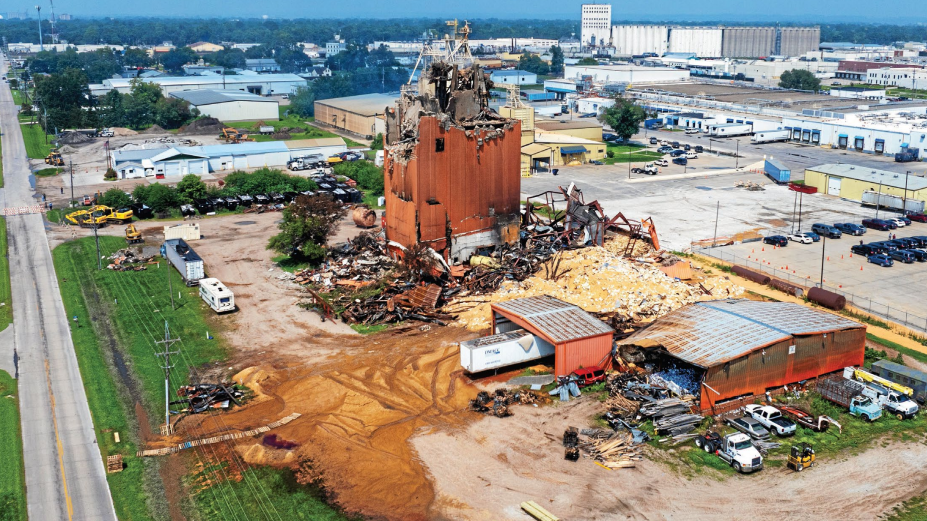
The deadly wood dust explosion and fire at a Nebraska pellet plant was a “terrible tragedy” made more so by findings that at least one of the three fatalities was alive and trapped in the rubble after the explosion and was able to talk to his wife and boss before succumbing to the collapsing structure and fire.
Dylan Danielson, 32, shift operator, and his two young daughters, Hayven, age 12, and Fayeah, aged 8, who were waiting for him to get off work, died in the wood dust explosion and subsequent fires that occurred July 29, 2025, at Horizon Biofuels in Fremont, Nebraska.
“He made a phone call to his wife and said where the girls were at, get someone in there to get them out, and he was pinned in, and there was fire all around him,” Hayven’s stepfather, Robby Baker, told KMTV News.
“Our lives are in there. We need to get them out,” Baker told the KMTV reporter.
The U.S. Chemical Safety and Hazard Investigation Board (CSB) is investigating the explosion. The agency released an update on what they had so far determined including the incident occurred as a result of a wood dust explosion.
"This terrible tragedy should not have happened,” said CSB Chairperson Steve Owens. “Preliminary evidence points to a combustible wood dust explosion, a well-known — and completely avoidable — hazard in wood processing.”
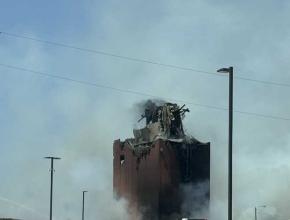
The explosion occurred at the Horizon Biofuels facility shortly before noon on July 29, following a sudden release of dust or smoke from the tower, quickly followed by flames and a much-larger, major blast that caused significant structural damage.

Danielson, the day shift operator, who had brought his two young daughters to work with him, as one of the girls had medical appointments in the afternoon, was trapped inside the collapsed structure and died. His two daughters, who were in the break room at the facility, also were killed in the explosion when portions of the tower and its adjacent structures collapsed, including the break room immediately north of the tower where the two girls were located.
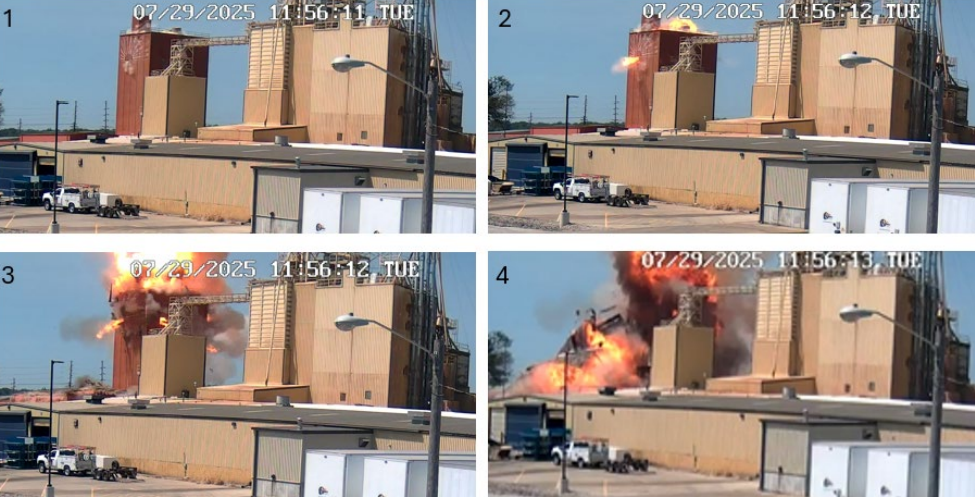
At approximately 11:56 a.m., a large puff of dust or smoke started billowing from windows near the top of the tower (Figure 2, panel 1) and openings from the ground floor of the tower. Within seconds, flames started jetting out of the windows (panel 2), followed by a large explosion at the top of the tower (panel 3). The explosion and fire propagated through the facility, which severely damaged the structures (panel 4).
Emergency responders were unable to enter the unstable, burning building until the following day, when they recovered the bodies of the three family members. The explosion caused severe damage within the facility, affected vehicles on-site and nearby, and led to road closures that disrupted local businesses for several days. Multiple fires also occurred at the facility and combustible material at the facility has continued to smolder for more than a month.
According to the report, the general manager was working from home on the day of the incident. When he learned of the explosion, at 12:06 p.m., the general manager called Danielson on his cell phone, who told his boss that he was trapped. Soon after, Danielson called his wife and told her he was pinned down. Witnesses working in neighboring businesses reported that they approached the building and heard the operator call for help. Witnesses entered the collapsed warehouse area and attempted to rescue him, but were unable to do so.
When emergency responders arrived, they evacuated everyone from the building and prevented people from approaching it due to the risks of explosion, the continuing fire, and the potential for building collapse.
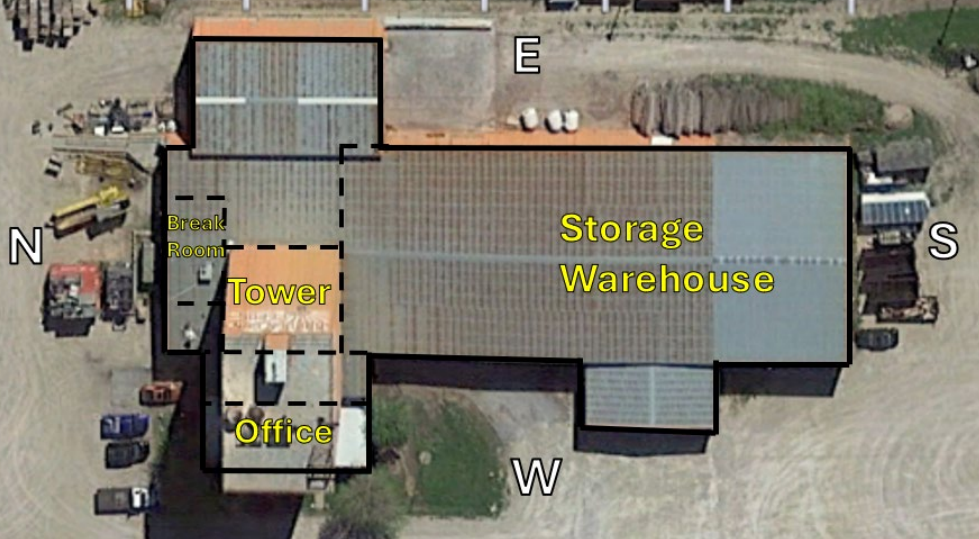
According to the report, Horizon Biofuels had a dust collection system connected to process equipment to help control wood dust generated from the process. Air blowers carried the wood dust and routed it through an enclosed system into the dust control equipment. The dust control equipment, located on the top floor of the tower, separated the wood dust from the carrier air, and discharged the clean air outside the building.
Horizon Biofuels employees told the CSB that the facility operated normally the day before the incident. No operational issues were reported during the night shift prior to the incident.
In a footnote to the report, the CSB reported that in February 2025, the Nebraska Department of Environment and Energy conducted an air quality investigation at the Horizon Biofuels facility in response to a complaint regarding wood dust blowing into adjacent properties. A Horizon Biofuels representative told the CSB that in response to the complaint, the company temporarily shut down the facility, resolved an issue with one of the cyclones (a device that controls wood dust generated from the process), and restarted operations as normal.
At the time of the incident, Horizon Biofuels employed five people: two operators (one day shift operator and one night shift operator), two part-time maintenance employees, and the general manager. During each eight-to-ten-hour shift, an operator started the equipment, operated it, and shut it down at the end of the shift. At the time of the incident, the day shift operator, Danielson, was the only employee at the facility.
The CSB’s ongoing investigations of the Horizon Biofuels incident include:
- Examining the facility’s design, process flow, dust handling, and dust control systems, including cyclones and dust collectors.
- Assessing whether the facility site operating procedures and practices met safety standards.
- Interviewing employees, management, first responders, and others knowledgeable about the facility’s operations, maintenance, and safety practices.
- Reviewing the conditions at the facility and whether prior audits or inspections addressed combustible dust hazards in the facility.
The CSB continues to gather facts and analyze several key areas, including:
- Cause or probable cause of the initiating dispersion of dust
- Events and conditions at the facility prior to the incident
- Post-incident equipment condition and failure analysis
- Properties of combustible wood dust
- Industry guidance for facilities that generate wood dust
The CSB said the Horizon Biofuels facility remains unsafe, and officials have advised that people maintain a safe distance from the facility due to the potential for the structurally compromised building to collapse, preventing the CSB from approaching the building so far.



Have something to say? Share your thoughts with us in the comments below.