

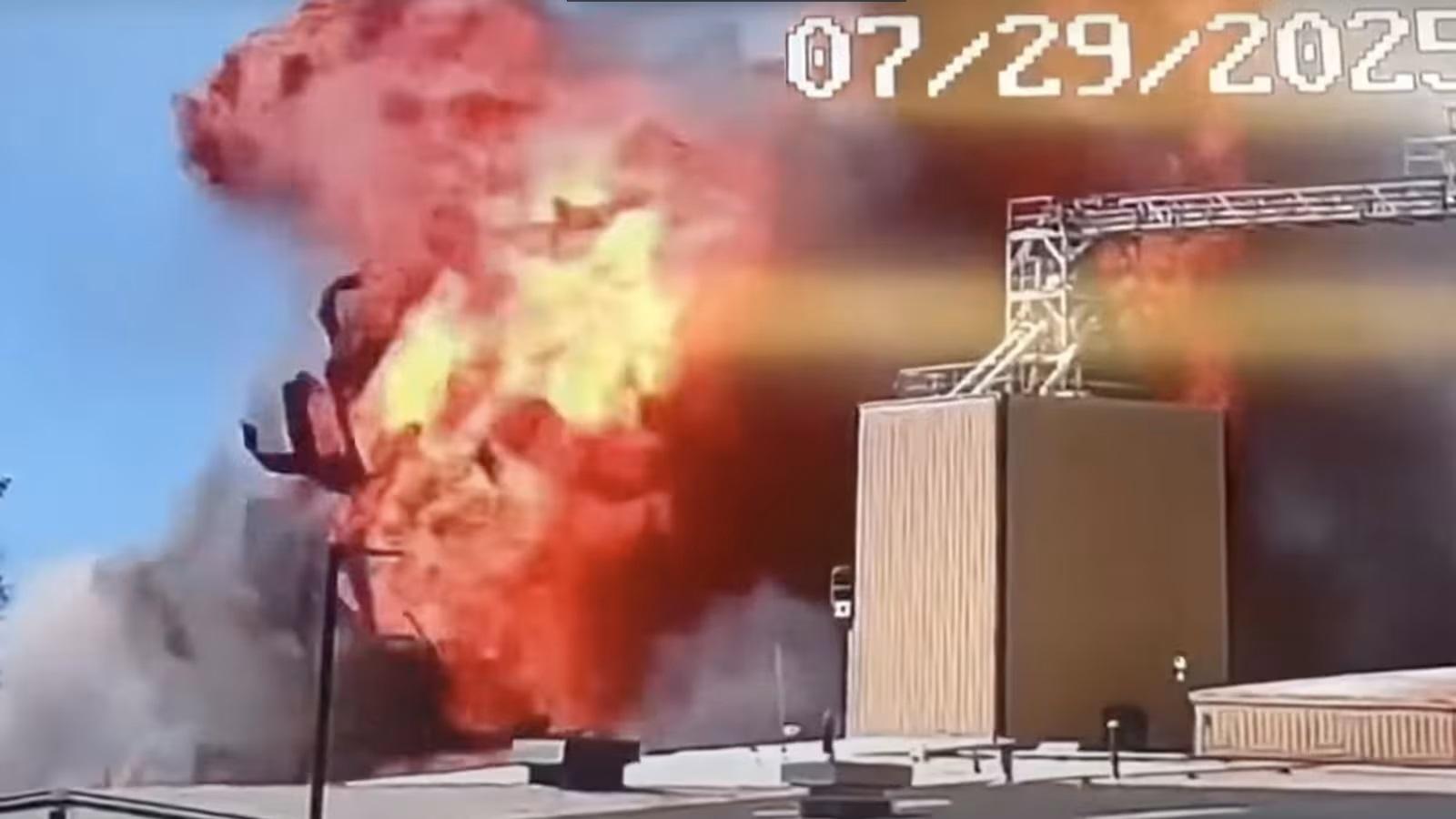
When dust collection expert Robert Williamson at Nederman Corporation, saw the video of the series of deadly explosions at Horizon Biofuels, a wood pellet and animal bedding manufacturer in Fremont, Nebraska, he felt he knew the cause.
"Looking at the video it, and it's only speculation at this point, but it is these types of [wood dust explosive] events where we see fatalities," said Williamson, VP Technical Solutions and Business Development North America. "You have the primary explosion and then a bigger explosion, the whole elevator explodes, and part of the building."
After the primary event, fine dust, which Williamson said is more reactive than heavier dust and tends to accumulate in hard-to-clean areas, causes a secondary explosion, which experts on the scene also believe was the case in this instance. The July 29 explosions at Horizon Biofuels, which killed three, including a father and his two daughters, have been determined by the Nebraska State Fire Marshall's office to be a wood dust explosion from dust that accumulated in an elevator that caught fire from an unknown source, which triggered the cascading explosions..
Wood dust explosions can happen so fast that there is no time to evacuate. "These things happen so quickly, in less than 500 milliseconds," he said, "There's really no way to get away. Nobody's going to run from this. There's just no way to get away from it."
Williamson explained that to cause a wood dust explosion, five elements, which he called a "Dust Explosion Pentagon," must be present. Wood dust, when finely divided and suspended in the air, acts as a combustible fuel source. The wood dust must be suspended in the air at a sufficient concentration to form a dust cloud. Sufficient oxygen in the surrounding atmosphere is necessary to sustain the combustion reaction, and an ignition source such as a spark, static electricity, open flame, or hot surface, is required to ignite the dispersed wood dust. Finally, the dust cloud needs to be enclosed within a space, such as a dust collector, silo, or room, to allow pressure to build up and create an explosion.




Have something to say? Share your thoughts with us in the comments below.