



For nearly 65 years, North American-made composite panels have collectively made a significant impact on the environment through the sequestering of carbon and recycling of wood from existing forestry operations. For more than seven decades, these composite panels — medium density fiberboard (MDF), particleboard, hardboard, and engineered wood siding and trim — have helped pave the way for sustainable design while locking carbon out of the atmosphere. With their durability, versatility, and renewable nature, these panels prove that designing with the planet in mind doesn’t require compromise. The North American composite panel industry is proud to contribute to a sustainable future with Panels for the Planet.
Decorative
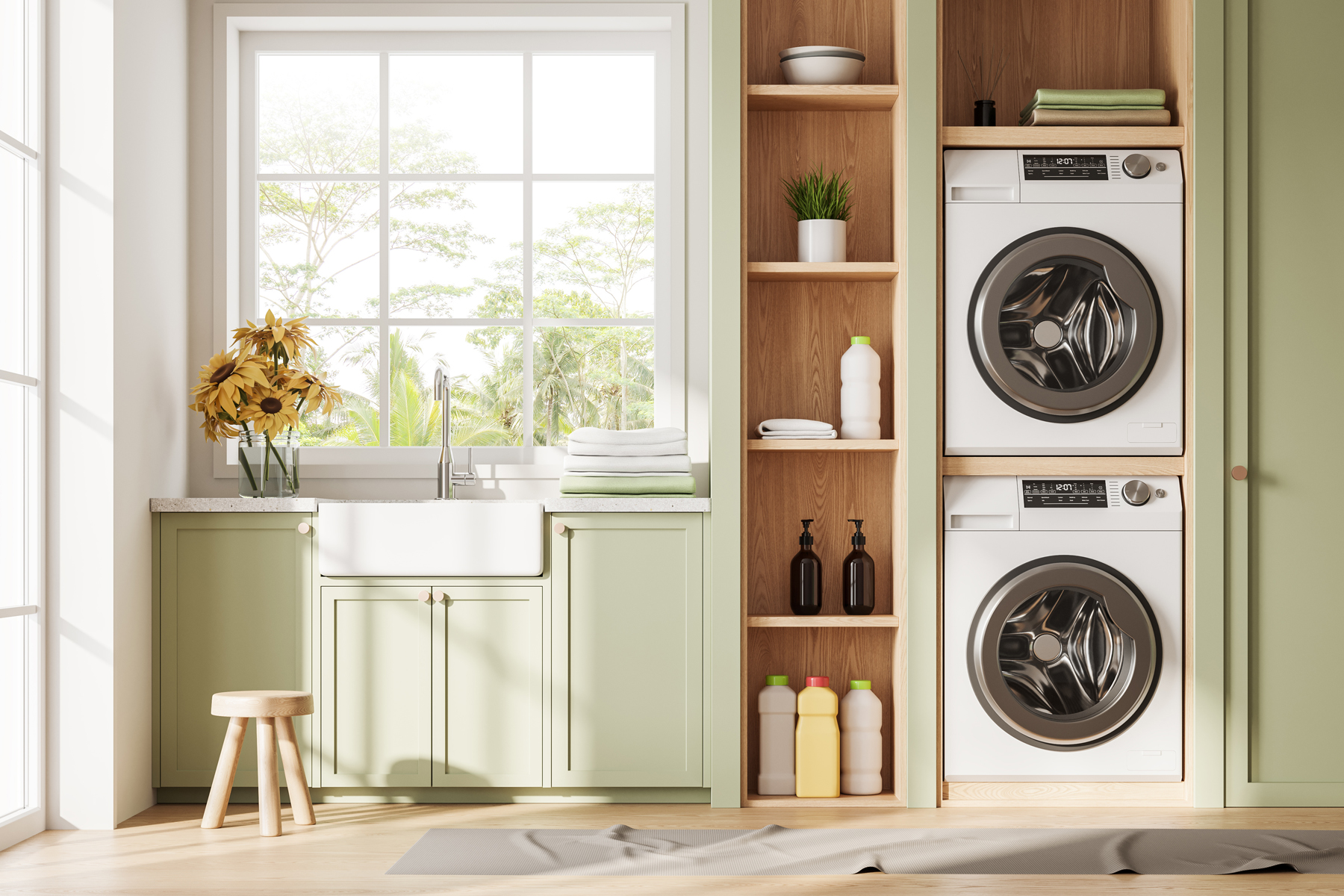
Composite wood panels are the ideal substrate to pair with decorative surfaces due to their uniformity, low maintenance, consistent quality, and affordability. Available in various finishes, textures, and patterns, they offer limitless design possibilities. When paired with advanced decorative surfaces, such as TFL, HPL, and decorative papers and foils, composite panels achieve a high degree of realism — replicating the look and feel of natural materials like wood, stone, and metals. These surfaces are perfect for creating beautiful and functional products, allowing designers to realize their vision without compromising aesthetics.
Durable
Composite panels are engineered to meet specific performance demands, ensuring they stand the test of time. With customizable strength, flexibility, moisture, and fire resistance, these panels can endure the challenges of high-traffic environments and variable conditions. Their durability makes them suitable for a wide range of applications, from residential to commercial, ensuring long-lasting performance even in demanding settings.
Versatile
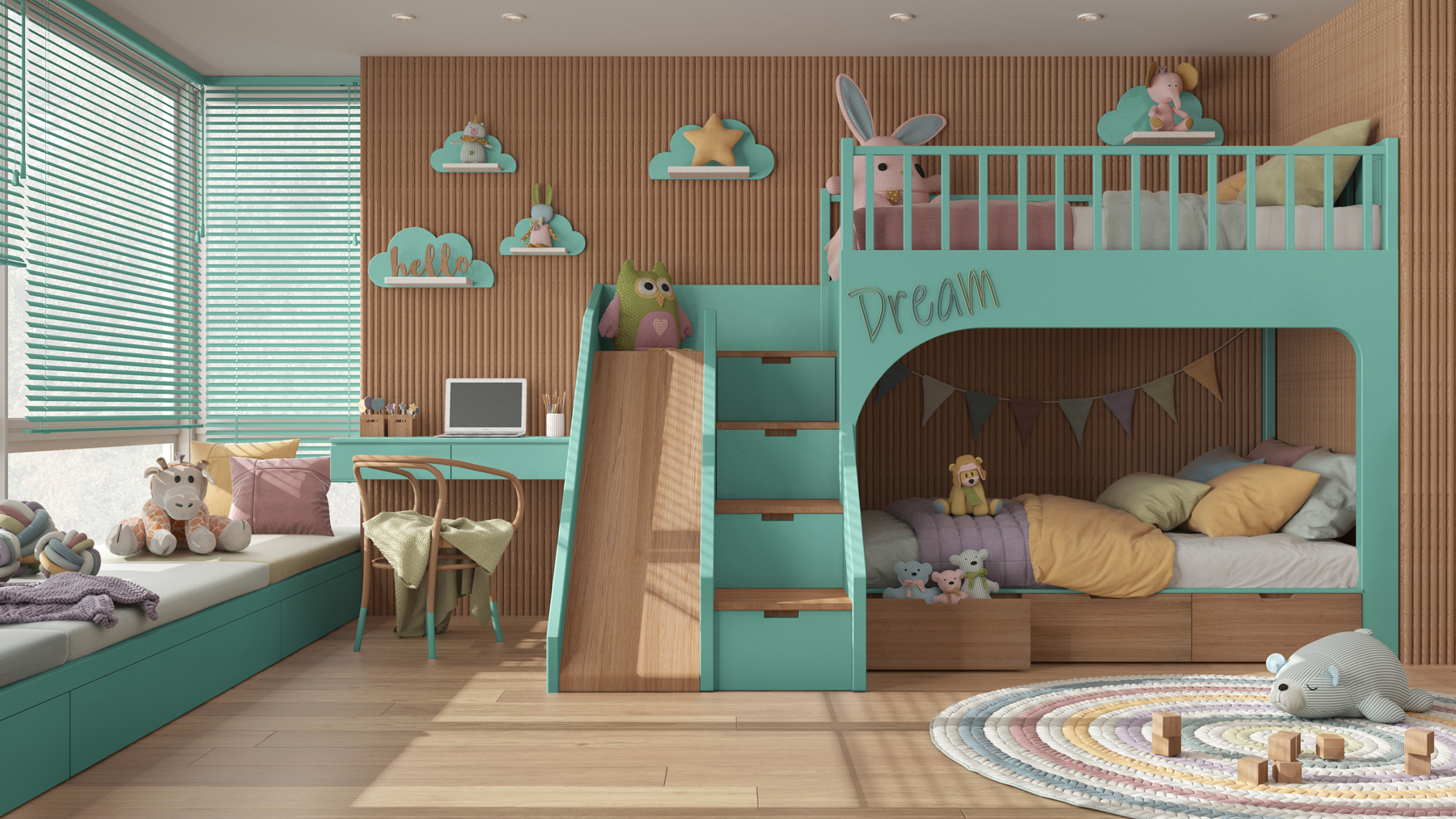
With a wide range of potential decorative specifications, composite panels offer the freedom and flexibility to realize any design vision. They can be used in diverse environments, from homes and offices to healthcare facilities, retail stores, hotels, and schools. Applications include cabinets, furniture, countertops, flooring, mouldings, and more.
Renewable
Unlike nonrenewable resources like stone or cement, composite panels are made with real wood — an infinitely renewable resource. Responsibly sourced from certified forests, they turn wood fiber that would otherwise be discarded into beautiful, functional products. These panels are carbon-negative and store carbon for the life of the product, making them an essential part of climate solutions.
Sustainable Manufacturing
Composite panels are made from recycled wood, ensuring minimal waste and near-total utilization. The industry ensures that 99% of all raw material inputs are put to productive use as new composite wood panels or biomass energy that fuels our plants. This results in an industry that produces near-zero waste, ensuring the highest and best use of this precious resource.
For more about Panels for the Planet, visit CompositePanel.org/PanelsforthePlanet.
MORE INFO Composite Panel Association More information, plus industry news, testing & certification, policy and stewardship at the Composite Panel Association's website CompositePanel.org | 
|
Fabrication Is Easy
Ideal for use in many residential and commercial applications, composite panels have excellent machining characteristics and can be fabricated with CNC and standard woodworking machinery. Tight tolerances can be achieved for value engineering.
Eco-Certified Composites (ECC)
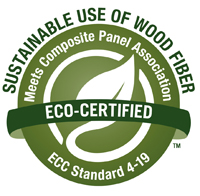
North American wood-based composite panels offer architects, designers, and manufacturers sustainable, flexible, and high-quality solutions. The Eco-Certified Composite (ECC) Sustainability Standard (4-19) verifies the responsible use of wood fiber by North American composite panel manufacturers while also focusing on life cycle inventory (LCI) and other verifiable environmental practices.

ECC-certified facilities must meet or exceed U.S. EPA’s TSCA Title VI and the California Air Resources Board (CARB) formaldehyde emissions requirements for 100% of their panels 100% of the time. ECC-certified mills stand apart from other producers, requiring unmatched attention to detail and a rigorous, audited commitment to compliance. ECC certification assures trusted compliance regardless of where in the world the product is manufactured. Find a list of ECC manufacturers at CertifiedByCPA.org.
Environmental Credits & Certifications
Composite wood products help earn points toward the following major certification programs:
o LEED v4.1 - U.S. Green Building Council (USGBC)
■ MR credits:
• Building Life-Cycle Impact Reduction: BD+C, ID+C
• Environmentally Preferable Products: Homes
• Building Product Disclosure and Optimization: BD+C, ID+C (EPDs; Material Ingredients; Sourcing of Raw Materials)
• Furniture and Medical Furnishings: BD+C
• Purchasing: OM (Ongoing; Facility Maintenance and Renovation)
■ EQ credit: Low-Emitting Materials: BD+C, ID+C, Homes
• MR prerequisite: Certified Tropical Wood: Homes
• BD+C (Building Design and Construction)
• ID+C (Interior Design and Construction)
• OM (Building Operations and Maintenance)
o Green Globes – Green Building Initiative (GBI)
o National Green Building Standard (NGBS)
o LEVEL by BIFMA – Furniture Sustainability Certification
o KCMA ESP – Kitchen Cabinet Environmental Stewardship Program
o ASHRAE 189.1
o Living Building Challenge
o WELL Certification
Environmental Product Declarations (EPDs)
The Environmental Product Declarations (EPDs) for North American MDF and particleboard give designers, specifiers, and fabricators a vital tool to objectively compare the environmental impacts of wood products with alternative products made of plastic, metal, or other materials. Building codes and green building rating systems drive demand for the verified life cycle assessment (LCA) information in these EPDs. These MDF and particleboard EPDs are certified by Underwriters Laboratories (UL), an independent certifier of the sustainable attributes of products. USGBC’s LEED rating system widely recognizes UL’s EPDs, GBI’s Green Globes, and other similar building certification programs.
Emissions Regulations
North American manufacturers of MDF and particleboard have been at the forefront of developing formaldehyde emission standards for more than 30 years and actively supported the U.S. EPA’s TSCA Title VI regulation, which is widely recognized as the most stringent in the world today. The North American industry supported similar regulations in Canada (CANFER, SOR/2024-256).
Thanks to these regulations, all composite wood products imported or sold in the U.S. and Canada must be third-party certified to meet formaldehyde emission limits. The industry fully supports all efforts to establish a strong enforcement program to ensure all composite wood products made globally meet these safe emissions standards.
All MDF and particleboard facilities in the Design Portfolio offer third-party certified products meeting or exceeding the following regulatory requirements:
- U.S. EPA TSCA Title VI regulation, Formaldehyde Emission Standards for Composite Wood Products, 40 CFR Part 770;
- California Air Resources Board Air (CARB) Airborne Toxic Control Measure to Reduce the Emissions of Formaldehyde from Composite Wood Products, 17 CCR 93120 (ATCM 93120), and;
- Canadian Environmental Protection Act (CEPA) SOR/2024-256 Formaldehyde Emissions Standard from Composite Wood Products Regulations, CANFER.
Products that have also achieved exemptions for no-added formaldehyde (NAF) or meet the ultra-low emitting formaldehyde (ULEF) designation are identified.
CPA’s Grademark Program is the world’s premier certification and inspection body and was the first approved third-party certifier (TPC-1). To ensure compliance with ECC and emissions standards, look for TPC-1-certified panels at CertifiedByCPA.org.
Standards and Technical Bulletins
CPA sponsors the key product standards for the industry and addresses technical issues bearing on product acceptance. As a highly regarded American National Standards Institute (ANSI)-accredited standards developing organization, the association sponsors the development and maintenance of American National Standards through the ANSI consensus process.
Additionally, CPA has created technical bulletins for the use and specification of MDF, particleboard, EWST, and hardboard. Please visit CompositePanel.org for more information.


Have something to say? Share your thoughts with us in the comments below.