

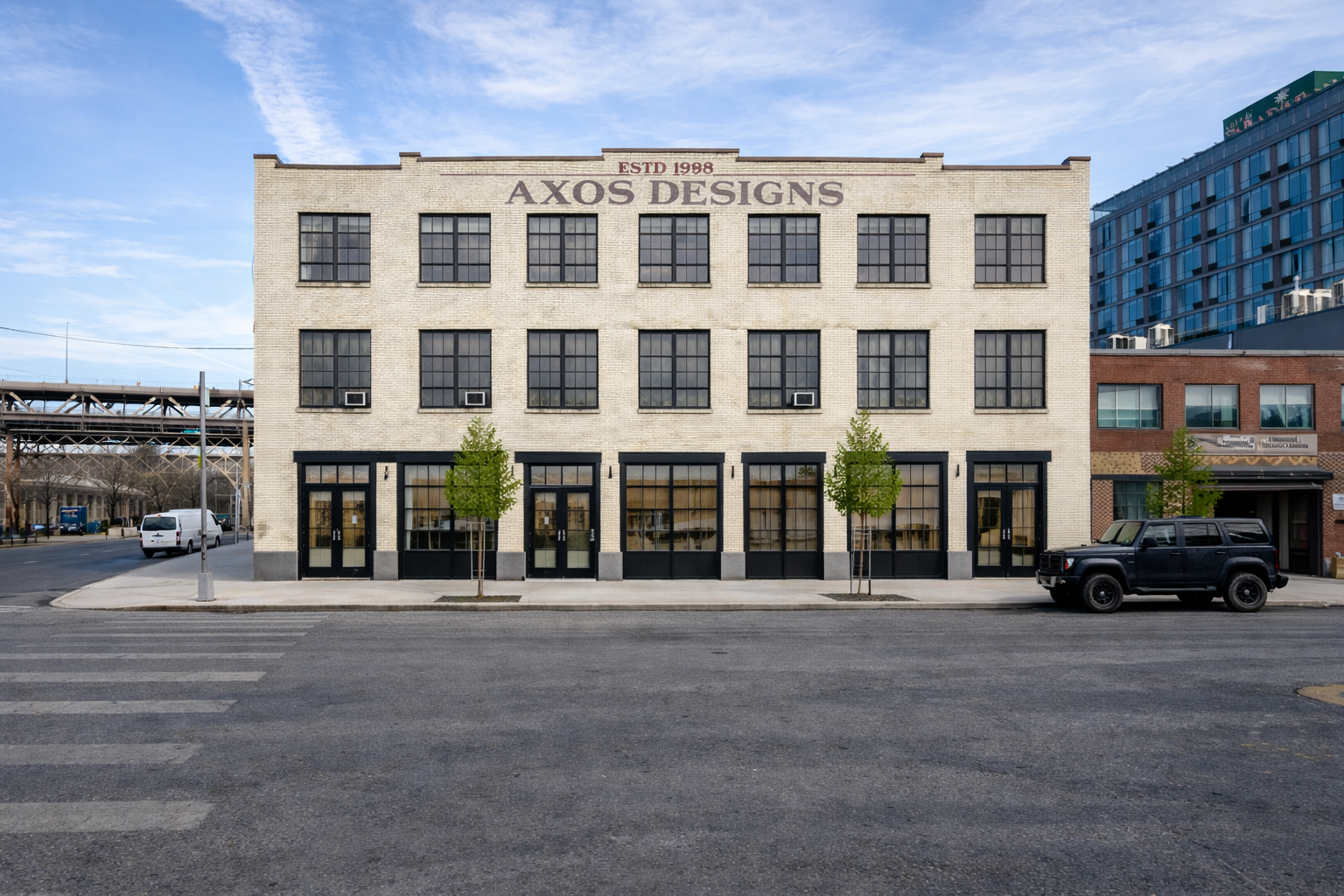
NEW YORK — Custom millwork shops are increasingly rethinking how their facilities are organized as projects grow and production timelines tighten, especially in an already tight New York City. For Axos Designs owner Chris Yerolemou, that organization is taking shape inside a newly acquired manufacturing building in Long Island City
The 30,000-square-foot manufacturing facility represents far more than additional square footage. The move is the first step in a broader strategy to expand production capacity, streamline fabrication workflows, and eventually integrate metal, stone, and advanced software into a unified manufacturing ecosystem.
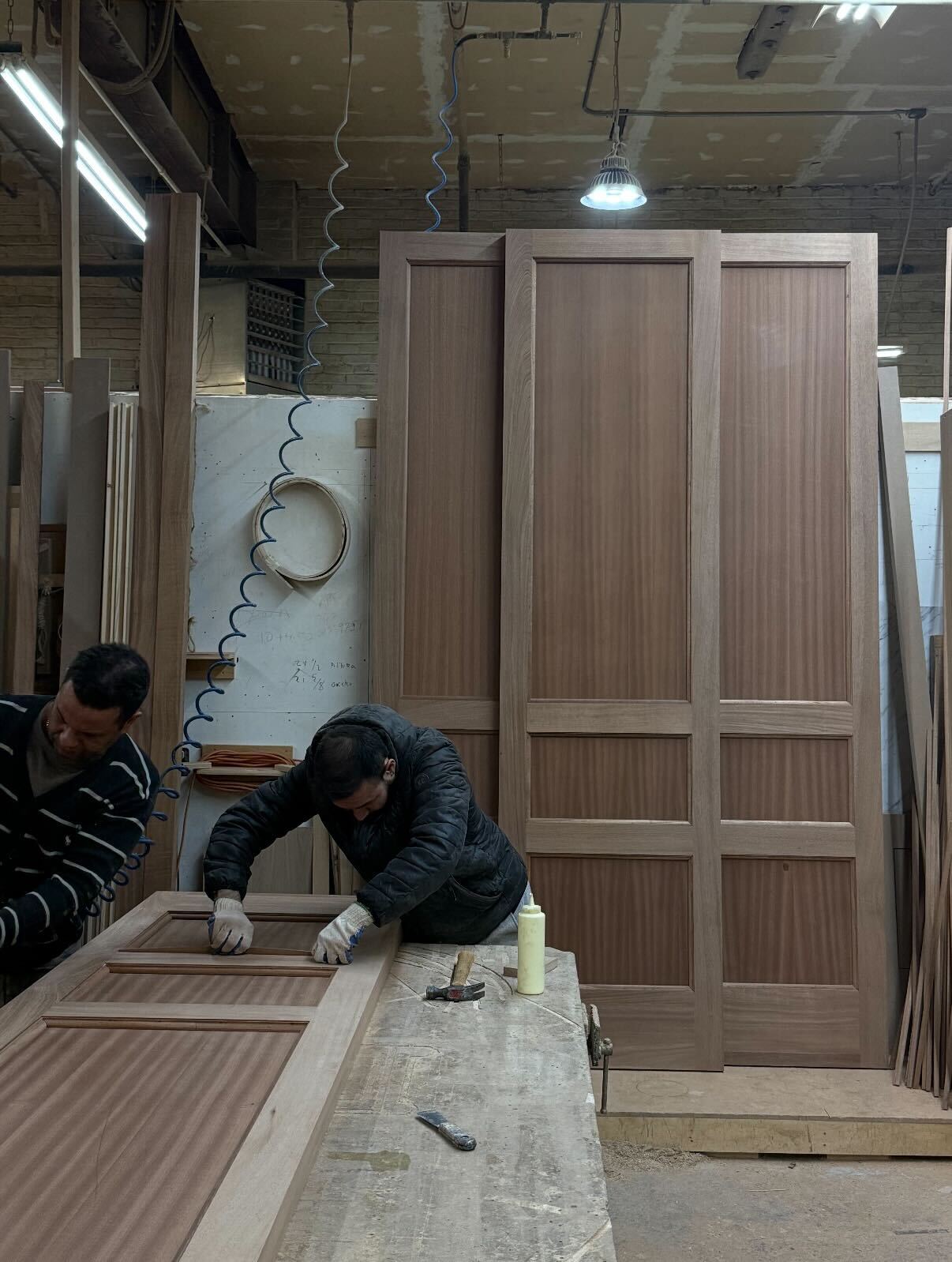
“Our core expertise in high-end millwork manufacturing is driving significant growth,” Yerolemou said when the acquisition was announced. “Adding both fabrication bandwidth and broader capabilities will allow us to support more of the high-profile projects that have built the business.”
Yerolemou is changing how a modern millwork facility is organized. In New York City’s tight industrial real estate market, many manufacturing companies frequently operate in several isolated facilities, separating showrooms, offices, and manufacturing space across different buildings.
The idea for Axos’ is to turn it into a three-in-one building for production, clientele, and finishing. The current projected plan is to implement construction and redesign phases over the course of two years, which will allow growth without inhibiting the company’s current production.
Rebuilding the first floor
The first phase of the project focuses on transforming the building’s ground level into a foundation for heavy manufacturing equipment.
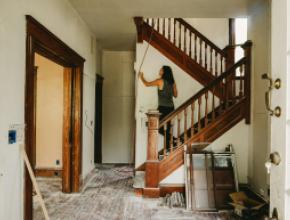
The existing first floor, which currently houses office space and a single planer, is being completely rebuilt to support the large machinery including CNC from Homag, and Altendorf sliding table saws, that will anchor the shop’s production capabilities. Once completed, the space will serve as the operational backbone of the facility, housing the machines responsible for the architectural components used in Axos’ projects.
This floor will ultimately serve as the base for the company’s high-precision machinery that can operate without interrupting other stages of production, such as finishing or assembly. The offices on this floor will be moved to the third floor, along with a new showroom and conference area.
Designing an automated flow
For the second floor, the company is converting what was once a generic woodworking space into a U-shaped production line, designed to move projects through a continuous sequence, rather than having workstations scattered across the shop floor,
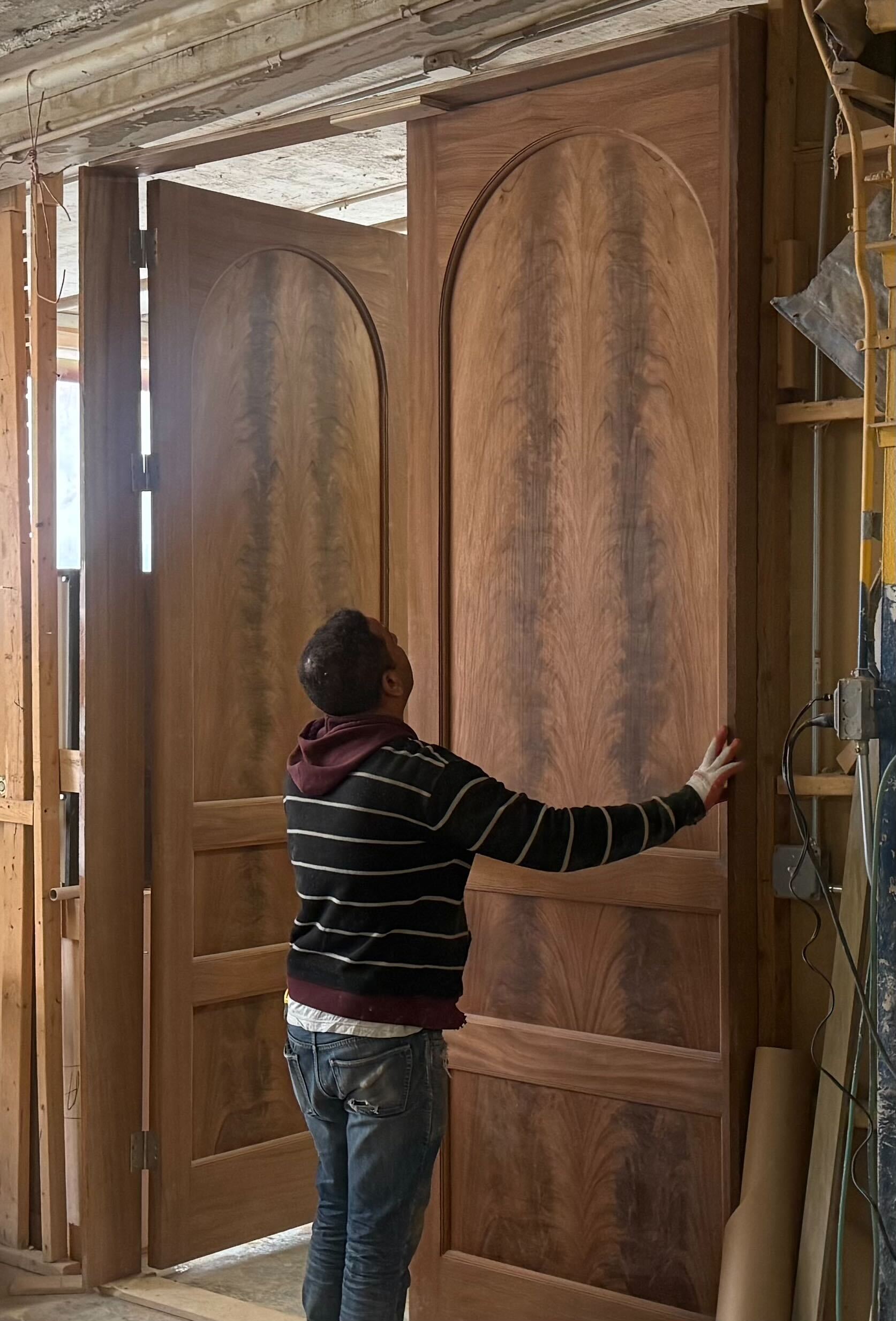
The new layout will guide materials through each stage of production from cutting and machining, to assembly and finishing, before moving on to packaging and installation in the center.
This type of production flow reflects a broader shift occurring across custom fabrication shops. As Axos’ clients become more prestigious and projects become larger and more complex, and as timelines tighten, the manufacturer is adopting a more structured production layout that reduce unnecessary material handling and improve job tracking.
“That’s the one thing that I’m excited about,” Yerolemou shares. “Having a fully automated area that will slash workflow by, ideally, more than half. It’s about creating a system where materials move through the shop faster and more predictably.”
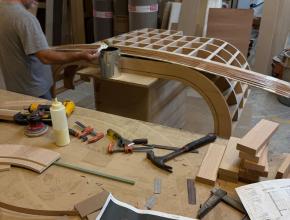
The shop’s projects often involve intricate architectural elements from custom wall panels and cabinetry to detailed millwork installations for restaurants, luxury residences, and retail environments. Maintaining quality while increasing volume requires a shop floor designed to move projects smoothly from one stage to the next.
The final stage of operations for most shops is finishing. For Axos, they will increase the quantity of finishing rooms from three to five or six. More space and better quality of a drying processes will also help their current bottleneck, Yerolemou hopes Waiting on pieces to fully dry can cost at least half-days in setbacks. The company is hoping to install drying ovens and is exploring different finishing products to shorten that window, as certain coatings can take five to six hours to fully dry.
Multi-material fabrication and technology integration
The company is exploring the possibility of integrating additional fabrication capabilities (metal and stone) either through acquisitions or by incorporating those processes into its existing operations. Along the same lines, Yerolemou is on the lookout for software that oversees everything from raw-material processing to finishing rooms, through delivery and installation.
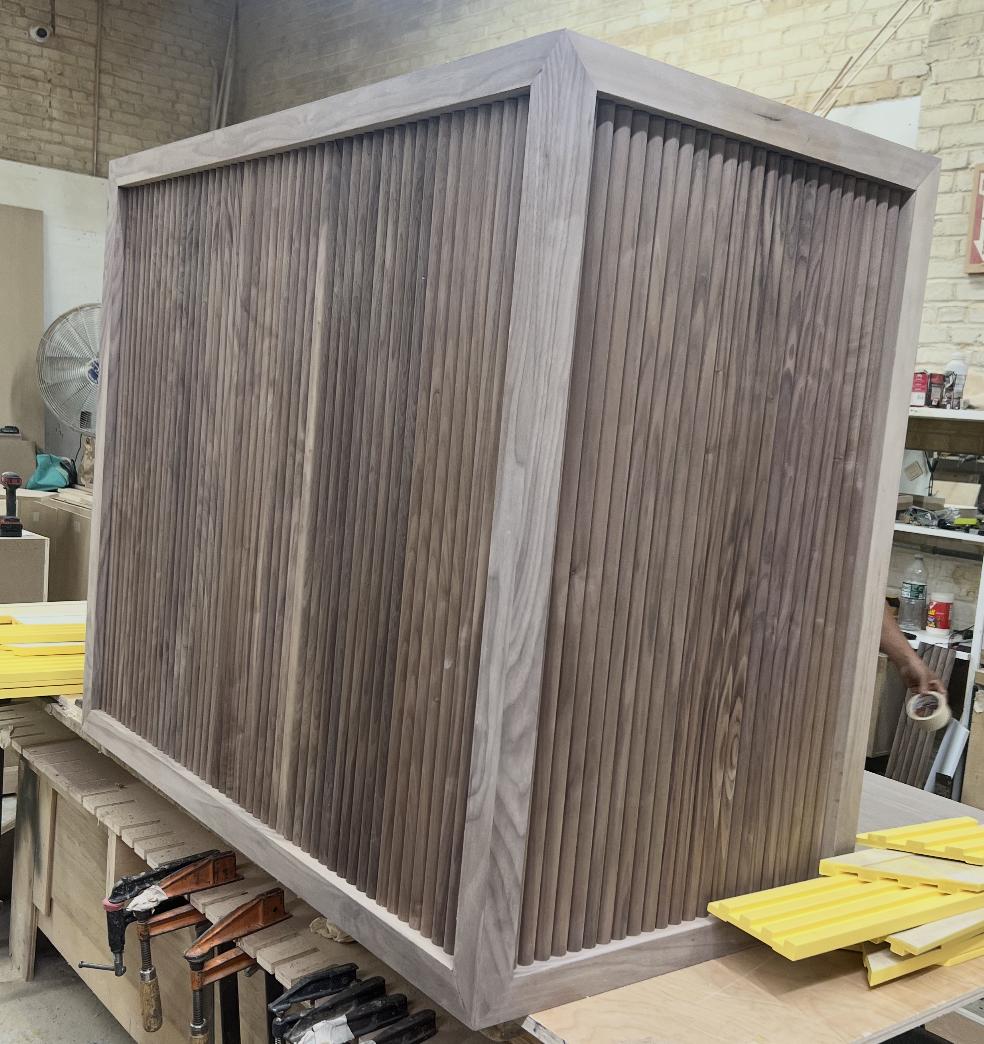
While the search for the right software combination continues, Axos is also examining the new potential offered by artificial intelligence to assist the company’s employees.
By introducing complementary trades into its platform, the company hopes to reduce reliance on outside vendors while improving quality control and scheduling across all projects with A.I. software. The strategy could also be adopted by other architects and designers as single source for multi-material fabrication, simplifying project coordination and potentially shortening construction timelines.
If the expansion proceeds as planned, the facility will not only increase manufacturing capacity, but it will also reshape how Axos approaches production, collaboration, and the growing demand for multi-material architectural interiors. The Long Island City facility represents more than just physical expansion. It signals a shift in how the company is positioning itself for the future of integrated fabrication, a trend that Yerolemou says is on the rise.
The vision, he says, remains rooted in the same philosophy that has guided the company from the beginning: respect for the craft, consistency in execution, and a deep, personal pride in every space we help create



Have something to say? Share your thoughts with us in the comments below.