


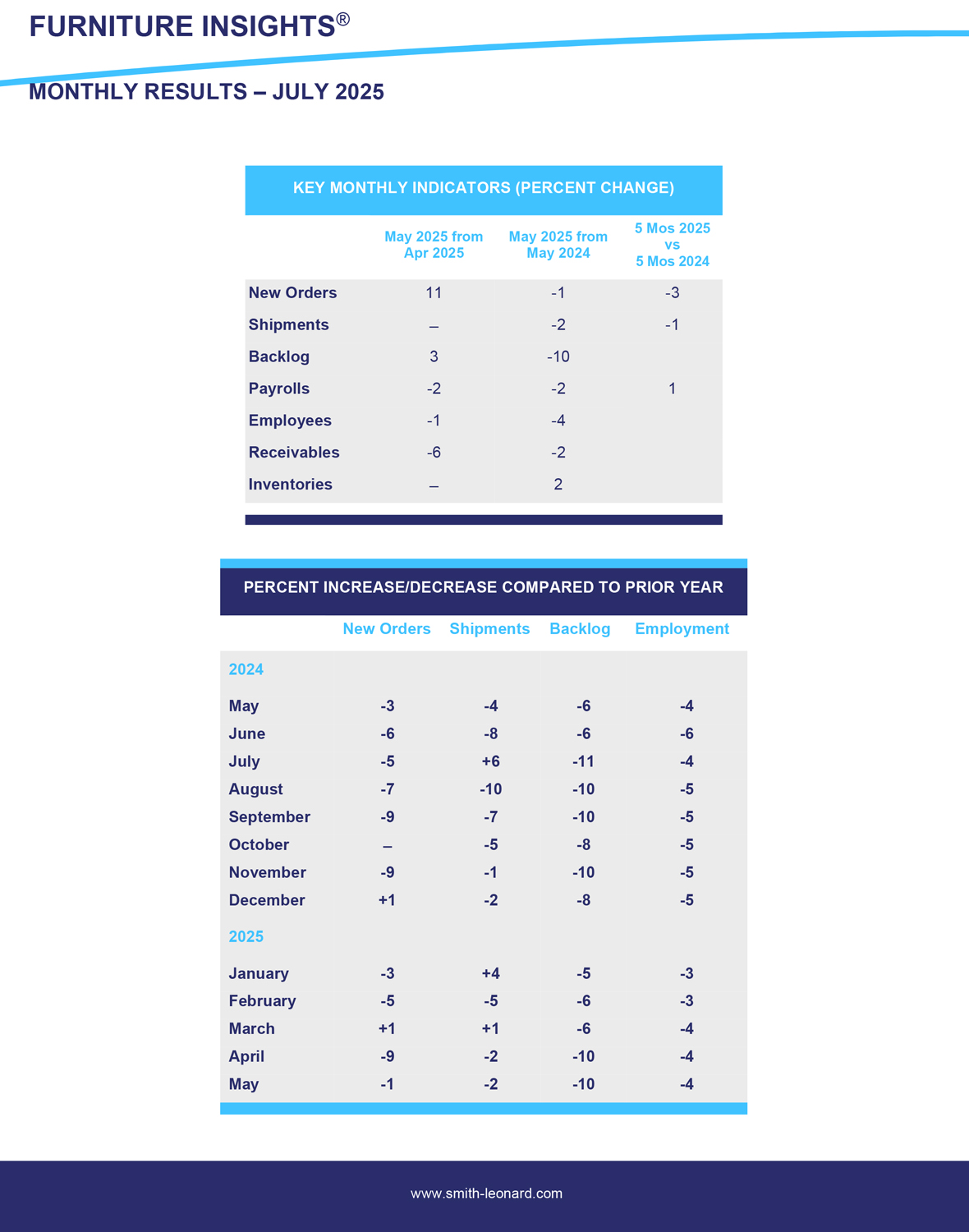
HIGH POINT, N.C. — New residential furniture orders dropped slightly in May, down 1% compared to the same period in 2024, according to the July issue of Furniture Insights. However, new orders were up 11% compared to April figures, according to Mark Laferriere, assurance partner at Smith Leonard, the accounting and consulting firm that produces the monthly report. Approximately half of participants reported increases versus decreases in May compared to a year ago, he said.
New residential furniture orders are now down 3% for the year-to-date, compared to last year.
May shipments were down 2% compared to 2024 figures, although 40% of survey participants reported increases compared to the year prior, Laferriere noted. May shipments are flat compared to April. and down 1% for the year-to-date compared to 2024 figures.
As with new furniture orders, May backlogs are down for the year-over-year comparison, but up compared to the previous month. Backlogs recorded a 10% drop compared to May 2024, but are up 3% compared to April 2025, "which appear materially in line with new order and shipments trends," he said.
Receivable levels were down 6% from April, and down 2% from May 2024, "both materially in line with related shipment trends, subject to normal fluctuations in the timing of collections," Laferriere continued.
On a seasonally adjusted basis, sales at furniture and home furnishings stores in June were flat compared to May, but up 4.5% from June 2024. Year to date on a non-adjusted basis, sales were up 5.7%, according to the July Furniture Insights.
"This month we saw consumer confidence at least begin to stabilize, and some positive trends with GDP, but housing continues to bump along while the Fed again takes a wait-and-see approach on inflation and rate cuts during its July meeting," Laferriere said.
"Dealing with the ever-evolving tariff landscape continues to be top of mind for suppliers and retailers alike, but that picture is seemingly coming more and more into focus with the latest round of tariff announcements, though China remains the wild card," he added. "After about six months of uncertainty, we are hopeful this will provide consumers with a return to some sense of normalcy and the direction the industry needs to effectively operate and capitalize on the many positive factors and opportunities that remain in the market for the remainder of the year and beyond."





Have something to say? Share your thoughts with us in the comments below.