


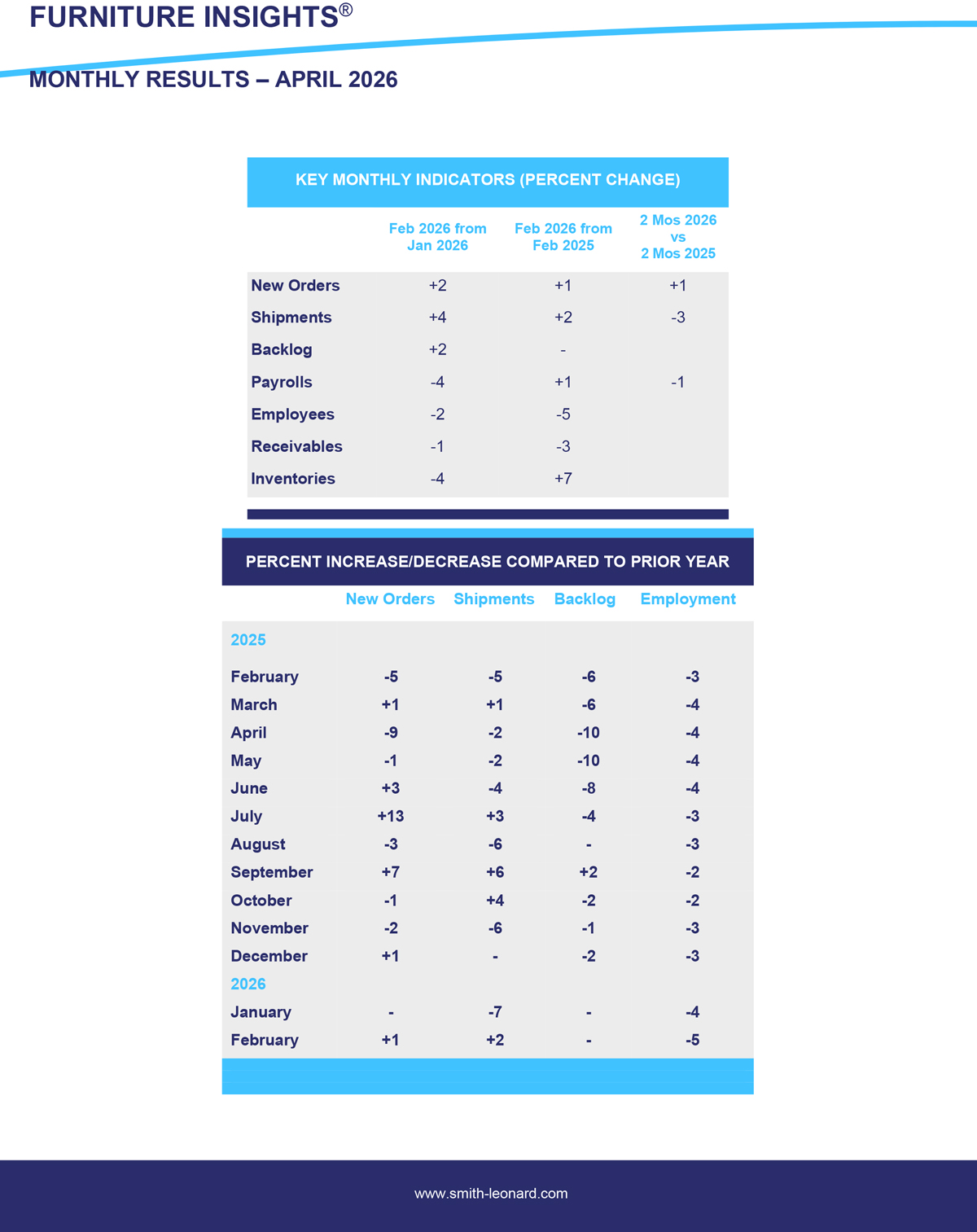
HIGH POINT, N.C. — New residential furniture orders rose 2% in February compared to the previous month, and were up 1% compared to February 2025's numbers, according to the April issue of Furniture Insights. Approximately one-half of participants reported increases versus decreases in February compared to a year ago.
To date, new orders are up 1% for the year.
"[N]ew orders and shipments were up in February 2026 over the prior year and month after a slow start," said Mark Laferriere, assurance partner at Smith Leonard, the accounting and consulting firm that produces the monthly report. "However, certain segments of the industry continue to perform better than others overall, with upholstery generally outperforming case goods, and the high/middle outperforming the low-end."
Shipments were also up 2% compared to January, but flat with February 2025, with two-thirds of survey participants reporting increases compared to the year prior, he added. Backlogs were up 2% from January, but flat compared to February 2025
Receivable levels were down 1% from January and down 3% from February 2025, according to the report. Inventories were down 4% over January, but up 7% from February 2025 continuing a trend from recent months, Laferriere said.
On a seasonally adjusted basis, sales at furniture and home furnishings stores in March were down 1.2% compared to February 2026. Year to date on a non-adjusted basis, March sales were up 2.5% compared to 2025, while new orders were up 2.0% year-to-date, according to April's Furniture Insights.
In his comments, which followed April's High Point Market, Laferriere noted, "There continue to be some signs of hope with consumer confidence despite all the 'noise' and people continue to buy furniture, so perhaps the industry will finally see the now long-time, pent-up demand realized as the year moves along.
"In the meantime, it seems like another season to control what can be controlled, focus on what companies do best, look for opportunities to operate more efficiently, and strengthen relationships with vendors, employees, and customers."




Have something to say? Share your thoughts with us in the comments below.