


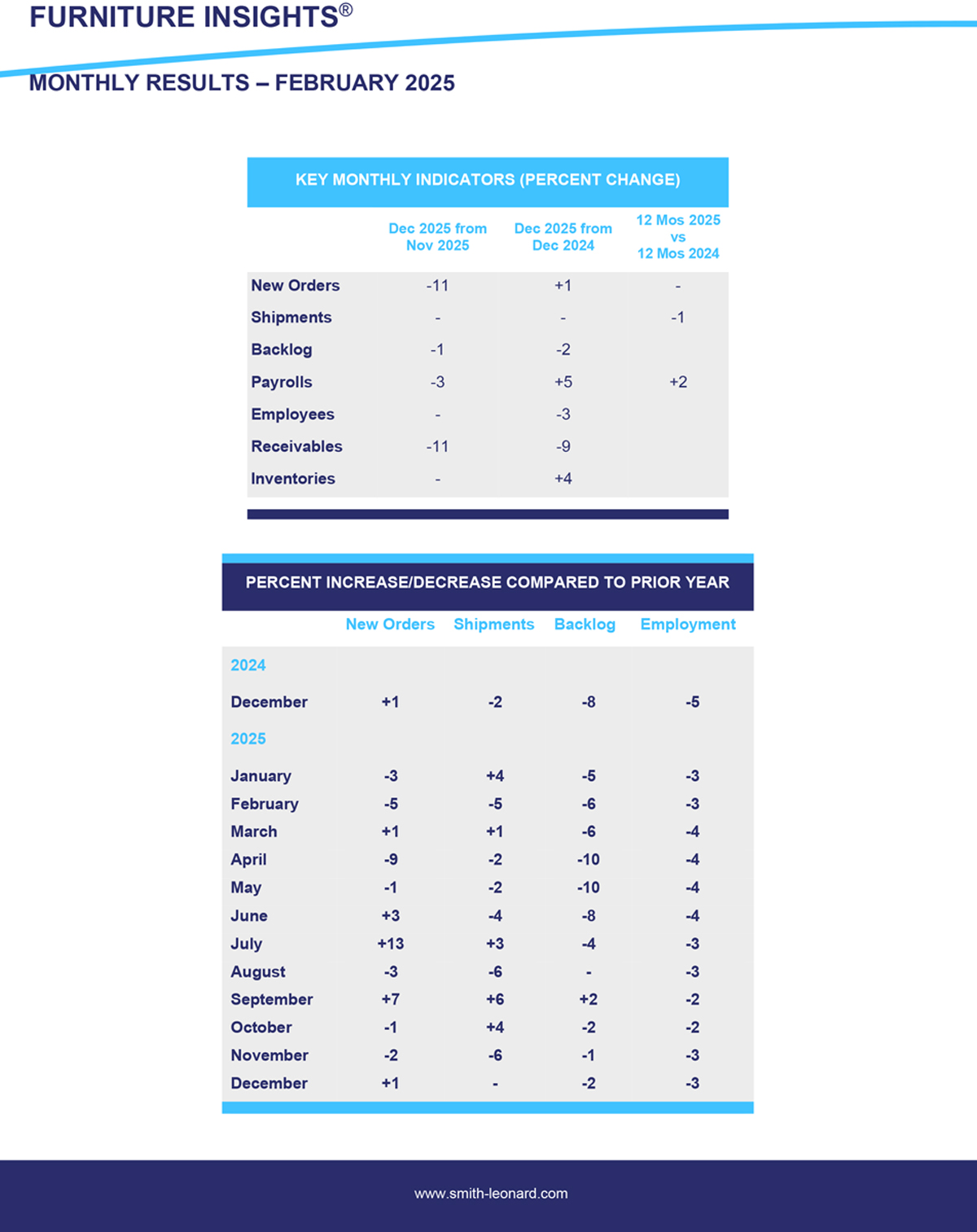
HIGH POINT, N.C. — New residential furniture orders dropped 11% in December compared to the previous month, but were up 1% compared to the 2024 figure, according to the February issue of Furniture Insights. "Year to date through December 2025, new orders pulled even with 2024 ignoring the impact of tariffs/inflation," said Mark Laferriere, assurance partner at Smith Leonard, the accounting and consulting firm that produces the monthly report.
"Certainly not what people were hoping for coming into 2025, but perhaps a relative win in light of the challenges presented by the year’s disruptions."
Approximately one-half of participants reported increases in December 2025 compared to a year ago, he said.
December shipments were flat compared to 2024 figures, with one-half of survey participants reporting increases compared to the year prior, Laferriere added. Shipments were also flat compared to November. Shipments ended the year down 1% compared to December 2024 year-to-date figures.
"December 2025 backlogs were down 2% compared to December 2024, and down 1% from November 2025 as shipments outpaced new orders," he added.
Receivable levels were down 11% from November and down 9% from December 2024. Inventories were flat with November and up 4% from December 2024.
On a seasonally adjusted basis, sales at furniture and home furnishings stores in December were down 0.9% compared to November, and down 5.6% from December 2024. Year to date on a non-adjusted basis, sales were up 2.3%, compared to 3.0% last month, according to February's Furniture Insights.
Commenting on economy and industry, Laferriere said, "This month we saw the Supreme Court strike down the tariffs imposed under the International Emergency Economic Powers Act, though they were quickly replaced with temporary tariffs of 10% (or 15%) that are generally lower than those imposed under IEEPA or otherwise negotiated, particularly for Asian countries. Certainly a lot still be determined on how these tariffs are unwound, potentially refunded and to who, what will ultimately replace them, then not to mention the operational burden on those within the industry who will get to once again deal with potentially resetting their cost and pricing structures ahead of the April Market.
"While the situation in Iran presents real-life human consequences, history has shown the impact of such conflicts on the stock market or consumer confidence to be generally short-lived. The more immediate concern to the economy and the industry would seem to be the impact of oil prices on container costs and discretionary income that drive consumer spending," he added.
"On a brighter note, there is some good news coming out of housing with the affordability index improving across all regions, which coupled with the continued decline in interest rates could drive the increased activity within the industry for 2026 we’ve been looking for."




Have something to say? Share your thoughts with us in the comments below.