

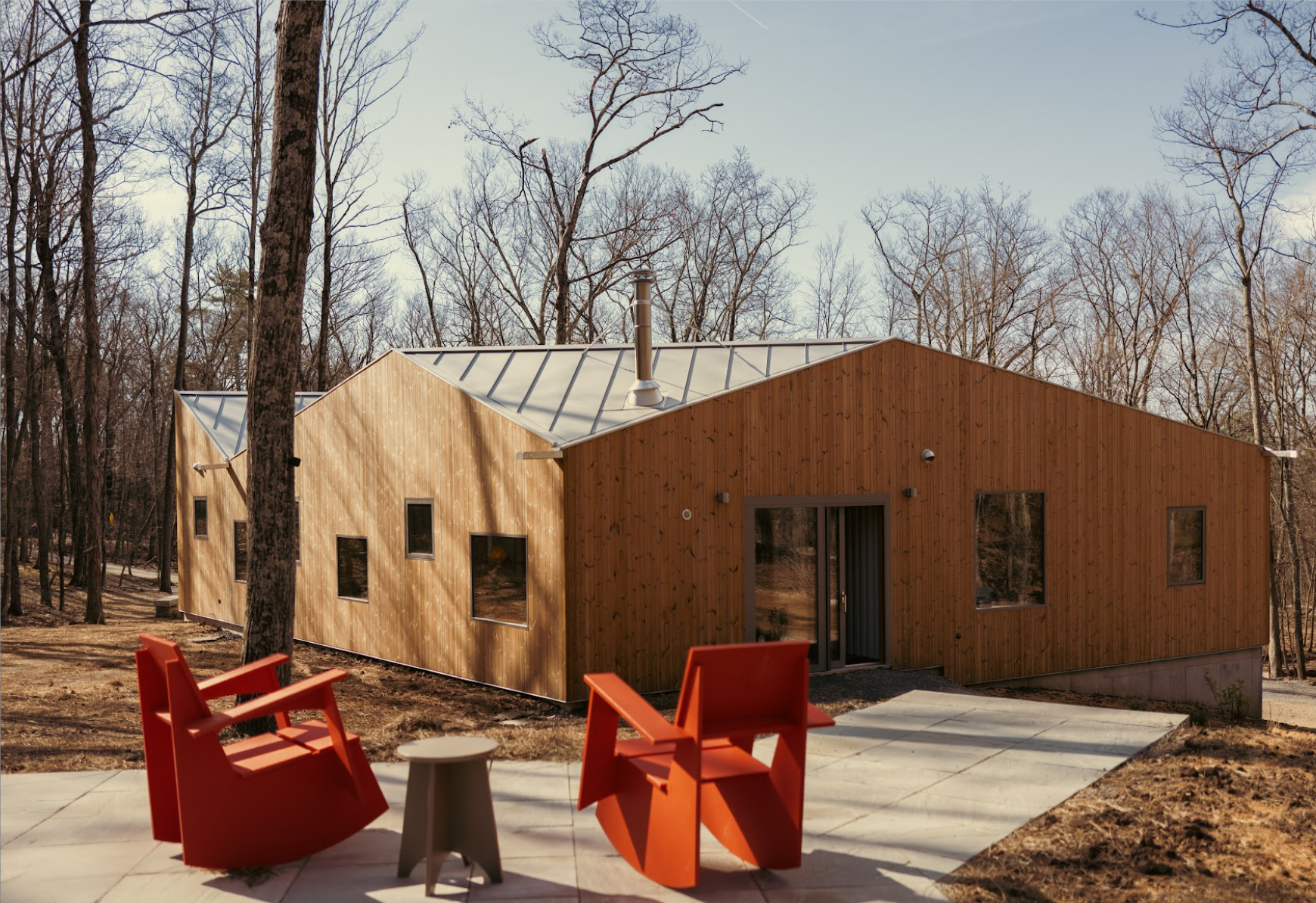
GLENFORD, N.Y. — A new residential project in New York’s Hudson Valley is redefining sustainable architecture through design, performance, and material innovation. The Ohayo Mountain House, designed by Amin Tadj Studio, demonstrates how contemporary homes can act as carbon sinks—featuring Lunawood thermally modified wood cladding as a central element of its low-carbon design strategy.
Located on a 2.15-acre site in Glenford, just minutes from Woodstock, the three-bedroom residence is conceived as both a private retreat and a shared cultural space. As the first realized prototype by Amin Tadj Studio, the project explores how architecture can merge environmental responsibility with modern living.
The single-story home is defined by its undulating roofline, inspired by the surrounding Catskill Mountains. Designed to follow the site’s natural slope, the building integrates seamlessly into its environment, creating a strong connection between indoor and outdoor spaces. A central courtyard forms the heart of the home, encouraging communal living while maintaining privacy across individual rooms.
“We are designing for a way of life where the borders of privacy and community can blend,” says architect Amin Tadj. “The Ohayo Mountain House is a platform to explore sustainability, design innovation, and responsible investment in a meaningful way.”
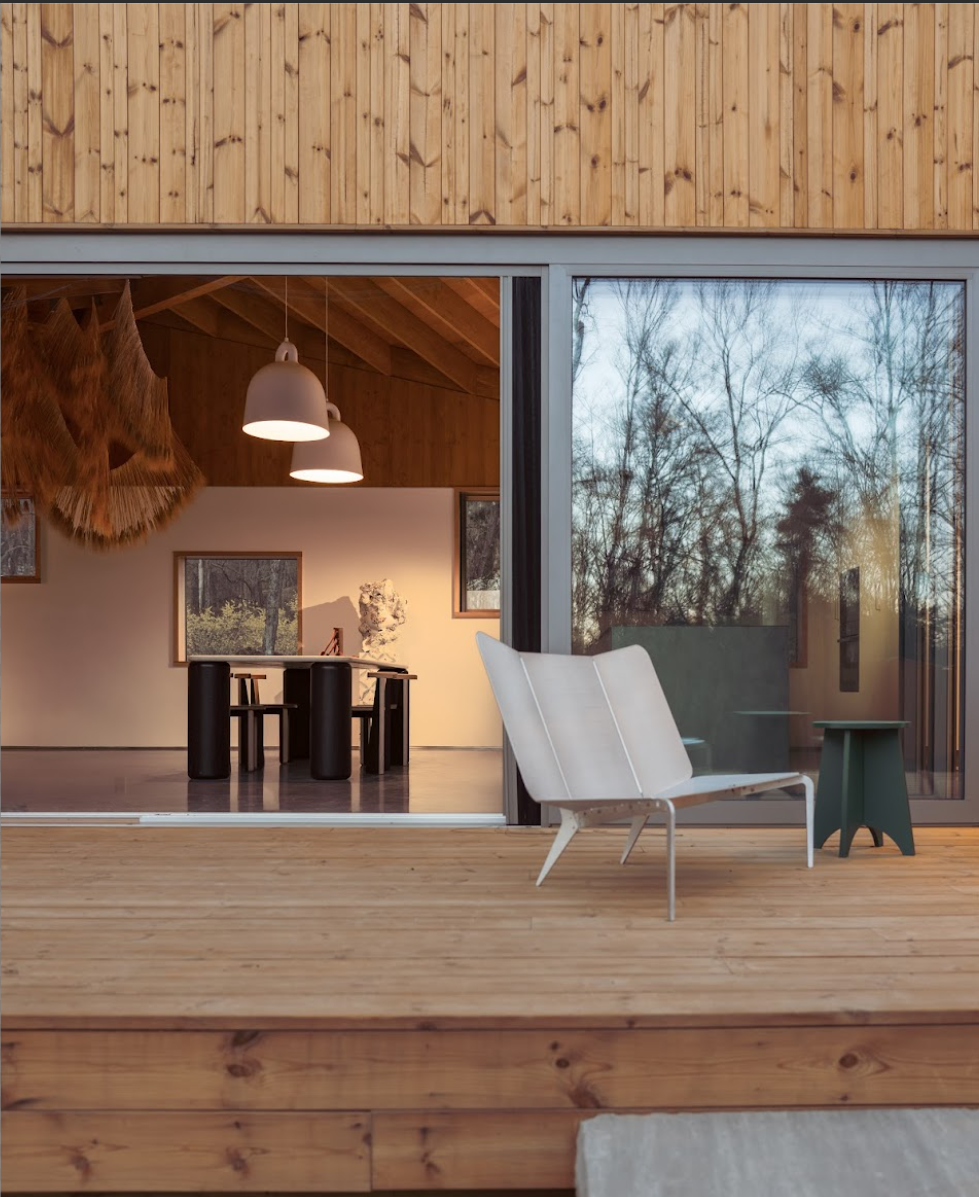
Beyond performance, Lunawood contributes significantly to the building’s environmental impact. The wood acts as a carbon storage material, locking in more carbon than is emitted during its production. This makes the facade not only a design element, but an active contributor to reducing the building’s overall footprint.
By integrating bio-based materials like Lunawood, the Ohayo Mountain House highlights the growing shift in architecture toward renewable, low-emission construction solutions.
The home is engineered to achieve high levels of energy efficiency, approaching Passive House performance. Its design supports a fossil-free lifestyle, combining high-performance building envelope solutions with systems that reduce operational energy use.
During its launch phase, the Ohayo Mountain House also serves as a public-facing cultural venue. In collaboration with a local gallery Available Items, the home hosts the exhibition “Sense of Place,” featuring designers and artists from the Hudson Valley region. Sense of Place is open to the public until the end of May, 2026. This reinforces the project’s role as both an architectural and community platform.





Have something to say? Share your thoughts with us in the comments below.