

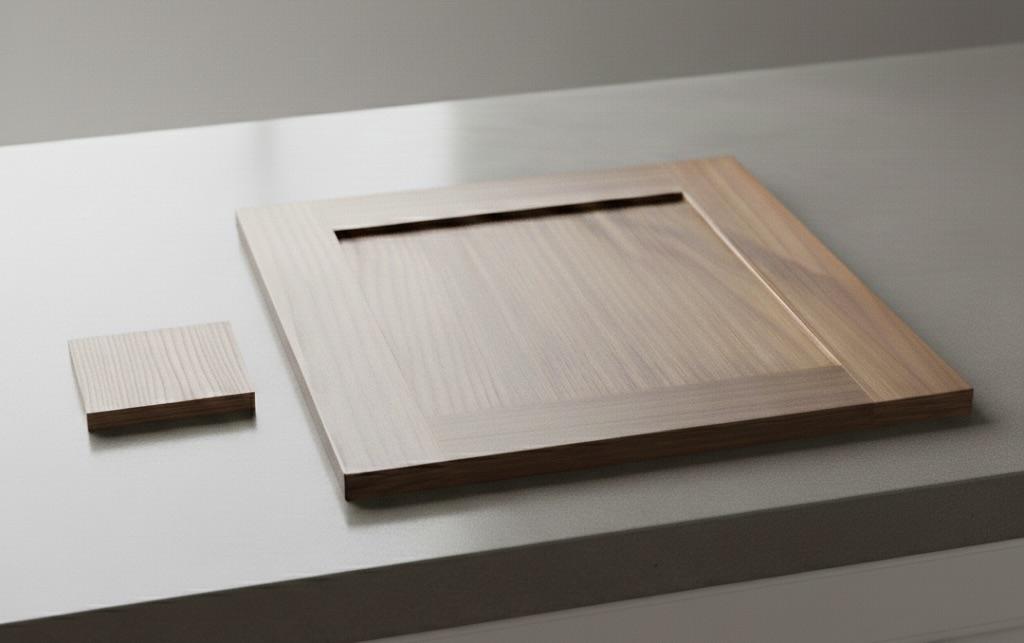
After thousands of conversations with homeowners, one issue shows up more consistently than any other: misaligned expectations, almost always around finishes. After all, it’s easy to take the sample approval process for granted. We’ve all done it dozens if not hundreds of times, and much of it goes without saying. But for what is a typical Tuesday for any proper finish department, it’s often a once-in-a-lifetime situation for the customer.
Given how frequently this comes up, it’s worth a refresher: getting everyone aligned as early as possible is the only reliable way to avoid costly rework, protect hard-earned reputations, and deliver projects with which customers are genuinely happy. When those expectations aren’t clearly defined and approved, disappointment is almost inevitable, regardless of how well the work is executed.
The limits of small samples
Small finish samples are useful, but they’re frequently asked to do a job they simply can’t do.
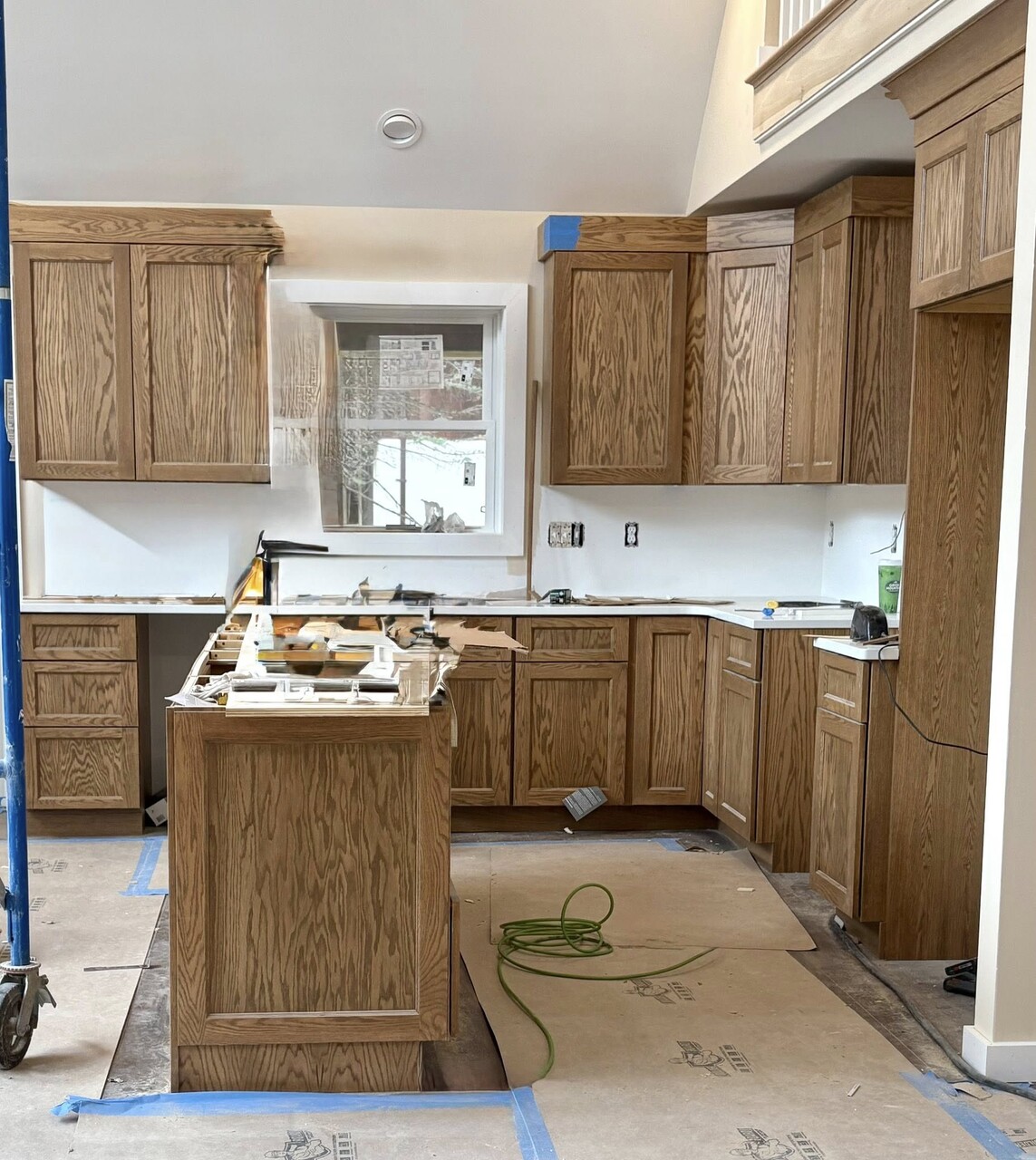
A swatch can establish general direction: light versus dark, warm versus cool, flat versus rift. What it can’t do is represent the finished cabinetry. It doesn’t show how a finish reads across a full door, how natural tone variation comes into play (looking at you, white oak), how veneer and solid wood behave differently, or how veneer layup—book-matched versus plank-matched, for example—affects the final appearance. With so many variables at work, small samples can only take the conversation so far.
From a professional standpoint, this is obvious. From our customer’s standpoint, it isn’t. When a client approves a small sample, they often believe they’ve approved the final, finished look. That misunderstanding is often where problems begin.
Full-door samples eliminate ambiguity
The only reliable way to align expectations is to have the customer approve the complete finish system on the exact door style used for the project. That means a full-size door, built with the same exact materials as the final project itself, finished using the exact same dyes, stains, glazes, toners, topcoat, etc. that will be used in production. This makes what was subjective now objective. The customer is no longer imagining what the finished cabinets might look like. They are seeing it in real life, on their actual door.
This eliminates any interpretation from the process.
Two samples, one standard
Producing two identical full-door samples per finish is a best practice that benefits both sides. One door goes to the customer. The other remains in the shop as the finish control for the project.
The shop sample becomes the objective reference for the entire run. If questions arise during production or at delivery, the comparison is straightforward. There’s no debate about memory, intent, or what was expected. The standard was established in advance.
The customer sample provided more than peace of mind. They weren’t guessing whether the final cabinets would match, they had already approved it. We typically used a 12" x 15" door for this, which also became a practical tool for our customer: they could take it to their countertop fabricator, tile supplier, or other trades to ensure color and tone coordination across the project. We baked the cost of these samples into the overall project, and clients consistently told us it was one of the most valuable parts of the process.
Delivery day should confirm, not surprise
Even with the best preparation, delivery day will almost always throw small challenges. But lets strive to control what we actually can. When finishes are properly approved, the installed cabinetry aligns with the approved sample, and that outcome isn’t accidental. It’s the result of a deliberate process designed to replace assumptions with agreement. Finish samples aren’t just about color—they’re about setting expectations clearly, professionally, and in a way that protects both your business and your customer.
When expectations are aligned, everyone wins.
Source: Corbin Clay is the founder of Ask a Cabinetmaker and FinishMatch. To learn more, visit finishmatch.com and askacabinetmaker.com.


Have something to say? Share your thoughts with us in the comments below.