

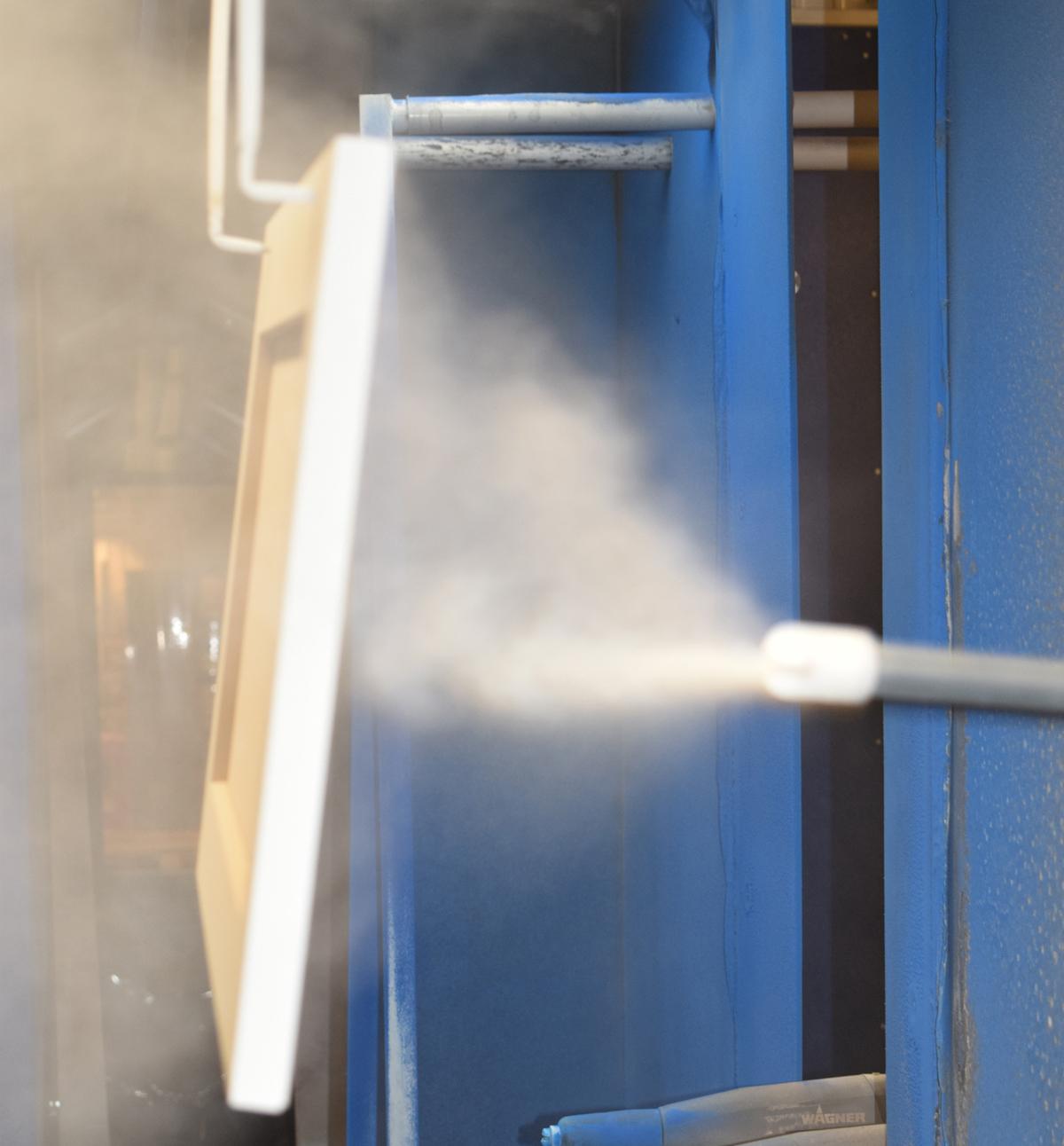
Powder coating for heat-sensitive substrates like wood and MDF has been around for years. The new generation of powder and the new cure technology deliver benefits that are worth checking out.
1 Choice of options
It’s not a ‘one size fits all’ solution. The options available to add powder into your program are varied and easily customizable. For wood-based substrates like hardwoods, high-density fiberboard (HDF), and MDF, there are powder primers that accept a powder topcoat or a liquid topcoat. Powder primers reduce the amount of sanding required plus offer superior filling capabilities on routed surfaces. There are also single-coat powder options, delivering one coat of protection with no primer needed.
2 Substrate selection
The latest powder technology for wood/MDF can be applied to hardwoods like maple and oak and most grades of MDF and HDF, including exterior HDF. Softwoods are trickier due to their high moisture content.
3 Technical performance
Chemical and mechanical properties ensure these new powders boast chip and crack resistance, good scratch and mar resistance, and high chemical and stain resistance. Due to the excellent film build, the coatings are resistant to moisture, thus creating a barrier over the substrate. They also overcome concerns with poor UV or heat resistance that can lead to yellowing or brittleness, and there is no edgebanding and no seams.
4 Flexibility is key
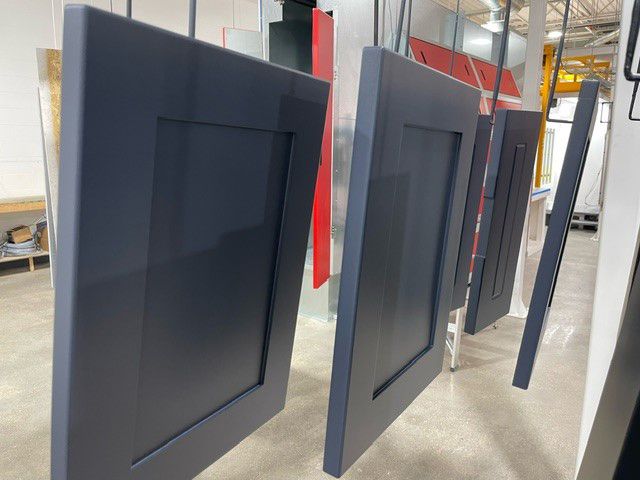
Overcoming the tendency for wood/MDF to shrink and swell over the life of finished products as they absorb and release moisture is a challenge for any coating. The coating must be sufficiently flexible to accommodate this without cracking or peeling.
5 Environmentally responsible
Powder coatings have a whole host of environmental benefits. No solvents, which means they also boast negligible VOCs. The powder can be reclaimed and reused or recycled and delivers an impressive carbon footprint. In addition, no hazardous waste is created in either manufacture or application.
6 Easy to use
Whether a small manual system or a large automatic line, teaching operators to work with powder is safe and easy to pick up and simple to manage on a day-to-day basis.
7 Quick cure
With gas catalytic IR oven technology, the new generation powders will cure at 265F in 6-10 minutes – lower temperatures, reduced energy bills, and quick throughput.
8 Process efficiency
The latest powder application and cure lines are designed to deliver maximum production efficiency with high line densities, fast application and curing, no matter what the size of your operation. The coating can be applied with a relatively small shop footprint, and offers a simple, repeatable finishing process with the ability to evenly coat even complex shapes.
9 Color and effect
The range of colors available is vast, but more exciting than simple color is the array of special effects that are achievable, from light fine textures to sparkles and beyond. There is no difference in how the powders are applied to achieve the effects – it’s the powder that does the hard work. What’s more, powders with additional functionality, such as anti-microbial and anti-graffiti treatments, are easily formulated.
10 Cost-effective
Did you know that if you put 3 mils of powder coating on a heat-sensitive substrate, once the powder is cured and the part ready to use – you still have 3 mils of cured product on the part? What you put on is what you get, unlike liquid coatings, where the cured film build is significantly less than what is applied.
Source: IFS Coatings. For information, call 940-668-1062 or visit IFSCoatings.com.


Have something to say? Share your thoughts with us in the comments below.