

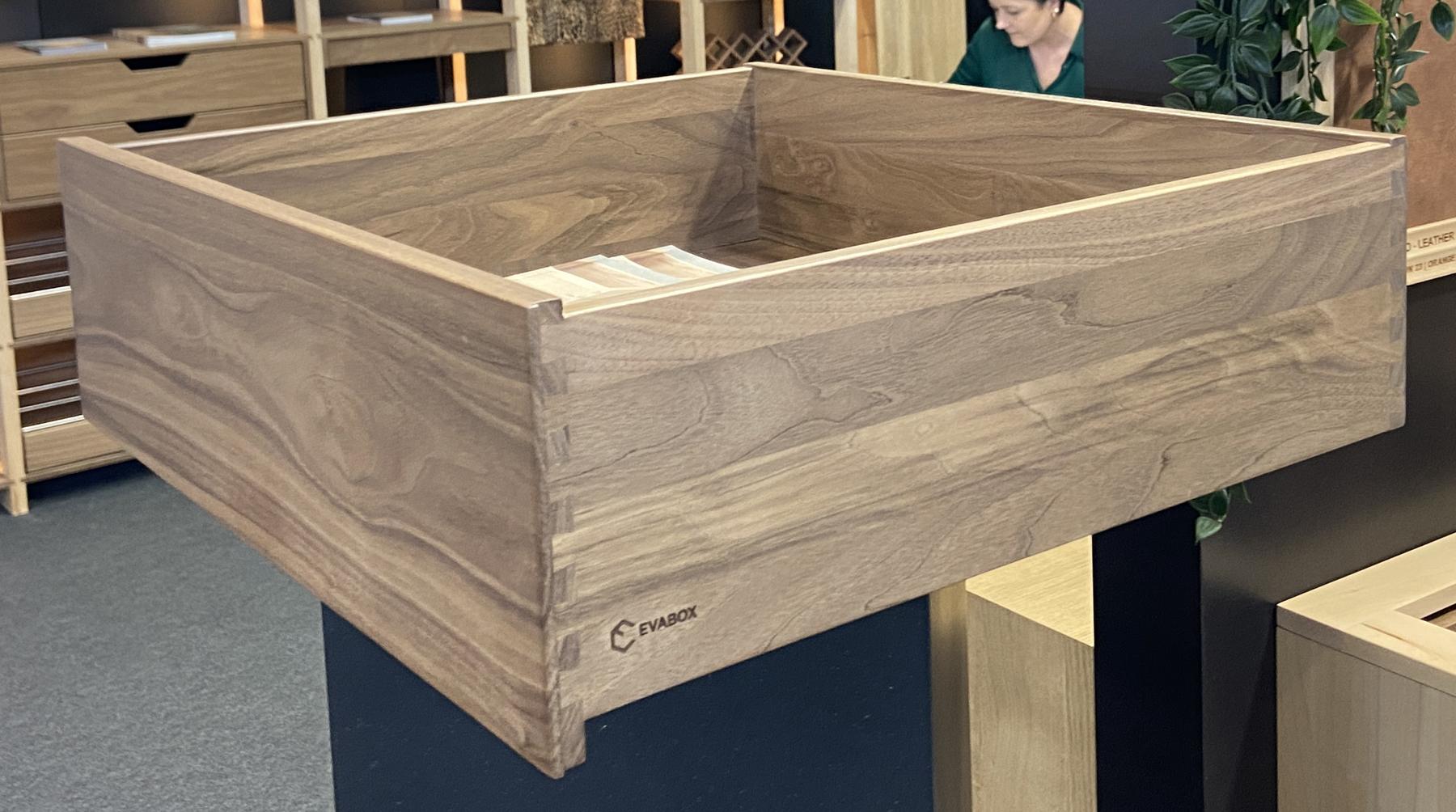
Woodworkers can complete many aspects of joinery using traditional tools, such as chisels, table saws, and bandsaws. The following are some of the most common basic techniques for joining pieces:
- Butt joints connect two pieces of wood using dowels, nails, or screws.
- Dado joints connect two pieces of wood by inserting a piece into a groove on another piece. The width of the groove is equal to the thickness of the adjoining piece.
- Rabbet joints are like dado joints, but the cut appears along the board's edge.
- Dovetail joints connect two pieces by cutting a portion out of one and flaring the other to fasten them together. The three types of dovetail joints include through, half-blind, and sliding.
- Half-lap joints connect two boards by removing half of each piece to join them flush.
- Miter joints fasten pieces of wood cut at 45-degree angles to form right angles.
- Mortise and tenon joints place an indentation (mortise) into one piece of wood and a projection (tenon) into the other to join them.
- Tongue and groove joints add grooves along one edge and protrusions (tongues) on the other to join two pieces.
- Box joints offer a convenient alternative to dovetail joints.
Types of CNC joinery
The following are some woodworking joints you can achieve with a CNC router:
- 3-axis CNC corner joint: Connects pieces along an edge to create a corner, typically at a right angle.
- 3-axis CNC housing joint: Connects two perpendicular pieces.
- 3-axis CNC frame joint: Connects parts in a T or X arrangement, typically using half-lap joinery.
- 3-axis CNC edge-to-edge joint: Connects two pieces at their edges to elongate them.
- Box joint and dogbone: Connects two pieces at the corners using dogbone joinery for clearance.
- Box joint with t-bone: Mimics the box joint with dogbone but delivers a cleaner interior corner.
- Blind box joint: Connects pieces and keeps clearance cuts and fingers hidden for a clean, structurally sound part.
- Step joints: Reinforces simple joints by adding more area for positive registration when gluing.
You can accomplish more techniques by combining a CNC router with other tools, such as a handheld router.
CNC machining considerations
CNC-routed joinery requires using router bits that place force on your workpiece, so sturdy fixturing is necessary. Additionally, you may encounter a tear out with router bits, but sharp tooling and tweaking feed rates can help minimize this issue and ensure you get the proper chip load during cutting.
Router bits on the CNC can’t reach the inside corners of square pieces, so the joints require rounded corners. Also, ensure the router bit stays moving when cutting out corners; if the tool sits in one corner for too long, it generates excessive heat and wear and tear.
Neglecting to program clearance leads to improper mating of joints. Clearance can be tight because the accuracy of CNC machining, combined with sharp tools, should deliver the ideal fit. If it’s too tight, increase the clearance slightly on each side.
When programming a toolpath for the project, you do it for a particular wood thickness. Compensate for discrepancies in different thicknesses with parameters like “Stock to leave” and “Floor to leave” on the CAM software.
Finally, be cognizant of joint positioning concerning the outer edges of a part. A combination of your CNC router and solid fixturing ensures the edges and ends of each piece line up.
Source: Laguna Tools. For information call 800-234-1976 or visit LagunaTools.com.


Have something to say? Share your thoughts with us in the comments below.