

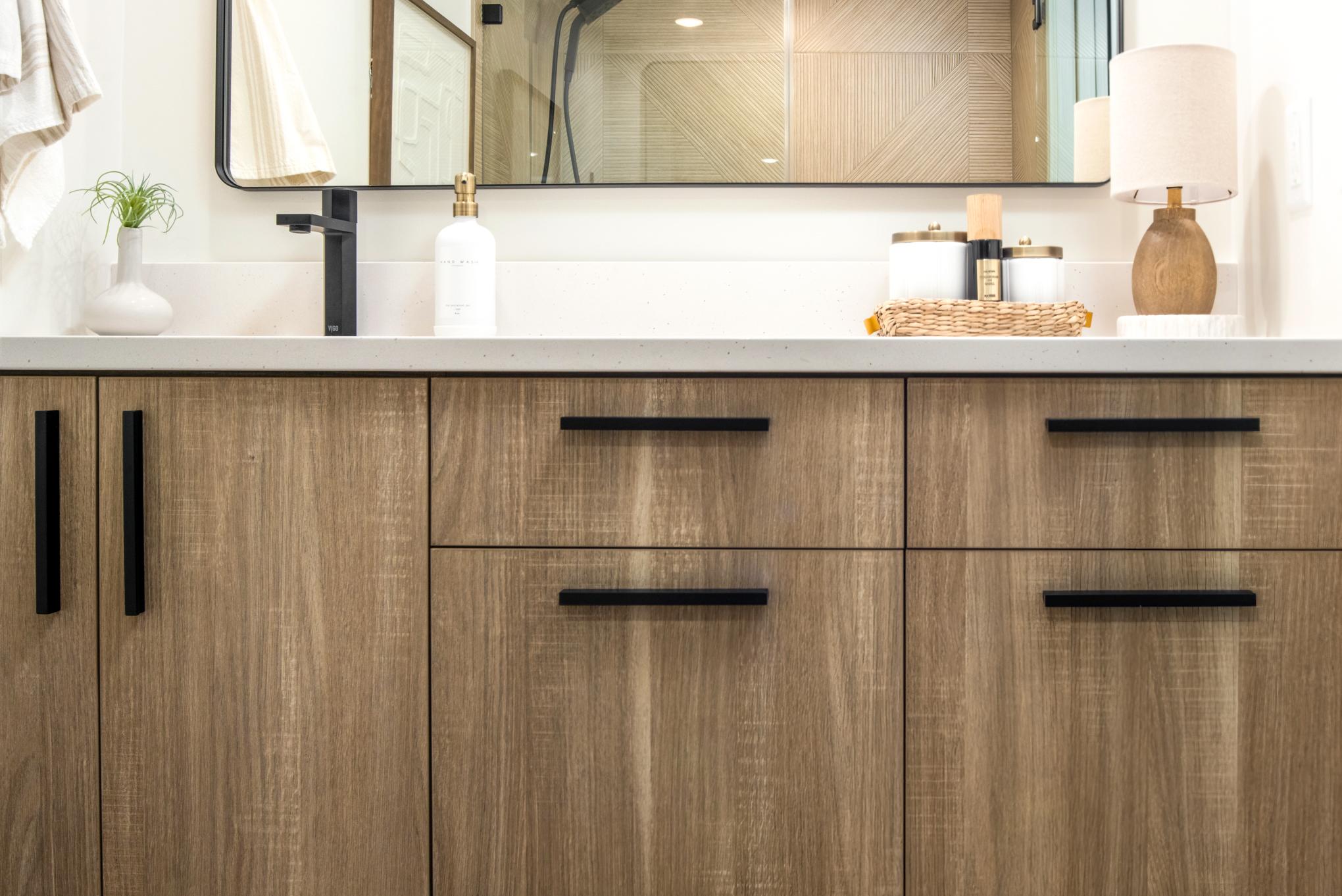
Today’s millwork and cabinet designs are all about elevating the look, feel and function of a space. Five surface types are leading the way: textured, high-gloss, matte, glass and metallic.
Textured surfaces bring tactile interest to designs, with popular material options being high-pressure laminate (HPL), textured melamine, wood and wood fiber laminate.
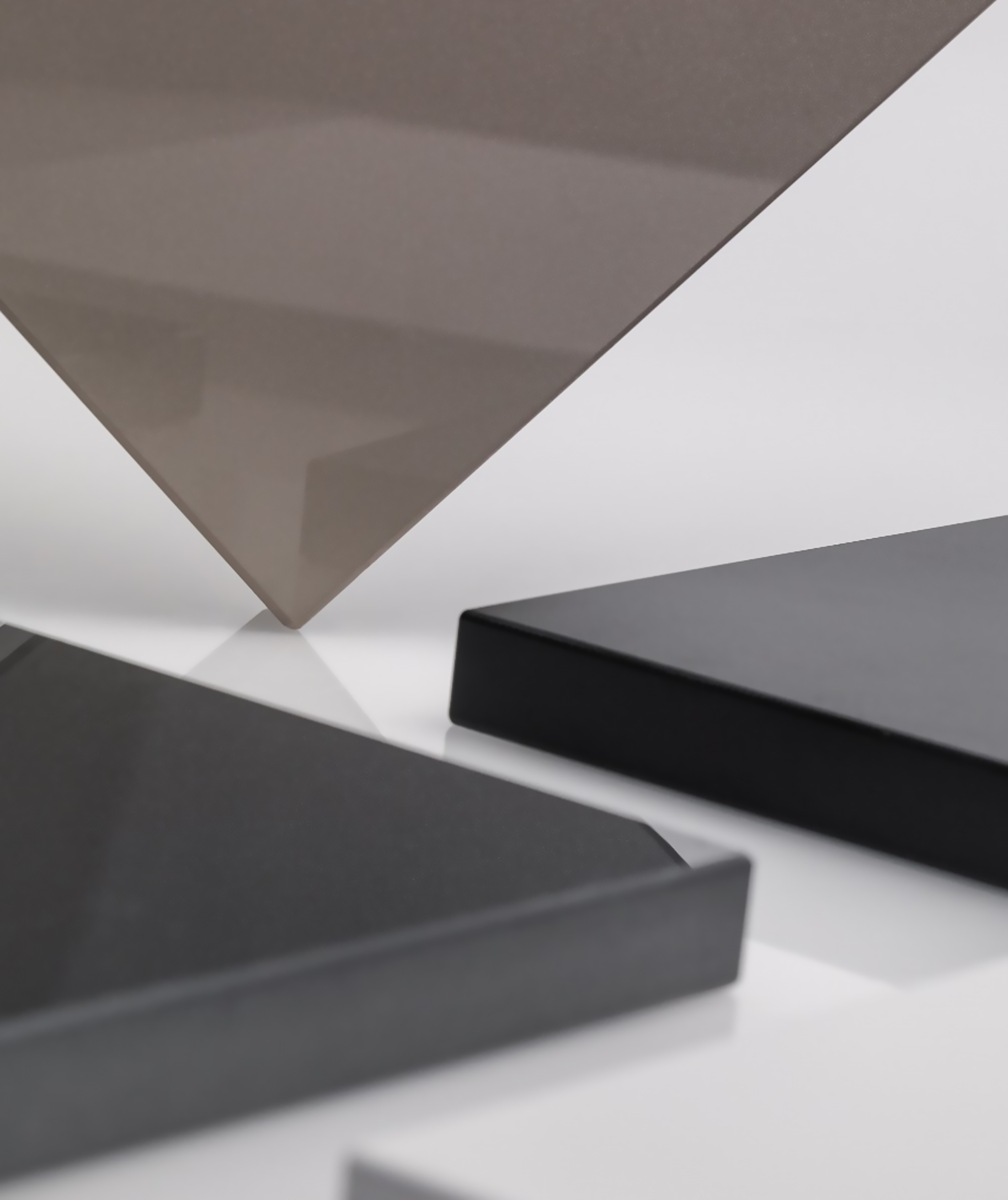
High-gloss surfaces reflect sleek sophistication, including options such as lacquered melamine, thermofoil, painted and lacquered panels and acrylic laminate.
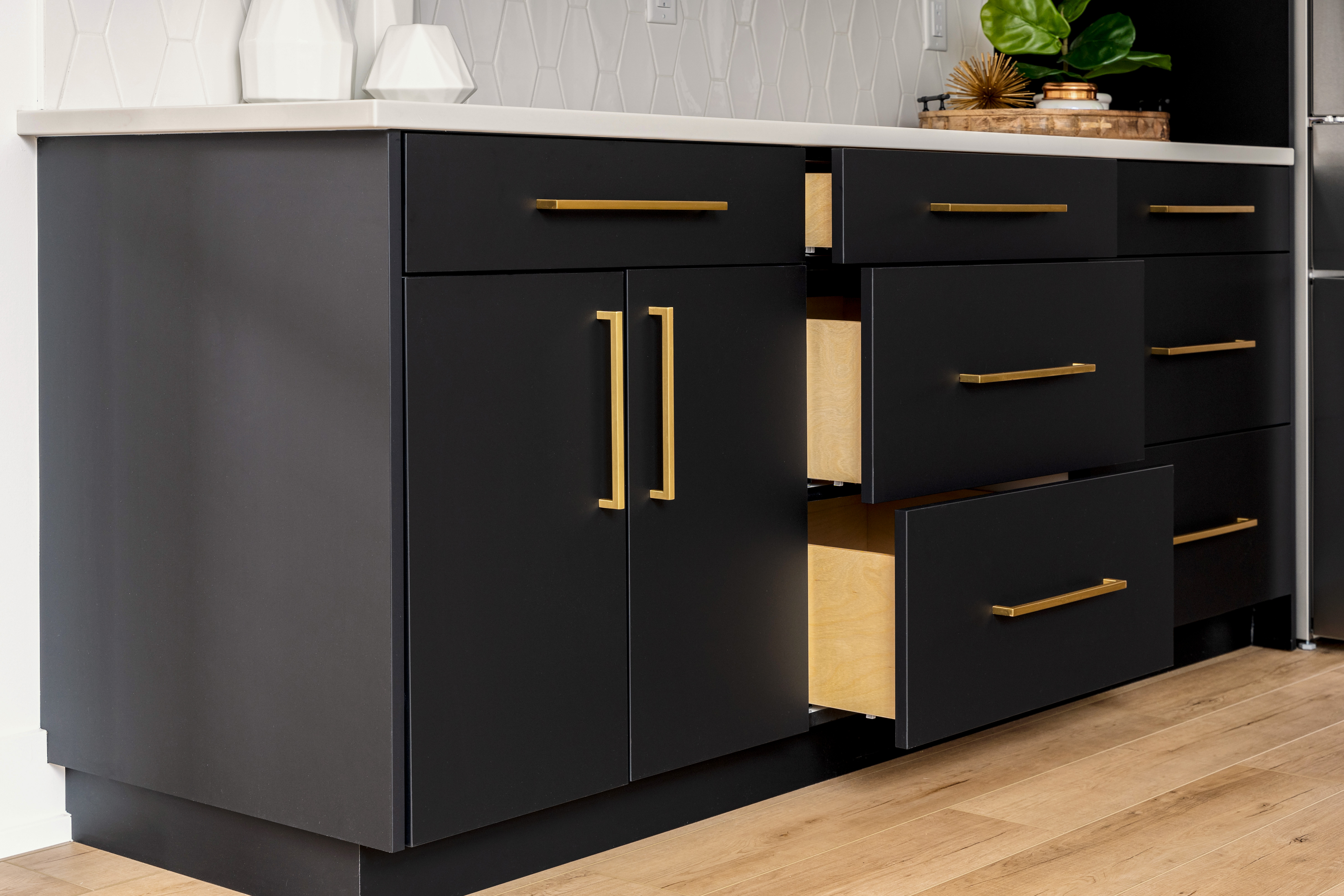
Matte surfaces offer understated elegance and versatility with options such as HPL, electron beam cured HPL and polyethylene terephthalate (PET) laminate.
Glass surface options, such as tempered glass and acrylic glass laminate, add subtle depth to contemporary spaces.
Metallic surfaces bring a luxurious feel to designs with their lustrous finish and distinct shimmer, with popular options including real metal sheets, metal foil HPL, lacquer or paint, clear PET applied over metal foil and solid PET laminate.
Durability
How do different surface options compare in terms of durability and performance?
HPL is impact resistant and can withstand heat and moisture exposure, unlike textured melamine which is susceptible to impact, moisture infiltration and swelling. Wood fiber laminate is a versatile option that is three times thicker than melamine, making it ideal for applications from curved walls to cabinet refacing. Additionally, wood is a high-quality material but is susceptible to moisture infiltration and swelling, which can lead to warpage and wear over time.
Matching wood
Textured melamine offers a deeply textured wood look, but it can feel low-cost and artificial. Alternatively, HPL has a deeply textured wood look and feel with consistent color and pattern, while offering better durability compared to textured melamine. Wood fiber laminate has precise synchronized etching, which adds visual dimension to a wood-fiber pore by applying a patterned matte and low-gloss finish, delivering the soft, crisp graining of veneer without the overcompensation of typical melamine embossing.
To maximize sustainability, consider wood fiber laminate, which is made of natural cellulose materials and is free of melamine resins, formaldehyde, phenol and solvents.
High-gloss options
Among high-gloss options, lacquered melamine and lacquered acrylic laminate are the best solutions for scratch resistance. However, once a lacquered melamine surface has been scratched, it cannot be repaired. Also be wary that melamine is brittle and can be chipped when cut.
Acrylic laminate can be lacquered for extra protection against scratches. Without lacquer, it’s a bit more delicate and can scratch easier, but it can typically be repaired.
Most high-gloss surfaces come with a protective peel coat that remains in place until final installation. High-gloss options are not recommended for horizontal surfaces where high-temperature resistance is required, such as cabinetry above cooktops.
Acrylic laminate is considered the premium high-gloss option thanks to its high-end color depth and mirror-like quality.
Design possibilities
Painted and lacquered panels offer the highest number of color options. Multiple 3D features can be accommodated, such as shaker or raised panel cabinet fronts, giving designers and homeowners flexibility in door styles.
Thermofoil — a thin PVC foil that is pressed and molded over an MDF board — is a good choice for those looking for varied prints and patterns along with different door styles.
The downside to thermofoil doors is that the PVC surface can eventually become loose from the MDF panel around the edges. Lacquered melamine boasts many color options and is a common application in kitchens, bathrooms, offices and living spaces.
Matte options
Matte surfaces in HPL are scratch resistant but offer limited thermal healing of micro-scratches, and fingerprints may be more visible on the surface. Electron beam cured HPL is fingerprint, impact and scratch resistant and has proven extreme heat and chemical tolerance. It also offers independent thermal healing of micro-scratches.
PET is fingerprint and scratch resistant, but it isn’t impact resistant like electron beam cured HPL.
Excimer lacquer, a UV-curable coating, can be applied on PET laminates for increased matte appearance. PET is a great fit for large-scale projects and is a value-engineered option.
Electron beam cured HPL is best for premium designs, delivering ultra-low light reflectivity for a true matte look and soft touch feel. This material also offers anti-bacterial properties, making it ideal for residential, hospitality, medical, lab and commercial settings. Electron beam cured HPL is an excellent choice for high-traffic areas like kitchens and bathrooms.
Glass surfaces
Tempered glass can bear a significant weight but is susceptible to shattering. As a result, it is considered a risky material to use in high-traffic or sensitive areas. Acrylic glass laminate is 10 times more break resistant than glass, offering enhanced safety and durability.
Tempered glass offers unlimited color options with paint. Acrylic glass laminate is made of a thin sheet of polymer — often multiple polymers co-extruded — with a clear top layer to mimic back-painted glass.
This results in a high-end color depth and mirror-like quality, while optimized formulations assure color fastness and UV stability.
Metallic surfaces
When it comes to durability, real metal sheets are strong and sturdy. However, they can be sensitive to temperature changes, especially when paired with low-pressure laminate backers or hot-melt adhesives. Foil options are quite delicate— metal foil HPL is prone to piercing and denting, while clear PET applied over metal foil is at risk of tearing during processing. Solid PET is much more resilient with its layered composition that resists delamination. This option also provides fingerprint, stain, scratch and impact resistance, making it a smart solution for high-traffic spaces like kitchens or bathrooms.
Real metal sheets give you the most genuine look, but they come with fabrication challenges. If your priority is color variety and creative freedom, metallic lacquers or paints offer the broadest range of possibilities.
The trade-off is that they don’t quite capture the authentic metallic look. Metal foil options deliver a realistic metallic aesthetic, but their fragility may limit where they can be used. Solid PET shines here, offering that rich, dimensional metallic effect designers love, combined with the performance needed for demanding environments.
Choosing the right surface
Designers can help homeowners choose the right surface by understanding and balancing the aesthetic and durability goals of the project. Textured surfaces are a great option for achieving a heritage look and feel, embracing warmth and character through millwork and cabinetry.
High-gloss surfaces are ideal for designs where light enhancement is desired. For the ultimate show of brightness, look for a material with mirror-like reflectivity.
Matte surfaces with fingerprint and scratch resistance help capture a soft and approachable design style, serving as a solid foundation for all kinds of material combinations with metal, stone and wood.
Glass is great for timeless yet impactful designs. Consider looking beyond tempered glass and explore polymer options for a longer-lasting finish.
Metallic surfaces catch the eye with their dimensional richness and subtle shimmer.
Choose an option that balances these aesthetic qualities with strong performance features to create millwork and cabinetry that make a lasting impression.
Jesse Collins is director of marketing and communications for REHAU Americas and is responsible for millwork and cabinetry lines of panel products.


Have something to say? Share your thoughts with us in the comments below.