

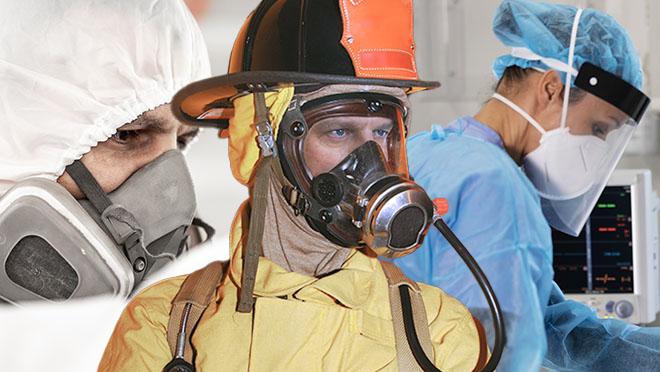
Federal officials announced May 13 that more than 100 employees at the National Institute for Occupational Safety and Health (NIOSH) who were slated to be let go will be permanently reinstated. Reports later in the day on May 14 put the number of potentially rehired workers at 328 but were unclear as to whether the safety programs on which they were working would be restarted.
Early in the day, the International Safety Equipment Association (ISEA), which led a nationwide campaign to defend NIOSH called this a “crucial development after months of uncertainty” that threatened the agency’s workforce and core safety programs.
“This is not just a win for NIOSH—it’s a win for every worker who depends on science-backed safety standards to do their job and come home safe,” said Cam Mackey, President and CEO of ISEA. “From firefighters to healthcare workers, from industrial crews to military responders, today’s news ensures the programs that protect them remain strong.”
ISEA said that NIOSH’s respirator approval system was at risk under the proposed staffing cuts. Its reinstatement ensures the certification system stays intact at a time when global health and emergency readiness remain top priorities, the group said.
“NIOSH’s respirator approval program isn’t just a bureaucratic process—it’s a life-saving measure that gives first responders confidence in the gear they rely on in hazardous environments,” added Dan Glucksman, ISEA’s Senior Director of Policy.
NPR.org reported that Secretary of Health and Human Services Robert F Kennedy Jr., under Congressional questioning, said that 328 employees at NIOSH were reinstated at NIOSH facilities in Morgantown, Cincinnati, and at the World Trade Center Health Program, which provides services to first responders and survivors of the terrorist attacks on Sept. 11, 2001.
Sources from NIOSH told NPR that key functions had come to a “standstill” because of the huge disruptions. Many researchers involved in studying and preventing toxic chemicals and workplace hazards are still slated to be laid off.
It is unclear if the research into silicosis, a uncurable lung disease caused by silica dust released in manufacturing countertop made from engineered stone would continue.
Previously, Woodworking Network spoke with Kyle Mandler, a pulmonary toxicologist at the Morgantown, West Virginia, location. Mandler had been running laboratory studies focused on a spike in lung disease linked to silica dust in the countertop industry. "We were in the middle of working to try and understand what is inherent in the material that was potentially so deadly for these workers," he said.


Have something to say? Share your thoughts with us in the comments below.