

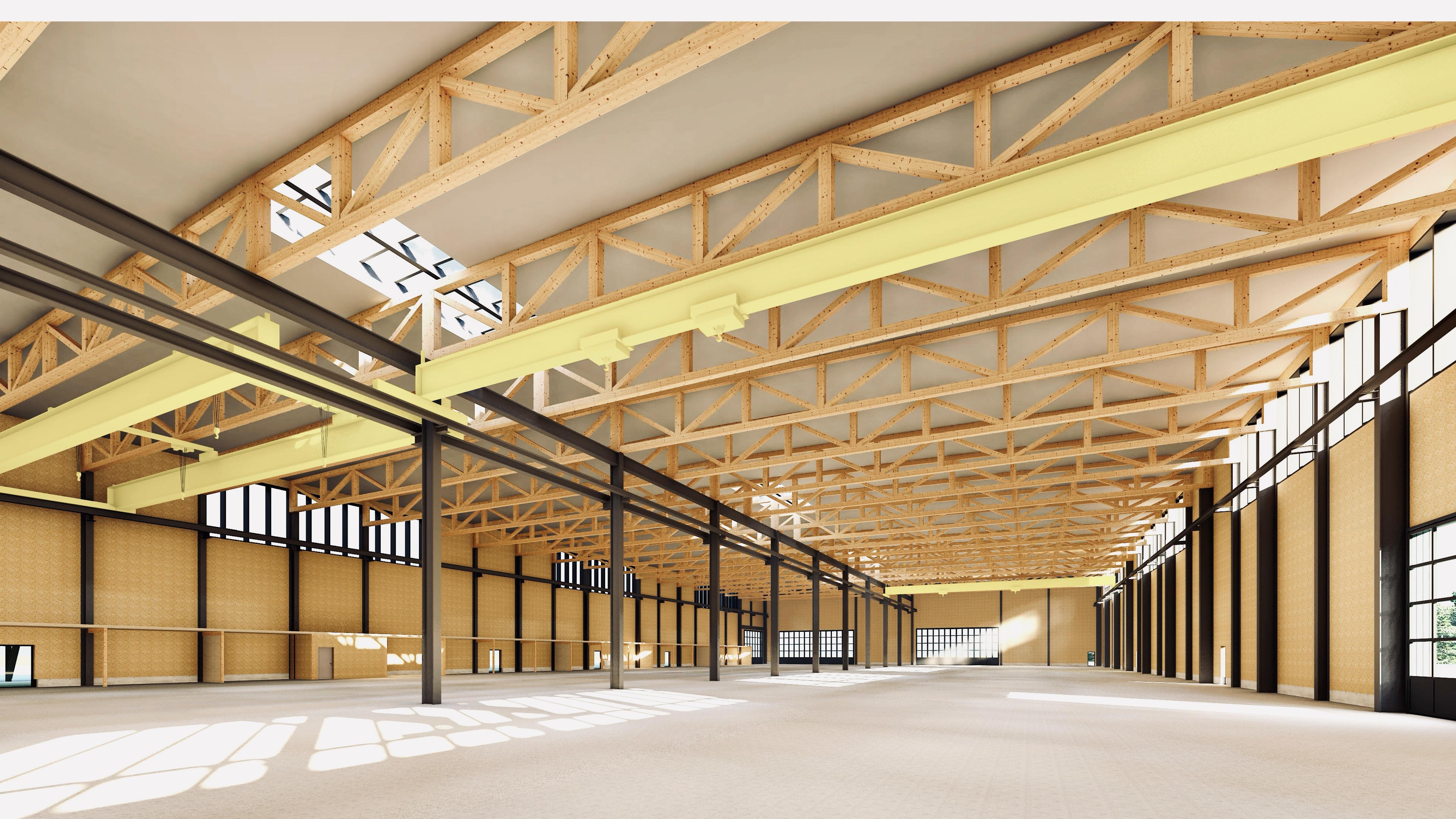
NEW CASTLE, Del. — The global mass timber construction industry generated $857.1 million in 2021, and is anticipated to generate $1,542.2 million by 2031, witnessing a CAGR of 6.0% from 2022 to 2031, according to a new report by Allied Market Research.
The report, titled "Mass Timber Construction Market by Construction Type," found that the mass timber construction market is driven by factors such as growth in awareness regarding the greater carbon footprint during steel and concrete construction and the growth in demand for construction that is more cost-efficient and as durable as steel and concrete construction. However, high installation costs of roofing and decaying problems associated with timber are restraining the growth of the market. On the contrary, rapid urbanization and industrialization of emerging countries such as India and China are expected to offer lucrative opportunities for the growth of the market.
Covid-19 scenario
The outbreak of the Covid-19 pandemic hurt the global mass timber construction market, owing to a decline in the construction activities during the lockdown.
The production of mass timber was hampered due to the closure of manufacturing units across the world, especially in the initial period of the pandemic. Although the mass timber construction industry faced losses, ongoing construction activities in different developing regions aided in its recovery.
The report explored construction types including: 1-8 Stories and Above 8 stories; Timber Type (Glue-Laminated Timber (GLT), Cross-Laminated timber (CLT), Nail-Laminated Timber (NLT) and Others); and End-user Industry (Residential Construction, Commercial Construction, and Industrial Construction).
Leaders by segment
- The 1-8 stories segment is expected to maintain its leadership status throughout the forecast period.
Based on construction, the 1-8 stories segment held the highest market share in 2021, accounting for nearly two-thirds of the global mass timber construction market revenue and is expected to continue its leadership status during the forecast period, owing to the growth in preference by the owners for houses that are made from lightweight material that helps in saving the cost of construction.
However, the above 8 stories segment is projected to manifest the highest CAGR of 7.5% from 2022 to 2031, owing to growth in the number of high-rise buildings along with skyscrapers in various developing and developed countries.
- The cross-laminated timber (CLT) segment to maintain its leadership status throughout the forecast period
Based on type, the cross-laminated timber (CLT) segment held the highest market share in 2021, accounting for nearly two-fifths of the global mass timber construction market and is expected to continue its leadership status during the forecast period, as cross-laminated timber (CLT) is used for all kinds of structures ranging from houses, barns, power line towers, churches, and bridges to high-rise apartment and office buildings.
However, the nail-laminated timber (NLT) segment is projected to manifest the highest CAGR of 8.3% from 2022 to 2031, as NLT assemblies have fire-resistance ratings that comply well with local fire codes. In addition, NLT has been identified as a potential cost-competitive alternative to CLT (Cross-Laminated Timber) for the mass-timber construction market in different countries such as China, Japan, and Korea.
- The residential construction segment to maintain its lead position during the forecast period
Based on application, the residential construction segment accounted for the largest share in 2021, contributing to more than half of the global mass timber construction market revenue, and is projected to maintain its lead position during the forecast period. Robust housing activity is seen in the present period, with nearly 50% of all mass timber products utilized in new single-family and multi-family housing units. In residential construction, glulam and I-beams have been utilized mainly allowing for long spans without intermediate supports indoor headers, floor beams, and ridge beams.
However, the commercial construction segment is expected to portray the largest CAGR of 8.1% from 2022 to 2031. The construction of low-rise nonresidential buildings and multistorey is an important market for mass timber products and structural and nonstructural wood panels in North America and Europe, which are major markets for mass timber constructed buildings.
- Europe to maintain its dominance by 2031
Based on region, Europe held the highest market share in terms of revenue in 2021, accounting for more than half of the global mass timber construction market revenue, and is likely to dominate the market during the forecast period. The government initiatives to promote sustainability, along with the rise in the adoption of eco-friendlier construction materials, have significantly promoted the growth of the mass timber construction market in Europe. However, the LAMEA region is expected to witness the fastest CAGR of 18.6% from 2022 to 2031 owing to the rise in construction activities, growing industrialization, and rising initiatives towards sustainability.
For more information, click here.




Have something to say? Share your thoughts with us in the comments below.