

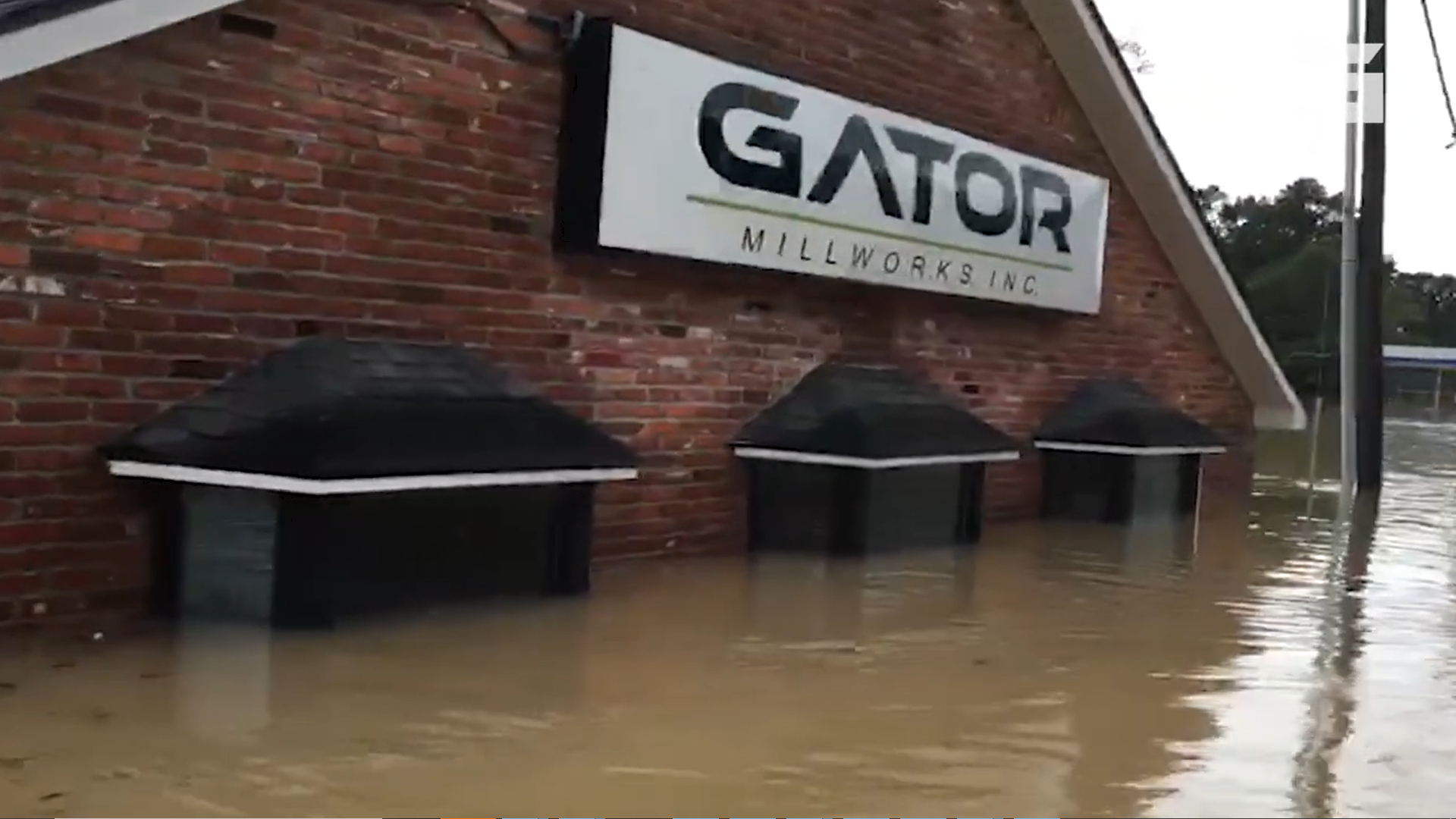
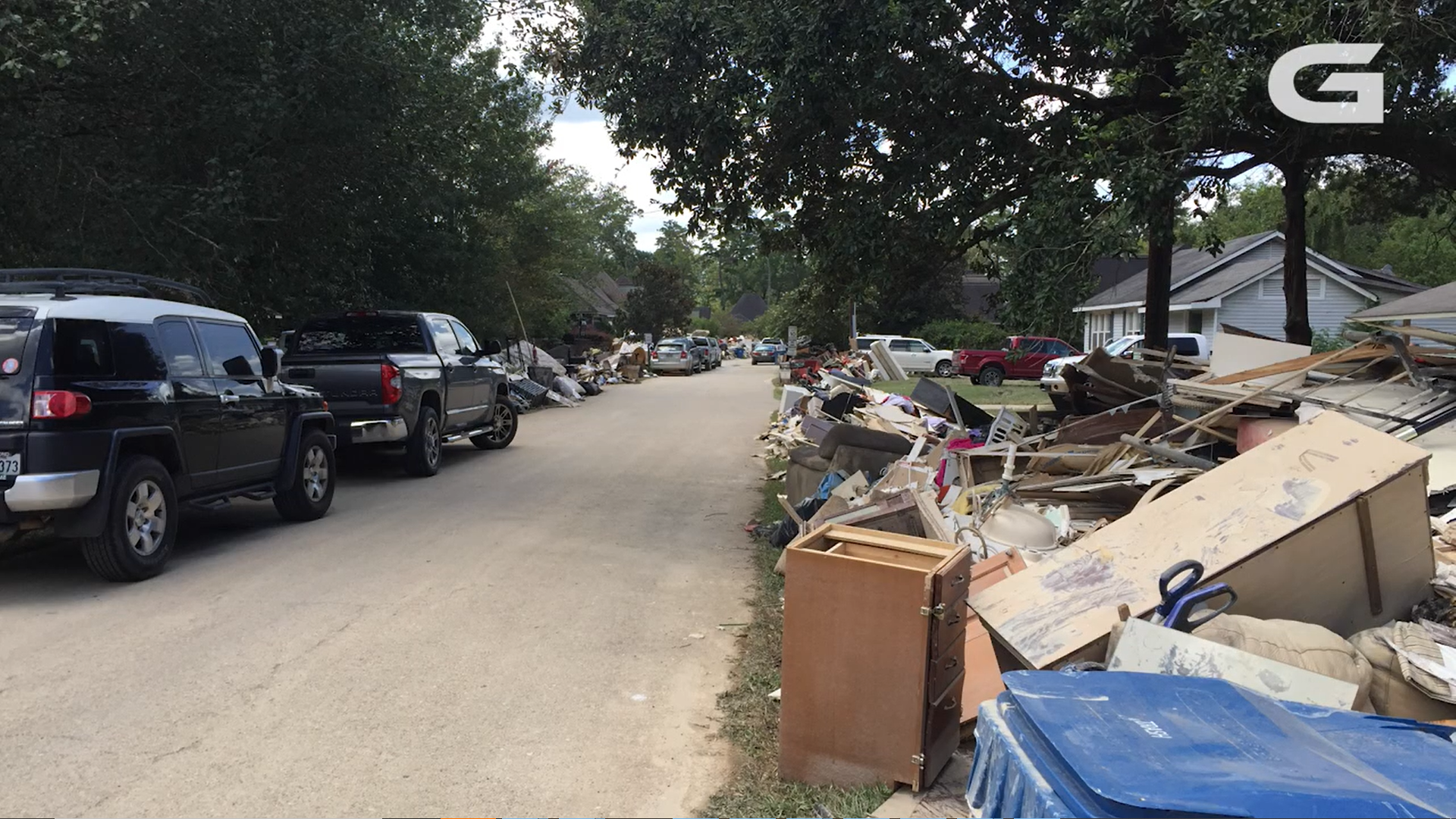
A decade ago, in August 2016, a “1,000-year” storm dumped more than 20 inches of rain in 48 hours, causing catastrophic flooding in south Louisiana, including the town of Denham Springs. Nearly the entire town suffered severe damage, forcing thousands to evacuate their homes and businesses.
One of those businesses hit was Gator Millworks.
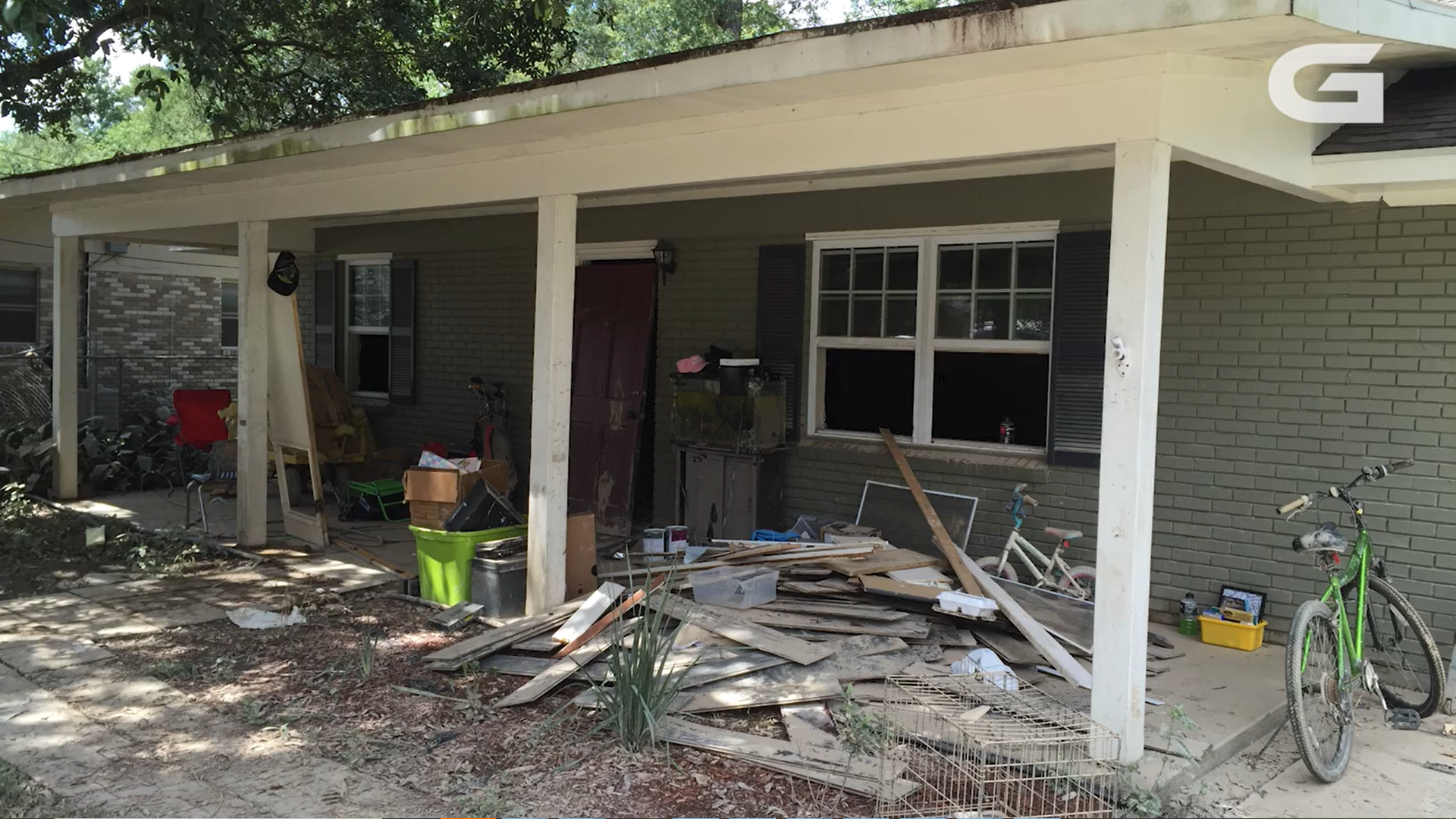
And many of its employees and their families had homes devastated by the flooding, too.
A recently released video by Gator Millworks takes a look at that horrific flood and how the company rebuilt not just their business, but also helped to rebuild the community.
Awful devastation
The community was desolated. Thirteen people were killed, 100,000 homes and thousands of businesses damaged.
At the flood’s peak, both the main Gator Millworks’ 25,000-square-foot plant and a second 8,000-square-foot plant located four miles away were under several feet of floodwater.
“It was the [most] awful thing I’d ever seen,” said Randy ‘Big Dawg’ Foster, founder of Gator Millworks. “Even though it wasn’t mine anymore, it was my baby. The first thing I thought of was my son.”
“My father called me that morning around 7:00,” said Chad Foster, CEO and president. “He said, ‘Son, you’re not going to believe this, but there’s 3 feet of water in the building.’ I said, ‘That’s not possible.’”
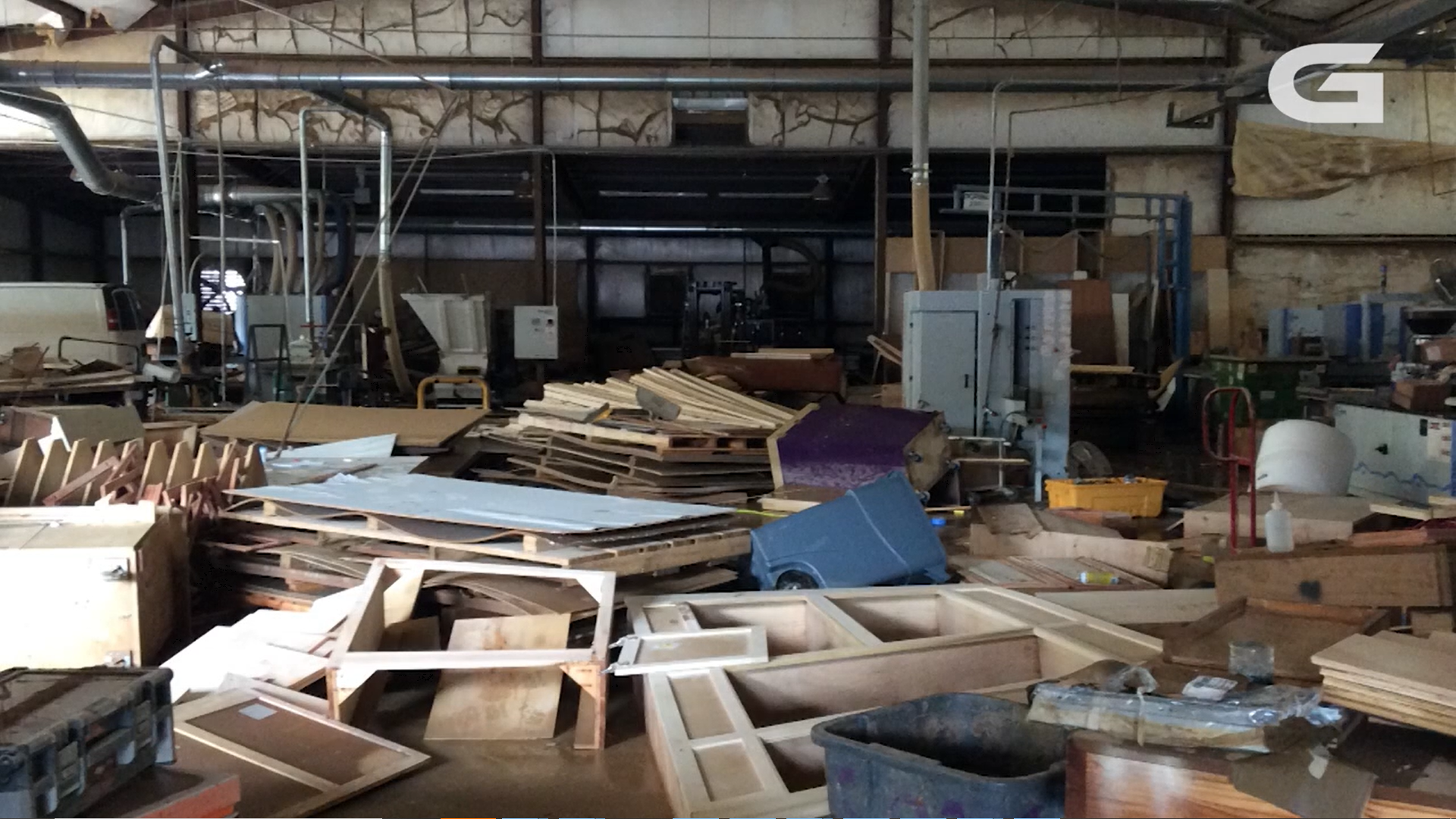
But, it was. Chad Foster attempted to get to the facility that day, knowing there was nothing to be done until the waters receded, but driven by instinct to attempt it. Later, when he was able to get there, he was struck by the devastation.
“I remember getting out of the truck, pulling in the driveway on that Monday and not hearing a sound, silence. It was strange how everything had vanished.”
Belief in people
Faced with the devastation, decisions had to be made. The company reached out to customers and suppliers.
Tom Choppin, chief growth officer, said “I can’t say I had any idea where to start, but I did tell Chad standing over the rubble that I still take us. I still believe in the people here.”
“It’s hard to put it in perspective,” said Brandon Altazan, sales consultant, Avantek Machinery, who came to help. “You have not only them as a business, but all the other people that made up Gator Millworks that were affected. It was much bigger than just replacing equipment.”
Thus began a fundamental transition. The company went from rebuilding a shop to helping rebuild a community, said Foster. “So, every day from that day forward, we took half our staff and helped rebuild their house, their family’s homes, while also doing ours.”
The work continued nonstop, said Choppin. “As much as you could do each day until that day ended, and then you did it again ... seven days a week.”
A community effort
The family, too, pitched in. Kelly Foster, Chad’s wife, worked with others to help the community. “We just rallied around him,” she said referring to her husband’s efforts. “[We] made sandwiches for everybody and brought them to different houses and made different meals for everybody ... just helping out [where we could].”
And it was not just homes that were renovated by Gator Millworks staff.
“School took weeks to open back up, because our school completely flooded,” said Alayna Foster, the daughter of Chad and his wife Kelly. “I remember that Gator was fixing the cabinets at my middle school. I remember seeing Mr. Greg (Greg Theriot, project executive) in one of my classrooms ... doing the cabinets.”
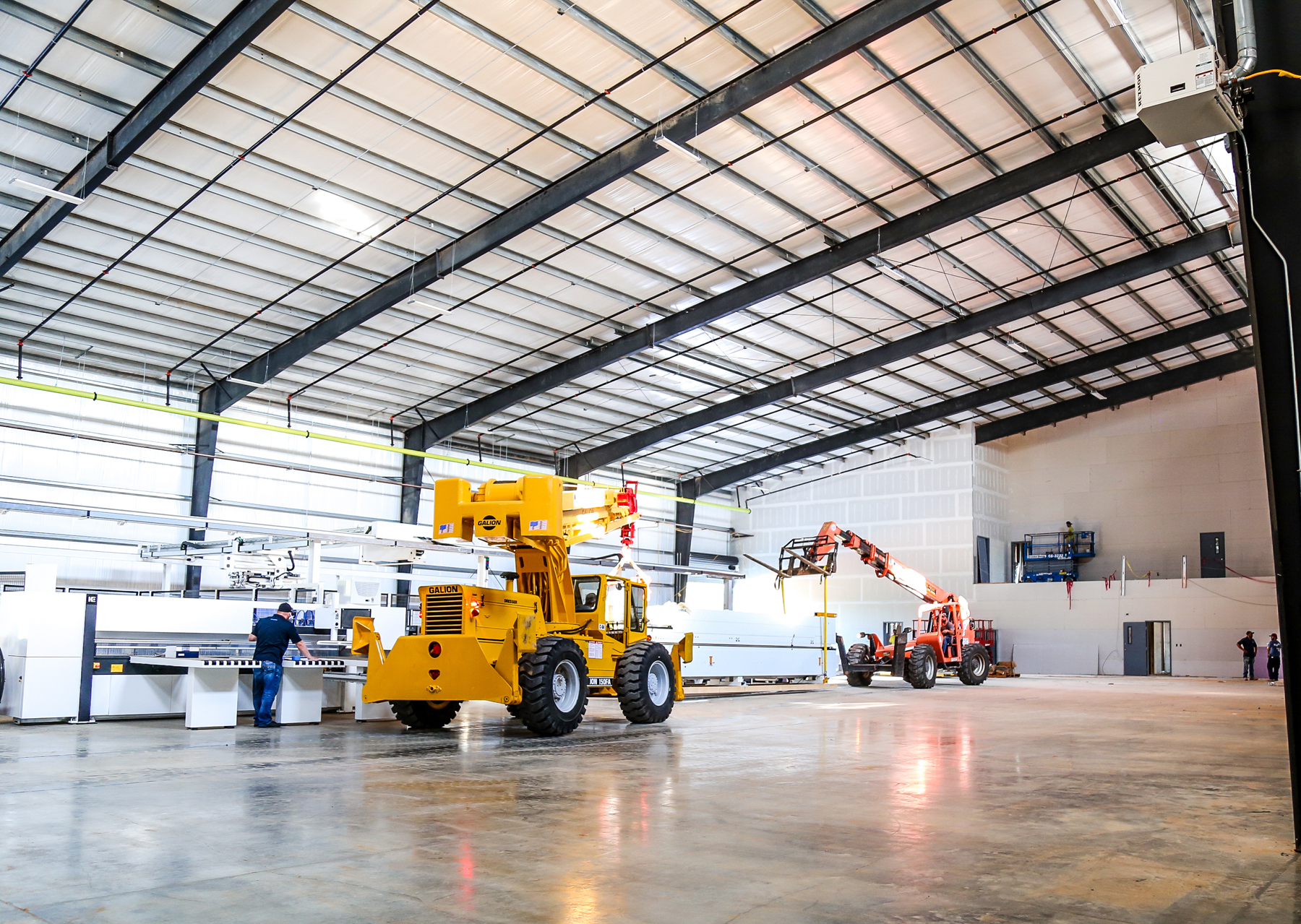
At the factory, workers were supplemented by volunteers from machinery supplier Stiles Machinery who dispatched a team to rebuild and repair damaged machinery. Stiles’ technicians worked alongside staff to salvage motors and components, helping them resume production quickly.
One of Gator’s biggest losses was a new Weeke Vantech 510 CNC Router (Concept 2) for nested-based machining that had been installed only a few months before the flood.
The company also lost a Holzma panel saw, Weeke BHX 055 HSK router, Weeke ABD dowel machine, Brandt edgebander, Kentwood six-head moulder, three-head 53-inch wide-belt sander from Butfering, a sliding table saw from Altendorf, and many smaller machines — well over $1.5 million in equipment.
In 13 days, with limited tooling, Gator was back to building some cabinets. Just five weeks after the flood, the plant was, for the most part, up and running again.
A brighter future
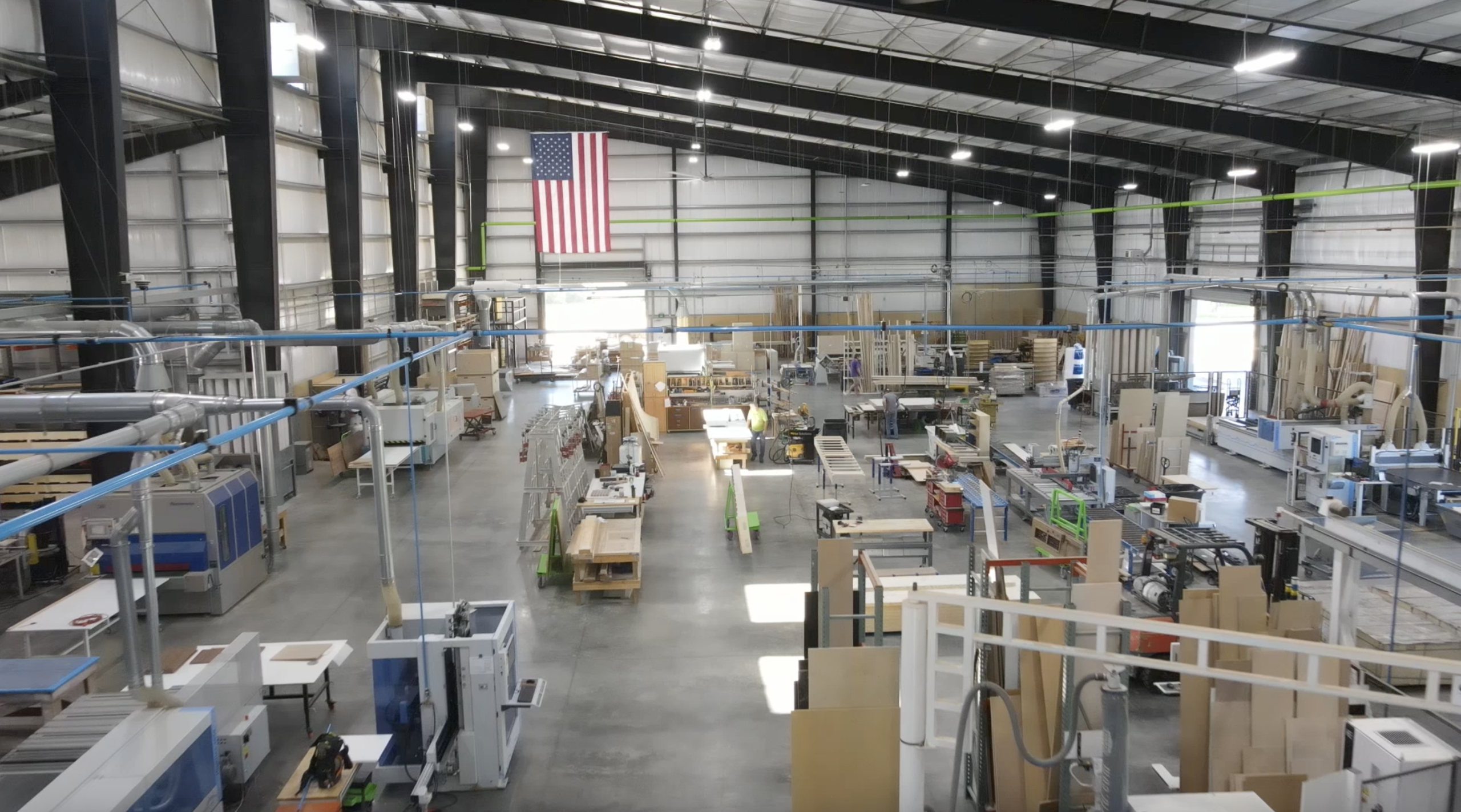
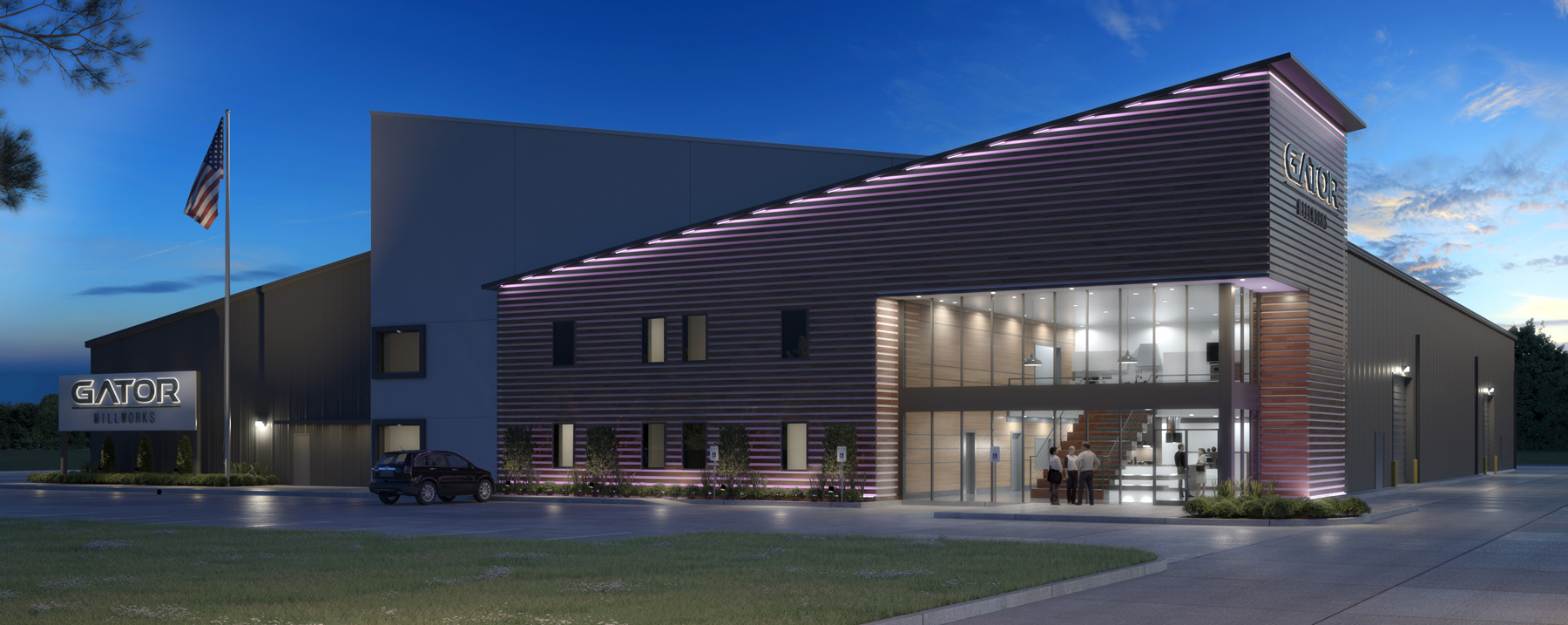
In 2018, Gator Millworks broke ground on a building with new offices, collaborative spaces, classrooms, and production equipment and capabilities, including CNC equipment, thermoforming, laser etching, press and stitch veneering, and more — all under one roof.
Work, seemingly, was non-stop. By 2019, for example, while equipment was being installed in the new building, Gator hosted a tour of woodworking companies during which visitors, including an FDMC editor, saw how the company had grown technologically.
Panels were cut-to-size on a Homag HPP 300 feedthrough panel saw and machined on Homag BHX CNC vertical machining centers. Edges were banded on a Homag Ambition single-sided edgebander, or SNX contour bander.
Other machines that were in use throughout the facility for both panel and solid wood processing included a Homag TLF IntelliStore System storage and retrieval system, ROBATech sander and Makor finishing system, Ligmatech MPH 450 Optimat case clamp, a Doucet clamp, Weeke Vantech CNC router, Heesemann sander, TigerStops, Ironwood shaper, and Castle pocket cutter.
In just a few years, the company has grown bigger than ever; rebuilding tested the mettle of the company, the workers, the community.
“Disastrous moments can define who we are as people and as a company,” said Foster. “If we can come together and help each other like we did to get back to what we had, or make it better, that can define who we are. I think that that’s what I’m most proud of.”



Have something to say? Share your thoughts with us in the comments below.