


Proposed tariffs on imports from Mexico, Canada, China, and other countries, along with possible supply chain disruptions, are leaving some U.S. furniture manufacturers uncertain about the future.
How are they adjusting and are there opportunities? Providing insight is Leonard Marano, Lectra Americas president, a provider of high-tech upholstery equipment, industry platforms and related technologies.
“What we hear from our customers is really the need for flexibility – flexibility in how they manage production through the cycles of up and down volume, and through the cycles of changing consumer trends, where more furniture customers are getting made to order,” Marano said. In essence, he added, “Making sure they have solutions that keep them competitive.”
Marano cited the need for continued investments in technology, sustainability efforts and increased flexibility, particularly when it comes to custom/batch one production, for ways U.S. upholstered manufacturers can grow their businesses.
Investments in technology & ‘econogy’
The need for increased automation and on-demand manufacturing technologies will continue to grow, Marano said, resulting in reduced inventories as companies adapt and respond to market fluctuations.
“Where our customers are investing is in digital solutions and integrated processes that give them that flexibility,” he noted. “When you have a business model that could be a combination of made-to-order or custom, and then also traditional mass production where maybe you're making a hundred or a thousand of something and then bringing it to inventory, [you need to] leverage your data to manage that type of shipping production efficiently.”
Industry 4.0 and other cloud-based solutions are also providing manufacturers with the flexibility to customize data “so they know where the product is going to be and when and how it's going to get there.”
Further emphasis and investments into sustainability is another trend cited by Marano.
“Everybody used to talk about sustainability because it was the socially conscious thing to do. And the reality is, as much as we'd like it to be, no companies out there are practicing sustainability truly for altruistic reasons, right? There has to be a good business rationale behind it."
Enter "econogy," a term used to describe the combining of social responsibility/sustainability with good economics. In other words, sustainability should equal profitability.
“What econogy is meant to really describe is the material savings and the meaningful impact to your P&L having sustainable business practices could be. So, if you're leveraging cloud-based solutions to put parts closer together, that allows you to get more parts out of the same amount of material, and you’re reducing waste while saving money. If you're using automation to take labor out and you're operating less shifts, you're reducing your carbon footprint. That is sustainable, but it's also saving you money. If you're using planning tools to make sure that what you produce is actually going to be consumed by a consumer and you’re not destroying stuff, that [also] has a meaningful impact on your bottom line. So that's what econogy is meant to represent; it's how sustainability can drive profitability within the business.”
Marano said while the term econogy is fairly new, the practice has been part of Lectra’s culture for the last 10 years, and the company recently launched a Sustainable Upholstery Furniture whitepaper.
“We've always had a sense that we needed to design our product offering with sustainability in mind. And not only practice what we preach when we produce our own products but also give our customers technology that allows them to be more sustainable knowing that sustainability can equal profitability.”
Customization is key
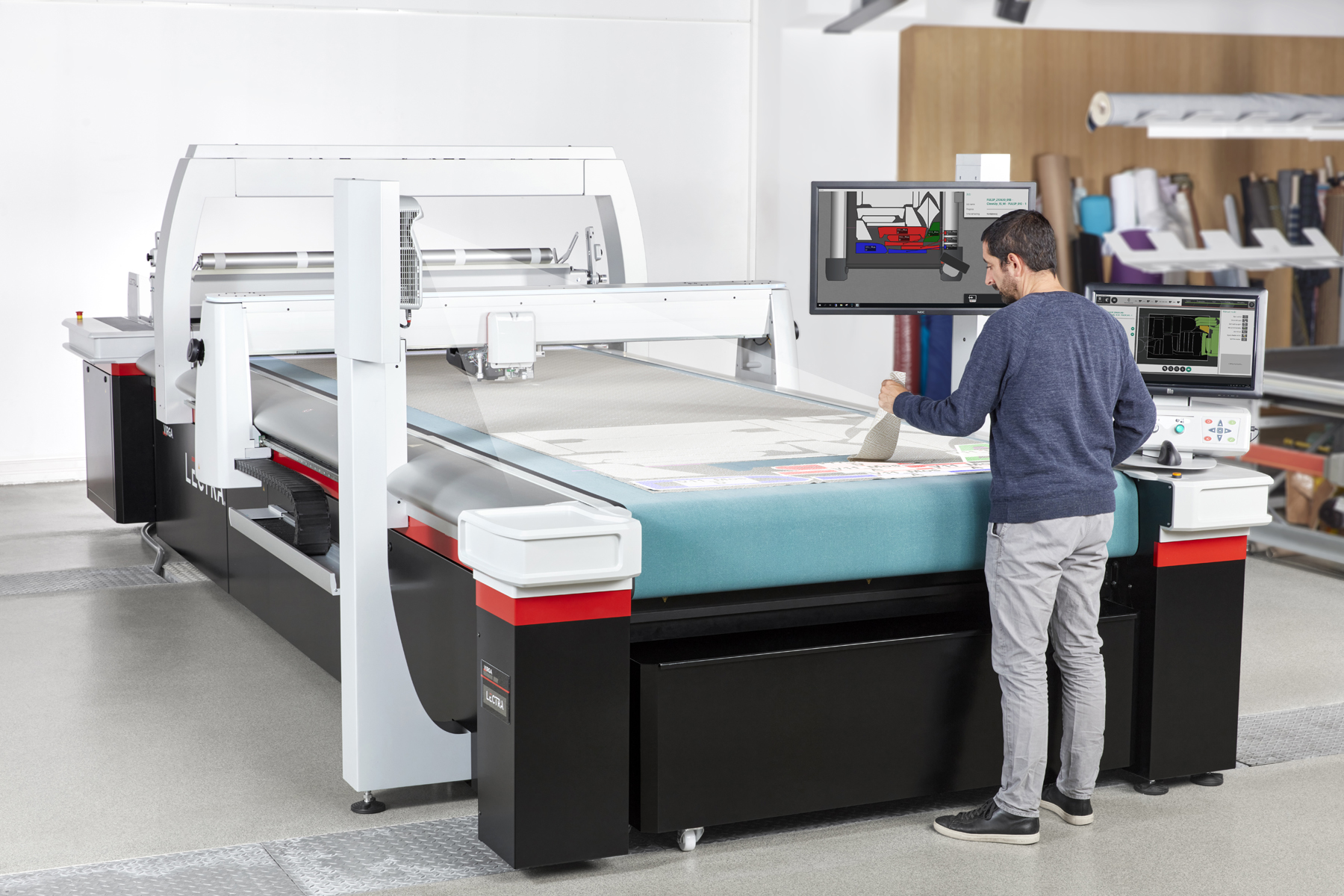
Along with increased automation, Marano sees an increase in custom, batch-one production by upholstery manufacturers. “I would say that on-demand has absolutely accelerated over the last four years or so.” The company offers a platform for on-demand upholstered furniture production and sees this business booming. Investments in these types of technology platforms “give them the flexibility to manage the kind of ups and downs of production flow across what would be their traditional, more mass production business than what's on demand,” with the faster turnaround required by today’s consumers. Customization of elements such as fabric patterns are among the trends he is seeing in high demand.
Additional thoughts
In his final comments, Marano said that while increased use of technology in production facilities helps offset some of the workforce issues, wood products manufacturers are still challenged. “Labor continues to be a major challenge. Automation helps that, but you still need people to assemble.”
Marano noted Lectra is among the organizations committed to helping the cause. The company has provided machines and technology to Catawba Valley Community College for training. “It’s something that we've done for probably close to 10 years now and our customers appreciate it. Also, it's a way to get the next generation groomed [for the workforce] and give back a little bit as well to the community.




Have something to say? Share your thoughts with us in the comments below.