

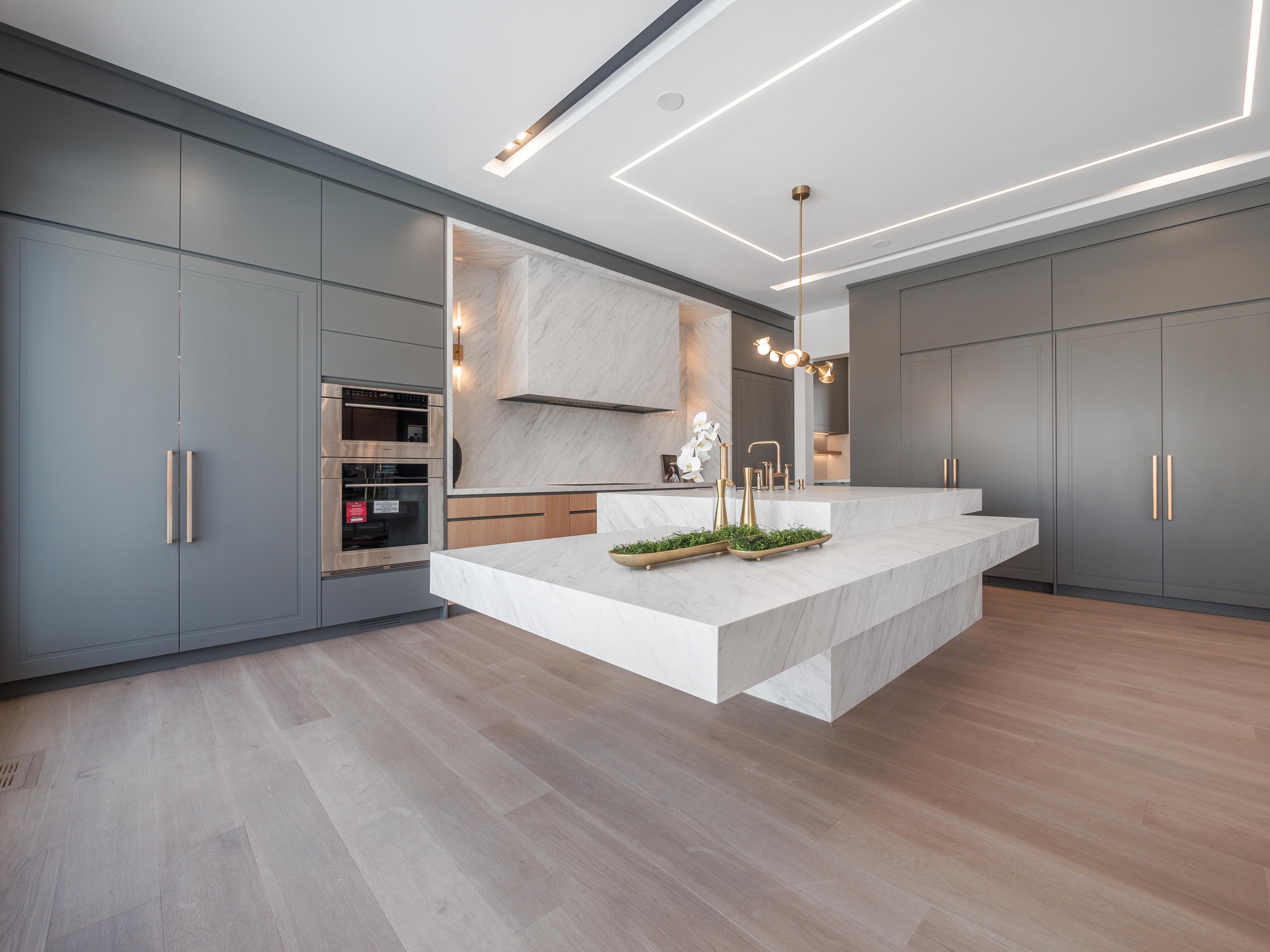
The kitchen continues to evolve toward a more intelligent, personalized, and health-conscious space that supports modern lifestyle demands, according to new research from the National Kitchen and Bath Association.
The 2026 Kitchen Trends Report, available at NKBA.org with free access for NKBA members, finds that over the next three years the kitchen will continue to evolve – replacing dining tables with custom storage, swapping intricate designs for minimal details, and increasing the kitchen IQ — the growing focus on intelligent, technology-integrated kitchens — for intuitive upgrades. The report also reveals that the majority of kitchen trends are in the growth phase of adoption, presenting an opportunity for designers to pursue. These include smart technology integration, open layouts, hybrid products, generational customizations and wellness focused spaces.
In tandem, the NKBA has partnered with CEDIA, the Association for Smart Home Professionals, to commission a U.S.-based research study examining the current state of technology integration in home design. The rapidly evolving smart home landscape weighs prominently on the industry, as homeowners completing projects with smart technology allocated on average approximately 20% of the overall budget towards smart home integration. This report revealed an increasing need for deeper and earlier collaboration between designers and home integrators as smart tech evolves into a “must-have” feature. The report also outlines which smart tech aspects are gaining traction, and which are better left behind: lighting, safety, and convenience reign.
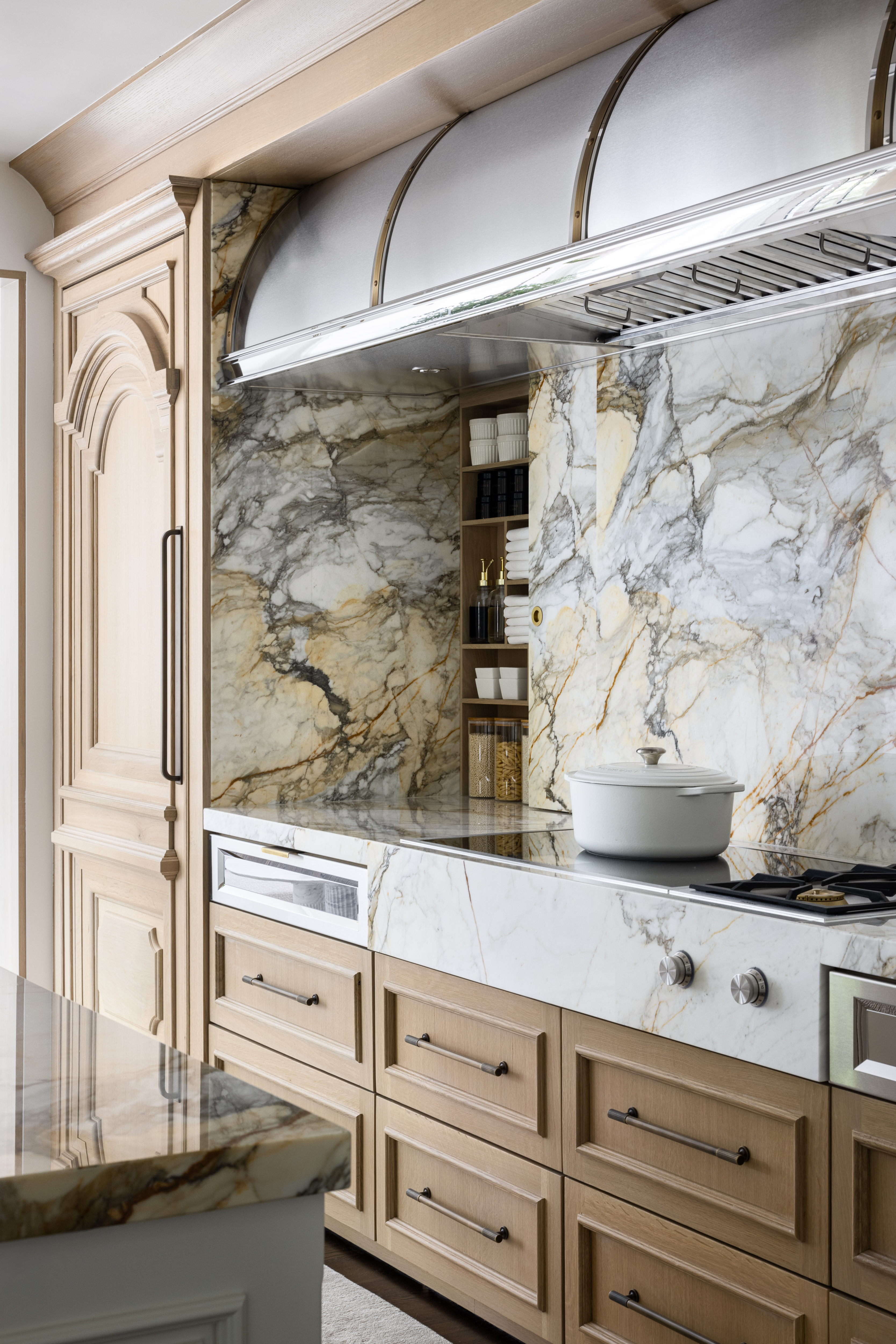
Comprised of data generated from a survey completed by industry experts including designers, manufacturers, remodelers, architects, and more, the report provides a comprehensive look into current and upcoming trends in residential kitchens that will have the biggest impact in 2026.
While the overall size of U.S. homes declines, 76% of respondents expect the kitchen footprint to increase over the next three years. As the kitchen expands, it further influences the whole home design. “The integration between the kitchen and whole home is a really exciting opportunity for the kitchen and bath industry,” said Bill Darcy, Global President & CEO of NKBA | KBIS. “The 2026 Trends Report further confirms this evolution, as homeowners desire connection and cohesive design between spaces for entertainment, functionality, and wellness. This report helps provide an inside look at what the market demands so that designers can be empowered to offer clients beautiful spaces tailored to their individual needs.”
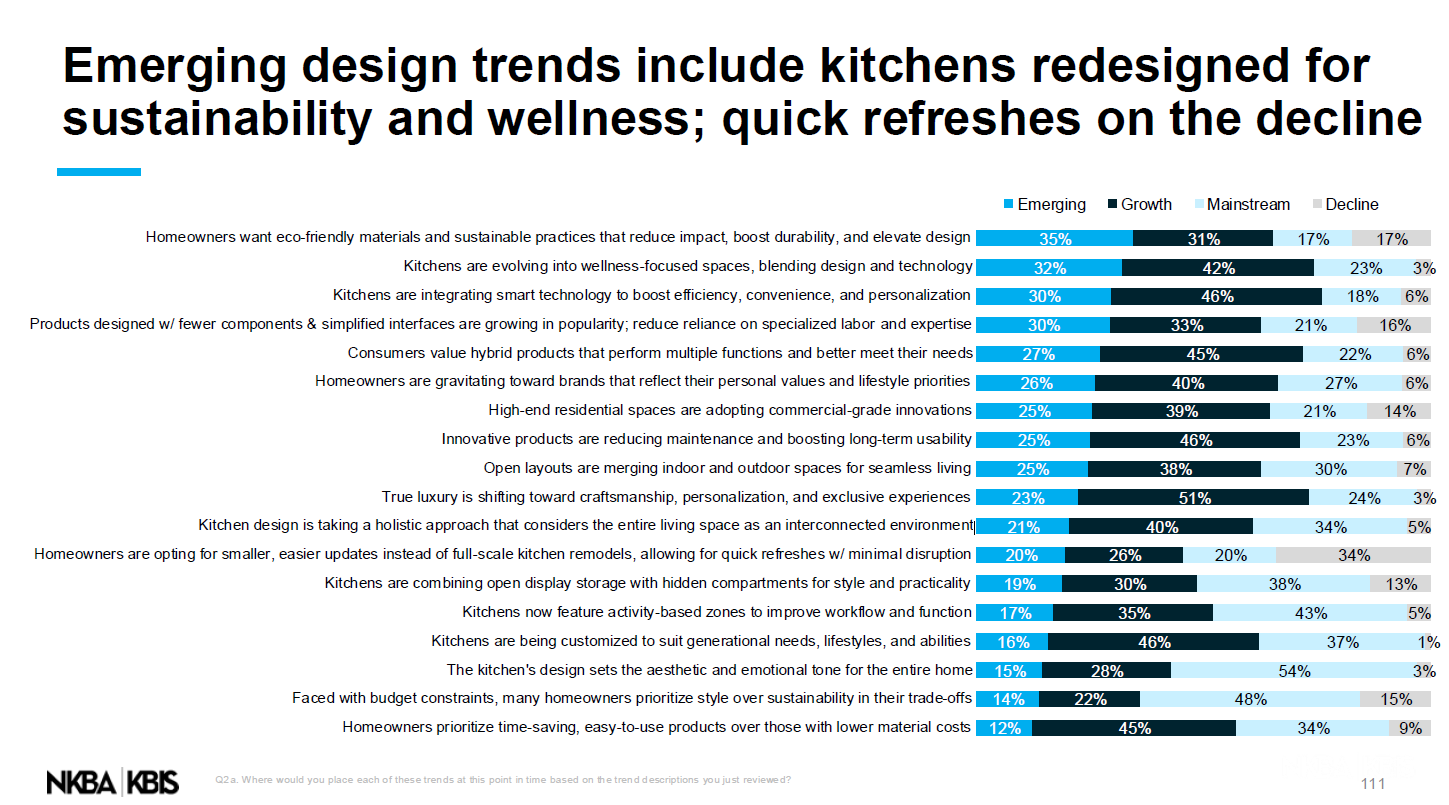
The reports finds a more holistic approach that considers the entire living space as an interconnected environment. Colors are more neutral; design is more timeless. Eco-friendly materials and sustainable practices that reduce impact, boost durability, and elevate design are favored. While kitchens are integrating smart technology with wellness-focused spaces that blend design and technology, respondents found that products designed with fewer components and simplified interfaces are growing in popularity.
Colors were overwhelmingly (96%) found to lean toward neutrals, while timeless design style was chosen by nearly three-quarters of respondents reporting that transitional/timeless kitchen design tops the list as a popular style in the next three years.
Kitchens over this period will tend toward minimalism over maximalism and natural materials taking the lead. Respondents identify features like a flat, slab cabinet door style (69%), panel-faced refrigeration (72%) and dishwashers (85%), and slab/solid surface backsplashes (75%) as gaining popularity.
Wood grain surpasses painted cabinets, with 59% of respondents identifying it as growing in popularity, and white oak was found to be the most popular wood type at 51%. Natural quartzite comes in right behind Quartz at 62% for countertop materials and 61% for backsplashes.
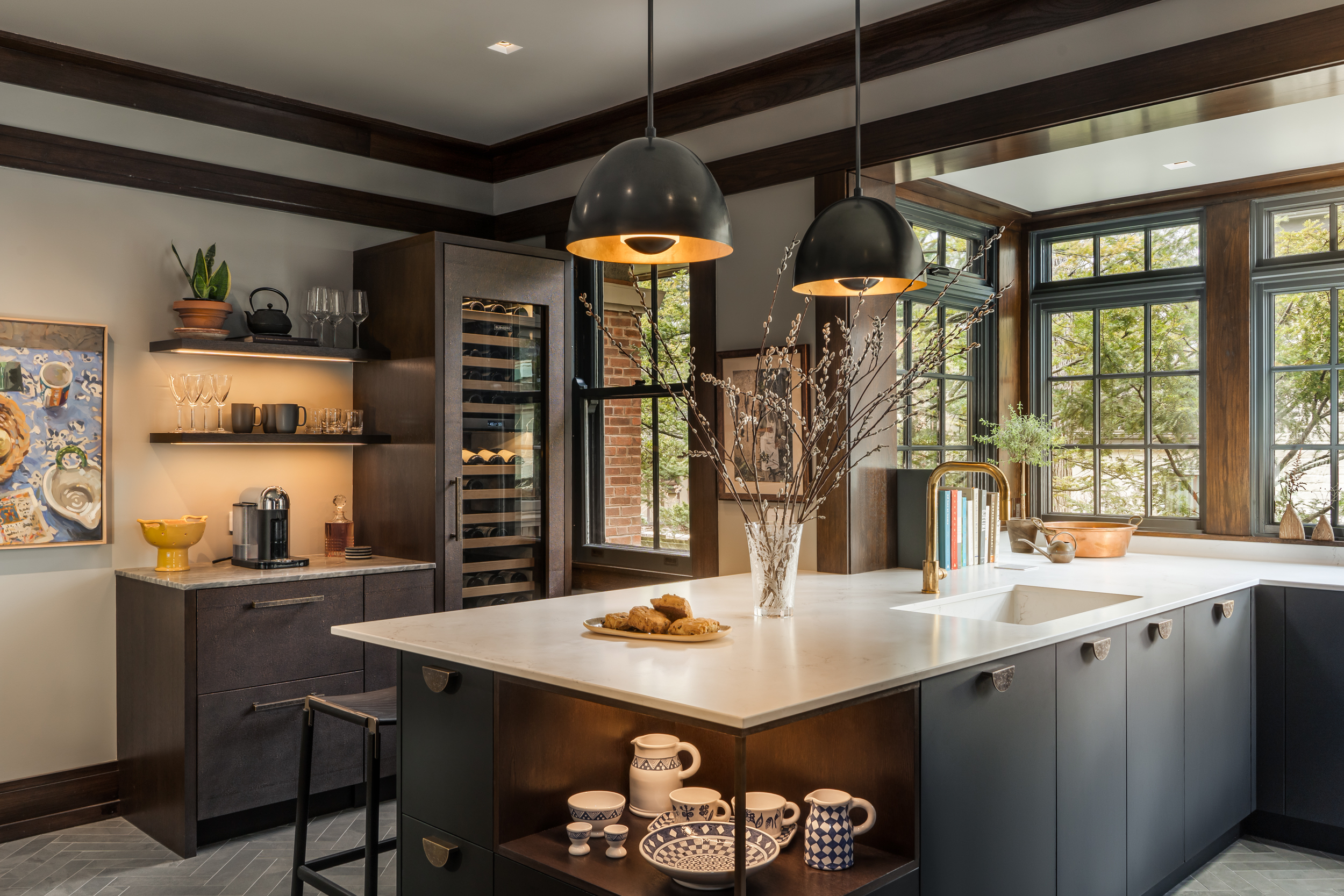
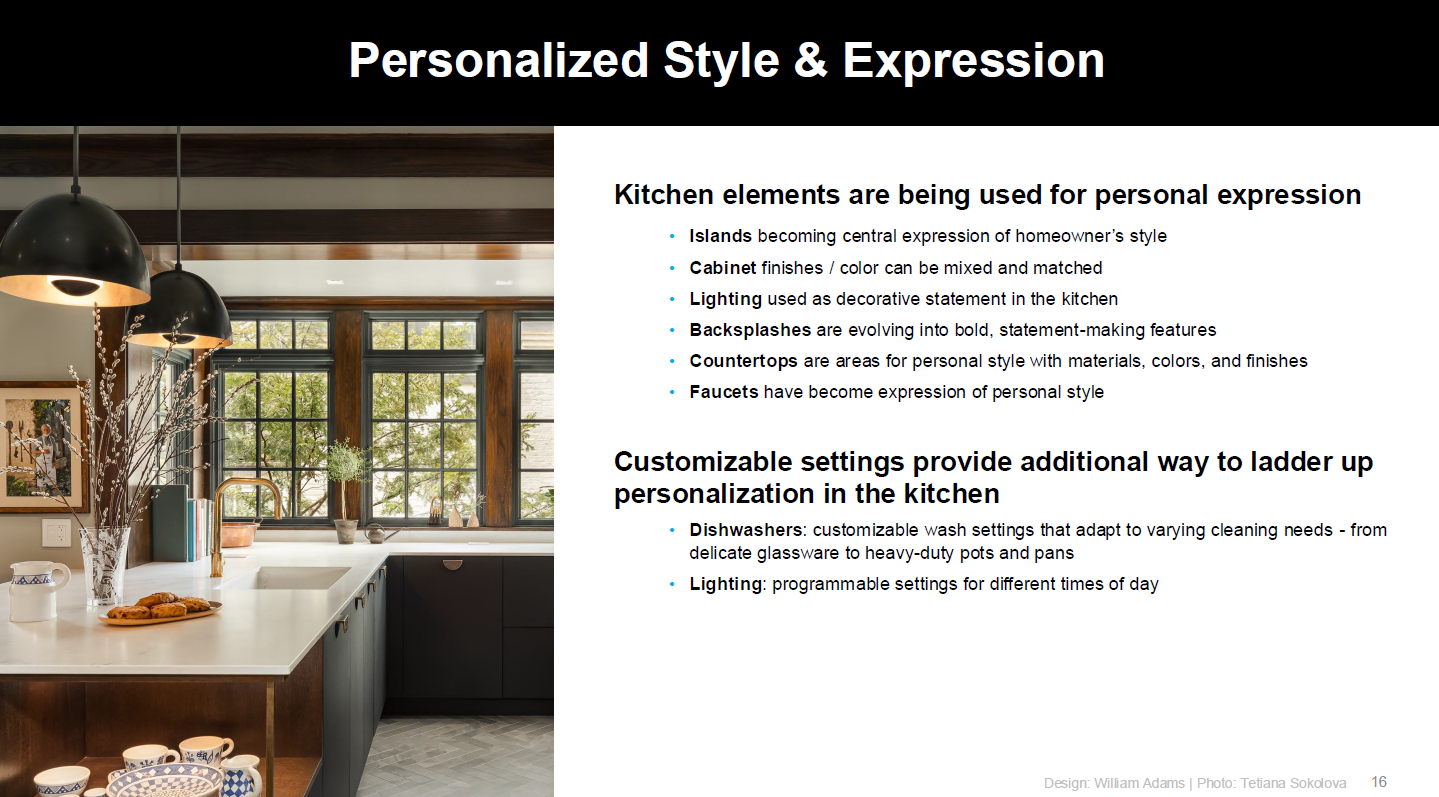
Survey respondents were in 100% agreement that lifestyle enhancements will be a popular kitchen layout feature in the next 3 years, as kitchens become personalized, multi-purpose hubs. Among the top features are dedicated beverage areas (85%), pet feeding stations (64%), and eat-in kitchens (59%). Additionally, 94% agree that homeowners are adding functional spaces like mudrooms and flex-office spaces. Smarter storage is also in demand, with floor-to-ceiling cabinetry with more drawers, walk-in and butler pantries, refrigerators with custom configurations (70%) and islands packed with storage topping lists.
Kitchens have become spaces for showcasing decorative, statement lighting, according to 87% of respondents. The most important kitchen design considerations to homeowners include natural lighting (95%), quality lighting (93%) and task lighting for work zones (92%). While a variety of lighting types will be on trend, under cabinet lights (82%), interior cabinet lights (72%) and pendant lights (63%) top the list.
The kitchen is no stranger to the technological advancements taking the world by storm. Smart technology is gaining traction in select categories across the kitchen, including WiFi-enabled, mobile-app controlled appliances and lighting, and embedded wireless charging. Additionally, there is a growing interest in the kitchen as a space to facilitate healthier living and well-being. Clever features like steam cooking (66%), powerful vent hoods (85%), outdoor connection (71%), enhanced storage (72%), and smart, spacious refrigerators (72%) offer support and are gaining traction.
Technological integration
The NKBA and Custom Electronic Design & Installation Association (CEDIA) joined forces to commission a research project that documents the current state of technology integration in home design: awareness, preferences, attitudes, challenges, and role of tech within the designer journey. It looked at design trends for bathrooms, kitchens and the whole home.
Technology integration, the report defines, is the seamless blending of various electronic systems—such as audio, video, lighting, climate control, networking, and security—into a unified and intuitive smart home experience, tailored to meet the lifestyle and needs of the user.
While few NKBA designers have heard of the term "integrator," and even fewer have worked with one, those who collaborate with integrators will have more support and advocacy for smart tech integration.
The report found that products such as exhaust fans, lighting control in the kitchen, and kitchen technology/projects show strong conversion rates from awareness to installation. These are entry-level products that could be easier (and potentially cheaper) for novice designers to recommend.
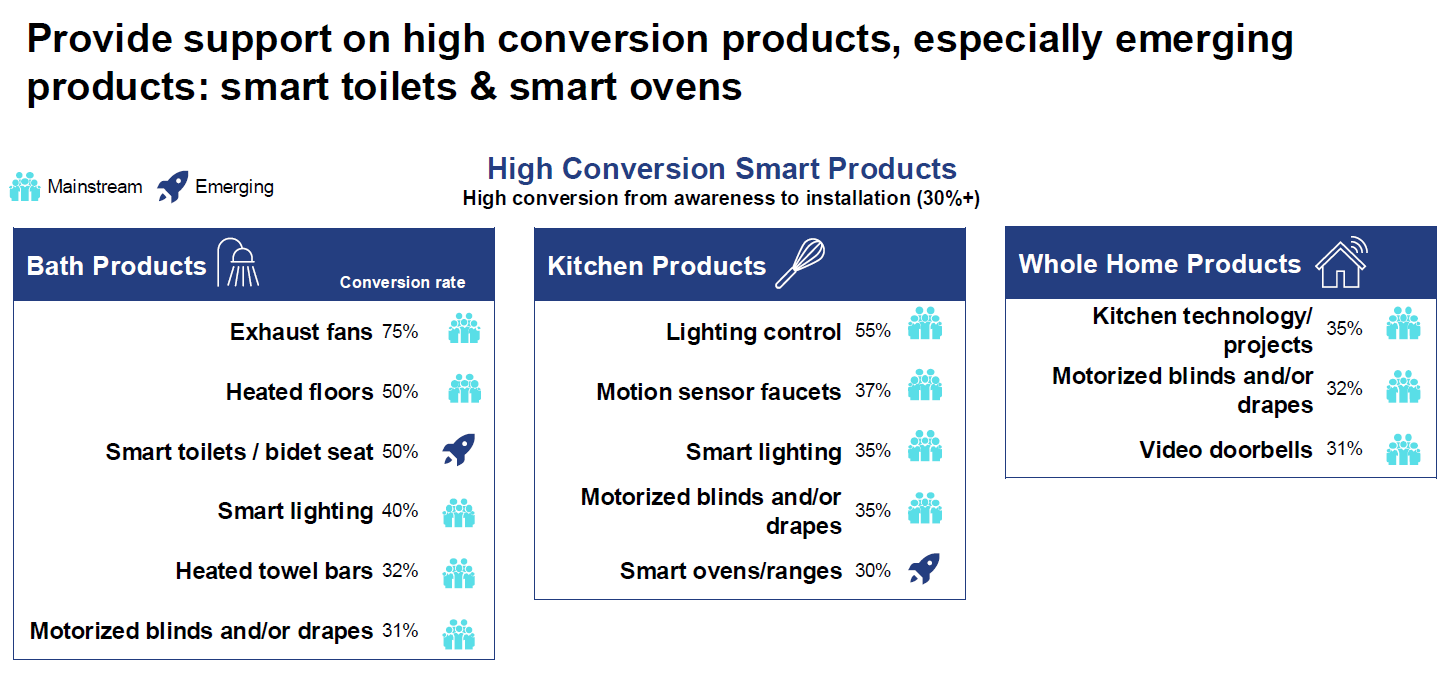
Currently, the most well-known smart products include heated floors (92%), exhaust fans (87%), and heated towel bars (86%)
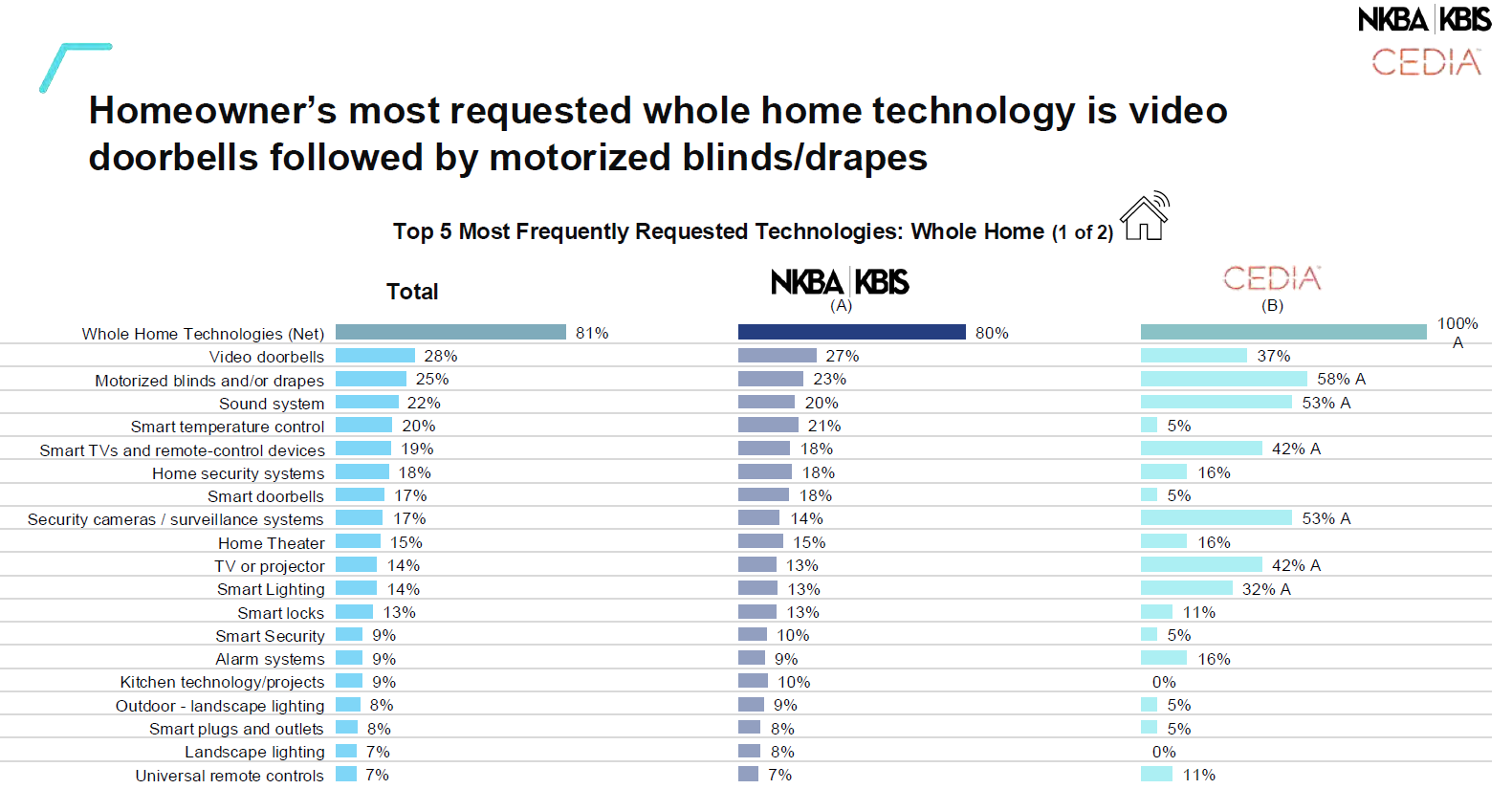
in the bathroom. In the kitchen, motion sensor faucets (85%), lighting control (84%), smart refrigerators (82%), and motorized blinds/drapes (80%) are most well-known. Throughout the home, video doorbells (91%), smart lighting (90%), security cameras/
surveillance systems (89%), alarm systems (89%), and motion detectors/home security systems (88%) are most well-known.
Lighting control, the report finds, is the most common smart product installed in kitchen projects, both with NKBA designers (46%) and CEDIA members (79%). Reflecting the influence that knowledgeable designers have in influencing buying decisions, it is also the most common smart kitchen product recommended to homeowners for both groups.
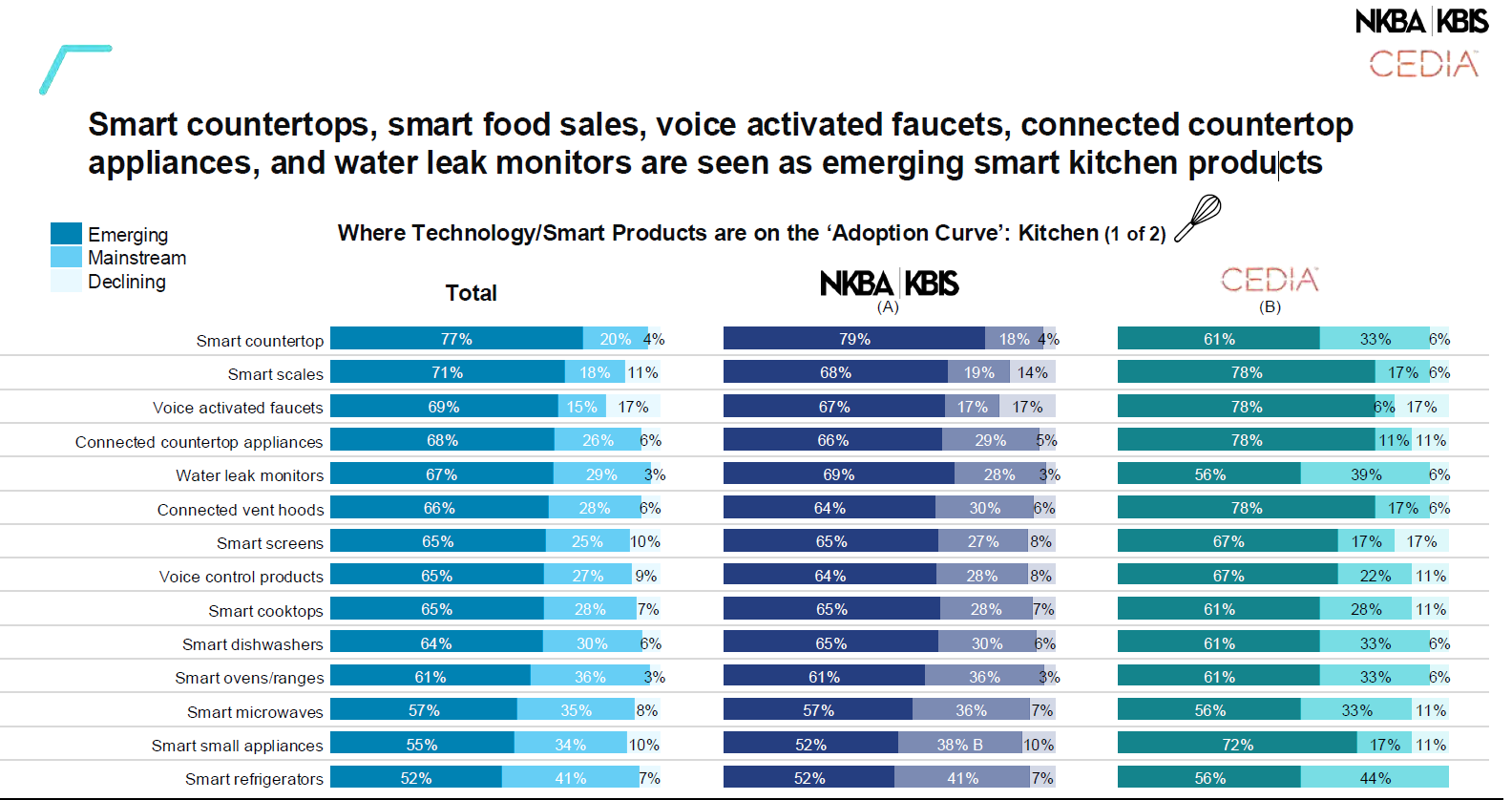
Smart countertops, smart food sales, voice activated faucets, connected countertop appliances, and water leak monitors are seen as emerging smart kitchen products.
The report found several barriers to this integration, however. Cost remains the primary barrier for homeowners, followed by
complexity (for both homeowners and designers).
For more information on either the NKBA Trends report or the NKBA/CEDIA report, visit the association's website.




Have something to say? Share your thoughts with us in the comments below.